Table of Contents
Pigache (Shoes)
Pigache shoes are among the most distinctive and controversial footwear styles in medieval European history. Recognized instantly by their sharply pointed and upturned toe, these shoes were far more than a simple fashion choice — they carried social meaning, sparked moral debate, and earned bans from some of the most powerful institutions of their time.
Originating during the Romanesque period, pigache spread rapidly across Western Europe, finding particular favor among nobility and royal court members. The word itself came from French, where it described both a type of hoe and a wild boar’s hoofprint that was uneven on one side — an oddly fitting origin for a shoe defined by its asymmetrical, elongated shape. The term later entered Medieval Latin as “pigacia” and “pigatia.”
What made pigache truly remarkable was not just its appearance but the reaction it provoked. Clergy condemned it. Poets mocked it. Church councils banned it. Yet despite all opposition, it remained popular for well over a century before eventually giving way to the even more exaggerated poulaine style. Few items of clothing in medieval history managed to attract such strong opinions from so many directions at once.
| Common Name | Pigache / Pigage |
| Other Names | Pulley shoe, Ram’s horn shoe, Scorpion’s tail |
| Style | Pointed, upturned toe |
| Region | Western Europe |
| Period | Romanesque Era — 11th to 12th century |
| Materials | Leather, fabric, stuffing |
| Decoration | Small bell at toe tip |
| Toe Length | Up to 2 inches beyond the foot |
| Banned By | Church councils, Paris University |
| Successor Style | Poulaine — 14th century |
| Byzantine Variant | Priestly pointed footwear — 5th to 8th century |
| Notable Critic | Orderic Vitalis |
What are pigache shoes?
Pigache shoes are a distinctive style of medieval European footwear characterized by a sharply pointed and upturned toe. Originating during the Romanesque period, these leather shoes were worn primarily by nobility and royal courtiers, becoming famous for sparking intense moral debate, church bans, and comparisons to scorpion tails and ram horns.
What Are Pigache Shoes?
Pigache shoes are a style of medieval footwear defined by one unmistakable feature — a toe that is both sharply pointed and curved upward. This was not subtle. The extension could reach up to two inches beyond the wearer’s actual foot, and in some extreme cases, the tip was stuffed with padding to hold its elevated shape. A small decorative bell was sometimes attached at the very end, adding an audible quality to an already attention-grabbing design.
The style emerged and flourished during the Romanesque period across Western Europe. It was not a quiet, understated fashion. From the moment it appeared, pigache attracted strong reactions — admired by those who wore it, condemned by those who did not. It became closely associated with courtly culture, wealth, and a particular kind of social display that made conservative religious figures deeply uncomfortable.
What makes pigache especially interesting is its dual identity in history. On one hand, it refers clearly to the pointed shoes of Western European medieval fashion. On the other hand, historians and scholars sometimes apply the same term to earlier pointed footwear worn by priests in Byzantine Egypt, dating back several centuries earlier. These two traditions share a visual similarity but come from entirely different cultural contexts, which is why the term can cause confusion when encountered in academic or historical writing.
Understanding what pigache shoes actually are requires separating these two threads — the medieval Western fashion item and the earlier Byzantine religious footwear — and appreciating each on its own terms.
Pigache Names and Etymology
Language has a way of carrying history inside it, and the word “pigache” is a perfect example. The term arrived in English directly from French, where it had two distinct and rather unexpected meanings. In everyday French usage, it referred to a type of hoe — a simple agricultural tool. In hunting contexts, the same word described the hoofprint of a wild boar where one side extended noticeably longer than the other. That second meaning, with its sense of something elongated and uneven, maps remarkably well onto the shoe it eventually came to name.
From French, the term moved into Medieval Latin, where it appeared in two forms — “pigacia” and “pigatia.” Both referred to the same style of pointed footwear, and both carried the same sense of something projecting forward beyond its natural boundary. This linguistic journey from farmyard tool to fashionable shoe reflects how medieval vocabulary often borrowed from the familiar world to describe something new.
Over time, pigache collected several alternative names, each reflecting a different aspect of its unusual design. “Pulley shoe,” “pulley toe,” and “pulley-toe shoe” all referenced the mechanical quality of the upturned tip, as though the toe had been pulled upward by some unseen force. More colorful names came from the pen of Orderic Vitalis, a monk and chronicler who had little affection for the style. He compared the curled toe to a scorpion’s tail, giving rise to the name “scorpion’s tail shoe,” and to the curved horn of a ram, producing the equally vivid “ram’s horn shoe.”
The term also stretched across time in its application. Scholars and writers sometimes used “pigage” to describe pointed footwear from Byzantine tradition dating back centuries earlier, even though these shoes came from an entirely different cultural context. This overlap in terminology has occasionally caused confusion, with pigache being mistakenly treated as identical to the later poulaine — a distinct style that came from Poland and dominated fashion in the following centuries. The two share a family resemblance but are separate traditions with different histories.
Pigache Pronunciation
For anyone encountering the word pigache for the first time, pronunciation is often the first obstacle. The word looks unusual on the page, and English speakers frequently hesitate over it. The correct pronunciation follows French phonetic rules, since that is where the word originates. It is spoken as “pee-GAHSH” — three distinct sounds, with the emphasis placed firmly on the second syllable. The final syllable, “-gash,” carries a soft “sh” sound, not a hard “ch” as English spelling might suggest.
This matters more than it might seem. Pigache appears regularly in academic discussions of medieval fashion, art history, and church history. Mispronouncing it in those contexts can undermine an otherwise confident argument. Historians, museum professionals, and medieval scholars all use the French-derived pronunciation as standard, and it has remained consistent across English and French academic writing alike.
In French itself, the pronunciation stays close to its written form — “pee-GAHSH” — with the natural fluidity that French phonetics bring to words ending in that soft “-ache” sound. English speakers sometimes flatten the word into “PIG-atch” or “pig-AYSH,” both of which drift away from the correct form. Neither is widely accepted in formal or academic contexts.
A simple way to remember it is to think of the word in two parts. The first part sounds like the letter “P” followed by a long “ee” sound. The second part rhymes with the English word “gash.” Put together — “pee-GAHSH” — and the word becomes much easier to say with confidence. Once learned, it tends to stick.
Design of Pigache Shoes
The defining characteristic of pigache shoes was the toe — pointed, upturned, and impossible to ignore. This was not a gentle taper ending in a modest tip. The toe extended forward and curved distinctly upward, creating a shape that contemporaries found striking enough to compare to animal features. Orderic Vitalis, never one to hold back an opinion, described the curled tip as resembling a scorpion’s tail. Courtier Robertus Cornardus took the design even further, bending his shoe tips into tight curves that mimicked the spiral horn of a ram.

The extension typically projected up to two inches — roughly five centimeters — beyond the wearer’s actual toes. This created an obvious practical challenge. To maintain the shape and keep the tip elevated rather than drooping downward, shoemakers and wearers alike turned to stuffing. The hollow toe section was filled with padding — moss, wool, or similar soft materials — which held the upturned form firmly in place and gave the extension a satisfying firmness when walking.
Decoration played a role as well. Some pigache featured a small bell attached at the very tip of the toe. This detail served no functional purpose whatsoever, which was arguably the point. The bell announced the wearer’s presence with every step, adding an audible layer to an already visually bold shoe. It was fashion as performance — deliberate, confident, and designed to attract attention.
In terms of materials, pigache were primarily constructed from leather, as was standard for quality footwear of the Romanesque period. The upper sections followed the foot’s natural shape before extending dramatically at the toe. Soles were typically leather as well, kept relatively flat since the shoe’s drama lived entirely at the front. Color varied, though darker tones appear most frequently in manuscript illustrations of the period.
What separated pigache from the later poulaine was primarily restraint — relative restraint, at least. The points of pigache, while bold, remained considerably shorter than the extraordinary lengths that poulaine would eventually reach in the following centuries. Pigache was dramatic. Poulaine was theatrical. The design logic was similar, but the scale was entirely different.
Who Wore Pigache Shoes?
Pigache shoes were not worn by everyone. From the very beginning, they were associated with a specific social world — one of wealth, privilege, and courtly ambition. The style belonged primarily to the nobility and to those who moved within royal circles, where clothing and footwear served as deliberate signals of status and sophistication. Ordinary working people had neither the means nor the occasion to wear shoes designed more for display than for practical movement.
Within noble society, men were the primary wearers, though the style attracted moral criticism partly because its critics associated it with femininity and excess. Orderic Vitalis, one of the most vocal opponents of the pigache, linked the shoe directly to what he described as effeminate behavior in royal courts. William of Malmesbury similarly questioned the masculinity of men who wore them. These criticisms reveal as much about the anxieties of the critics as they do about the actual wearers — pigache had become a cultural flashpoint, a shoe that carried meanings far beyond its physical design.
The court of William Rufus in England became particularly associated with pigache culture. It was here that the style found some of its most enthusiastic and extravagant adopters. Courtier Robertus Cornardus became notorious specifically for the extreme shape of his pigache, curling the tips into ram’s horn spirals that went well beyond anything most wearers attempted. He represented the outer edge of pigache fashion — the kind of wearer who treated the shoe as a statement of personal identity rather than simply an item of clothing.
Regional variations existed across Western Europe as well. While the style spread broadly through France, England, and surrounding territories during the Romanesque period, local interpretations differed in the degree of the toe’s extension and curvature. French wearers and English courtiers both embraced the style, though the most documented examples of extreme pigache come from the English royal court, where fashion competition among nobles appears to have pushed designs toward increasingly dramatic forms.
Women were not entirely absent from pigache fashion, though their association with the style appears less frequently in historical records. Guibert of Nogent connected the shoe to women and to the city of Cordoba, suggesting a broader geographic and gender spread than the English court alone might imply. However, the dominant image of the pigache wearer that emerges from historical sources is male, noble, and deeply embedded in courtly culture.
History of Pigache Shoes
The story of pigache shoes is inseparable from controversy. From almost the moment they appeared in Western European fashion, they attracted criticism, mockery, and eventually outright prohibition from some of the most powerful authorities of the medieval world. Few items of footwear have generated such a sustained and documented reaction across so many different social institutions.
The style rose to prominence in the late eleventh century, with its peak popularity falling during the reign of William Rufus in England. This was a court known for its elaborate fashions and its willingness to push social boundaries, and pigache fit perfectly into that atmosphere. The shoes became symbols of a certain kind of courtly excess — admired by those inside that world, deeply unsettling to those outside it.
The question of who invented pigache has an answer, at least according to Orderic Vitalis. He credited Fulk of Anjou with creating the style, claiming that Fulk had the shoes made to conceal a bunion from his bride Bertrade during their union. Whether this origin story is historically accurate or simply a good tale attached to a famous name is difficult to verify, but it became the accepted explanation in medieval chronicles. Ruth Wilcox offered a different theory, suggesting that pigache evolved naturally from the elongated sabatons worn by Norman soldiers, whose footwear was adapted over time from practical riding gear into fashionable court shoes.
Opposition came quickly and from multiple directions. St. Anselm moved against pigache at the Synod of Westminster, adding a ban on the shoes to a broader package of Gregorian reforms that also addressed issues of slavery, clerical marriage, and simony. This placed pigache in striking company — the church considered the shoes morally significant enough to prohibit alongside far graver concerns. The ban was a clear signal that religious authorities viewed the style as more than a harmless fashion choice.
Academic institutions followed. Robert de Courson, serving as a papal legate, banned faculty at the University of Paris from wearing pigache. The same period saw the Fourth Lateran Council extend a similar prohibition to Catholic clergy across the broader church. These bans, coming from both ecclesiastical and academic authorities within the same period, suggest a coordinated concern about what pigache represented — associations with effeminacy, moral looseness, and a kind of worldly vanity incompatible with scholarly or clerical life.
Despite all opposition, pigache endured for well over a century. The style proved remarkably resilient against criticism, surviving bans, mockery, and sustained moral pressure. It was ultimately not prohibition but fashion itself that ended the pigache era. The arrival of the Black Death reshaped European society profoundly, and in the changed world that followed, a new and even more dramatic pointed shoe emerged from Poland — the poulaine. With its far longer toe extensions and its association with a new era of courtly fashion, the poulaine made pigache look restrained by comparison, and the older style gradually faded from use.
Pigache in Byzantine Egypt
The connection between pigache and Byzantine Egypt is one of the more nuanced and frequently misunderstood aspects of the shoe’s history. When historians and scholars apply the term “pigache” to Byzantine footwear, they are not describing the same shoes that appeared in Western European courtly fashion during the Romanesque period. They are instead pointing to a visual similarity — a shared characteristic of pointed toes — that links two separate footwear traditions across a considerable gap of time and geography.
The footwear in question belonged primarily to priests and religious figures operating within the Byzantine Egyptian church tradition, spanning roughly the fifth through the eighth centuries. These were not fashion items in any recognizable modern sense. They were ceremonial and functional shoes worn within a religious context, their pointed form likely reflecting broader aesthetic conventions of the Byzantine world rather than any deliberate attempt at stylistic drama. The pointed toe in this tradition carried a very different cultural weight than it would later carry in the courts of Norman England.
What the two traditions share is a silhouette. Both feature an elongated toe that extends beyond the natural line of the foot. This visual overlap is what prompted scholars to occasionally apply the pigache label to Byzantine priestly footwear, creating a terminological bridge between two otherwise distinct traditions. However, the similarity is largely superficial. The Byzantine shoes were not stuffed to maintain an upturned curve, were not decorated with bells, and were not associated with the kind of social controversy that followed Western pigache wherever it appeared.
Archaeological evidence and surviving textile fragments from Byzantine Egypt have provided some insight into what these priestly shoes actually looked like. Coptic collections housed in various European museums contain examples of pointed footwear from this period, offering a tangible connection to a tradition that might otherwise exist only in manuscript references. These artifacts show careful craftsmanship and deliberate design, suggesting that even within a religious context, the appearance of footwear carried meaning and received attention.
The risk of conflating Byzantine priestly shoes with Western medieval pigache is a real one, particularly for general readers encountering the term for the first time. Keeping the two traditions separate — while acknowledging their shared visual language — allows for a more accurate understanding of both. Byzantine pointed footwear belongs to the story of religious dress in late antiquity. Western pigache belongs to the story of medieval courtly fashion and its social consequences. Both are fascinating. Neither is the other.
Pigache in Art and Manuscripts
Medieval art is one of the richest sources of evidence for what people actually wore, and pigache shoes appear with enough frequency in illuminated manuscripts and decorative carvings to give historians a clear picture of how the style looked and what it meant to those who depicted it. Artists of the Romanesque period were not neutral observers — they made choices about what to show and how to show it, and their treatment of pigache reveals a great deal about the shoe’s cultural status during its peak years.
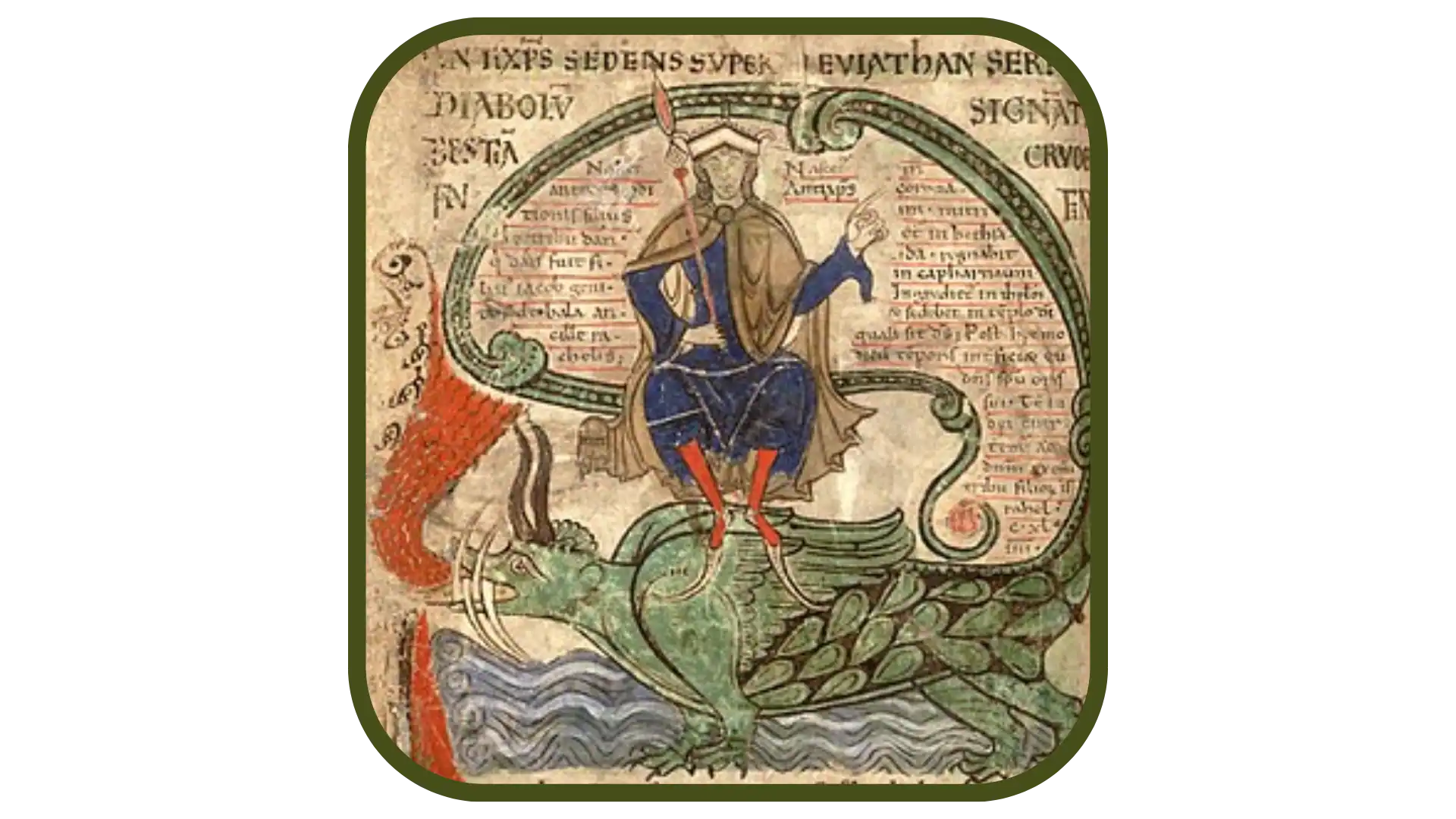
The single most cited artistic reference to pigache is Lambert’s Liber Floridus, an illuminated manuscript completed in the early twelfth century. In one of its most striking illustrations, the Antichrist is depicted wearing shoes with pointed toes extended into wildly exaggerated horns — forms so extreme that they border on the grotesque. This was not an accident of artistic style. Placing pigache on the feet of the Antichrist was a deliberate moral statement, connecting the fashionable shoe of the courtly world directly to the most threatening figure in Christian theology. The message was clear and intentional — this is the footwear of corruption and moral disorder.
This kind of symbolic use of pigache in religious art reflects the broader climate of hostility that the shoe generated among church figures and morally conservative writers. Manuscript illustrators working within monastic traditions had little sympathy for courtly fashion, and they used their art accordingly. By placing pigache on figures associated with sin, excess, or corruption, they participated in the same cultural argument being made from pulpits and in council chambers across Western Europe.
Beyond the Liber Floridus, pigache appear in church carvings, sculptural reliefs, and the marginal illustrations that medieval manuscript artists used to comment on the world around them. These marginal spaces were often where the most direct social commentary appeared — less formal than the main illustrations, more willing to be pointed and satirical. Pigache featured in these margins as a recognizable shorthand for a certain kind of worldly vanity, a symbol that readers of the time would have understood immediately.
What is particularly valuable about these artistic records is the way they document the exaggeration of the style over time. Early depictions tend to show relatively modest toe extensions, consistent with the two-inch projection that historical sources describe. Later illustrations, particularly those created as the style was declining and the poulaine was rising, show increasingly extreme versions — as though artists were amplifying the shoe’s most controversial features to make their moral point more forcefully. This artistic escalation mirrors the real-world trajectory of pointed toe fashion from the restrained pigache to the theatrical poulaine, and it suggests that manuscript artists were paying close attention to the fashion world even as they criticized it.
Pigache vs. Poulaine — Key Differences
To anyone unfamiliar with medieval fashion history, pigache and poulaine can easily appear to be the same thing. Both feature dramatically pointed toes. Both attracted fierce criticism from religious authorities. Both became cultural symbols of courtly excess in their respective eras. Yet treating them as interchangeable misses something important — these were two distinct styles, separated by geography, time, social context, and the sheer scale of their ambition.
The most immediately obvious difference is the length of the toe extension. Pigache points were bold by the standards of their time, projecting up to two inches beyond the foot and curving upward in that distinctive scorpion-tail shape. Poulaine took that basic concept and stretched it far beyond anything pigache ever attempted. Poulaine toe extensions could reach extraordinary lengths — sometimes so long that chains were attached from the toe tip to the knee simply to keep the shoe functional during movement. Pigache, by comparison, looks almost restrained.
The geographic origins also differ significantly. Pigache emerged from the courtly culture of Western Europe, with its most enthusiastic adoption centered in Norman England and France during the Romanesque period. Poulaine, as its name suggests, came from Poland — “poulaine” being a French term for Poland — and spread westward across Europe bringing with it a distinctly different cultural flavor. Where pigache was a homegrown Western European fashion, poulaine arrived as an import, carrying the prestige and novelty of something foreign.
| Feature | Pigache | Poulaine |
| Era | 11th — 12th century | 14th — 15th century |
| Origin | Western Europe — Normandy and France | Poland |
| Toe Length | Up to 2 inches | Extremely long — sometimes knee length |
| Toe Shape | Pointed and upturned curve | Pointed and straight or slightly curved |
| Stuffing | Sometimes used | Commonly used |
| Decoration | Small bell at toe tip | Varied — paint, embroidery |
| Church Reaction | Banned at multiple councils | Also condemned |
| Social Association | Courtly nobility — royal courts | Broader noble and merchant classes |
| Decline Reason | Black Death and poulaine rise | Changing fashion — broader toe styles |
| Successor Style | Poulaine | Broader rounded toe shoes |
The social meanings attached to each style also evolved differently. Pigache carried strong associations with a very specific courtly world — the royal courts of Norman England in particular — and with the moral anxieties of the Romanesque church. It was a shoe that provoked reaction partly because it was new and partly because of who was wearing it and what they represented. Poulaine, arriving in a later and differently structured society, became associated with a broader range of wealthy wearers including merchants and urban elites, not just the traditional nobility.
Perhaps the clearest way to understand the relationship between the two styles is to see poulaine as pigache’s successor — inspired by the same basic aesthetic instinct toward pointed toes but taken in a new direction, in a new era, with far less restraint. Pigache opened the door. Poulaine walked through it wearing shoes that scraped the ceiling.
Decline of Pigache Shoes
Nothing lasts forever in fashion, and pigache proved no exception. After more than a century of sustained popularity — remarkable given the sustained opposition it faced from church authorities, academic institutions, and moral commentators — the style began its gradual retreat from Western European fashion. The decline was not sudden. It unfolded across several decades, driven by a combination of external catastrophe and the irresistible pull of something newer and more extreme.
The Black Death altered European society in ways that touched every aspect of life, including fashion. The devastation it caused disrupted existing social structures, shifted economic patterns, and changed the cultural mood across the continent. The elaborate courtly culture that had sustained pigache fashion — with its competitive displays of wealth and its appetite for provocative style — was profoundly shaken. In the aftermath, fashion itself began moving in new directions, reflecting a changed world with different preoccupations.
Into this changed landscape came the poulaine, arriving from Poland with its dramatically elongated toe and its fresh associations. For those in noble and wealthy circles who still wanted pointed shoes — and many clearly did — poulaine offered everything pigache had provided but more so. The toe was longer, the statement was bolder, and the style carried the added appeal of novelty and foreign origin. Against this competition, pigache had little to offer that poulaine did not surpass.
The church bans that had accumulated against pigache over the preceding century had not succeeded in killing the style, but they had created a cultural environment in which pointed shoes carried a certain transgressive reputation. When poulaine arrived and attracted its own wave of criticism and prohibition, the dynamic simply transferred from one style to the next. Pigache did not disappear because it was defeated — it disappeared because it was superseded, absorbed into the longer history of pointed toe fashion that it had helped to begin.
By the time poulaine was firmly established as the dominant style, pigache had effectively vanished from the records of contemporary fashion commentary. It survived in manuscripts, in historical chronicles, and in the writing of critics who had documented its controversies. But as a living fashion worn by real people in real courts, it had run its course — leaving behind a fascinating historical record and a clear line of influence leading directly to the style that replaced it.
Pigache Shoes — Modern Relevance
A shoe style that disappeared from active fashion several centuries ago might seem like a purely academic subject, of interest only to historians and medieval specialists. Pigache, however, has maintained a quiet but genuine presence in modern culture through several different channels, each reflecting a different kind of engagement with medieval history and its material culture.
Museum collections represent the most direct form of modern engagement with pigache. Several European institutions with strong medieval holdings include examples of pointed toe footwear from the Romanesque period in their collections, allowing visitors to encounter the physical reality of these shoes rather than simply reading about them. The Victoria and Albert Museum in London, along with various French and German institutions with medieval collections, hold relevant artifacts that bring pigache out of the manuscript page and into three-dimensional reality. Seeing an actual surviving example — its leather still shaped around that distinctive pointed toe — makes the historical record suddenly concrete.
Historical reenactment communities have also kept pigache alive in a practical sense. Groups dedicated to the accurate recreation of medieval life regularly research and produce pigache based on historical sources, manuscript illustrations, and surviving artifacts. For these communities, the shoe is not merely decorative — it is part of a broader effort to understand how medieval people actually lived, moved, and presented themselves. Craftspeople specializing in historical footwear have developed considerable expertise in reproducing pigache using period-appropriate techniques and materials.
Academic interest in pigache has remained steady as well. The shoe sits at an intersection of several active areas of scholarly inquiry — medieval fashion history, the sociology of dress, the history of church authority over personal behavior, and the study of gender and social identity in the Romanesque period. Each of these fields finds something useful in pigache, which is why it continues to appear in academic publications, conference discussions, and university courses dealing with medieval material culture.
In broader popular culture, the pointed toe aesthetic that pigache helped establish has never entirely disappeared. Modern fashion periodically returns to dramatically pointed toe shoes, and while contemporary designers rarely cite medieval precedents directly, the visual lineage from pigache through poulaine to modern pointed footwear is a thread that fashion historians can trace with reasonable confidence. The shoe that scandalized the Synod of Westminster has, in its own quiet way, never quite gone out of style.
Discover Pigache Shoes
There is something genuinely compelling about a shoe that has survived centuries of historical scrutiny and still manages to feel relevant. Pigache shoes occupy a unique position in the story of Western footwear — not simply as a medieval curiosity but as a style that established design principles still visible in contemporary fashion. Discovering pigache means engaging with that history directly, whether through museum collections, academic study, historical reconstruction, or the simple pleasure of understanding where pointed toe shoes actually came from.
For the enthusiast approaching pigache for the first time, the most striking discovery is usually how modern the basic concept feels. A pointed toe, a carefully constructed upper, attention to the visual drama of the foot in motion — these are not foreign ideas to anyone familiar with contemporary shoe design. What pigache adds to these familiar elements is context. Each pair carries the weight of a specific historical moment, a specific social world, and a specific set of arguments about what clothing means and what it communicates to the people who see it.
The craftsmanship behind pigache deserves particular attention. Medieval shoemakers working in leather produced shoes that were structurally sophisticated for their time, with the pointed toe requiring careful pattern cutting and construction to achieve the desired shape without compromising the shoe’s ability to actually be worn. The addition of stuffing to maintain the upturned tip represented a practical engineering solution to an aesthetic challenge — evidence that the people making and wearing these shoes took the design seriously enough to solve the problems it created.
Modern reproductions of pigache, produced by craftspeople working within historical reenactment and living history communities, have demonstrated that these shoes are genuinely wearable. They are not merely display objects. Made correctly from appropriate materials using historically informed techniques, pigache function as real footwear — comfortable enough for extended wear, distinctive enough to stop conversation, and connected enough to their historical origins to carry genuine meaning for those who choose to wear them. Discovering pigache, in this sense, is discovering a living tradition rather than a dead one.
Exploring Comfort and Style
The conversation about comfort and style in footwear is often presented as a tension — as though a shoe must sacrifice one to achieve the other. Pigache challenges that assumption in an interesting way. At first glance, a shoe with a dramatically pointed and upturned toe might seem like the last word in impracticality. In reality, both the original medieval pigache and the modern interpretations inspired by its design demonstrate that visual boldness and genuine wearability are not mutually exclusive.
Pigache Shoes for Wide Feet
One of the more counterintuitive discoveries about pointed toe shoes is their relationship with wider feet. The pointed section of a pigache sits beyond the toes rather than around them — the toe box, where the foot actually sits, can be constructed with generous width while the shoe’s visual profile remains slim and elongated. Modern footwear makers working with pigache-inspired designs have used this structural insight to create shoes that offer genuine comfort for wider feet without abandoning the distinctive silhouette that makes the style recognizable. The drama lives in the extension. The comfort lives in the fit.
Eco-Friendly Materials
Medieval pigache were made from leather — the standard material of their era, sourced and worked according to the practices of the time. Contemporary makers approaching pigache-inspired footwear with modern values have expanded the material palette considerably. Vegetable-tanned leathers, recycled textiles, natural rubber soles, and responsibly sourced fabrics all find application in historically informed shoe design that takes environmental responsibility seriously. The aesthetic legacy of pigache can be honored without requiring the environmental compromises that conventional footwear manufacturing often involves. Thoughtful material choices are increasingly central to how serious shoemakers approach their work.
Orthopedic Support
Comfort in footwear is not simply a matter of cushioning — it involves the relationship between the shoe’s structure and the foot’s natural mechanics. Well-constructed pointed toe shoes, whether historically informed or purely contemporary in design, can incorporate orthopedic principles without visually compromising their distinctive profile. Supportive insoles, appropriate heel height, and careful attention to where the foot’s weight falls during movement all contribute to a shoe that can be worn through a full day without discomfort. The assumption that style and support cannot coexist is one that skilled shoemakers have been quietly disproving for some time.
The Best Sellers
Among those who produce historically informed footwear, certain pigache-inspired styles consistently generate the strongest interest. Designs that balance historical accuracy with contemporary wearability tend to attract the widest audience — buyers who want the visual drama of the pointed toe without sacrificing the practical requirements of modern life. Clean leather constructions in darker tones, faithful to the manuscript evidence for medieval pigache coloring, sit alongside more contemporary interpretations that adapt the pointed toe aesthetic to current materials and finishing techniques. Both ends of this spectrum find dedicated buyers among those who appreciate footwear with genuine historical roots.
Celebrity Endorsements
The pointed toe aesthetic that pigache helped establish has found consistent favor among those whose professional lives involve visual presentation and public attention. Performers, designers, and cultural figures across several decades have returned repeatedly to dramatically pointed footwear as a statement of confidence and distinctiveness. This ongoing affection for the pointed toe in high-profile fashion contexts reflects something that medieval courtiers understood instinctively — that an elongated toe changes the visual language of the entire body, creating a sense of elongation and intentionality that rounder toe shapes simply cannot replicate.
Luxury Collection
At the upper end of historically informed footwear, pigache-inspired designs have found a natural home in the luxury market. Bespoke shoemakers working with the finest available leathers, using hand construction techniques that echo the craft traditions of medieval cordwainers, produce pointed toe shoes that represent the absolute summit of the shoemaker’s art. These are not shoes purchased for convenience or casual wear. They are considered objects — investments in craft, history, and personal style that reward careful attention and improve with time and use. The luxury pigache-inspired shoe exists at the intersection of historical scholarship and contemporary craft excellence, a meeting point that produces results unlike anything available in mainstream footwear.
FAQ: Everything You Need to Know About Pigache Shoes
Key questions answered about the medieval pointed toe footwear of Western Europe
The toe extension could reach up to two inches beyond the wearer's actual foot and was sometimes stuffed with padding to maintain its elevated shape. A small decorative bell was occasionally attached at the tip. The style became closely associated with courtly nobility and attracted fierce criticism from church authorities, poets, and moral commentators throughout its period of popularity.
The term passed from French into Medieval Latin as "pigacia" and "pigatia," both referring to the same pointed footwear style. The connection between the boar's uneven hoofprint and the shoe's asymmetrical elongated shape made the word a fitting choice. In English, the term was borrowed directly from French and has retained its original spelling and pronunciation — "pee-GAHSH" — in academic and historical usage.
The most obvious difference is toe length. Pigache points extended up to two inches beyond the foot with an upturned curve. Poulaine took the concept far further, with extensions sometimes so long that chains were needed to keep the shoe functional. Poulaine also originated in Poland and spread westward, while pigache was a homegrown Western European style. The two are related by aesthetic lineage but are separate traditions with distinct histories and cultural contexts.
The style was closely associated with the court of William Rufus in England, where courtiers competed in elaborate displays of fashion. Courtier Robertus Cornardus became notorious for curling his shoe tips into extreme ram's horn shapes. While men were the primary wearers documented in historical sources, Guibert of Nogent connected the style to women as well. Ordinary working people did not wear pigache — the shoes were a symbol of wealth, status, and courtly identity.
St. Anselm included a ban on pigache at the Synod of Westminster, placing the shoe alongside concerns about slavery, clerical marriage, and simony. The Fourth Lateran Council extended the prohibition to Catholic clergy. Robert de Courson, acting as papal legate, banned faculty at the University of Paris from wearing them. Critics including Orderic Vitalis and William of Malmesbury linked the shoes to effeminate behavior and questioned the masculinity of those who wore them — making pigache one of the most politically charged fashion items of the medieval period.
Despite surviving church bans and sustained moral criticism for over a century, pigache could not withstand the combination of a changed social landscape following the Black Death and the appeal of the more dramatic poulaine. The newer style offered everything pigache had provided — pointed toes, courtly association, visual drama — but on a far grander scale. Pigache did not disappear through defeat but through being superseded by a style that eclipsed it entirely.
The pronunciation follows French phonetic rules, since that is the language from which the word originates. English speakers sometimes mispronounce it as "PIG-atch" or "pig-AYSH," neither of which is accepted in formal or academic contexts. A simple memory aid is to think of the word in two parts — "pee" followed by "GAHSH," rhyming with the English word "gash." Once learned, the pronunciation is straightforward and consistent across both English and French academic usage.
Beyond museums, pigache appear in illuminated manuscripts held in major European libraries and archives — Lambert's Liber Floridus being the most cited example. Historical reenactment communities also produce accurate reproductions of pigache based on manuscript illustrations and surviving artifacts, making the style accessible to those interested in medieval living history. Academic publications dealing with medieval fashion, church history, and material culture continue to reference and illustrate pigache regularly.
More Topics
Medieval Architecture: Dive into the rich history of Pigache’s medieval architecture, from its charming stone houses to its historic churches and fortifications.
Cultural Festivals: Explore the vibrant cultural scene of Pigache by attending local festivals celebrating music, dance, and traditional cuisine.
Local Cuisine and Gastronomy: Indulge your taste buds in Pigache’s culinary delights, from hearty mountain stews to delicate pastries made with local ingredients.
Nature Trails and Hiking: Embark on scenic nature trails and hiking routes around Pigache, offering breathtaking views of the Pyrenees landscape and abundant wildlife.
Artisanal Crafts: Discover the artistry of Pigache’s artisans, who create beautiful handmade crafts ranging from pottery and textiles to woodwork and jewelry.
Historic Legends and Folklore: Uncover the fascinating legends and folklore of Pigache, passed down through generations and intertwined with the region’s rich cultural heritage.
Local Wildlife and Conservation: Learn about the diverse flora and fauna of Pigache and efforts to conserve its natural habitats through eco-tourism and environmental initiatives.
Traditional Music and Dance: Immerse yourself in the traditional music and dance of Pigache, experiencing the rhythms and melodies that echo through its valleys and hills.
Wine and Vineyards: Explore Pigache’s burgeoning wine industry, with vineyards dotting the landscape and producing a variety of wines unique to the region.
Sustainable Tourism Initiatives: Discover how Pigache is embracing sustainable tourism practices, balancing the preservation of its cultural and natural heritage with responsible tourism development.