Table of Contents
Imran Khan(عمران خان)
Imran Ahmad Khan Niazi (عمران خان), born on October 5, 1952, in Lahore, Pakistan, is a prominent Pakistani politician and former cricketer. Known globally for leading Pakistan to its first-ever Cricket World Cup victory in 1992, Imran Khan transitioned into politics by founding the Pakistan Tehreek-e-Insaf (PTI) in 1996. He served as the 22nd Prime Minister (PM) of Pakistan from August 2018 to April 2022. His tenure was marked by economic reforms and social welfare initiatives. Though he stepped down as PTI chairman in 2023, Imran Khan remains a significant figure in Pakistan’s political landscape.
Imran Khan was born in Lahore and graduated from Keble College, Oxford University, UK. He started his international cricket career with a Test match against England in 1971 and ended it by winning the Cricket World Cup in 1992. This World Cup is Pakistan’s only victory to date. Imran Khan, one of the great all-rounders of cricket, was later inducted into the ICC Cricket Hall of Fame.
Imran Khan (عمران خان) entered politics in 1996 and formed his party PTI (Pakistan Tehreek-e-Insaf). In the 2002 general elections, he won the National Assembly seat from Mianwali. In the 2013 elections, PTI emerged as the second-largest party. The PTI won a majority in the 2018 general elections, and Imran Khan became Pakistan’s Prime Minister (PM), leading the country with a focus on anti-corruption and social justice reforms. His tenure as Pakistan Prime Minister (PM) Imran Khan was marked by efforts to stabilize the economy, reform governance, and establish a welfare state.
As Prime Minister (PM), Imran Khan tried to revive the country’s economy by obtaining loans from the IMF. He reduced the fiscal deficit and took various measures to stabilize the economy. His government launched projects like the Ehsaas program, the Plant for Pakistan campaign, and the Renewable Energy Scheme. However, the country faced economic difficulties during the coronavirus pandemic, which reduced Imran Khan’s popularity.
In 2022, Imran Khan claimed that the US had conspired to topple his government. In April 2022, he became the first Pakistani Prime Minister (PM) to be removed from office by a no-confidence motion. In October of the same year, the Election Commission disqualified him due to the Tosha Khana case. In November 2022, he was assassinated during a rally in Wazirabad, where he escaped unharmed.
On 9 May 2023, Imran Khan (عمران خان) was arrested on corruption charges, sparking nationwide protests by his supporters. On August 5, 2023, he was imprisoned for three years. However, the court suspended the sentence on August 29 and released Imran Khan on bail. Shortly after, he was arrested again for allegedly disclosing state secrets in another case. On January 30, 2024, a special court sentenced him to 10 years on this charge. On February 3, both he and his wife were sentenced to seven years for violating Islamic marriage laws. These convictions were later overturned by the Islamabad High Court and the Court of Appeal. Despite these developments, Imran Khan remains in jail on charges related to the 2023 riots.
Lahore, West Punjab, Pakistan
| Imran Khan | |
| Name | Imran Ahmad Khan Niazi |
| Urdu | عمران احمد خان نیازی |
| Nickname(s) | Kaptaan (Captain), # 804, Murshed |
| Date of Birth | 5 October 1952 |
| Birth Place | Lahore, West Punjab, Pakistan |
| Profession | Cricketer, Politician, Chancellor |
| Political Party | Pakistan Tehreek-e-Insaf (PTI) |
| Founded Pti | April 25, 1996 |
| Education | Keble College, Oxford (BA) |
| Spouses |
Reham Khan
Bushra Bibi
|
| Children | 2 (Sulaiman Isa and Kasim) |
| Residences | Bani Gala, Islamabad, Capital Territory |
| Medal Record | |
| ICC Cricket World Cup | |
| Winner | 1992 Australia and New Zealand |
| World Championship of Cricket | |
| Runner-up | 1985 Australia |
| ACC Asia Cup | |
| Runner-up | 1986 Sri Lanka |
| Austral-Asia Cup | |
| Winner | 1986 United Arab Emirates |
| Winner | 1990 United Arab Emirates |
| Read More | |
| Imran Khan (IK) Politics | |
Early life and family
Imran Ahmed Khan Niazi (عمران خان) was born on October 5, 1952 in Lahore. Although, according to some sources, his date of birth is also given as 25 November 1952, Khan says that this error is due to a wrong entry in his passport. He is the only son of civil engineer Ikramullah Khan Niazi and his wife Shaukat Khanum, and he has four sisters. His family was settled in the Mianwali region of North West Punjab for a long time. His ancestral family belongs to the Pashtun race and belongs to the Niazi tribe. One of his ancestors, Haibat Khan Niazi, was one of the most important generals of Sher Shah Suri in the 16th century and was also the governor of Punjab.
Khan’s maternal family has also produced several cricketers representing Pakistan, including his cousins Javed Barki and Majid Khan. On his mother’s side, Imran Khan is also descended from the Sufi warrior-poet and inventor of the Pashto alphabet, Pir Roshan, who hailed from Kani Guram in South Waziristan, Khyber Pakhtunkhwa. His mother’s family lived in the village of Basti Daneshmanda in the Jalandhar region of India for almost 600 years and moved to Lahore after Pakistan’s independence.
In his youth, Imran Khan was a quiet and shy boy. He grew up with his parents and sisters in a relatively wealthy and upper-middle-class environment and was given an excellent education. He received his primary education from Aitchison College and Cathedral School in Lahore. He then went to the Royal Grammar School in Worcester, England, where he excelled in cricket. In 1972, he entered Keble College, Oxford University, from which he graduated in 1975 with a degree in philosophy, politics, and economics. Paul Hayes, a keen cricketer, was instrumental in getting him into Keble College, especially when he was rejected by Cambridge University.
Personal Life
Imran Khan had many relationships in his youth. He was known at one time as a hedonistic bachelor and a playboy on the London nightclub circuit. The names of his multiple girlfriends have not been revealed, and the British newspaper “The Times” dubbed him the “mysterious blonde.” Her relationship list includes Zeenat Aman, Emma Sargent, Susie Murray-Phillipson, Sita White, Sarah Crowley, Stephanie Beecham, Goldie Hawn, Christian Baker, Susanna Constantine, Mary Helveen, Caroline Kellett, Lisa Campbell, Anastasia Cooke, Hannah Rothschild, and includes Lulu Blacker.
His first girlfriend, Emma Sargent, daughter of artist and British investor Sir Patrick Sargent, introduced him to socialites. They met for the first time in 1982, after which they visited Pakistan. She was also with him during the Pakistan cricket team’s tours. However, the relationship between the two ended in 1986. He then briefly connected with Susie Murray-Phillipson, whom he invited to Pakistan in 1982 and had dinner with.
In a book published in 2009, Christopher Sandford claimed that Imran Khan and former Prime Minister (PM) Benazir Bhutto had a close relationship during their time at Oxford University. He wrote that in 1975, Benazir Bhutto came close to Khan for the first time, and they had a relationship for about two months. However, Khan denied these claims saying that they were just friends.
An alleged daughter of Imran Khan, Tyrion Jade, has also been embroiled in controversy. She is the daughter of his ex-girlfriend, Sita White. Khan initially denied Tyrion’s paternity and offered to take a paternity test in Pakistan. In 1997, a California court declared Khan to be Tyrion’s father without a DNA test. After Sita White died in 2004, Imran Khan’s then-wife Jemima Khan was appointed Tyrion’s legal guardian.
Khan’s ex-wife Reham Khan claimed in her book that Imran Khan had told her he had four other children besides Tyrion White. Reham later clarified these claims herself, saying she could not say anything with certainty about their truth.
Imran Khan married Jemima Goldsmith on 16 May 1995 in a simple ceremony in Paris, conducted in Urdu. The couple has two sons, Sulaiman Isa and Qasim. However, on 22 June 2004, they divorced, with Jemima citing difficulties in adapting to life in Pakistan. Imran Khan sons, Sulaiman Isa and Qasim, primarily live with their mother but have maintained a close relationship with their father.
In January 2015, Imran Khan (عمران خان) married British Pakistani journalist Reham Khan in a private wedding ceremony. Reham Khan later stated in her autobiography that they married in October 2014. However, on 22 October 2015, the two parted ways.
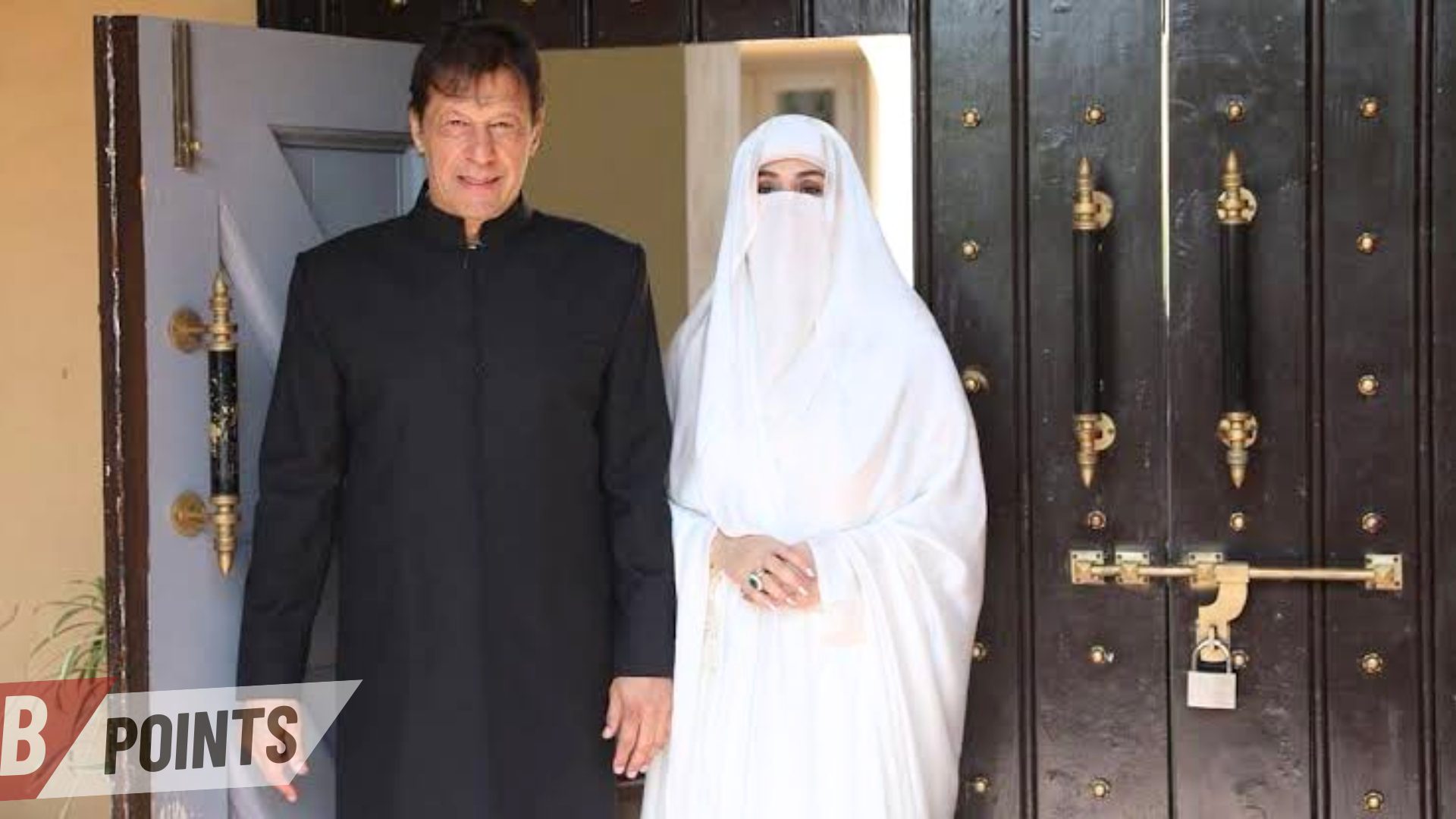
In 2018, Imran Khan married his spiritual mentor Bushra Bibi. The news of this marriage was initially considered rumours but was later confirmed by PTI. Imran Khan said that his life has been deeply connected with spirituality, and it is this spirituality that brought him close to Bushra Bibi. Later, PTI confirmed their marriage on 18 February 2018.
Imran Khan lives in his spacious farmhouse in the Bani Gala area of Islamabad. As of 2018, they also have five pet dogs that live on their property.
Cricket Career
Imran Khan (عمران خان) started his cricket career in Lahore at the age of 16. By the early 1970s, he played for Lahore A, Lahore B, Greens, and then the Lahore main team. From 1973 to 1975, he was part of the Oxford University Blues cricket team and played English county cricket for Worcestershire from 1971 to 1976. He also represented teams like Pakistan International Airlines and Dawood Industries during this time. From 1983 to 1988, he also played for Sussex, England’s county team.
Imran Khan, a legendary figure in Pakistan cricket, began his Test career in June 1971 against England at Edgbaston and played his first One-Day International (ODI) match against England in 1974. His return to Pakistan in 1976 solidified his position in the national team, where his remarkable performances in matches against New Zealand and Australia set him apart. Imran Khan’s influence on Pakistan cricket continued to grow, and he later joined Kerry Packer’s World Series Cricket, further enhancing his global cricketing reputation.
Imran Khan on Pakistan cricket has often emphasized the importance of nurturing young talent and maintaining discipline to achieve long-term success.
Imran Khan became one of the world’s best and fastest fast bowlers in the late 1970s. In the 1978 Perth Fast Bowling Competition, he came third with a speed of 139.7 mph. Khan was one of the founders of reverse swing bowling, which was later adopted successfully by bowlers like Wasim Akram and Waqar Younis.
Imran Khan worked hard to improve his bowling, which made him one of the most dangerous bowlers in the world during the 1980s. From 1980 to 1988, he took 236 Test wickets at an average of 17.77. His bowling strike rate and average were better than Richard Headley, Malcolm Marshall, Dennis Lillee, and other leading bowlers.
Playing against India in 1983, Imran Khan achieved an ICC Test bowling ranking of 922 points, one of the highest performances. He was also ranked high in the list of all-time best bowlers.
Khan achieved 3000 runs and 300 wickets in Test cricket in 75 Tests, second fastest behind Ian Botham. He also excelled with the bat, and while playing at number six in the batting order, he averaged 61.86, the second-highest average among batsmen in that position.

Imran Khan led Pakistan to victory in the 1992 Cricket World Cup, Pakistan’s only World Cup win to date. He played the last Test match of his career in 1992 against Sri Lanka and retired from cricket after the World Cup in the same year. Imran Khan amassed 3807 runs and 362 wickets in his illustrious career in 88 Test matches. In ODI cricket, he scored 3709 runs and 182 wickets in 175 matches, and his best ODI bowling was 6 for 14 runs.
Imran Khan’s cricket career is memorable not only for his achievements but also for establishing Pakistani cricket at the global level.
Captaincy
At the height of his career, Imran Khan took over the captaincy of the Pakistan cricket team from Javed Miandad in 1982. As captain, he led Pakistan in 48 Test matches, winning 14, losing 8, and drawing 26. In ODI cricket, he captained 139 matches, winning 77, losing 57, and drawing one match. In the second match of his captaincy, he led Pakistan to their first Test victory after 28 years against England at Lord’s. After becoming captain in 1982, Imran Khan’s bowling and batting prowess cemented his legacy. In 1981-82, he bowled the best Test of his career against Sri Lanka in Lahore, taking eight wickets for 58 runs. In the three-Test series against
England that year, he took 21 wickets and maintained a batting average of 56. At the end of 1982, Imran Khan performed brilliantly in the home series against India, taking 40 wickets in six Tests at an average of 13.95. By the end of that 1982–83 series, he had taken 88 wickets in 13 Test matches in a year. While playing in this series, he suffered a shin injury, which caused him to be away from cricket for over two years. He underwent experimental treatment funded by the Pakistani government, after which he made a full recovery by the end of 1984 and made a successful return to international cricket in the 1984–85 season. In 1987, Pakistan under Imran Khan won its first Test series in India and its first series in England. During the 1980s, his team also achieved three important draws against the West Indies. Imran Khan announced his retirement from cricket after the 1987 Cricket World Cup. However, he returned to captaincy in 1988 at the request of Pakistan President General Zia-ul-Haq.
After his return, Imran Khan-led Pakistan on another successful tour of the West Indies. For his best performance in the series, he was named Man of the Series. Under his leadership, Pakistan won the 1992 Cricket World Cup for the first time in history. Imran Khan held the team together despite a poor start and captained the winning side.
Imran Khan holds the record for most Test wickets, has the best bowling strike rate, and has the best bowling average as a captain. His bowling figures of 8/60 are the best in Test innings as captain. In addition, he also holds the world record for most five-wicket hauls in Test matches as a captain six times.
Imran Khan’s leadership took Pakistani cricket to new heights, and his captaincy will always be remembered in cricket history.
After Retirement From Cricket
Imran Khan admitted to ball tampering while playing domestic cricket in his early cricketing days after retiring. He said that during the matches, he would sometimes scratch the side of the ball and pick up the seam. However, he defended his practice and said that this method was common then, and spin bowlers also used it. He added that he never raised the ball’s seam above the normal level and, therefore, was not violating the rules and spirit of the game. According to him, in his 21-year cricket career, no umpire complained about his actions. “The umpire is the only judge of fair and unfair play on the cricket field,” he said. At one point, he admitted using a bottle top to give the ball more spin.
In 1996, Imran Khan successfully prosecuted former England captains Ian Botham and Alan Lamb over ball-tampering allegations against him. He was accused of calling the two cricketers “racist, uneducated and lacking in class”. Imran Khan protested that he was misquoted and defended himself after admitting to ball tampering in a county match. Imran Khan won the case, and the judge called it “a complete exercise in futility.”
After retirement, Imran Khan wrote reviews and articles on cricket for British and Asian newspapers, including his opinion on the Pakistan national team. His articles have appeared in Indian magazines “Outlook”, “The Guardian”, “The Independent”, and “The Daily Telegraph”. He also appeared as a cricket commentator on BBC Urdu and Star TV network from time to time. When the Indian cricket team toured Pakistan in 2004, Imran Khan was a commentator on TEN Sports’ special live show “Straight Drive” and was also a Sify columnist for the 2005 India-Pakistan Test series. He has provided commentary during every Cricket World Cup since 1992.
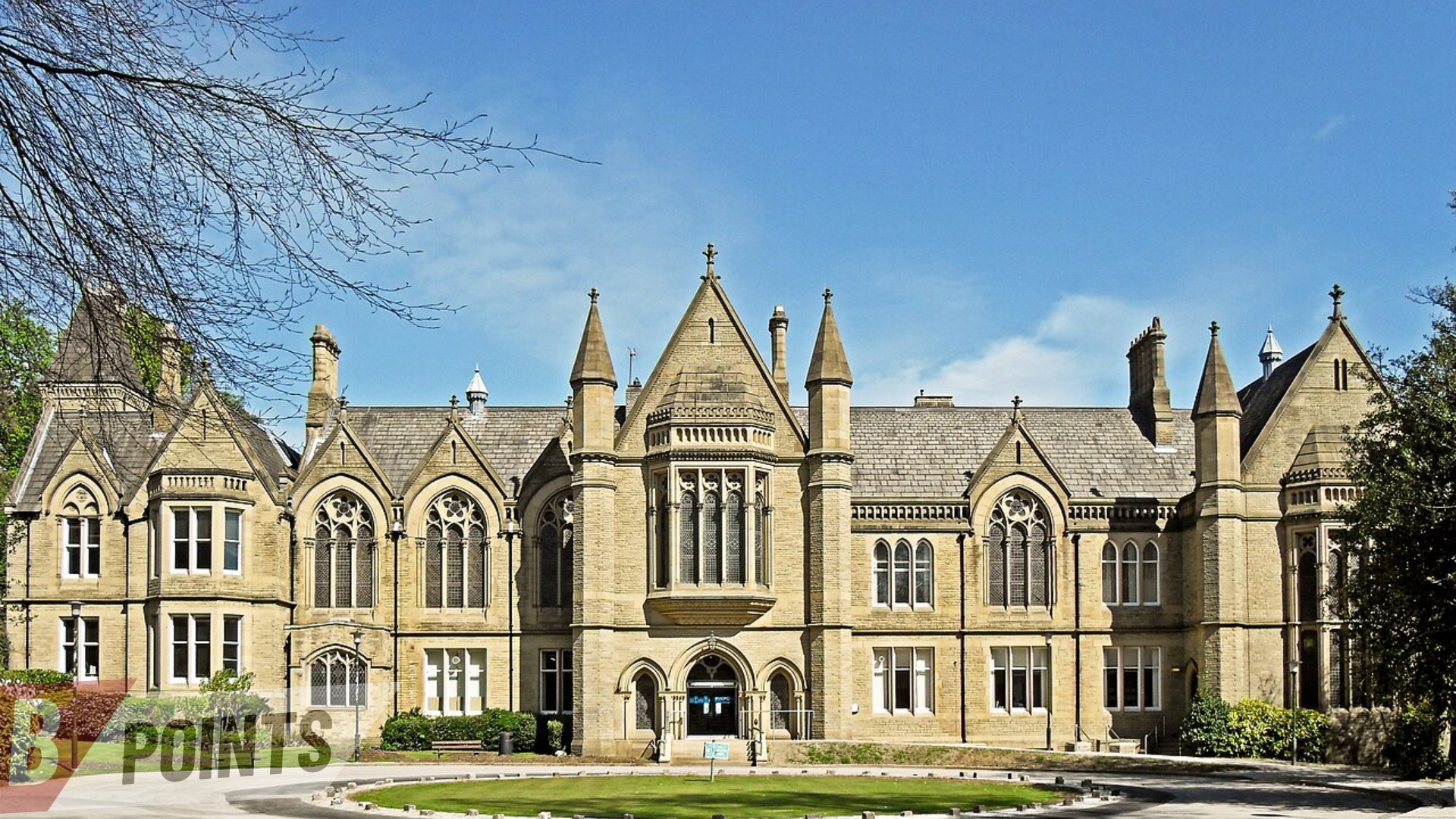
On 23 November 2005, Imran Khan was appointed Chancellor of the University of Bradford. However, his absence from every graduation ceremony since 2010 prompted the university’s union to move for his removal. Imran Khan announced his resignation on 30 November 2014 due to his growing political affiliations. The university’s vice-chancellor, Brian Canter, said Khan was “a wonderful role model for our students.”In February 2024, after the announcement of Oxford University Chancellor Chris Peyton’s retirement, Imran Khan was mentioned as a possible chancellor candidate. On 18 August 2024, his advisor, Zulfi Bukhari, confirmed that Khan had submitted nomination papers for the post.
Personal Information
| Name | Info |
| Height | 6 ft 2 in (188 cm) |
| Batting | Right-handed |
| Bowling | Right-arm fast |
| Role | All-rounder |
International information
| National Side | Pakistan (1971–1992) | Test debut (cap 88) | 3 June 1971 v England |
| Last Test | 2 January 1992 v Sri Lanka |
| ODI debut (cap 175) | 31 August 1974 v England |
| Last ODI | 25 March 1992 v England |
Chancellor of the University of Bradford
7 December 2005 – 8 December 2014
| Name | Info |
| Preceded | Betty Lockwood |
| Succeeded | Kate Swann |
Career Statistics
| Competition | Test | ODI | FC | LA |
| Matches | 88 | 175 | 382 | 425 |
| Runs scored | 3,807 | 3,709 | 17,771 | 10,100 |
| Batting average | 37.69 | 33.41 | 36.79 | 33.22 |
| 100s/50s | 6/18 | 1/19 | 30/93 | 5/66 |
| Top score | 136 | 102* | 170 | 114* |
| Balls bowled | 19,458 | 7,461 | 65,224 | 19,122 |
| Wickets | 362 | 182 | 1,287 | 507 |
| Bowling average | 22.81 | 26.61 | 22.32 | 22.31 |
| 5 wickets in innings | 23 | 1 | 70 | 6 |
| 10 wickets in match | 6 | 0 | 13 | 0 |
| Best bowling | 8/58 | 6/14 | 8/34 | 6/14 |
| Catches/stumpings | 28/– | 36/– | 117/– | 84/– |
Awards and Honours
Some Awards 1992 - 2024
| Year | Award | Category/Field | Country |
| 1992 | Pride of Performance | Sports (Cricket) | Pakistan |
| 1993 | Hilal-e-Imtiaz | Sports (Cricket) | Pakistan |
| 2004 | Lifetime Achievement Award | Sports (Cricket) | Asian Sports Awards |
| 2008 | Humanitarian Award | Philanthropy | Asian Jewel Awards, UK |
| 2009 | Gold Medal | Philanthropy | Royal College of Physicians, UK |
| 2012 | Top 100 Global Thinkers | Leadership | Foreign Policy Magazine |
| 2018 | International Sports Personality | Sports (Cricket) | Asian Sports Awards |
| 2019 | UN Humanitarian Award | Philanthropy | United Nations |
| 2020 | Muslim Man of the Year | Leadership | The Muslim 500 |
| 2022 | Best Prime Minister of Pakistan | Political Leadership | Pakistan |
| 2024 | Champion of the Earth | Environmental Leadership | United Nations |
Literary works
Imran Khan has published six nonfiction books, including his autobiography, which he co-authored with Patrick Murphy. He has also highlighted the modern history of Pakistan in his book “Main Aur Mera Pakistan,” published in Urdu and Hindi in 2014. The book details the Pakistan-India wars of 1965 and 1971, the impact of the 1979 Iranian Revolution, and the killing of Osama bin Laden in Abbottabad in 2011. Imran Khan has also written editorials on cricket and Pakistani politics in various leading Pakistani and British newspapers.
In 2008, it was revealed that Khan’s second book, “Indus Journey: A Personal View of Pakistan,” required heavy editing from the publisher. Publisher Jeremy Lewis said in a memoir that when he inquired of Khan about his writing, he handed over “a leather-bound notebook or diary containing some notes and autobiographical fragments.” The publisher said they soon realized the material needed more work. Imran Khan’s latest book, published in 2011, describes his transition from cricketer to politician and the challenges of his philanthropic work.
Khan has also published articles in various media outlets, including CNN, advocating for dialogue for peace and restoration of damaged natural ecosystems.
In June 2024, reports surfaced that Imran Khan was writing a book while in jail and had completed more than 300 pages of the book.
Bibliography
- Khan, Imran (1975). West and East. Macmillan Publishers. ISBN 978-0-333-90059-8.
- Khan, Imran; Murphy, Patrick (1983). Imran: Autobiography of Imran Khan. Pelham Books. ISBN 978-0-7207-1489-0.
- Khan, Imran (1989). Imran Khan’s Cricket Skills London: Golden Press in association with Hamlin. ISBN 978-0-600-56349-5.
- Khan, Imran (1991). A Journey to Sindh: A Personal View of Pakistan. Chatto and Winds. ISBN 978-0-7011-3527-0.
- Khan, Imran (1992). A round view. Mandarin. ISBN 978-0-7493-1499-6.
- Khan, Imran (1993). Warrior Race: A Journey through the Land of the Tribal Pathans. Chatto and Winds. ISBN 978-0-7011-3890-5.
- Khan, Imran (2011). Pakistan: A Personal History. Bantam Press. ISBN 978-0-593-06774-1.
- Khan, Imran (2014). Me and my Pakistan. Orient Paperback. ISBN 978-81-222056-8-8.
FAQ (Q & A)
1. Is Imran Khan in jail right now?
Imran Khan, the former Prime Minister of Pakistan and chairman of Pakistan Tehreek-e-Insaf (PTI) has been in and out of jail since his ouster from office in 2022. As of recent events, he was arrested multiple times on various charges, but his current status can change quickly due to ongoing legal and political dynamics in Pakistan. A real-time news source would be required for the latest update.
2. Where is Imran Khan now?
Due to his ongoing legal battles and political activities, Imran Khan’s location varies. He has been placed under house arrest or imprisoned at different times in 2023. One would need to refer to recent news reports to get his current location.
3. Who is Imran Khan?
Imran Khan is a prominent Pakistani politician and former cricketer who served as the 22nd Prime Minister of Pakistan from 2018 to 2022. He was the captain of Pakistan’s cricket team, which won the 1992 Cricket World Cup. After retiring from cricket, he entered politics and founded the Pakistan Tehreek-e-Insaf (PTI) political party.
4. Is Imran Khan in jail?
Imran Khan’s imprisonment status has fluctuated. He was arrested on several occasions in 2023 on charges ranging from corruption to inciting violence. Whether he is in jail at any specific moment depends on ongoing legal proceedings and court rulings.
5. Why is Imran Khan in jail?
Imran Khan has been arrested on multiple charges, including alleged corruption, misuse of authority, and incitement of violence. His supporters claim these charges are politically motivated, while the government states they are part of accountability and the rule of law.
6. Where is Imran Khan?
Imran Khan’s location has varied between jail, house arrest, or his residence in Zaman Park, Lahore. His exact whereabouts depend on the current legal and political situation in Pakistan.
7. How old is Imran Khan?
Imran Khan was born on October 5, 1952. As of 2024, he is 72 years old.
8. Is Imran Khan still in jail?
Imran Khan’s status changes frequently due to the dynamic political situation in Pakistan. At various times in 2023, he has been arrested, released, and re-arrested. To get an accurate answer, one must consult current news sources.
9. What happened to Imran Khan?
Imran Khan has faced numerous legal challenges since his removal from office in April 2022 through a no-confidence vote, including arrests and court cases. His political struggle against the current government and legal troubles have kept him in the spotlight.
10. How old was Imran Khan?
Imran Khan is 72 years old as of 2024.
11. How old is Imran Khan Pakistan?
This question also asks about his age. Imran Khan is 72 years old in 2024.
12. Is Imran Khan released?
Imran Khan has been released and re-arrested multiple times. Current news sources provide the latest information on his release status.
13. Is Imran Khan released today?
The status of Imran Khan’s release can vary daily due to ongoing legal proceedings. Therefore, it is necessary to check recent news for up-to-date information.
14. Is Imran Khan out now?
This depends on the current legal situation. He has been detained and released multiple times in 2023. One must check the latest news updates to find out if he is out now.
15. Is Imran Khan out of jail?
Imran Khan’s jail status has been a recurring issue throughout 2023. Depending on court decisions and political circumstances, he has been in and out of jail,.
16. What happens to Imran Khan?
Imran Khan’s political future is uncertain. He faces legal challenges and political opposition, and the outcome of his trials and the political climate in Pakistan will determine it.
17. Why was Imran Khan arrested?
Imran Khan has been arrested on charges ranging from alleged corruption and misuse of power to incitement of violence. His supporters claim these arrests are politically motivated.
18. What degree does Imran Khan have?
Imran Khan obtained a degree in Philosophy, Politics, and Economics (PPE) from the University of Oxford in 1975.
19. What was Imran Khan’s bowling style?
Imran Khan was a right-arm fast bowler known for his pace, swing, and ability to reverse swing the ball, making him one of the greatest all-rounders in cricket history.
20. Who is the chairman of the PTI?
Imran Khan is the chairman of Pakistan Tehreek-e-Insaf (PTI), the political party he founded in 1996.
21. Who is the no. 1 prime minister of Pakistan?
The “no. 1 prime minister” could be interpreted in different ways. Liaquat Ali Khan was Pakistan’s first Prime Minister. Opinions vary based on political views if the question refers to the best or most influential Prime Minister.
22. Why did Imran Khan retire?
Imran Khan retired from cricket in 1992 after leading Pakistan to its first and only Cricket World Cup victory. He retired to focus on philanthropy and later entered politics.
23. How fast was Imran Khan?
Imran Khan was a fast bowler with speeds often exceeding 140 km/h (87 mph). His ability to bowl fast and reverse swing the ball made him one of the most feared bowlers of his time.
24. Was Imran Khan a good cricketer?
Imran Khan is regarded as one of the greatest cricketers of all time. He was an exceptional all-rounder and an effective captain, and he led Pakistan to victory in the 1992 Cricket World Cup.
25. How old is Pakistan in 2024?
Pakistan was founded on August 14, 1947. As of 2024, Pakistan is 77 years old.
26. Who is who in Pakistan in 2024?
Pakistan’s “who is who” includes vital political figures, military leaders, and other influential personalities. Names and positions can change, so refer to a current directory or government resource for the latest list.
27. What is the salary of the PM of Pakistan?
The salary of the Prime Minister of Pakistan can vary over time due to changes in government policies and economic conditions. According to recent reports, it is relatively modest compared to other countries, with additional allowances and benefits.