Table of Contents
Imran Khan(عمران خان)
As UNICEF’s special representative during the 1990s, Imran Khan promoted child health and immunization programs through sports. He has worked prominently in the health sector in Bangladesh, Pakistan, Sri Lanka, and Thailand. During his stay in London, he was also associated with the cricket charity Lord’s Taverners. Khan focused his attention mainly on social services and philanthropy.
Imran Khan’s philanthropy and philanthropic works have played an important role in improving the health, education, and energy sectors in Pakistan. These actions highlight his services to humanity not only in Pakistan but also at the global level.
After the 2018 general elections, Khan announced that he would try to rebuild Pakistan based on Muhammad Ali Jinnah’s ideology. During his administration, he resolved the balance-of-payments crisis by obtaining a bailout from the IMF and cutting defence spending to reduce the current account deficit. His policies also resulted in some degree of economic development. He took measures to increase tax collection and promote investment. Pakistan’s energy policy under the leadership of Imran Khan also included efforts to transition to renewable energy.
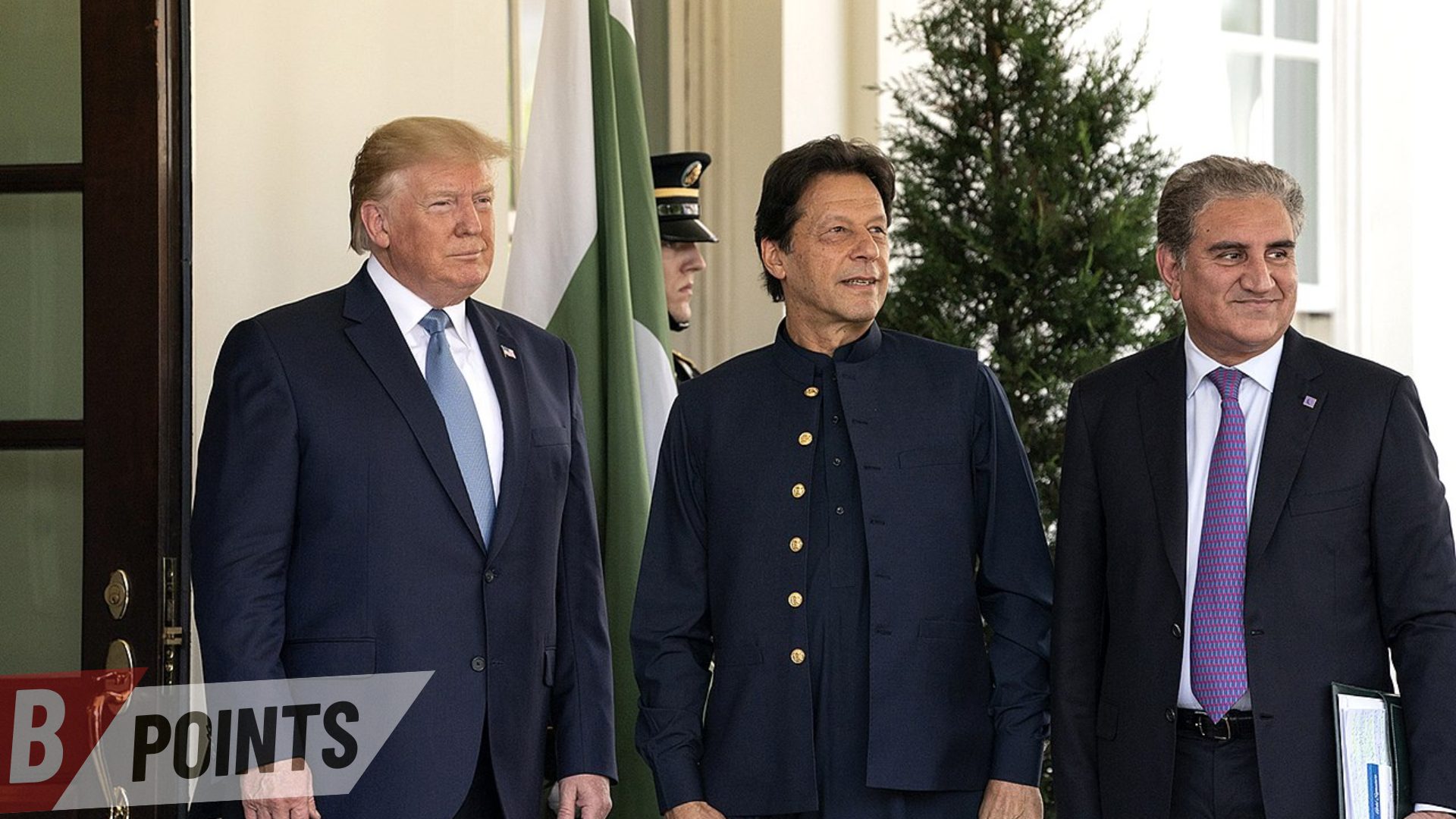
Relations with India, China, Russia, and the United States were important in Imran Khan’s foreign policy. They have faced border skirmishes with India and strengthened ties with China and Russia, while relations with the United States have remained relatively frosty. In an interview in 2010, he said that he hated India in his childhood because of the great bloodshed in Lahore after the 1947 riots. But when he visited India, he found love and friendship there, after which his views changed. He proposed secret talks between the two countries as he believed certain vested interests could thwart efforts to resolve them. He rejected a military solution to the Kashmir conflict and ruled out the possibility of a fourth war.
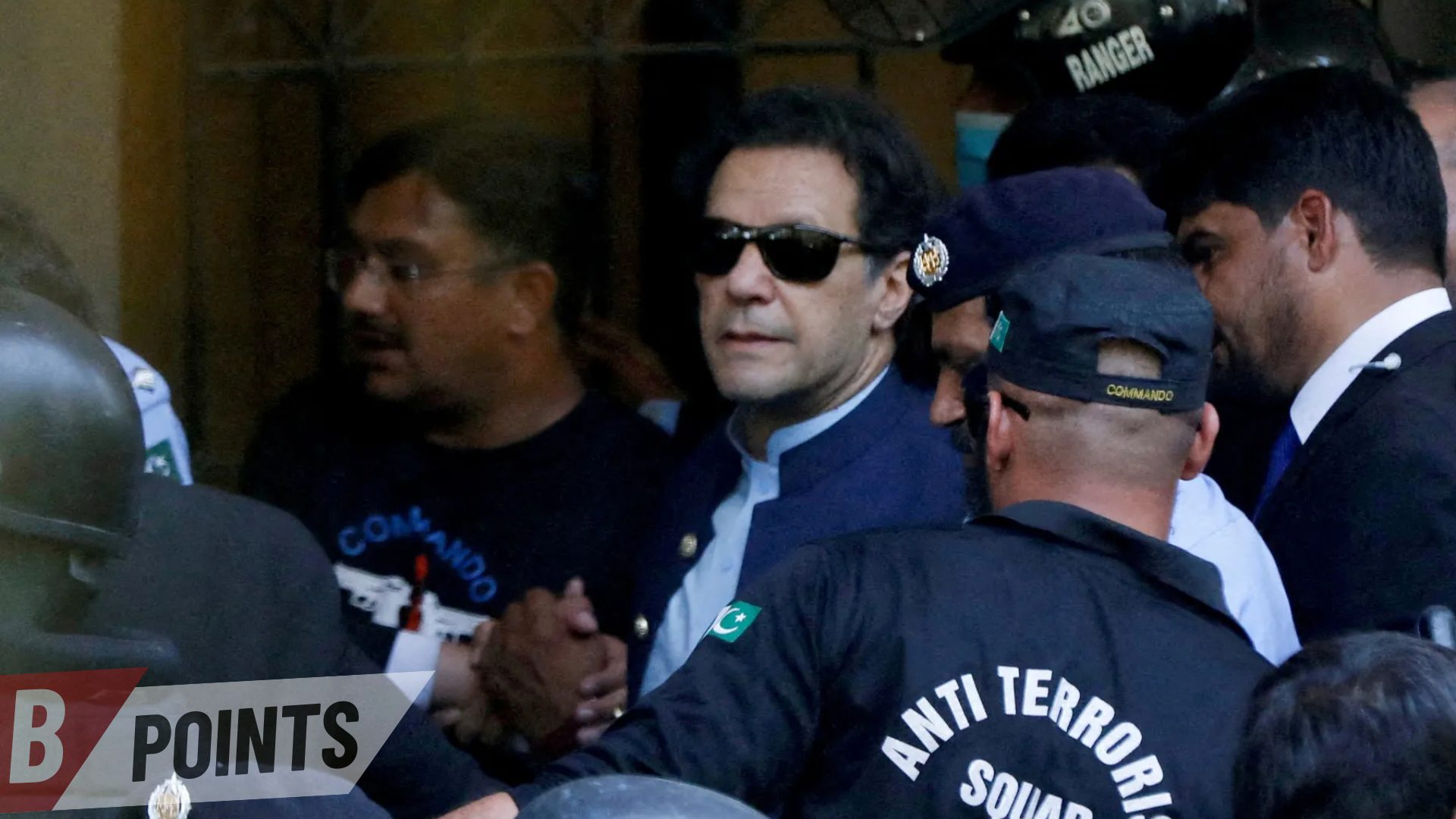
On 10 April 2022, Imran Khan became the first Prime Minister (PM) of Pakistan to be removed from office by a no-confidence motion in Parliament. On 22 August 2022, he was charged by Pakistani police under anti-terrorism laws after he criticized the police and judiciary for allegedly detaining and allegedly torturing his close associate.
Lahore, West Punjab, Pakistan
| 22nd Prime Minister of Pakistan | |
| In office | |
| 18 August 2018 – 10 April 2022 | |
| President | |
| Preceded | Nasirul Mulk (caretaker) |
| Succeeded | Shehbaz Sharif |
| Chairman of the Pakistan Tehreek-e-Insaf | |
| 25 April 1996 – 2 December 2023 | |
| Vice Chairman | Shah Mahmood Qureshi |
| Preceded | Position established |
| Succeeded | Gohar Ali Khan |
| Read More | |
| Imran Ahmed Khan Niazi (Imran Khan) | |
Philanthropy
As UNICEF’s special representative during the 1990s, Imran Khan promoted child health and immunization programs through sports. He has worked prominently in the health sector in Bangladesh, Pakistan, Sri Lanka, and Thailand. During his stay in London, he was also associated with the cricket charity Lord’s Taverners. Khan focused his attention mainly on social services and philanthropy.
In 1991, Imran Khan founded the Shaukat Khanum Memorial Trust in his mother’s name. Under this trust, he established Pakistan’s first and only cancer hospital, for which he collected more than $25 million in donations and funds worldwide. This hospital still provides advanced treatment to cancer patients and is considered one of the best cancer hospitals in Pakistan.
On 27 April 2008, Khan established a technical college named Namal College in Mianwali district. The college was built under the Mianwali Development Trust (MDT) and was recognized as an associate college of the University of Bradford in December 2005. Nimal College is important in imparting higher education and technical training.
Imran Khan Foundation is another charity organization that aims to help needy people across Pakistan. This foundation has worked especially for the relief and rehabilitation of flood victims in Pakistan. In partnership with the Buksh Foundation, the Imran Khan Foundation launched the “Lighting a Million Lives” project. Under this campaign, solar-powered charging stations were set up in the off-grid villages of Dera Ghazi Khan, Mianwali, and Dera Ismail Khan, and villagers were provided with solar lanterns that could be charged regularly at these stations.
Imran Khan’s philanthropy and philanthropic works have played an important role in improving the health, education, and energy sectors in Pakistan. These actions highlight his services to humanity not only in Pakistan but also at the global level.
Political Ideology & Domestic Policies
Imran Khan is generally described as a Pakistani nationalist and a populist leader. His political views were strongly influenced by thinkers such as the poet-philosopher Muhammad Iqbal, the Iranian writer and sociologist Ali Shariati, and the British diplomat Charles Lee Guy Eaton. He made Islamic values a part of his political platform in the 1990s. In addition, his policies included liberal economics, the elimination of economic irregularities, and the promise of a welfare state. Khan envisioned cutting bureaucracy, establishing a clean government, enforcing anti-corruption laws, establishing an independent judiciary, reforming the police system, and a democratic and anti-militant Pakistan.
After the 2018 general elections, Khan announced that he would try to rebuild Pakistan based on Muhammad Ali Jinnah’s ideology. During his administration, he resolved the balance-of-payments crisis by obtaining a bailout from the IMF and cutting defence spending to reduce the current account deficit. His policies also resulted in some degree of economic development. He took measures to increase tax collection and promote investment. Pakistan’s energy policy under the leadership of Imran Khan also included efforts to transition to renewable energy.
Khan’s government launched the social safety net and the “Ihsaas Program” to alleviate poverty and expanded the country’s protected areas under the “Plant for Pakistan” initiative. He also faced the coronavirus epidemic in the country, which caused the economy to suffer and increased inflation, which threatened Khan’s political position.
Imran Khan’s government faced political problems due to its failure to revive the economy and rising inflation. Although he made promises to eradicate corruption, the perception of corruption also increased during his tenure. He was also accused of retaliating against political opponents and restricting freedom of expression.
On 10 April 2022, Imran Khan became the first Prime Minister (PM) of Pakistan to be removed from office by a no-confidence motion in Parliament. On 22 August 2022, he was charged by Pakistani police under anti-terrorism laws after he criticized the police and judiciary for allegedly detaining and allegedly torturing his close associate.
Foreign Relations
Relations with India, China, Russia, and the United States were important in Imran Khan’s foreign policy. They have faced border skirmishes with India and strengthened ties with China and Russia, while relations with the United States have remained relatively frosty. In an interview in 2010, he said that he hated India in his childhood because of the great bloodshed in Lahore after the 1947 riots. But when he visited India, he found love and friendship there, after which his views changed. He proposed secret talks between the two countries as he believed certain vested interests could thwart efforts to resolve them. He rejected a military solution to the Kashmir conflict and ruled out the possibility of a fourth war.
Imran Khan also supported an apology to the Bangladeshi people for the events in Bangladesh in 1971, calling the 1971 operation a “mistake.” He opposed the war crimes trials in Bangladesh and spoke out in favour of the perpetrators. In August 2012, the Pakistani Taliban threatened Khan for marching to the Afghan border to protest US drone strikes because he described himself as a “liberal”. The Taliban later offered Khan security support for the rally because of his opposition to drone strikes.
Imran Khan’s perceived sympathy towards the Taliban and criticism of the US-led war on terror earned him the nickname “Taliban Khan.” He supported negotiations with the Taliban and the withdrawal of Pakistani troops from the Federally Administered Tribal Areas (FATA). He also opposed US drone strikes and was in favour of disengaging Pakistan from the US-led war on terror. Imran Khan opposed almost all military operations, including the siege of Lal Masjid.
In 2014, when the Pakistani Taliban declared an armed struggle against the Ismailis and Kalash people, Imran Khan called “forced conversion un-Islamic” and also condemned incidents of forced conversion of Hindu girls in Sindh. Following the Taliban’s takeover of Kabul in 2021, Khan congratulated the Taliban on their victory in the war and appealed to the international community to support his government. He also said that his government is negotiating a peace deal with the Pakistani Taliban with the help of the Afghan Taliban.
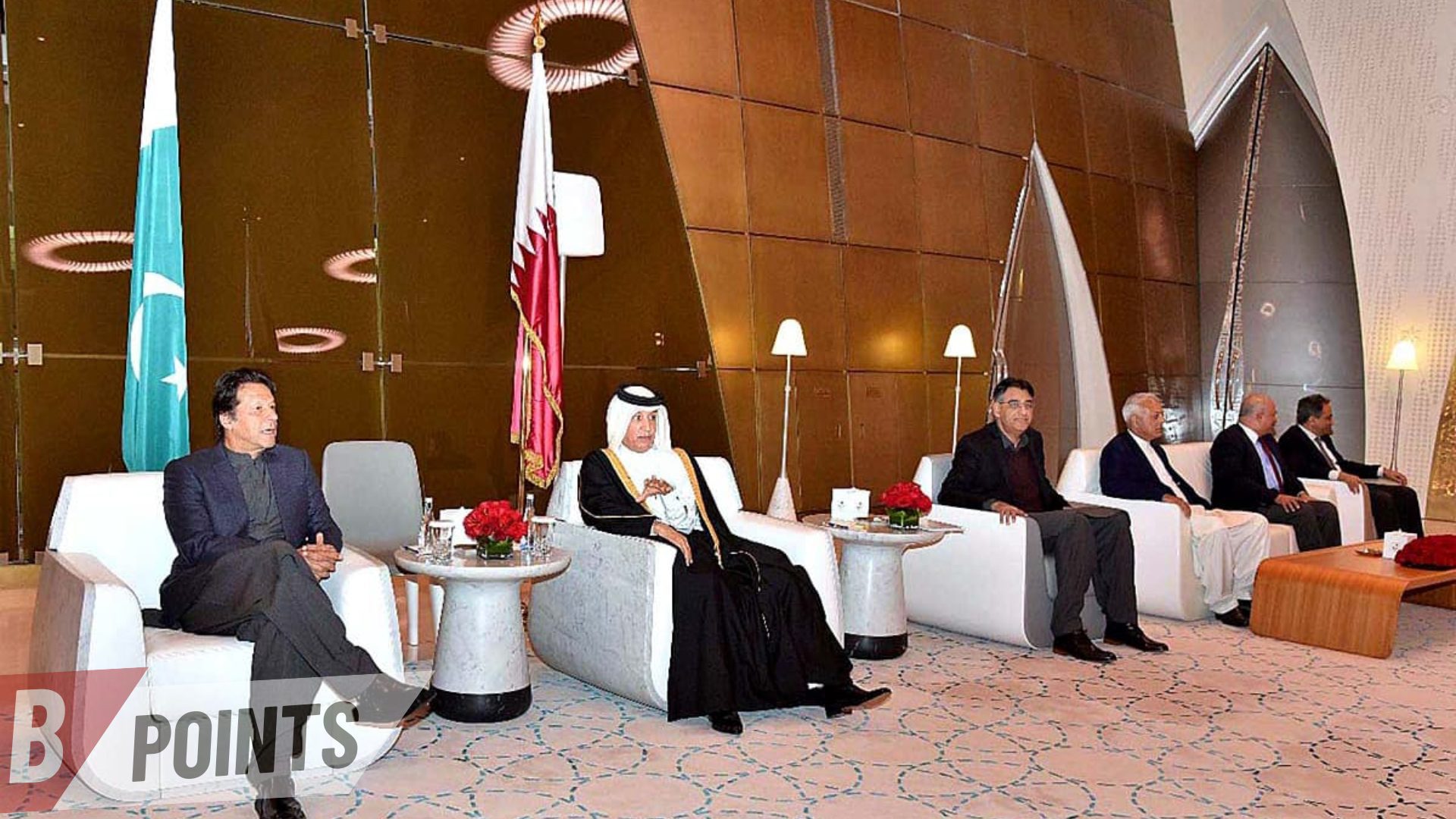
On 8 January 2016, Imran Khan visited the embassies of Iran and Saudi Arabia to understand the conflict between the two countries that arose after the execution of Nimr al-Nimr in Saudi Arabia. He urged the government of Pakistan to play a positive role in resolving the conflict between the two countries. After Parliament passed a unanimous resolution in April 2015 to keep Pakistan out of the war in Yemen, Imran Khan claimed that his party was responsible for “many important provisions” of the resolution. In July 2018, the Saudi Arabia-based Islamic Development Bank activated a $4.5 billion oil financing facility for Pakistan.
Imran Khan’s support for Pakistan’s blasphemy laws changed relations with the West. In 2021, he called on Muslim countries to pressure Western governments to criminalize insulting the Islamic prophet Muhammad. He urged Muslims to boycott products from countries that do not punish “insulting” the Prophet of Islam. Blasphemy is a sensitive issue in Pakistan, and violence has been witnessed on various occasions over this issue. French President Emmanuel Macron defended the right to republish sketches of the Prophet of Islam, which a large number of Pakistanis considered blasphemous.
Early Political Career
Imran Khan was offered political office several times during his cricket career. In 1987, President Zia-ul-Haq offered him to join the Pakistan Muslim League (PML), which he politely declined. Similarly, Nawaz Sharif also invited him to join his party. In 1993, Khan was appointed as Tourism Ambassador in Moeenuddin Ahmad Qureshi’s caretaker government, where he served for three months until the government was dissolved. In 1994, Khan joined Jamiat-e-Pasban, a breakaway faction of Jamaat-e-Islami of Hamid Gul and Muhammad Ali Durrani. On 25 April 1996, Chairman PTI Imran Khan founded his political party, Pakistan Tehreek-e-Insaf (PTI). In the 1997 general elections, Imran Khan contested for the National Assembly seats from NA-53 Mianwali and NA-94 Lahore but was defeated in both constituencies.
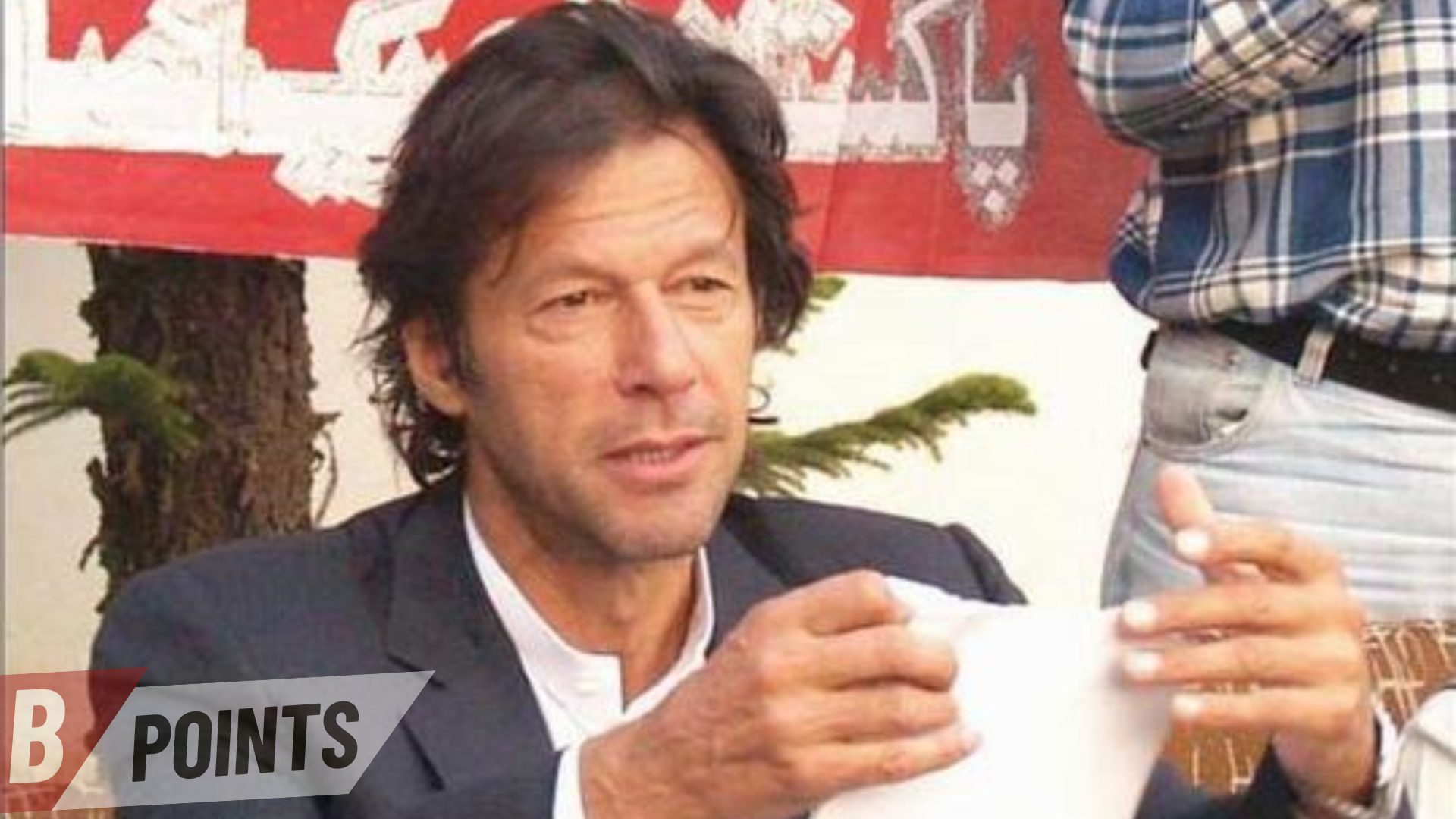
Imran Khan supported General Pervez Musharraf’s military coup in 1999, thinking that Musharraf would end corruption. According to him, Musharraf offered him the Prime Minister (PM)ship in 2002, but Khan turned him down. Khan contested the October 2002 general elections and was elected from Mianwali. He supported General Musharraf in the 2002 referendum and later became part of the Kashmir Committee and Public Accounts Committee.
On May 6, 2005, Imran Khan was cited by The New Yorker as a key figure in bringing the Muslim world’s attention to Newsweek’s report on the alleged desecration of the Quran at Guantanamo Bay. In June 2007, he faced stiff opposition in Parliament and political circles.
On 2 October 2007, as part of the All Parties Democratic Movement, Imran Khan resigned along with 85 other members when General Musharraf announced that he would contest the presidential election without relinquishing his post as army chief. On 3 November 2007, he was detained when Musharraf imposed a state of emergency. Imran Khan escaped and participated in a student demonstration at Punjab University on 14 November, where he was arrested and sent to Dera Ghazi Khan Jail. Imran Khan in jail spent a few days before he was released.
On 30 October 2011, Imran Khan addressed a large rally in Lahore, challenging the government’s policies and calling his movement a “tsunami.” A successful rally was also held in Karachi on 25 December 2011. After these rallies, Imran Khan emerged as an important figure in Pakistani politics and came to be known as a powerful political candidate. According to an International Republican Institute survey, Imran Khan’s party, PTI, topped the list of popular figures at the national and provincial levels.
On 6 October 2012, Imran Khan went to South Waziristan from Islamabad with a large convoy to counter US drone strikes. On 23 March 2013, he introduced the Naya Pakistan Resolution at the launch of his election campaign. The Observer on 29 April described the PTI as the main opposition party to the PML-N. Between 2011 and 2013, there was intense political tension between Imran Khan and Nawaz Sharif, especially when Imran Khan addressed a huge rally at the Minar-e-Pakistan in Lahore.
2013 Election Campaign
On 21 April 2013, Imran Khan launched his final public relations campaign for the 2013 general elections in Lahore, where he addressed thousands of supporters on Mall Road. He announced that he would withdraw Pakistan from the US-led war against terrorism and restore peace in the Pashtun tribal areas. Addressing rallies in various cities of Khyber Pakhtunkhwa and other parts of the country, Khan said that PTI will introduce a uniform education system, providing equal opportunities to rich and poor children. He also held rallies in various cities of South Punjab and concluded his campaign there.
Khan concluded his election campaign by addressing supporters in Islamabad via video link while lying in a hospital bed in Lahore. In The Herald’s last pre-election survey, 24.98 per cent of voters nationally indicated their intention to vote for the PTI, trailing former Prime Minister (PM) Nawaz Sharif’s PML-N by a narrow margin.
On May 7, just four days before the elections, Imran Khan was seriously injured after falling from a forklift on the side of a stage during a rally and was rushed to Shaukat Khanu—hospital in Lahore. The 2013 general elections were held across the country on 11 May. These elections resulted in a clear majority for the PML-N. Imran Khan’s party, PTI, emerged as the second largest party in terms of popular vote nationally, especially in Karachi, which saw an increase in its support. The PTI won 30 directly elected parliamentary seats and became the third largest party in the National Assembly after the Pakistan People’s Party, while the PPP came second.
In Opposition
The Pakistan Tehreek-e-Insaf (PTI), under the leadership of Imran Khan, became the opposition party in Punjab and Sindh, and Khan became the parliamentary leader of his party. On 31 July 2013, Khan was issued a contempt of court notice for allegedly criticizing the higher judiciary and using the word “disgraceful” for the judiciary. However, the notice was dropped after Khan submitted an explanation to the Supreme Court that he had criticized the actions of the lower judiciary returning officers during the May 2013 general elections.
In Khyber Pakhtunkhwa, the PTI won the 2013 general elections and formed the provincial government. The PTI-led Khyber Pakhtunkhwa government presented a balanced and tax-free budget for the fiscal year 2013-14. Meanwhile, Imran Khan faced criticism for supporting Sami-ul-Haq and funding his madrassa Darul Uloom Haqqania.
Imran Khan believed that the terrorist activities of the Pakistani Taliban could be stopped through negotiations, and he even offered the Taliban to open an office in Khyber Pakhtunkhwa. He accused the US of sabotaging the peace process after Taliban leader Hakimullah Mehsud was killed in a drone strike in 2013. On 13 November 2013, Khan ordered provincial Chief Minister Pervez Khattak to sack Qaumi Watan Party ministers who were allegedly involved in corruption. Khan ordered Khattak to end his alliance with the QWP. Also, PTI minister Yousuf Ayub Khan was sacked from the post on fake degree charges.
On 11 May 2014, a year after the elections in 2014, Khan alleged that the 2013 general elections were rigged in favour of the ruling PML-N. On 14 August 2014, Imran Khan led a rally from Lahore to Islamabad, demanding the resignation of Prime Minister (PM) Nawaz Sharif and an investigation into election rigging. During the rally, PML-N supporters pelted stones at Khan’s convoy in Gujranwala, but no casualties were reported. On 15 August, protesters led by Khan entered Islamabad’s red zone and later attempted to storm the official residence of Prime Minister (PM) Nawaz Sharif, sparking violence. As a result of this violence, three people were killed, and more than 595 were injured.
By September 2014, Imran Khan allied with Canadian-Pakistani cleric Muhammad Tahir-ul-Qadri to mobilize his supporters for regime change. Khan reached an agreement with the government to set up a three-member high-powered judicial commission that would issue its report. If the commission proves rigging across the country, the Prime Minister (PM) will dissolve the national and provincial assemblies, and new elections will be held. While in the opposition, Imran Khan also met with other political leaders, including Syed Mustafa Kamal.
General Election 2018
In the 2018 general elections, Imran Khan won NA-35 (Bannu), NA-53 (Islamabad-II), NA-95 (Mianwali-I), NA-131 (Lahore-IX), and NA-243 (Karachi East- II) participated from. According to preliminary official results, Khan won in several constituencies, but his opposition, particularly the PML-N, alleged widespread rigging and administrative malpractice. On 27 July, the Election Commission announced that Imran Khan’s PTI won 110 of the 269 seats, giving them a majority in the National Assembly. At the end of the counting of votes on 28 July, the ECP confirmed that the PTI had won 116 of the 270 seats. Imran Khan became the first person in Pakistan’s electoral history to contest and win all five constituencies, thus surpassing Zulfiqar Ali Bhutto, who contested from four constituencies in 1970 and won three.
In May 2018, Khan’s party announced a 100-day agenda for a possible future government that included wide-ranging reforms in various sectors. These included the commitment to create a new province in southern Punjab, merge the Federally Administered Tribal Areas into Khyber Pakhtunkhwa, improve the law and order situation in Karachi, and develop relations with Baloch political leaders.
The reaction after the 2018 election
Several opposition parties alleged “massive rigging” in favour of Imran Khan amid allegations of military interference in the general election. Nawaz Sharif and his party, PML-N, claimed that the election was rigged in PTI’s favour through a conspiracy by the judiciary and the military. The ECP rejected the allegations, and the PML-N later accepted Imran Khan’s victory, despite having ‘reservations’. After the election, Michael Gahler, Chief Observer of the EU Election Observation Mission, said that the overall situation of the general election was satisfactory.

Victory Speech
During his victory speech, Imran Khan outlined the policy for his next government. He said that his aim was to make Pakistan a welfare state based on the principles of the first Islamic state of Medina. He made the eradication of poverty and the welfare of the common people the top priority of his government. He also promised to investigate allegations of rigging and said he would treat all political opponents equally and be equal in the eyes of the law. Khan promised a simple and frugal government and announced that the Prime Minister’s (PM) House would be converted into an educational institution while the Governor’s Houses would be opened for public use. On foreign policy, he praised China and hoped for better relations with Afghanistan, the United States, and India. He also talked about having balanced relations with Saudi Arabia and Iran.
Nominations and Appointments
On 6 August 2018, PTI officially nominated Imran Khan as the Prime Minister (PM). In his nomination speech, Khan said he would devote one hour every week to public accountability and answer questions from the public. After the election, Khan made various important appointments. Asad Umar was named Finance Minister, Imran Ismail as Sindh Governor, Mehmood Khan as Khyber Pakhtunkhwa Chief Minister, Chaudhry Sarwar as Punjab Governor, Asad Qaiser as National Assembly Speaker, and Shah Farman as Khyber Pakhtunkhwa Governor.
In Balochistan, the PTI supported the Balochistan Awami Party, which nominated Jam Kamal Khan as Chief Minister and former Chief Minister Abdul Quddus Bizenjo as Speaker. Pakistan Muslim League (Q) leader and former Deputy Prime Minister (PM) of Pakistan, Pervaiz Elahi, was nominated for the post of Punjab Assembly Speaker. Abdul Razak Dawood was appointed Advisor to the Prime Minister (PM) on Economic Affairs, Qasim Khan Suri as Deputy Speaker of the National Assembly, and Mushtaq Ahmad Ghani and Mehmood Jan as Speaker and Deputy Speaker of the Khyber Pakhtunkhwa Assembly, respectively. Dost Muhammad Mazari was nominated as Deputy Speaker Punjab Provincial Assembly, while Sardar Usman Buzdar was nominated as Chief Minister of Punjab. Explaining the selection of Buzdar, Khan said that he belongs to a backward area of Punjab, so he can better understand the province’s problems. Some sources indicated that Buzdar was nominated temporarily so that it would be easy to replace him later on with the possible appointment of Shah Mehmood Qureshi.
Prime Minister (PM) (2018-2022)
Imran Khan became the 22nd Prime Minister (PM) of Pakistan on 17 August 2018. This achievement followed the victory of the Pakistan Tehreek-e-Insaf (PTI) in the 2018 general elections, with anti-corruption and populism central to their campaign. On August 18, 2018, he was sworn in as the Prime Minister (PM) in a ceremony held at the President’s House in Islamabad. His cabinet consisted of 16 ministers and 5 advisers, and he held the portfolio of the Home Ministry. In his inaugural speech, Imran Khan emphasized that he would work to transform Pakistan into a welfare state based on the principles of the first Islamic state of Medina.
Soon after assuming office, Imran Khan presented a 100-day plan to reform the country rapidly. He made important changes in the bureaucracy and the army and made several important appointments. Khan’s cabinet also included ministers from former President Pervez Musharraf’s tenure and former members of the Pakistan People’s Party. His government faced fiscal challenges, leading to a bailout package from the IMF and implementing austerity measures. However, by 2020, Pakistan’s balance of payments had improved, the fiscal deficit had narrowed, and tax collections had reached record levels.
On the foreign policy front, Imran Khan sought to make Pakistan an internationally respected and influential country. He emphasized the struggle against Islamophobia and the unity of Muslim countries in the OIC. Khan and Foreign Minister Shah Mehmood Qureshi maintained good relations with Saudi Arabia but also tried to mediate the proxy dispute between Saudi Arabia and Iran. He took a strong stand on the Kashmir issue and refused to negotiate with India until the restoration of autonomy in Indian-administered Kashmir. He also criticized the US drone campaign and supported recognizing the Taliban-led Afghan government.
At the domestic level, Imran Khan’s government launched an anti-corruption campaign to improve the security situation. He also worked on the restoration of minority religious places. In the field of social policy, his government reformed the education and health sectors and launched large-scale welfare programs, the health facility program being the most prominent. He passed the “Zainab Alert Bill” for women’s rights and protection. His environmental initiatives included the “Billion Tree Tsunami” project, which aimed to increase widespread reforestation and renewable energy nationwide.
Imran Khan has faced criticism for some of his policies, comments, and behaviour, but he has also been praised for his efforts to deal with the COVID-19 pandemic, launch massive welfare programs, and revive the economy. In March 2022, a no-confidence motion was brought against him, resulting in many of his allies leaving the government. Imran Khan then became the first Pakistani Prime Minister (PM) to be removed from office by a no-confidence motion. His three-and-a-half-year rule saw significant reforms in several areas, including support for welfare domestic policies, a proactive foreign policy on global issues, and major anti-corruption initiatives.
After the Premiership
2022 Toshakhana Reference Case
Members of the Pakistan Democratic Movement (PDM) brought the Tosha Khana case against Imran Khan in August 2022, alleging that Khan had not disclosed details of gifts received from the Tosha Khana in his annual report to the Election Commission of Pakistan (ECP). why did The ECP initiate an inquiry into the matter and, in its judgment dated 21 October 2022, disqualify Imran Khan from holding public office under Article 63(1)(p) of the Constitution of Pakistan? Khan was accused of misrepresenting his assets and liabilities. After the verdict, Khan announced “Azadi March II” to protest.
Attempted Murder
On 3 November 2022, Imran Khan was shot dead during a rally in Wazirabad, Punjab. An assailant attacked him, injuring his leg and foot. He was then leading a march towards Islamabad to demand early elections. One PTI supporter was killed, and eight others were injured in the firing. The attacker was arrested on the spot and claimed that he wanted to target Khan to “spread hatred and mislead people”.
2023 Arrests
First Arrest and Release
As a result of the arrest warrant issued by the District and Sessions Court of Islamabad on 14 March 2023, the Islamabad and Lahore police launched an operation to arrest Imran Khan. On 9 May 2023, Imran Khan was arrested by paramilitary forces at the Islamabad High Court for his alleged role in the Al-Qadri Trust case. Following his arrest, protests erupted across the country as PTI supporters took to the streets, leading to widespread riots on 9 May. The situation intensified due to the high-profile nature of the case and the significant public support for Imran Khan, marking a pivotal moment in Pakistan’s political landscape. However, the Supreme Court later declared his arrest illegal. After the events of 9 May, several PTI members left Khan and formed the Istehkam-e-Pakistan Party under the leadership of Jahangir Tareen.
Guarantee
On 12 May, the Islamabad High Court declared Imran Khan’s arrest illegal and ordered his immediate release. The court also granted him secured bail, which ensured that he could not be re-arrested for at least two weeks, emphasizing the demand to release Imran Khan.
Punishment and Second Arrest
On 5 August 2023, Imran Khan was arrested for the second time and sentenced to three years in prison. He was accused of abusing official powers by illegally selling gifts he received during foreign tours during his Prime Minister (PM)ship from 2018 to 2022. On 29 August 2023, an appeals court suspended his corruption conviction and prison sentence, but the Islamabad High Court ordered him to remain in jail in connection with the “cypher case”. The Federal Investigation Agency (FIA) registered a case against Khan for allegedly sharing information on the cipher and revealing state secrets.
On 30 January 2024, Khan was convicted in the “convicted case” and sentenced to 10 years in prison. Khan appealed to voters for the 2024 general elections to “revenge every injustice with your vote.” Khan’s lawyers have called the decision illegal and intend to file an appeal. Many observers believed that the sentence was part of a campaign to oust Khan and the PTI from the political scene ahead of the 2024 elections. PTI deputy chief Shah Mehmood Qureshi was also sentenced to 10 years in prison in this case. On 3 February, Imran Khan and his wife, Bushra Bibi, were sentenced to an additional seven years in prison, which was suspended on 1 April.
Detention Conditions and Ongoing Cases
Since his arrest, Imran Khan has been incarcerated in Rawalpindi’s Adiala Jail, where his trial also took place. According to a PTI official, they were allowed to vote through postal ballot for the 2024 general elections. On 3 June 2024, the Islamabad High Court overturned Imran Khan’s conviction in the “cypher case”, but he remained in jail for violating marriage laws. On 13 July, Imran Khan’s conviction in the Bushra Bibi marriage case was also overturned on appeal. Imran Khan has also been arrested on charges related to the 2023 riots. Since the 2022 no-confidence vote, Imran Khan has been involved in more than 150 court cases.
Wealth / Networth
In 2003, Imran Khan owned a house in Zaman Park, Lahore, worth about 20 crore rupees (about US$29 million). He was also an investor and had invested 40 million rupees (about US$140,000) in various businesses. Khan owned 39 kanals (5 acres) of agricultural land in the Talhar area of Islamabad and 530 kanals (66 acres) in Khanewal. In addition, he was also a shareholder in 363 kanals (44 acres) of agricultural land, which he inherited. Imran Khan paid Rs 10.19 million (about US$35,000) to buy two apartments on Shahrah Dastur in Islamabad.
In 2017, his other assets included furniture worth 0.6 million rupees (about US$2,100) and livestock worth 0.2 million rupees (about US$690). At that time, no vehicle was registered in his name.
In 2017, Imran Khan also owned a 300-kanal mansion in Bani Gala, Islamabad, worth about 750 million rupees (about US$2.6 million). In his statement, he revealed this mansion as a gift to the Election Commission of Pakistan. The mansion is situated within a gate and is accessible via a private driveway.
According to documents released by the Federal Board of Revenue (FBR) in 2019, Imran Khan paid a total of Rs 4 million (about US$71,000) in taxes over 37 years. According to the FBR, they were exempted from paying taxes for some years during this period. On 3 January 2022, the FBR released its 2019 tax directory for parliamentarians, revealing that Imran Khan paid 9.8 million rupees (approximately US$33,942) in taxes.
Imran Khan’s net worth is estimated to reach Rs 315.95 million in 2023. In the financial year that ended June 30, 2023, he paid Rs 15.59 million in income tax.
Public Image
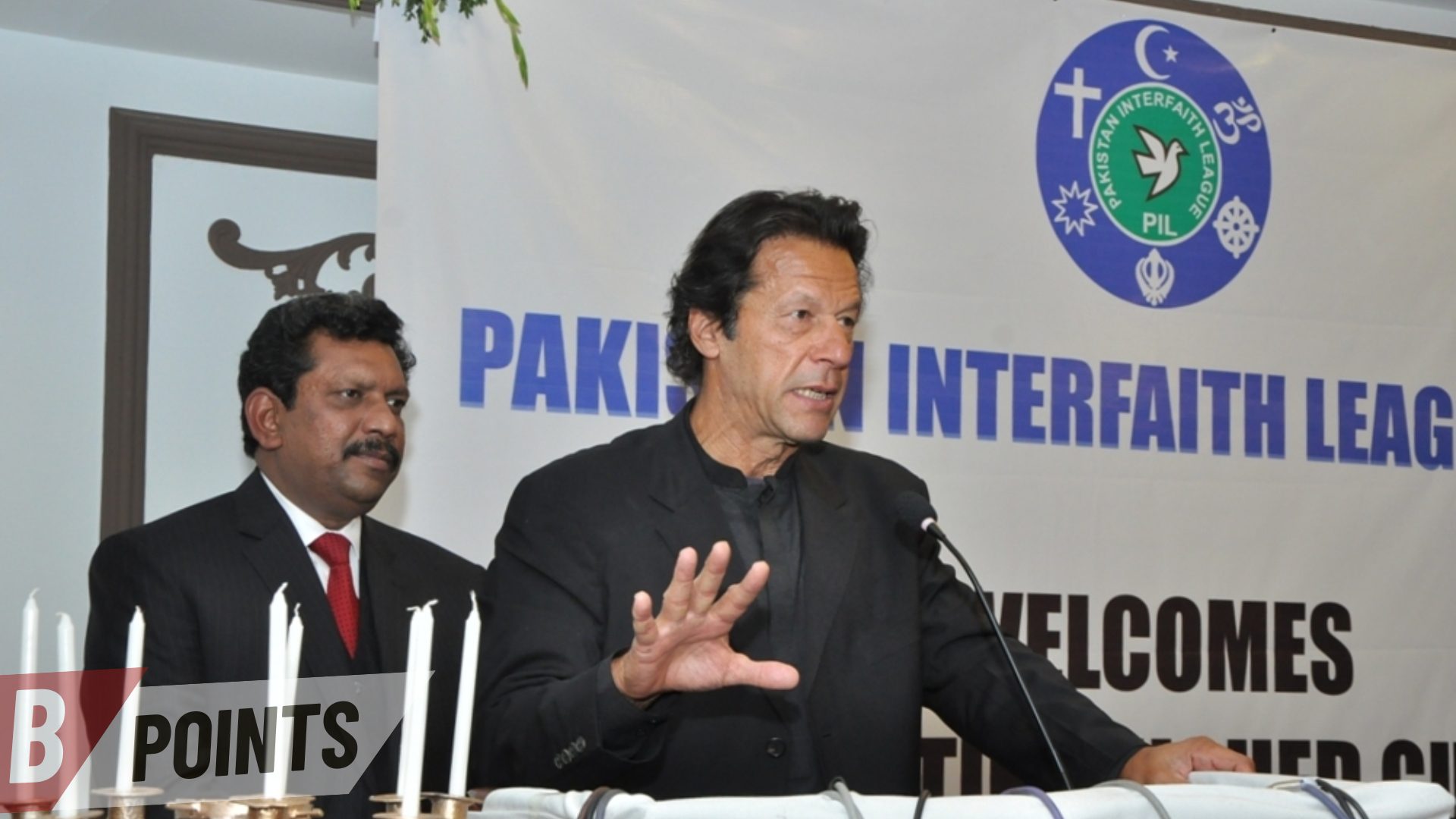
After the 2013 elections, Mohammad Hanif wrote in The Guardian that Imran Khan’s support is mainly among the educated middle class. Still, Pakistan’s main problem is the country’s lack of educated middle-class citizens. Pankaj Mishra, writing for The New York Times in 2012, described Khan as “a serious figure” grappling with his and Pakistan’s conflicting identities. He said that Imran Khan’s closeness to the people and his attacks on the rich, English-speaking class are often the subject of jokes in the living rooms of Lahore and Karachi. His critics give him nicknames like “Im the Dim” and “Taliban Khan.” Mishra added, “Like all populist politicians, Khan tries to offer something to everyone.
But there are differences among his constituencies, especially socially liberal, upper-middle-class Pakistanis and Pakistan’s tribals.” Among the conservative people of the region, there seems to be irreconcilability.” Critics sometimes called him “Fitna Khan” and sometimes “Zini Khan”.
On 18 March 2012, Salman Rushdie criticized Khan after Imran Khan refused to attend an India Today conference due to Rushdie’s participation. Khan said that Rushdie’s writings have hurt Muslims all over the world. In response, Rushdie described Khan as “a dictator in waiting.” 2011 Richard Leiby wrote for The Washington Post that Imran Khan is often portrayed as a pro-democracy liberal. Still, he is also known for his soft approach to conservative Islamic parties. Ayesha Siddiqa, writing for the Express Tribune in September 2014, said that while one can sympathize with Imran Khan’s right to change the political tone, it is important for him to know that if he becomes the Prime Minister (PM) of this country, corruption How do you put the genie back in the bottle?
Imran Khan was a popular sex symbol in the 1970s, 1980s, and 1990s. He was known as a socialite in English high society and a “playboy” among the British press and paparazzi due to his “non-stop parties” in London nightclubs. However, he claimed That he hated English pubs and never drank alcohol. British heiress Sita White, daughter of Gordon White, became the mother of her daughter Tyrian Jade White. An American court declared Imran Khan the father of Tyrion for failing to appear, but Khan asked for the case to be opened in Pakistani courts. Later, in 2007, the Election Commission of Pakistan ruled in favour of Imran Khan and overruled the US court’s decision.
In 2005, Declan Walsh in The Guardian described Imran Khan as a “miserable politician” and said his views and affiliations had constantly changed since entering politics. Khan has also been accused of hypocrisy and opportunism, particularly over his “playboy-turned-puritan” version of his life. Najam Sethi said, “The story of Imran Khan is about going back on what he said before, and that’s why people are not impressed by him.” Fatima Bhutto has also criticized Khan for showing closeness “not to the military but to the dictatorship”.
Although he has been criticized, his approval rating has remained relatively strong for an incumbent in Pakistani politics since becoming Prime Minister (PM). According to a survey, Imran Khan was approved by 51 per cent, while 46 per cent opposed him. Other polls put his approval at 57 percent. A recent study by Gallup Pakistan in March 2023 showed a 61 percent increase in approval ratings for Imran Khan.
In Popular Culture
During his cricket days, Imran Khan was a celebrity in several advertisements and television campaigns. These included Pepsi Pakistan, Brooke Bond, Thums Up (with Sunil Gavaskar), and the Indian soap brand Cinthol. At that time, Bollywood legends like Vinod Khanna endorsed the same product. A sign of Khan’s popularity in India was that wherever he went, he was greeted by crowds. He was also offered the role of a cricketer in the Bollywood thriller Awwal Number (1990). Still, he declined, citing a lack of acting skills, and the role was eventually given to Aditya Pancholi.
In 2010, a Pakistani production house produced a biographical film based on Imran Khan’s life, Kaptaan: The Making of a Legend. The movie “Kaptaan” title reflects his captaincy of the Pakistan cricket team and their victory in the 1992 Cricket World Cup. It depicts various stages of his life, such as his struggles in cricket, being labeled a “playboy,” his mother’s death, and his dedication to building Pakistan’s first cancer hospital. Efforts. In addition, it highlights his role as the first Chancellor of Bradford University and in building Namal University.
Canadian rock band Nickelback released a music video for their politically-themed single, “Edge of a Revolution.” The video also features a short clip of a PTI rally. The clip features posters and party red and green flags of Imran Khan, Pakistan’s most popular opposition leader at the time.
Thoughts on Pashtuns and Afghans
In his virtual address to the 76th session of the United Nations General Assembly on 24 September 2021, Imran Khan said: “The people of Pakistan’s semi-autonomous tribal belt – where no Pakistani army has been present since independence – sympathize with the Afghan Taliban.” held, not because of their religious ideology, but because of Pashtun nationalism.” His statement sparked outrage among many Pashtuns, who demanded an apology from Khan. He made similar comments on 11 October, leading to the following day in Peshawar by the left-wing Mazdoor Kisan Party (MKP), Awami National Party (ANP), and Pashtun Tahafuz Movement (PTM) to condemn Imran Khan that they are trying to link Pashtuns with terrorists.
At an extraordinary meeting of Foreign Ministers of the Organization of Islamic Cooperation (OIC) to discuss the humanitarian situation in Afghanistan on December 19, 2021, in Islamabad, Imran Khan said that not allowing girls to study is part of Afghan culture. It is, and the world should respect it. His statement was heavily criticized by several circles in Afghanistan and Pakistan, including former Afghan President Hamid Karzai and Nobel laureate Malala Yousafzai. Malala said: “I almost lost my life fighting against the Taliban’s ban on girls’ education.”
Poltical Career Statistics
Political Career
| Event | Date | Details |
| Founding of Pakistan Tehreek-e-Insaf (PTI) | 25 April 1996 | Imran Khan founded PTI to bring change in Pakistan’s political landscape, emphasizing anti-corruption and justice. |
| First Election Contested | 1997 General Election | PTI contested its first election but failed to win any seats. |
| First Seat Won | 2002 General Election | Imran Khan won his first seat in NA-71 Mianwali-I, entering the National Assembly. |
| 2013 General Election | 11 May 2013 | PTI emerged as the second-largest party. Imran Khan won NA-56 Rawalpindi-VII but lost in NA-122 Lahore-V. |
| 2018 General Election | 25 July 2018 | PTI won the majority, with Imran Khan becoming the 22nd Prime Minister of Pakistan. He contested in multiple constituencies, including NA-95 Mianwali-I. |
| Prime Minister of Pakistan | 18 August 2018 – 10 April 2022 | Imran Khan served as Pakistan’s Prime Minister, implementing various reforms in education, health, and foreign policy. |
| Vote of No-Confidence | 10 April 2022 | Imran Khan was ousted as Prime Minister after losing a no-confidence vote in the National Assembly. |
| Toshakhana Case | 2022-2023 | Imran Khan faced allegations related to receiving gifts during his time as Prime Minister and was involved in legal proceedings. |
| 2023 Elections Campaign | 2023 | Imran Khan’s PTI continued to campaign for future elections, focusing on corruption and governance reforms. |
Member of the National Assembly
| Position | In Office | Preceded by | Succeeded by | Constituency | Majority |
| Member of the National Assembly | 13 August 2018 – 21 October 2022 | Obaidullah Shadikhel | N/A | NA-95 Mianwali-I | 113,523 (44.89%) |
| Member of the National Assembly | 19 June 2013 – 31 May 2018 | Hanif Abbasi | Sheikh Rashid Shafique | NA-56 Rawalpindi-VII | 13,268 (8.28%) |
| Member of the National Assembly | 10 October 2002 – 3 November 2007 | Constituency established | Nawabzada Malik Amad Khan | NA-71 Mianwali-I | 6,204 (4.49%) |
Awards and Honours
Some Awards 1992 - 2024
| Year | Award | Category/Field | Country |
| 1992 | Pride of Performance | Sports (Cricket) | Pakistan |
| 1993 | Hilal-e-Imtiaz | Sports (Cricket) | Pakistan |
| 2004 | Lifetime Achievement Award | Sports (Cricket) | Asian Sports Awards |
| 2008 | Humanitarian Award | Philanthropy | Asian Jewel Awards, UK |
| 2009 | Gold Medal | Philanthropy | Royal College of Physicians, UK |
| 2012 | Top 100 Global Thinkers | Leadership | Foreign Policy Magazine |
| 2018 | International Sports Personality | Sports (Cricket) | Asian Sports Awards |
| 2019 | UN Humanitarian Award | Philanthropy | United Nations |
| 2020 | Muslim Man of the Year | Leadership | The Muslim 500 |
| 2022 | Best Prime Minister of Pakistan | Political Leadership | Pakistan |
| 2024 | Champion of the Earth | Environmental Leadership | United Nations |
Literary works
Imran Khan has published six nonfiction books, including his autobiography, which he co-authored with Patrick Murphy. He has also highlighted the modern history of Pakistan in his book “Main Aur Mera Pakistan,” published in Urdu and Hindi in 2014. The book details the Pakistan-India wars of 1965 and 1971, the impact of the 1979 Iranian Revolution, and the killing of Osama bin Laden in Abbottabad in 2011. Imran Khan has also written editorials on cricket and Pakistani politics in various leading Pakistani and British newspapers.
In 2008, it was revealed that Khan’s second book, “Indus Journey: A Personal View of Pakistan,” required heavy editing from the publisher. Publisher Jeremy Lewis said in a memoir that when he inquired of Khan about his writing, he handed over “a leather-bound notebook or diary containing some notes and autobiographical fragments.” The publisher said they soon realized the material needed more work. Imran Khan’s latest book, published in 2011, describes his transition from cricketer to politician and the challenges of his philanthropic work.
Khan has also published articles in various media outlets, including CNN, advocating for dialogue for peace and restoration of damaged natural ecosystems.
In June 2024, reports surfaced that Imran Khan was writing a book while in jail and had completed more than 300 pages of the book.
Bibliography
- Khan, Imran (1975). West and East. Macmillan Publishers. ISBN 978-0-333-90059-8.
- Khan, Imran; Murphy, Patrick (1983). Imran: Autobiography of Imran Khan. Pelham Books. ISBN 978-0-7207-1489-0.
- Khan, Imran (1989). Imran Khan’s Cricket Skills London: Golden Press in association with Hamlin. ISBN 978-0-600-56349-5.
- Khan, Imran (1991). A Journey to Sindh: A Personal View of Pakistan. Chatto and Winds. ISBN 978-0-7011-3527-0.
- Khan, Imran (1992). A round view. Mandarin. ISBN 978-0-7493-1499-6.
- Khan, Imran (1993). Warrior Race: A Journey through the Land of the Tribal Pathans. Chatto and Winds. ISBN 978-0-7011-3890-5.
- Khan, Imran (2011). Pakistan: A Personal History. Bantam Press. ISBN 978-0-593-06774-1.
- Khan, Imran (2014). Me and my Pakistan. Orient Paperback. ISBN 978-81-222056-8-8.