Table of Contents
Ban on VPNs in Pakistan - Users' Plight and Government's Stand
After the recent ban on VPNs in Pakistan, users are facing severe difficulties. On Sunday, several internet users complained of slow internet connections and difficulties in accessing VPNs. VPNs are used in Pakistan specifically to access blocked or restricted content on the Internet, including platforms such as X (formerly Twitter). However, in recent times, users have reported slow connection speeds and connection failures through VPNs, raising questions about the move by the government.

The Pakistan Telecommunication Authority (PTA) began restricting VPN access in August, with the aim of blocking access to certain platforms. Government officials defended that VPNs were being used by “separatists and terrorists” and that banning X was in the interest of national security. Although the PTA clarified in September that VPNs are not being blocked completely, recent experiences show that access to them is being gradually restricted.
Meanwhile, users have reported problems with VPN services such as VPN Unlimited and Tunnelbear. Websites such as Downdetector confirmed connection failures, and users experienced problems with these services during the evening hours. Some users have shared lists of alternative services for their VPNs so that others can find solutions to their problems.
Digital rights activist Fareeha Aziz criticized the situation, saying that even big VPN services like Cloudflare and Orbital are not reliable, affecting people’s daily lives and work. Aziz also lamented that authorities have not yet given a clear explanation of the reason for banning VPNs.
Amidst the growing debate and impact of the ban on VPNs in Pakistan, users are expecting the PTA to explain why these measures are being taken and what problems they are addressing.
Ban on VPNs in Pakistan and the effect of Prime Minister Sharif's tweet
The ban on VPNs in Pakistan has created problems for internet users, especially those who use VPNs to access blocked content. In recent times, the issue of banning VPNs in Pakistan has become a hot topic after Prime Minister Shehbaz Sharif’s tweet on social media platform X congratulating former US President Donald Trump. Following this post, users reported problems accessing VPNs, raising the question of whether the effects of the ban on VPNs in Pakistan are limited to ordinary citizens or are government policies aimed at something else.
As reported by Dawn, users of VPN services such as VPN Unlimited and TunnelBear have complained of constant connectivity issues due to the ban on VPNs in Pakistan. At the same time, Pakistani citizens have questioned the government’s decision to monitor VPNs and felt the effects of “Ban VPNs in Pakistan”.
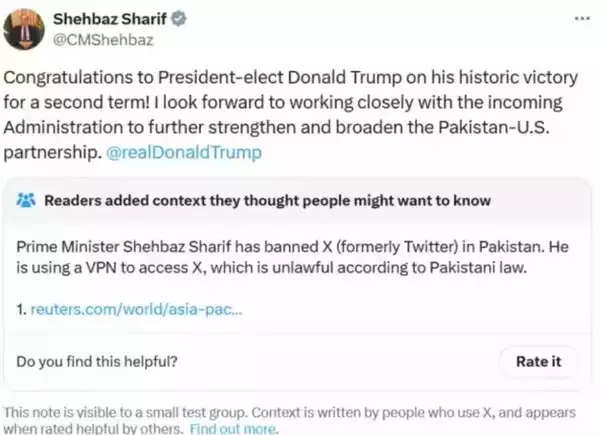
The Pakistan Telecommunication Authority (PTA) announced in August that it would scrutinize VPN services, and restrict access to services that do not comply with government regulations. This move regarding the “ban on VPNs in Pakistan” is affecting services that are essential for ordinary citizens, especially to access platforms like X.
After Prime Minister Shehbaz Sharif’s tweet “Ban VPNs in Pakistan” and its implications, the public debate has intensified. “Congratulations to President-elect Donald Trump on his historic victory for a second term!” his tweet said. But after X was banned, the tweet became a new topic, saying that the Prime Minister himself was using a VPN. This is important because “banning VPNs in Pakistan” is considered an illegal practice.
“Ban on VPNs in Pakistan” has not only limited the digital freedom of citizens but also raised questions on the government’s actions. Many people are raising the question that if the government is banning VPNs, then how do they avoid the ban themselves?
The effects of banning VPNs include interference in daily life, as citizens face difficulties in accessing essential services due to “Ban VPNs in Pakistan”. Given all these factors, the people of Pakistan are demanding a response from the PTA to provide more clarity regarding this ban.
A few weeks ago, the issue of “Ban VPNs in Pakistan” has gained more importance due to the ban on X. Citizens are demanding that the government review these restrictions and restore digital freedom.
Going forward, the ban on VPNs in Pakistan and the impact of Prime Minister Sharif’s tweet could further complicate questions of digital rights and online access in the country. This growing concern of “Ban VPNs in Pakistan” has forced government officials to rethink their policies.