Table of Contents
The Future of Artificial Intelligence (AI)
Artificial Intelligence (AI) has evolved from a futuristic concept into an everyday reality, shaping industries, redefining workflows, and even influencing personal lives. From machine learning algorithms that recommend your next favorite movie to automation revolutionizing businesses, AI’s impact is undeniable. But what does the future hold for this rapidly advancing technology? Will it lead to groundbreaking innovation, or will it pose ethical and societal dilemmas such as job disruption and data privacy concerns?

As we stand on the brink of a technological renaissance, AI’s trajectory is fueled by developments in generative AI, deep learning, and natural language processing (NLP). These advancements are enhancing existing systems and creating new possibilities, from intelligent virtual assistants to predictive analytics that foresee trends before they emerge. However, with great power comes great responsibility—regulations and ethical considerations, including the AI Bill of Rights, are gaining traction to ensure AI remains a tool for progress rather than a source of unchecked risk.
The increasing adoption of AI in healthcare, finance, education, and manufacturing industries is reshaping how we work and interact with technology. AI-powered automation is streamlining processes, while innovations like computer vision and robotics are enabling machines to perform tasks that were once exclusive to humans. Yet, concerns over human biases, misinformation, and deepfakes highlight the need for responsible AI development. How can we balance AI’s potential with its ethical implications?
The coming years will see AI integrate with cutting-edge technologies like quantum computing, IoT (Internet of Things), and synthetic data to unlock even greater capabilities. Concepts like multimodal AI and agentic AI are pushing the boundaries of what artificial intelligence can achieve, bringing us closer to systems that understand and respond to the world as humans do. At the same time, the rise of open-source AI and custom AI solutions is democratizing access, making AI more adaptable across various sectors.
With all these advancements, one fundamental question remains—how will society prepare for an AI-driven future? The shift will not only technological readiness but also upskilling and employment opportunities to ensure the workforce evolves alongside AI. As businesses develop AI strategies and governments establish ethical guidelines, we are entering an era where AI will shape not just industries but the very fabric of human existence. Are we ready to embrace this transformation responsibly?
The future of AI is both thrilling and complex, filled with opportunities and challenges alike. Whether it leads to superior intelligence or raises deeper regulatory and sustainability concerns, one thing is certain—artificial intelligence is here to stay. In the coming sections, we will explore AI’s trajectory, its impact across industries, and the ethical considerations that will define its future. Buckle up for an insightful journey into the world of AI!
Evolution of Artificial Intelligence (AI)
Artificial Intelligence (AI) has come a long way from being a speculative concept in science fiction to an integral part of modern technology. But how did AI evolve into what it is today? The journey of AI is a fascinating blend of theoretical breakthroughs, computational advancements, and real-world applications. From early rule-based systems to the rise of machine learning and deep learning, AI has continuously transformed the way we interact with technology.
From its humble beginnings as a theoretical concept to becoming a driving force behind automation, robotics, and intelligent systems, AI’s journey is far from over. As AI continues to evolve, ethical considerations such as data privacy, bias mitigation, and regulatory compliance will shape its future. Will AI eventually achieve superior intelligence, or will human oversight always be necessary? The next decade will be crucial in determining how AI transforms industries, governance, and society as a whole.
The future of AI is not just about smarter machines but also about how we, as humans, shape its development and implementation. The next sections will explore AI’s impact across industries, emerging trends, and the ethical dilemmas that must be addressed to ensure AI remains a force for progress.
The Early Days: From Theory to Reality
The origins of AI trace back to ancient times when philosophers and mathematicians explored the idea of artificial reasoning. However, AI as a formal discipline emerged in the mid-20th century with Alan Turing’s groundbreaking work on computational intelligence. His famous Turing Test (1950) set a fundamental benchmark—could a machine exhibit behavior indistinguishable from that of a human?
During the 1950s and 1960s, researchers developed early AI models based on symbolic reasoning, or rule-based logic. Programs like the Logic Theorist (1956) and ELIZA (1966) demonstrated basic forms of automated problem-solving and natural language processing, though they lacked true understanding. The optimism of this era led to the first AI boom, but limitations in computational power and data availability soon resulted in an AI winter, where funding and interest declined.
Despite setbacks, AI research persisted. The 1970s and 1980s saw the emergence of expert systems, which mimicked human decision-making in specialized domains such as medical diagnosis and engineering. However, these systems were rigid and required extensive manual rule-setting, limiting their scalability. It became evident that AI needed to evolve beyond predefined rules to learn dynamically from data.
Major Milestones in AI Development
The revival of AI came in the 1990s and early 2000s, driven by advances in computing power, big data, and algorithmic improvements. Several key breakthroughs shaped AI’s modern trajectory:
- 1997: Deep Blue defeats Garry Kasparov – IBM’s Deep Blue became the first AI to defeat a world chess champion, marking a milestone in AI’s ability to handle complex strategic thinking.
- 2011: IBM Watson wins Jeopardy! – Demonstrating advances in natural language processing (NLP), Watson showcased AI’s ability to understand and process human language at an advanced level.
- 2012: The Deep Learning Revolution – The introduction of deep neural networks, notably AlexNet, achieved groundbreaking accuracy in computer vision, kickstarting the modern deep learning era.
- 2016: AlphaGo triumphs in Go – Google DeepMind’s AlphaGo defeated world champion Lee Sedol in the complex game of Go, proving AI’s ability to learn patterns beyond brute-force calculations.
- 2020s: Rise of Generative AI – The development of large language models (LLMs), such as OpenAI’s GPT and IBM Watsonx.ai, revolutionized AI’s ability to generate human-like text, create images, and assist in creative fields.
These milestones illustrate how AI has evolved from rule-based automation to self-learning models capable of contextual awareness, predictive analytics, and decision-making across industries.
The Rise of Machine Learning and Deep Learning
The shift from traditional AI methods to machine learning (ML) and deep learning (DL) marked a turning point in AI’s evolution. Unlike symbolic AI, which relied on explicit programming, machine learning enables systems to learn from data and improve over time.
Machine Learning vs. Deep Learning – What’s the Difference?
- Machine Learning (ML): Uses statistical techniques to allow machines to identify patterns and make predictions. It includes methods like supervised learning, unsupervised learning, and reinforcement learning.
- Deep Learning (DL): A subset of ML that mimics the human brain using artificial neural networks. It excels in tasks such as speech recognition, image classification, and natural language understanding.
The explosion of big data and the availability of high-performance computing (HPC) have accelerated deep learning adoption. Today, AI models like transformers (used in ChatGPT and Google Bard) leverage vast amounts of data to achieve unprecedented accuracy in language processing, image generation, and automated decision-making. Moreover, AI’s integration with quantum computing, IoT, and federated AI is opening new frontiers, making AI systems even more powerful, scalable, and efficient.
Current State of AI Technology
Artificial Intelligence (AI) is no longer a futuristic concept—it’s deeply embedded in our daily lives, industries, and global economies. From the smart assistants on our phones to self-learning algorithms powering search engines and streaming platforms, AI is transforming how we interact with technology. But beyond consumer applications, AI is driving innovation in healthcare, finance, manufacturing, and robotics, unlocking new possibilities while raising ethical concerns.
This section explores the real-world applications of AI, the latest breakthroughs in natural language processing (NLP), automation, and robotics, and the societal challenges that come with its widespread adoption.
AI in Everyday Life: Applications We Use Today
AI has become an invisible yet integral part of our daily experiences. Whether we realize it or not, we interact with AI-powered systems multiple times a day. Here are some of the most common ways AI influences our lives:
🔹 Virtual Assistants & Chatbots – AI-driven assistants like Siri, Google Assistant, and Alexa use natural language processing (NLP) to understand and respond to voice commands. Meanwhile, chatbots powered by OpenAI’s ChatGPT or IBM Watson enhance customer service by offering real-time responses.
🔹 Search Engines & Recommendation Systems – AI algorithms analyze vast amounts of data to predict user preferences and refine search results. Platforms like Google, YouTube, and Netflix use AI-driven predictive analytics to suggest content based on viewing history.
🔹 Finance & Fraud Detection – Banks and fintech companies leverage machine learning to detect suspicious transactions, automate loan approvals, and personalize financial recommendations. AI-driven predictive analytics also helps forecast stock trends.
🔹 Healthcare Diagnostics & Drug Discovery – AI-powered tools like IBM Watson Health assist doctors in diagnosing diseases, while deep learning models analyze medical imaging (MRIs, X-rays) with higher accuracy than traditional methods. AI-driven research expedites drug development and clinical trials.
🔹 Smart Homes & IoT Integration – AI connects devices in smart homes, optimizing energy consumption, security, and automation. IoT-enabled sensors combined with AI improve home safety and efficiency, from Nest thermostats to AI-powered surveillance systems.
As AI continues to evolve, its integration into transportation, education, and urban planning will further enhance convenience, efficiency, and decision-making across various sectors.
Breakthroughs in Natural Language Processing (NLP)
One of the most remarkable advancements in AI has been in natural language processing (NLP)—the ability of machines to understand, interpret, and generate human language. Recent breakthroughs have led to human-like conversational AI, revolutionizing communication and content creation.
Key advancements in NLP include:
✅ Large Language Models (LLMs) – AI models like GPT-4, Google Bard, and IBM Watsonx.ai have set new standards for text generation, code completion, and multilingual translation. These models leverage deep learning to generate contextually relevant responses.
✅ Multimodal AI – Unlike traditional NLP models that process text, multimodal AI integrates images, videos, and voice data, enhancing capabilities in virtual assistants and content moderation.

✅ Sentiment Analysis & Emotion Recognition – AI now understands tone, intent, and sentiment, making it valuable for businesses analyzing customer feedback, social media trends, and market sentiment.
✅ Real-Time Translation & Speech Recognition – AI-driven tools like Google Translate and DeepL enable real-time multilingual communication, breaking language barriers across industries.
As NLP evolves, we can expect more intuitive AI interactions, transforming fields like customer service, journalism, and education with hyper-personalized experiences.
AI in Robotics and Automation
AI and robotics are revolutionizing industries by automating complex tasks, enhancing precision, and reducing human intervention. From self-driving cars to robot-assisted surgeries, AI-driven automation is pushing the boundaries of efficiency.
🔹 Manufacturing & Predictive Maintenance – AI-powered robotics streamline assembly lines, reducing errors and downtime. Predictive maintenance leverages AI to anticipate machinery failures, preventing costly breakdowns.
🔹 Autonomous Vehicles & Transportation – Companies like Tesla, Waymo, and Uber are developing self-driving cars that rely on AI-driven computer vision, deep learning, and IoT for navigation and real-time decision-making.
🔹 AI in Healthcare Robotics – AI-powered surgical robots, such as Da Vinci Surgical System, assist doctors in complex procedures with unmatched precision. Robots also support elderly care, rehabilitation, and logistics in hospitals.
🔹 AI in Warehousing & Logistics – Retail giants like Amazon use AI-driven robotics to automate warehouse operations, optimizing inventory management, order fulfillment, and supply chain logistics.
Despite these innovations, the rise of AI-driven automation raises concerns about job displacement and the need for workforce upskilling. While AI is enhancing productivity, industries must balance automation with employment opportunities.
Ethical and Societal Challenges in AI Adoption
As AI becomes more sophisticated, it also raises critical ethical, legal, and societal concerns. While AI brings efficiency and innovation, its unregulated growth can lead to unintended consequences. Some of the most pressing challenges include:
❗ Job Disruption & Employment Gaps – The rise of AI-powered automation threatens traditional jobs, particularly in manufacturing, transportation, and customer service. Upskilling and AI education are crucial to mitigate widespread job losses.
❗ Bias & Discrimination in AI Models – AI systems trained on biased datasets can perpetuate discrimination, leading to unfair hiring practices, biased law enforcement decisions, and financial inequalities. Addressing AI ethics and fairness is vital.
❗ Data Privacy & Surveillance – AI relies heavily on big data, raising concerns about personal privacy, data security, and surveillance risks. Without strict data governance regulations, AI-driven surveillance could pose threats to civil liberties.
❗ Misinformation & Deepfakes – AI-generated deepfakes and synthetic media can spread misinformation, manipulating public opinion and endangering democratic processes. AI-powered content moderation is necessary to combat digital deception.
❗ Regulatory Gaps & AI Bill of Rights – The rapid advancement of AI demands clear regulations to ensure transparency, accountability, and ethical compliance. Governments and organizations are pushing for AI governance frameworks like the AI Bill of Rights to establish industry-wide standards.
As AI adoption accelerates, the focus must shift toward responsible AI development, ethical considerations, and regulatory oversight to ensure AI remains a tool for progress rather than a source of societal harm. AI’s current state reflects both unprecedented technological advancements and profound ethical challenges. While AI enhances efficiency, decision-making, and automation, its responsible deployment is key to ensuring long-term societal benefits.
Emerging Trends in AI
Artificial Intelligence is evolving at an unprecedented pace, with groundbreaking innovations pushing the boundaries of what machines can achieve. The next wave of AI is marked by its convergence with quantum computing, its expansion into virtual worlds and the metaverse, and the rise of autonomous, self-learning systems. Additionally, as AI systems become more complex, the demand for explainable and responsible AI is growing to ensure transparency and trust.
This section explores four major AI trends that are shaping the future: AI’s role in the metaverse, quantum computing integration, self-learning AI systems, and the shift toward explainability and ethics. The future of AI is not just about innovation—it’s about creating intelligent systems that are explainable, fair, and responsible. As AI expands into the metaverse, quantum computing, and autonomous systems, ethical considerations will shape how AI integrates into our daily lives.
The Role of AI in the Metaverse and Virtual Worlds
The metaverse is no longer just a science-fiction concept—it’s rapidly becoming a digital extension of reality, where AI plays a central role in creating immersive and interactive virtual experiences. AI-driven technologies are powering digital avatars, enhancing real-time interactions, and generating hyper-realistic environments.
Some key applications of AI in the metaverse include:
🔹 AI-Generated Avatars – AI enables the creation of lifelike digital humans that can express emotions, adapt to user interactions, and evolve over time. Companies like Meta (Facebook), Nvidia, and Microsoft are developing AI-powered virtual assistants and avatars for digital spaces.
🔹 Procedural Content Generation (PCG) – AI algorithms generate dynamic virtual landscapes, realistic textures, and interactive objects, making virtual worlds more engaging and scalable.
🔹 AI-Powered Personalization – Machine learning algorithms analyze user behavior in real time to provide customized experiences, from virtual real estate recommendations to adaptive gaming environments.
🔹 Natural Language Processing (NLP) for Immersive Communication – AI-driven chatbots and virtual assistants will facilitate seamless communication across languages in the metaverse, breaking linguistic barriers.
With the expansion of AI in gaming, education, and digital workspaces, the metaverse will continue to evolve, transforming how we socialize, learn, and conduct business in virtual worlds.
AI and Quantum Computing: A Game Changer
One of the most revolutionary AI trends is its integration with quantum computing—a technology that has the potential to exponentially accelerate AI processing power. While classical computers process data in binary (0s and 1s), quantum computers use qubits, enabling them to perform multiple calculations simultaneously.
Key breakthroughs in Quantum AI include:
✅ Supercharged Machine Learning – Quantum computing can process large datasets at speeds impossible for traditional computers, significantly improving AI training models.
✅ Breakthroughs in Drug Discovery & Material Science – AI-powered quantum simulations can model molecular interactions, leading to faster drug discoveries and the development of advanced materials.
✅ Optimization Problems Solved in Seconds – AI-driven logistics, finance, and supply chain management can leverage quantum computing to optimize complex decision-making in real time.
Tech giants like Google, IBM, and Microsoft are racing to develop practical quantum AI applications, which could redefine the limits of computing power and AI capabilities.
Autonomous AI: Self-Learning and Self-Improving Systems
A major leap in AI development is the rise of autonomous AI, where machines can self-learn, adapt, and improve without human intervention. Unlike traditional AI models that require manual updates and retraining, autonomous AI systems continuously evolve by learning from their environment.
Key advancements in autonomous AI include:
🔹 Agentic AI – These systems function independently, making complex decisions without explicit programming. Future AI agents could operate businesses, manage smart cities, or conduct scientific research autonomously.
🔹 Self-Improving Neural Networks – AI models like AutoML (Automated Machine Learning) optimize themselves, reducing the need for human data scientists.
🔹 Federated Learning & Decentralized AI – AI models are now learning across multiple devices (e.g., smartphones, IoT devices) without requiring centralized data collection, ensuring better privacy and security.
🔹 AI in Autonomous Vehicles & Robotics – AI-powered self-driving cars, drones, and industrial robots are increasingly capable of learning from real-world data, making them safer and more efficient.
Autonomous AI could lead to a world where machines operate complex systems, drive economic growth, and create new industries, but it also raises ethical concerns regarding accountability and human oversight.
The Shift Toward Explainable and Responsible AI
As AI systems become more advanced, there is a growing demand for explainable, ethical, and transparent AI to build trust and ensure fair decision-making. “Black box AI” models—which make decisions without human understanding—pose risks in critical sectors like healthcare, finance, and law enforcement.
Some key efforts in responsible AI development include:
✅ Explainable AI (XAI) – Researchers are developing AI models that can justify their decisions in human-readable formats, helping regulators and businesses ensure transparency.
✅ AI Ethics & Fairness Initiatives – Governments and tech leaders are pushing for AI Bill of Rights frameworks to prevent bias, discrimination, and unethical AI usage.
✅ Regulatory Compliance & AI Governance – Countries are introducing AI laws and data governance policies to ensure responsible AI deployment.
✅ Hallucination Detection & Bias Reduction – AI hallucination insurance models are being developed to prevent AI from generating false or misleading information.
As AI continues to permeate all aspects of society, ensuring accountability, fairness, and human oversight will be critical in maintaining ethical AI practices.
AI’s Impact on Industries
Artificial Intelligence is revolutionizing industries across the globe, reshaping how businesses operate and how consumers engage with services. From healthcare and finance to education and entertainment, AI is driving innovation, boosting efficiency, and unlocking new possibilities.
In this section, we’ll explore five major industries where AI is making the biggest impact:
- Healthcare: AI-driven diagnosis and treatment
- Finance: Fraud detection and algorithmic trading
- Education: Personalized learning with AI
- Manufacturing: Smart factories and automation
- Entertainment: AI in content creation and personalization
Let’s take a deep dive into how AI is transforming each of these fields.

Healthcare: AI-Driven Diagnosis and Treatment
AI is revolutionizing medicine by improving diagnosis accuracy, drug discovery, and patient care. With the ability to process vast amounts of medical data, AI enhances early detection and personalized treatment plans, leading to better health outcomes.
🔹 Medical Imaging & Diagnosis: AI-powered tools like IBM Watson and Google’s DeepMind Health analyze X-rays, MRIs, and CT scans, detecting diseases like cancer, strokes, and neurological disorders with higher accuracy than traditional methods.
🔹 Predictive Analytics & Preventative Care: AI algorithms assess patient history and genetic markers to predict potential health risks and recommend preventative measures.
🔹 AI-Powered Drug Discovery: AI speeds up drug research by analyzing complex biological data, significantly reducing the time and cost required to develop new medications.
🔹 Virtual Health Assistants & Chatbots: AI-powered chatbots and virtual assistants provide 24/7 patient support, offering symptom checks, medication reminders, and mental health counseling.
AI in healthcare is not just about technology—it’s about saving lives, enhancing treatment precision, and improving global healthcare accessibility.
Finance: Fraud Detection and Algorithmic Trading
In the finance sector, AI is enhancing security, optimizing investments, and streamlining financial operations. With real-time data analysis, AI-driven systems help banks and financial institutions detect fraud, automate trading, and personalize financial services.
🔹 Fraud Detection & Risk Management: AI analyzes financial transactions in real-time, identifying suspicious activities and anomalies to prevent fraud. Banks like JPMorgan Chase and PayPal use AI to combat cyber threats.
🔹 Algorithmic & High-Frequency Trading (HFT): AI-driven trading bots analyze financial markets, executing trades within milliseconds based on predictive analytics. This improves market efficiency and profitability.
🔹 AI-Powered Robo-Advisors: AI investment platforms like Wealthfront and Betterment offer personalized financial planning, reducing reliance on human financial advisors.
🔹 Automated Loan & Credit Scoring: AI evaluates creditworthiness using machine learning models, making loan approvals faster and reducing human bias in financial decisions.
With AI transforming banking, investing, and risk assessment, the finance industry is becoming more efficient, secure, and accessible.
Education: Personalized Learning with AI
AI is reshaping education by customizing learning experiences, improving accessibility, and enabling smart content delivery. Schools, universities, and EdTech platforms are leveraging AI to make learning more engaging and effective.
🔹 Adaptive Learning Platforms: AI-powered EdTech tools like Duolingo, Coursera, and Khan Academy analyze student performance, adjusting lessons to match individual learning speeds and styles.
🔹 AI Tutors & Chatbots: Virtual AI tutors provide real-time feedback, helping students understand complex topics outside traditional classrooms.
🔹 Automated Grading & Administrative Tasks: AI reduces the workload for educators by automating grading, attendance tracking, and administrative tasks.
🔹 AI in Special Education: AI-driven assistive technologies help students with disabilities, including speech-to-text software for those with learning impairments.
By making education more personalized and efficient, AI is breaking learning barriers and improving academic outcomes worldwide.
Manufacturing: Smart Factories and Automation
AI is driving the era of Industry 4.0, where factories become smarter, more efficient, and highly automated. With AI-powered robotics, predictive maintenance, and intelligent supply chains, manufacturing is experiencing a technological revolution.
🔹 Robotics & Automation: AI-powered robotic arms and autonomous systems enhance precision and speed in assembly lines, reducing human errors.
🔹 Predictive Maintenance: AI analyzes machine data to predict failures before they happen, minimizing downtime and reducing maintenance costs.
🔹 Smart Supply Chains: AI optimizes logistics, inventory management, and demand forecasting, ensuring faster and more efficient manufacturing cycles.
🔹 Quality Control & Defect Detection: AI-driven computer vision systems detect product defects in real time, ensuring higher production standards.
With AI-driven smart factories, manufacturers are achieving greater efficiency, cost savings, and improved product quality.
Entertainment: AI in Content Creation and Personalization
The entertainment industry is witnessing a major AI-driven transformation, making content more immersive, personalized, and innovative. From music and movies to video games and social media, AI is reshaping how we consume entertainment.
🔹 AI-Generated Content & Deepfakes: AI-powered tools like OpenAI’s DALL·E, Deepfake technology, and AI music generators create realistic images, videos, and music with minimal human input.
🔹 Personalized Streaming & Recommendations: Platforms like Netflix, YouTube, and Spotify use AI to analyze user preferences, curating personalized content recommendations.
🔹 AI in Video Game Development: AI enhances game graphics, NPC behaviors, and real-time content generation, making gaming experiences more dynamic.
🔹 Synthetic Media & Virtual Influencers: AI-generated influencers, such as Lil Miquela and AI-powered avatars, are gaining popularity on social media.
With AI reshaping content creation, distribution, and engagement, the entertainment industry is becoming more interactive and audience-centric. From life-saving innovations in healthcare to personalized learning, automated trading, and AI-powered entertainment, artificial intelligence is transforming industries at an unprecedented rate. Businesses that embrace AI gain a competitive advantage, while those that resist may fall behind.
The Future Possibilities of AI
Artificial Intelligence (AI) has already revolutionized industries, but what lies ahead is even more fascinating. The evolution from narrow AI—which specializes in specific tasks—to Artificial General Intelligence (AGI), capable of human-like reasoning, is a topic of intense debate. As AI continues to integrate into our daily lives, its potential to augment human capabilities, solve global challenges, and shape the future is becoming increasingly evident.
In this section, we will explore:
- Artificial General Intelligence (AGI): Are We Close?
- AI and Human Collaboration: Enhancing Human Potential
- The Role of AI in Solving Global Challenges
- Predictions for AI in the Next 10, 20, and 50 Years

Artificial General Intelligence (AGI): Are We Close?
Today’s AI systems are highly specialized, excelling in tasks like language translation, medical diagnostics, and financial analysis. However, these systems lack the broad adaptability and reasoning skills of human intelligence. Artificial General Intelligence (AGI) aims to bridge this gap, creating machines that can understand, learn, and apply knowledge across multiple domains—just like humans.
Key Challenges to Achieving AGI:
🔹 Massive Data & Computational Power: AGI would require exponential improvements in computational efficiency and memory processing to match human cognition.
🔹 Common Sense & Reasoning: Unlike humans, AI struggles with contextual awareness, emotional intelligence, and adaptability in unfamiliar situations.
🔹 Ethical & Safety Concerns: Developing AGI introduces risks such as uncontrollable AI behavior, biases, and existential threats if not aligned with human values.
🔹 Neuromorphic Computing & Brain Emulation: Scientists are exploring neuromorphic chips that mimic human brain neurons, potentially accelerating AGI development.
While leading AI researchers, including those at OpenAI, DeepMind, and IBM Watson, are making breakthroughs, AGI remains an ambitious goal. Experts predict that AGI may emerge within the next 30-50 years, but ethical governance will be crucial in shaping its role in society.
AI and Human Collaboration: Enhancing Human Potential
Instead of replacing humans, AI is increasingly seen as a collaborative tool that enhances human intelligence, productivity, and creativity. From healthcare and education to business and scientific research, AI-driven assistance is augmenting human decision-making rather than replacing it.
How AI is Enhancing Human Potential:
✅ Augmented Intelligence: AI helps professionals make better decisions—whether it’s assisting doctors with medical diagnoses or financial analysts with risk assessments.
✅ Creative AI: AI-powered tools like ChatGPT, DALL·E, and AI-assisted music generators are transforming how artists, writers, and designers create content.
✅ AI in Scientific Discovery: AI is accelerating discoveries in quantum computing, climate change research, and space exploration, unlocking new frontiers for humanity.
✅ AI-Powered Accessibility: AI-driven assistive technologies help individuals with disabilities through speech recognition, real-time transcription, and predictive text.
The synergy between AI and human intelligence is shaping a future where humans and machines work together to achieve breakthroughs that neither could accomplish alone.
The Role of AI in Solving Global Challenges
AI holds immense potential to tackle some of the world’s most pressing issues, from climate change and food security to healthcare accessibility and disaster response.
AI’s Contributions to Global Problem-Solving:
🌍 Climate Change & Sustainability:
- AI-driven predictive analytics help forecast climate patterns, extreme weather events, and carbon emissions.
- AI optimizes renewable energy grids and enhances climate action strategies for sustainability.
🍽 Food Security & Agriculture:
- AI-powered precision farming improves crop yield and reduces resource wastage.
- Automated drones & IoT sensors monitor soil health and optimize irrigation.
🏥 Global Healthcare Advancements:
- AI enhances early disease detection, pandemic forecasting, and vaccine development.
- Telemedicine and AI-powered diagnostics improve healthcare access in remote regions.
🆘 Disaster Response & Humanitarian Aid:
- AI-powered satellite imaging & predictive models assist in disaster relief efforts.
- AI-driven chatbots and crisis response systems provide real-time emergency assistance.
By leveraging AI’s capabilities, governments, scientists, and global organizations can drive meaningful progress toward a more sustainable, equitable, and resilient world.
Predictions for AI in the Next 10, 20, and 50 Years
What does the future hold for AI? While no one can predict with certainty, here are some expert projections for AI’s evolution over the next few decades:
📌 Next 10 Years (2025-2035):
- AI becomes fully integrated into daily life (advanced virtual assistants, AI-driven transportation).
- Autonomous AI systems improve in robotics, healthcare, and cybersecurity.
- Stronger AI regulations emerge to address data privacy, misinformation, and bias.
📌 Next 20 Years (2035-2055):
- Breakthroughs in AGI enable AI to reason and make independent decisions.
- AI-powered personalized education replaces traditional schooling models.
- Quantum AI & Neuromorphic Computing revolutionize computational power.
📌 Next 50 Years (2055 & Beyond):
- Artificial Superintelligence (ASI) surpasses human intelligence, leading to unprecedented scientific discoveries.
- AI-human brain interfaces allow seamless interaction between the mind and machines.
- The world is shifting toward an AI-driven economy, requiring radical rethinking of employment, governance, and ethics.
While the road ahead is uncertain, one thing is clear: AI will continue to shape the future in profound ways, redefining how we live, work, and interact with technology. AI’s future is filled with both promise and challenges. Whether it’s the quest for AGI, human-AI collaboration, global problem-solving, or long-term predictions, AI will remain one of the most transformative forces in human history.
Risks and Ethical Considerations
As artificial intelligence (AI) advances at an unprecedented pace, the ethical dilemmas and risks surrounding its adoption become more pressing. While AI promises efficiency, innovation, and economic growth, it also raises concerns about bias, job displacement, governance, and the delicate balance between progress and ethical responsibility. The decisions made today will shape how AI interacts with society in the years to come.
This section explores:
- AI Bias and Fairness Issues
- Job Displacement vs. Job Creation
- AI Governance and Regulations
- Balancing Innovation with Ethical Responsibility
Let’s examine these challenges and the strategies needed to navigate them effectively.
AI Bias and Fairness Issues
One of the most critical concerns in AI ethics is algorithmic bias—the tendency of AI models to reinforce existing societal inequalities. AI systems are only as unbiased as the data they are trained on, meaning historical prejudices, imbalanced datasets, and flawed algorithms can lead to discrimination in fields like hiring, lending, law enforcement, and healthcare.
Examples of AI Bias in Action:
🔹 Hiring Discrimination: AI-powered hiring tools have been found to favor certain demographics over others, disadvantaging women and minority groups.
🔹 Facial Recognition Issues: Studies have shown that AI-based facial recognition is less accurate for darker skin tones, leading to misidentifications and wrongful arrests.
🔹 Healthcare Disparities: AI-driven medical diagnostics may be less effective for underrepresented populations due to limited training data.
How to Mitigate AI Bias:
✅ Diverse and Representative Data: AI models must be trained on inclusive datasets to ensure fairness across different racial, gender, and socio-economic groups.
✅ Regular Algorithm Audits: Organizations should conduct bias audits and introduce fairness checks before deploying AI systems.
✅ Explainable AI (XAI): Making AI decision-making transparent allows users to understand and challenge biased outputs.
The push for AI fairness and inclusivity must be a priority for tech companies, researchers, and policymakers to prevent AI from reinforcing social injustices.
Job Displacement vs. Job Creation
Automation has historically replaced certain jobs while creating new opportunities, and AI is no exception. However, the rapid pace of AI-driven automation has sparked concerns about mass unemployment, economic instability, and the need for workforce adaptation.
Industries Most at Risk of Job Displacement:
🚫 Manufacturing & Logistics: AI-powered robots, predictive maintenance, and automation are reducing the need for human labor.
🚫 Customer Service: Chatbots and virtual assistants are replacing traditional customer support roles.
🚫 Data Processing & Administrative Work: AI-driven document processing and data analysis are eliminating routine desk jobs.
New Job Opportunities in the AI Era:
✅ AI Specialists & Machine Learning Engineers: As AI adoption grows, so does the demand for AI researchers, data scientists, and NLP engineers.
✅ AI Ethics & Governance Experts: Companies need specialists to ensure AI compliance, fairness, and transparency.
✅ Human-AI Collaboration Roles: Rather than replacing humans, AI is enhancing roles in healthcare, education, and cybersecurity.
To ensure a smooth transition, governments and businesses must invest in upskilling programs, AI literacy, and reskilling initiatives to help workers adapt to an AI-driven economy.
AI Governance and Regulations
With AI’s increasing influence over sensitive areas like finance, law enforcement, and healthcare, strong governance and regulatory frameworks are essential to prevent misuse, discrimination, and unintended consequences.
Current AI Regulations and Guidelines:
📌 The AI Bill of Rights (USA): A framework proposed to protect consumers from algorithmic discrimination and privacy violations.
📌 EU AI Act: A risk-based regulatory approach that classifies AI systems based on their potential harm and restricts the use of high-risk applications.
📌 China’s AI Ethics Guidelines: Policies promoting AI safety, transparency, and alignment with national interests.
Key Areas of AI Regulation:
⚖️ Data Privacy & Security: Regulations like GDPR ensure that AI systems respect user privacy and protect sensitive data.
⚖️ Deepfakes & Misinformation: Governments are pushing for policies to combat AI-generated disinformation and fraudulent content.
⚖️ Automated Weapons & Military AI: There is growing concern about the use of AI in autonomous weapons and warfare.
As AI continues to evolve, global cooperation on ethical AI policies, safety standards, and accountability measures will be crucial.
Balancing Innovation with Ethical Responsibility
While AI has the potential to drive technological breakthroughs, boost economic growth, and improve quality of life, it must be developed and deployed responsibly. Striking a balance between innovation and ethical responsibility is the key to ensuring AI benefits society without causing unintended harm.
Strategies for Ethical AI Development:
🛠 Human-in-the-Loop AI: Keeping human oversight in AI decision-making to prevent harmful or unintended consequences.
🛠 Open Source & Transparent AI Models: Promoting accountability and trust by allowing AI research and development to be publicly reviewed.
🛠 Ethical AI Research & Collaboration: Governments, tech companies, and researchers must work together to establish global ethical AI standards.
AI should not be a tool for unchecked automation or corporate gain; instead, it should be a force for progress, fairness, and empowerment. By prioritizing ethical considerations, inclusivity, and responsible development, we can harness AI’s power while ensuring a future that benefits everyone.
Preparing for an AI-Driven Future
Artificial Intelligence (AI) is no longer a distant concept—it’s shaping industries, redefining job markets, and influencing daily life. As AI continues to evolve, the question is no longer if it will impact the future but how we can prepare for it. Businesses, professionals, and society at large must take proactive steps to ensure AI drives progress, inclusion, and shared prosperity rather than disruption and inequality.
This section explores:
- How Businesses Can Leverage AI for Growth
- Skills Needed to Thrive in an AI-Powered World
- The Importance of AI Literacy for Everyone
- Building a Future Where AI Benefits All
By understanding these critical aspects, we can navigate the AI revolution strategically and responsibly.
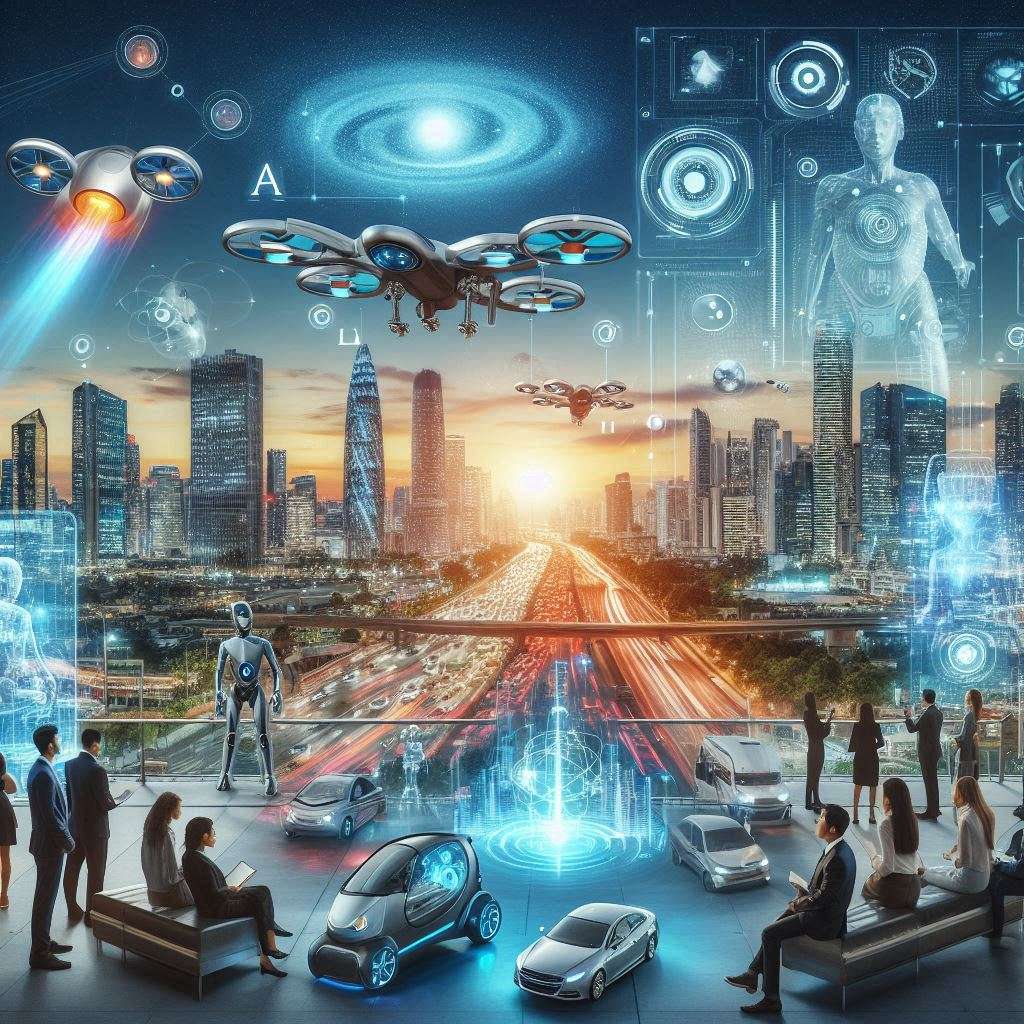
How Businesses Can Leverage AI for Growth
AI has become a competitive advantage for businesses, offering automation, efficiency, and data-driven decision-making. Companies that embrace AI today will lead tomorrow.
Ways Businesses Can Use AI for Growth:
📊 Predictive Analytics & Business Intelligence
- AI-driven data science enables companies to forecast market trends, consumer behavior, and financial risks.
- Big Data and machine learning help businesses make informed, real-time decisions.
🛒 Personalized Customer Experiences
- AI powers recommendation engines, like those used by Amazon, Netflix, and Spotify, to tailor services to individual users.
- Chatbots and virtual assistants improve customer service by providing instant support and engagement.
🏭 Automation & Smart Operations
- AI-driven automation reduces costs and increases productivity in manufacturing, logistics, and supply chain management.
- Predictive maintenance in factories prevents equipment failures and downtime.
📈 AI-Optimized Marketing & Advertising
- AI tools like Google’s Smart Bidding and Meta’s AI-driven ad placements optimize campaigns for higher ROI.
- AI-generated content and Natural Language Processing (NLP) enhance SEO and audience engagement.
To remain competitive and innovative, businesses must integrate AI strategies into their core operations while ensuring ethical and responsible use.
Skills Needed to Thrive in an AI-Powered World
As AI transforms industries, the workforce must adapt, upskill, and reskill to stay relevant. While automation may replace certain jobs, it will also create new roles requiring AI literacy and human-centric skills.
In-Demand Skills for an AI Future:
💻 AI & Data Science Skills
- Machine Learning (ML) and Deep Learning (DL)
- Data analytics and predictive modeling
- Python, R, and AI-driven software development
🧠 Cognitive & Critical Thinking Skills
- Problem-solving and decision-making in AI-augmented environments
- Understanding AI ethics and responsible deployment
🔧 Tech-Enabled Creativity & Innovation
- AI-driven content creation (text, video, and design)
- Automation in digital marketing, product development, and storytelling
🤝 Human-AI Collaboration & Emotional Intelligence
- Leadership and strategic thinking in AI-integrated workplaces
- Soft skills like empathy, adaptability, and communication remain irreplaceable
To thrive, individuals should embrace continuous learning, explore AI-powered tools, and stay ahead of industry trends.
The Importance of AI Literacy for Everyone
AI is not just for developers and tech experts—every individual should have a basic understanding of AI’s impact on society. AI literacy helps people make informed decisions, navigate misinformation, and use AI tools effectively.
Why AI Literacy Matters:
📌 Empowers Informed Decision-Making
- Understanding AI helps individuals assess fake news, deepfakes, and biased AI systems.
- AI literacy ensures consumers are aware of data privacy rights and ethical AI concerns.
📌 Enhances Workplace Readiness
- As AI reshapes industries, employees must know how AI affects their roles and career paths.
- Employers value workers who can collaborate with AI tools and optimize productivity.
📌 Bridges the Digital Divide
- Access to AI knowledge should not be limited to tech elites—education systems must integrate AI concepts from early learning to higher education.
- Governments and institutions must promote AI learning initiatives for all demographics.
Building a future-ready workforce starts with making AI education accessible and understandable to everyone.
Building a Future Where AI Benefits All
The AI-driven future should not be controlled by a few tech giants—it must be inclusive, ethical, and beneficial for humanity. By ensuring fair policies, responsible AI development, and public awareness, we can harness AI’s power for global progress.
Key Steps to a Balanced AI Future:
🌍 Ethical AI Development
- Governments and corporations must follow AI ethics guidelines to prevent bias, discrimination, and privacy violations.
💼 Job Creation & Workforce Adaptation
- AI should augment human capabilities rather than replace them, ensuring job security and economic stability.
🏛 AI Governance & Public Trust
- Regulations and transparent AI frameworks must be established to ensure accountability and responsible AI deployment.
🤖 AI for Good: Solving Global Challenges
- AI can be used for climate action, disease prevention, and global education initiatives.
By preparing businesses, individuals, and society for AI’s inevitable growth, we can shape a future where AI serves humanity rather than disrupts it.
Conclusion The Future of AI
As we stand on the precipice of an AI-driven future, one thing is certain: the potential for transformation is limitless. From healthcare innovations to enhanced customer service, AI’s impact is being felt across industries and everyday life. But with this vast potential comes responsibility. As we integrate artificial intelligence into our work, our homes, and our societies, we must ask ourselves: how do we ensure that AI is used for good, and how can we navigate the challenges that come with it?
One thing is clear—AI is not a trend, but a revolution that will redefine the very fabric of our world. As businesses, individuals, and governments, we have an unprecedented opportunity to shape its evolution, to ensure it empowers rather than displaces, and to use it as a tool for global challenges, including climate change, disease prevention, and social equity. But with this power comes the need for ethical guidelines, regulation, and transparency to mitigate the risks of bias, privacy violations, and inequality.
As we look to the future, the question is not whether AI will dominate, but how we can use AI strategies to create a world that benefits all of us. The journey will require collaboration between human intelligence and machine learning, where human biases are recognized and addressed, and where AI’s potential is harnessed for the greater good.
Ultimately, the future of AI is in our hands. Whether it’s through upskilling for new employment opportunities, promoting AI literacy, or advocating for AI governance, we all have a role to play. Will we rise to the challenge? Will we take the steps necessary to ensure that AI technologies enhance human potential and not replace it?
The future is bright, but only if we approach it with a clear, responsible vision. Together, we can leverage AI to build a world that is not only smarter and more efficient but also more inclusive, ethical, and beneficial to everyone. The future of AI is a journey, and it’s one that we must take—carefully, thoughtfully, and with a collective commitment to progress. 🌍