Table of Contents
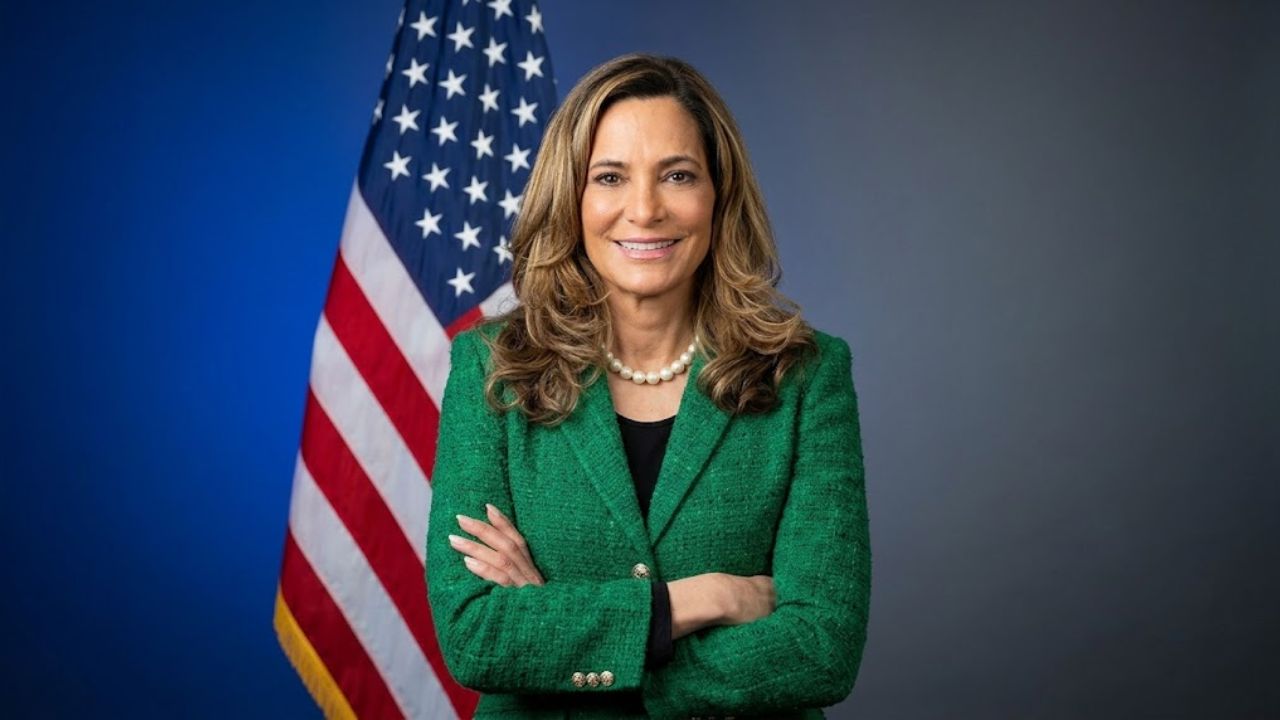
María Elvira Salazar (American Political)
María Elvira Salazar is 64 years old, born on November 1, 1961, in Miami’s Little Havana neighborhood — and her life reads like the story of the American Dream itself. The daughter of Cuban exiles who arrived with almost nothing, she grew up in the shadow of a revolution her family had fled. That history didn’t just shape her values. It launched a career.
Before she ever set foot in Congress, Salazar spent decades as one of the most recognizable faces in Spanish-language broadcast journalism. She worked for every major U.S. Hispanic network — Univision, Telemundo, CNN en Español, AmericaTeve, and MegaTV — winning five Emmy Awards along the way. She became the only U.S. Spanish-language journalist to ever interview Cuban dictator Fidel Castro one-on-one. That is not a small distinction.
In November 2020, she was elected to represent Florida’s 27th Congressional District, flipping the seat back to Republican control. She has served as a Republican Assistant Whip and chairs the Western Hemisphere Subcommittee on the House Committee on Foreign Affairs. Today, she is perhaps best known in policy circles for her work on immigration reform — particularly the Dignity Act, a bipartisan immigration bill she has championed as a realistic, humane solution to one of Washington’s longest-standing failures.

| Full Name | María Elvira Salazar |
| Date of Birth | November 1, 1961 |
| Place of Birth | Little Havana, Miami, Florida, United States |
| Nationality | American (Cuban-American heritage) |
| Profession | U.S. Congresswoman, Former Broadcast Journalist, Author |
| Employer | U.S. House of Representatives, Florida’s 27th Congressional District |
| Education | B.A. in Communications, University of Miami (1983); M.P.A., Harvard University, John F. Kennedy School of Government (1995); Miami Dade College; Deerborne School, Coral Gables (graduated 1979) |
| Career Start | Univision, Miami, Florida (circa 1983, age 22) |
| Current Role | U.S. Representative, FL-27; Republican Assistant Whip; Chair, Western Hemisphere Subcommittee, House Committee on Foreign Affairs |
| Notable Work | Dignity Act (H.R. 4393); One-on-one interview with Fidel Castro; Coverage of El Salvador civil war; Five Emmy Award-winning journalism career across Univision, Telemundo, CNN en Español, AmericaTeve, MegaTV |
| Marital Status | Married to Lester Woerner (m. 2022); previously married to Renzo Maietto (m. 1999–2010) |
| Children | Two daughters — Nicoletta and Martina |
| Awards | Five Emmy Awards (broadcast journalism) |
| Estimated Net Worth | $2.2 million – $2.4 million (estimated; based on FEC financial disclosures via Quiver Quantitative — not officially confirmed) |
| Salary | $174,000 annually (standard congressional salary; U.S. Office of Personnel Management) |
| Siblings | Not publicly available |
| Residence | Coral Gables, Florida, United States |
Who is María Elvira Salazar?
María Elvira Salazar, born November 1, 1961, in Miami, Florida, is a Cuban-American journalist and Republican politician serving as the U.S. Representative for Florida’s 27th Congressional District since 2021. A five-time Emmy Award winner, she is best known for her bipartisan Dignity Act immigration reform legislation.
Early Life and Family Background
María Elvira Salazar was born on November 1, 1961, in Miami’s Little Havana neighborhood, to Cuban parents who had fled their homeland following Fidel Castro’s rise to power. According to her official congressional biography, her parents arrived in the United States with almost nothing. They became American citizens at Miami’s Freedom Tower — a building that served as a processing center for thousands of Cuban refugees and carries deep symbolic weight in South Florida’s exile community.
Childhood and Cuban Heritage
Salazar grew up bilingual, speaking both Spanish and English. She was raised between Miami and Puerto Rico, absorbing two distinct but connected cultures. Her parents’ stories of life under communism were not abstract history lessons. They were dinner-table conversations that left a lasting mark.
That upbringing — rooted in exile, displacement, and the pursuit of freedom — would later become the lens through which she approached journalism, politics, and immigration policy. Her parents’ names are not publicly available in official records. Information about siblings has also not been confirmed in any verified source. What is documented, according to the U.S. House of Representatives Biographical Directory, is her birthplace, her Cuban heritage, and the fact that her family’s immigrant experience remained central to her public identity throughout her career.
María Elvira Salazar's Education — From Miami to Harvard
María Elvira Salazar’s academic path moved from local Miami schools to one of the most prestigious universities in the world — a journey she completed largely on her own terms. According to the U.S. House of Representatives Biographical Directory, Salazar attended the Deerborne School in Coral Gables, Florida, graduating in 1979. She then enrolled at Miami Dade College, building her foundational academic credentials close to home, in the same city where she was born.
University Education
She earned a Bachelor of Arts in Communications from the University of Miami in 1983. The degree aligned directly with the career she was already beginning to pursue. Communications was not a fallback — it was a deliberate choice for someone who would spend the next three decades in front of a camera.
Then came Harvard. Salazar earned a Master of Public Administration from Harvard University’s John F. Kennedy School of Government. Her campaign biography notes she paid for this degree herself. That detail matters. It reflects the same self-reliance her parents modeled when they arrived in the United States with almost nothing.
The Kennedy School is where journalists become policymakers. For Salazar, it was exactly that — a bridge between the world she had reported on and the world she would eventually help shape.
María Elvira Salazar's Career
Few politicians arrive in Washington with a career résumé as distinctive as María Elvira Salazar’s. She did not come from law, business, or local government. She came from a television studio — and before that, from war zones, press conferences with dictators, and the front lines of Latin American history.
Early Journalism Career
According to her official congressional biography, Salazar began working in broadcast journalism at approximately age 22. That first assignment was local — covering stories for Univision in Miami. But she did not stay local for long.
Over the following decades, she worked for every major U.S. Spanish-language broadcast network: Univision, Telemundo, CNN en Español, AmericaTeve, and MegaTV. Her assignments took her deep into Latin America. She covered the civil war in El Salvador. She reported from Cuba during one of the most closed and surveilled periods in that country’s modern history. She sat across from presidents, generals, and strongmen — interviewing figures including Bill Clinton, George W. Bush, Augusto Pinochet, Nicolás Maduro, and Vicente Fox.
The defining moment of her journalism career came when she secured a one-on-one interview with Fidel Castro. As stated on her official House.gov biography, she remains the only U.S. Spanish-language journalist ever to have conducted that interview. It was not granted easily. She pursued Castro directly and confronted him in New York before he agreed to sit down with her. For a journalist covering the Cuban exile community in Miami — a community built on anti-Castro sentiment — that interview carried enormous weight.
In 1996, she was one of two Hispanic journalists to participate in a landmark political debate broadcast: a confrontation between Ricardo Alarcón, president of the National Cuban Assembly, and Jorge Mas Canosa, founder of the Cuban American National Foundation. The debate was the first of its kind in more than fifty years of Cuban revolutionary history, as documented on Wikipedia citing historical broadcast records.
She hosted several long-running television programs. At AmericaTeve, she anchored María Elvira Confronta. When Mega TV launched, she adapted the program under the name Polos Opuestos, later rebranding it as María Elvira Live! — a debate-format show that ran for years and built a loyal audience across South Florida’s Spanish-speaking community.
Over the course of her journalism career, she won five Emmy Awards. That figure, cited on her official congressional biography, is not a ceremonial accumulation. Emmy Awards in broadcast journalism are peer-adjudicated and category-specific. Winning five reflects sustained, recognized excellence across different areas of work.
Entry Into Politics
Salazar made her first run for political office as the Republican nominee for Florida’s 27th Congressional District. She lost to incumbent Donna Shalala — a former U.S. Secretary of Health and Human Services under President Bill Clinton — by six points. It was a narrow defeat in a competitive district, and she did not walk away from it. She ran again. In the rematch, she defeated Shalala and returned Florida’s 27th to Republican control, a seat that had been held by retiring Republican Representative Ileana Ros-Lehtinen for decades. She was sworn into the U.S. House of Representatives on January 3, 2021.
She has been re-elected twice since — defeating Annette Taddeo and, most recently, Lucia Baez-Geller. According to Ballotpedia, she has declared candidacy for re-election, with a primary scheduled for August 2026.
Current Role in Congress
Salazar currently serves as the U.S. Representative for Florida’s 27th Congressional District. Within the Republican caucus, she holds the role of Assistant Whip — a leadership position responsible for helping coordinate party votes on the House floor. Her committee assignments reflect the geography of her journalism career as much as the geography of her district. She sits on the House Committee on Foreign Affairs, where she chairs the Western Hemisphere Subcommittee — giving her direct oversight over U.S. policy toward Cuba, Venezuela, Nicaragua, Bolivia, and Colombia, countries she reported from for decades. She also serves on the House Committee on Financial Services.
Her foreign policy positions are consistent and well-documented: strong support for democratic movements in Cuba, Venezuela, Nicaragua, and Bolivia; vocal backing for Israel and Colombia as regional partners; and sustained opposition to what she describes as authoritarian socialist regimes in the Western Hemisphere.
The overlap between her reporting past and her legislative present is deliberate. She covered these governments as a journalist. Now she helps shape American policy toward them.
Major Achievements
A full record of Salazar’s legislative achievements is available through Congress.gov and her official House website.
Among the most notable:
- Five Emmy Awards for broadcast journalism
- Only U.S. Spanish-language journalist to interview Fidel Castro one-on-one
- Lead sponsor of the Dignity Act — the most significant bipartisan immigration reform bill introduced in Congress in recent decades
- Chair, Western Hemisphere Subcommittee, House Committee on Foreign Affairs
- Republican Assistant Whip
- Endorsed for re-election by President Donald Trump
The Dignity Act Explained
Immigration is not an abstract policy issue for María Elvira Salazar. It is personal. Her parents fled Cuba with almost nothing. They rebuilt their lives in Miami. That story — repeated across millions of immigrant families in South Florida and beyond — is the foundation on which she has built her most significant legislative effort.
Why She Focuses on Immigration
Salazar has been explicit about her motivation. As quoted on her official House.gov Dignity Act page, she has said: “For 40 years, every president and Congress has looked the other way while millions have lived here illegally, many working in key industries that keep our economy running. It’s the Achilles’ heel no one wants to fix.”
Her position is not a soft one. She supports border security. She opposes amnesty. But she also argues that mass deportation of long-term residents who work, pay taxes, and have built lives in the United States is neither practical nor just. The Dignity Act is her attempt to hold both positions at once.
At a roundtable she hosted in Miami with religious and community leaders, Salazar stated: “Every sector of our economy depends on immigrants, and when they live in fear, our entire community suffers.” That quote, reported via her office’s official press materials, captures the argument at the center of her immigration work.
What Is the Dignity Act? (Ley Dignidad)
The Dignity Act — known in Spanish as the Ley Dignidad or Ley DIGNIDAD — is a comprehensive immigration reform bill that Salazar has developed and refined over several legislative sessions. According to her official congressional website, she first announced the framework as the “Dignity Plan” before introducing a formal legislative version. The most recent iteration is the DIGNITY Act of 2025, introduced as H.R. 4393.
The bill is built around three core pillars:
1. Secure the Border
Fund modern technology, physical infrastructure, and personnel to stop illegal crossings and drug trafficking.
2. A Dignified Solution
Establish a seven-year Dignity Program that protects eligible undocumented immigrants from deportation. To qualify, participants must have no criminal record, must work, and must pay restitution. The program leads to legal status — not citizenship. There is no amnesty provision.
3. Strengthen the American Workforce
Address labor shortages in key industries — agriculture, construction, healthcare — where immigrant workers make up a significant share of the workforce. The bill includes an American Worker Fund, financed through restitution payments, to support workforce development for American citizens.
The bill was introduced on a bipartisan basis, co-led by Salazar and Representative Veronica Escobar of Texas, a Democrat. As documented on salazar.house.gov, it was co-sponsored at introduction by 20 Republican and 20 Democratic members of Congress — a rare alignment in a deeply divided legislative environment.
Who Supports the Dignity Act?
Support for the legislation spans a notably wide range of organizations. According to press materials from Salazar’s office, the Dignity Act of 2025 has drawn endorsements from more than 50 national organizations, including:
- U.S. Chamber of Commerce — citing critical workforce needs
- National Association of Evangelicals — citing biblical principles on human dignity
- National Hispanic Christian Leadership Conference — representing more than 42,000 affiliated churches
- American Legion
- Florida Farm Bureau — citing agricultural labor shortages
- National Immigration Forum
The U.S. Chamber of Commerce stated in a verified press release from Salazar’s office that the bill “would help many companies that are struggling to meet their critical workforce needs.” The breadth of endorsers — from evangelical churches to business lobbies to veterans’ groups — reflects the bill’s deliberate positioning as something other than a partisan document.
Dignity Act 2025 — Current Status and Momentum
The Dignity Act of 2025 is the most actively searched iteration of Salazar’s immigration legislation, with search interest categorized as Breakout growth. The bill has generated more than 250 media mentions since its introduction, according to press materials from her office.
Salazar and her co-sponsors have taken the bill on the road. She launched a Housing Affordability Tour to highlight the Dignity Act’s construction workforce provisions, drawing a direct line between immigration reform and the nationwide housing shortage. Faith leaders and community organizations have held roundtables across South Florida in support of the legislation.
The bill faces a difficult path in a divided Congress. Salazar has acknowledged this. On her campaign website, she frames it plainly: “America is a nation of laws and a nation of immigrants — the Dignity Act honors both.” Whether or not it passes in its current form, the legislation has established her as the most prominent Republican voice in Congress actively pursuing a bipartisan immigration compromise.
Net Worth and Salary
Before entering public life as a legislator, María Elvira Salazar spent decades as a working broadcast journalist — not a corporate executive or investment banker. Her financial profile reflects that background: a career built on professional achievement rather than inherited or accumulated wealth.
These figures are estimates based on publicly available financial disclosure information and should not be taken as precise or officially verified figures.

Congressional Salary
As a sitting member of the U.S. House of Representatives, Salazar earns the standard congressional salary applicable to all rank-and-file members. That figure is $174,000 per year, as established by federal law and publicly documented through the U.S. Office of Personnel Management.
This salary applies uniformly to non-leadership House members. It is not negotiated, performance-based, or supplemented by the federal government for committee work or party roles. It is a matter of public record.
Estimated Net Worth
These figures are estimates based on publicly available financial disclosure information and should not be taken as precise or officially verified figures. According to Quiver Quantitative — a financial data platform that tracks congressional wealth using Federal Election Commission filings and mandatory financial disclosure reports — María Elvira Salazar’s estimated net worth sits in the range of $2.2 million to $2.4 million. Within those estimates, approximately $1.6 million to $1.9 million is attributable to tracked publicly traded assets.
These disclosures place her at roughly the 240th to 247th position among all members of Congress by estimated net worth — meaning the majority of her colleagues hold significantly more wealth. She is, by congressional standards, a middle-tier earner in an institution where many members arrive already wealthy.
It is worth noting what these figures represent and what they do not. Congressional financial disclosures require members to report assets, liabilities, and sources of income within defined ranges — not precise dollar amounts. Third-party estimates like those from Quiver Quantitative are calculated from those range-based disclosures. The actual figure could be modestly higher or lower. No significant inheritance, business ownership, or outside income sources have been identified in publicly available disclosures reviewed for this article.
Personal Life and Family
María Elvira Salazar has been open about the role her family plays in her public identity. Her Cuban heritage, her parents’ immigrant story, and her life as a mother in South Florida are not background details she keeps separate from her political work. They are, in many ways, the source of it.
Marriages and Husband
Salazar has been married twice. Her first marriage was to Renzo Maietto, whom she married in 1999. That marriage ended in divorce in 2010. Details about Maietto beyond what appears in public records and press reporting are not confirmed in verified sources.
Her current husband is Lester Woerner. The two married in Miami, as reported by the Cuban-American publication Cuba en Miami in August 2022. The wedding was covered as a notable social event within South Florida’s Cuban-American community. Woerner has maintained a private profile and has not been a prominent public figure in connection with Salazar’s congressional work. Further biographical details about him are not publicly available in verified sources.
Children
According to her official congressional website — salazar.house.gov — Salazar is the mother of two daughters: Nicoletta and Martina. She currently resides with them in Coral Gables, Florida, a city just south of Miami and within the district she represents.
Their ages and other biographical details are not publicly disclosed, consistent with how most members of Congress handle information about minor or private-life family members.
Religion and Personal Values
Public records and congressional biographical databases identify Salazar as Christian, with a Protestant affiliation. Faith is not incidental to her public work. She has engaged directly with religious leaders — including Catholic and evangelical figures — in advocating for the Dignity Act, framing immigration reform explicitly in terms of human dignity and moral responsibility.
That framing is consistent across her public statements. Whether speaking to faith communities, business groups, or legislative colleagues, she returns to the same core argument: that treating people with dignity and enforcing the law are not opposing goals.
Life in South Florida
Salazar lives in Coral Gables — the same general area where she grew up, attended school, and built her journalism career. She has not relocated to Washington in the way some members of Congress do. South Florida is not just her district. It is, by every available account, her home.
FAQ: Everything You Need to Know About María Elvira Salazar
Key questions answered about the Cuban-American congresswoman, Emmy-winning journalist, and Dignity Act sponsor
Born on November 1, 1961, in Miami's Little Havana neighborhood, she is the daughter of Cuban exiles who fled Fidel Castro's rise to power. Before entering politics, she spent decades as one of the most recognized faces in U.S. Spanish-language broadcast journalism, working for Univision, Telemundo, CNN en Español, AmericaTeve, and MegaTV. She is best known in Congress for sponsoring the bipartisan Dignity Act immigration reform bill.
Their wedding was reported by the Cuban-American publication Cuba en Miami in August 2022. Woerner maintains a private profile and has not been a prominent public figure in connection with Salazar's congressional career. Further biographical details about him are not publicly available in verified sources. Salazar was previously married to Renzo Maietto from 1999 to 2010.
The bill is built around three pillars: securing the border, providing a seven-year path to legal status (not citizenship) for eligible long-term undocumented immigrants who work, pay restitution, and maintain a clean criminal record, and strengthening the American workforce. It does not grant amnesty. The Dignity Act 2025 (H.R. 4393) was co-sponsored by 20 Republicans and 20 Democrats and endorsed by more than 50 national organizations, including the U.S. Chamber of Commerce and the National Association of Evangelicals.
Their names are listed on her official congressional website at salazar.house.gov. Their ages and further personal details are not publicly disclosed, consistent with how most members of Congress handle information about family members who are not public figures.
This estimate is based on mandatory federal financial disclosure filings tracked by Quiver Quantitative, a financial data platform that monitors congressional wealth. Approximately $1.6 million to $1.9 million of that figure is attributable to tracked publicly traded assets. These are third-party estimates derived from range-based disclosure data and have not been officially confirmed by Salazar herself.
She has held this seat since January 3, 2021. Within the Republican caucus, she serves as Assistant Whip. Her committee assignments include the House Committee on Foreign Affairs — where she chairs the Western Hemisphere Subcommittee — and the House Committee on Financial Services. She is based in Coral Gables, Florida, within the district she represents.
According to the U.S. House of Representatives Biographical Directory, she graduated from the Deerborne School in 1979, attended Miami Dade College, and earned a Bachelor of Arts in Communications from the University of Miami in 1983. She later earned a Master of Public Administration from Harvard University's John F. Kennedy School of Government. Her campaign biography notes she paid for her Harvard degree herself.
This figure is established by federal law and publicly documented through the U.S. Office of Personnel Management. It applies uniformly to all non-leadership House members and is a matter of public record. It is not supplemented by the federal government for committee chairmanships or party roles such as Assistant Whip.
Gallery