Table of Contents
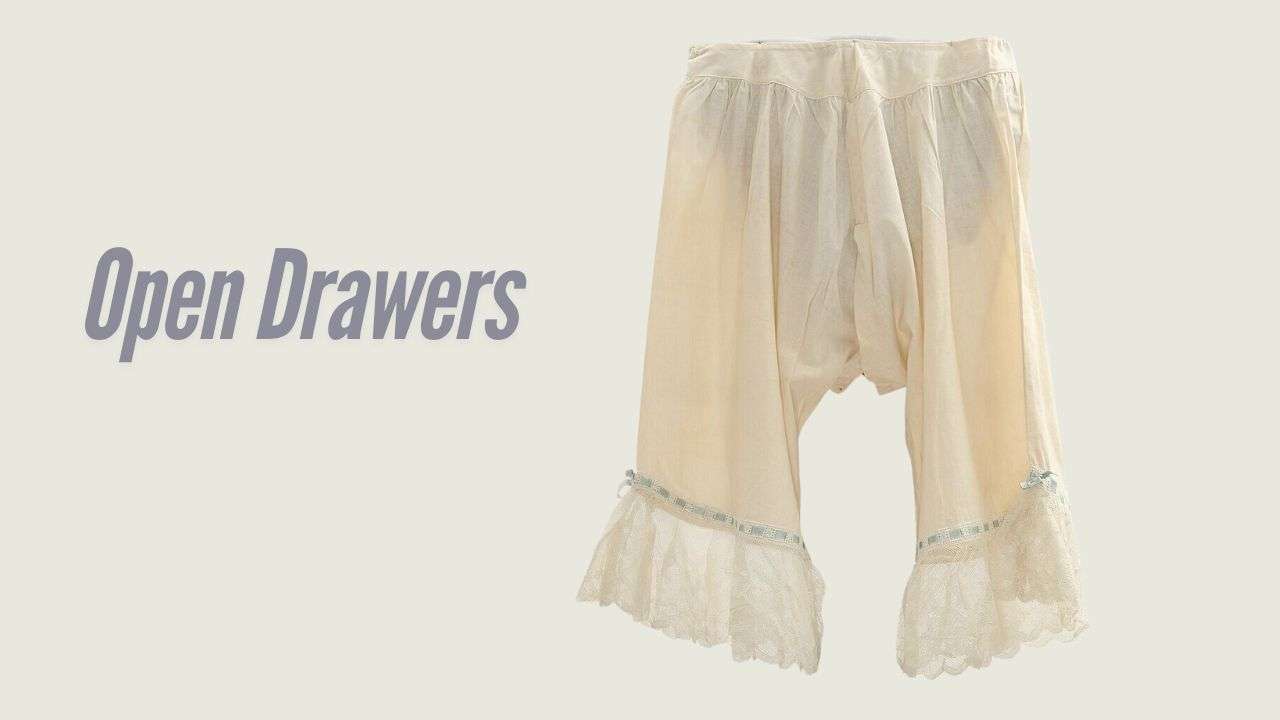
Open Drawers (Undergarments & Underwear)
Many physicians opposed the wearing of closed drawers, as they believed that open drawers allowed for better air circulation, which was beneficial to health. At the time, physicians also criticized the odor and other problems caused by closed drawers. Closed drawers were considered appropriate for young girls, but open drawers were considered more appropriate and comfortable for young women and mature women.
During the Victorian era, the use of undergarments was more formal and morally bound. Open drawers were compatible with the clothing of the time, such as petticoats and corsets, and were an important part of women’s daily lives.
Today, research into historical undergarments such as open drawers is important for understanding fashion and cultural changes. People examine Victorian life and social attitudes by viewing these historical garments in museums, fashion shows, or in films.
Modern Open Drawers
| Open Drawers | |
| Urdu Name | دراز کھولیں۔ |
| Purpose | Storage of undergarments and underwear for easy access. |
| Material | Wood, plastic, metal, or fabric-lined options for durability and style. |
| Design | Sliding or pull-out drawers with dividers for better organization. |
| Maintenance | Regular cleaning and decluttering to maintain hygiene and order. |
| Size | Available in various sizes to fit closets, dressers, or standalone units. |
Introduction and Description
Open drawers are undergarments in which the front and back of the legs are not connected, but are open in the middle, so that it is easier for women to urinate. These undergarments were made especially for women and children in the 18th and 19th centuries, when long dresses and layered clothes were common. Open drawers met the needs of the time, taking into account the principles of practical use and hygiene. In ancient times, open drawers were an important part of everyday life for women, as they were not only comfortable but also allowed for better air circulation. However, by the end of the 19th century, their use had decreased due to changes in fashion.
Today, they are seen as historical costumes or fashion designs, especially in the context of the Victorian era. In modern offices and homes, “open drawers” may refer to furniture drawers that are not closed after use. Not only do they pose a safety risk to the workplace, they can also lead to accidents and unexpected injuries. Keep drawers clean: Keep your workspace safe and organized by closing drawers when not in use.
Fix sticky drawers: If you have difficulty opening or closing drawers, apply paraffin wax or soap to the sliding parts. Professional help: If the problem persists, consult a furniture expert. These tips will not only improve safety, but also make everyday life easier.
Uses and Design
Open drawers were used as undergarments for women and girls in the late 19th century. Their main purpose was to provide convenience and ensure hygiene. In 1894, Elizabeth Roseware mentioned that girls usually began wearing open drawers at the age of nine or ten. These drawers were not cut at the hips but were fastened at the waist by a full band.
Design features
Open design: The unique aspect of the open drawer was that the front and back of the legs were not connected, but were hemmed separately or arranged with a false hem.
- Closure: The front closed up to 2 inches in children’s sizes, while it was slightly more closed in women’s sizes.
- Band and buttons: Buttons and buttonholes or two tape strings were used at the ends of the band.
- Leg design: The legs could be closed like knickerbockers or made with a deep hem and tight tucks.
Changing Fashion
As the length of chemises and dresses decreased in the late 19th century, the use of open drawers gradually decreased. Women’s drawers were rarely closed, as open drawers were considered more practical and comfortable for everyday life. Today, open drawers are considered an important part of historical fashion and undergarment design. They not only give us a glimpse into Victorian-era clothing, but also help us understand the social and hygiene concepts of the time.

The Open Chest Controversy: Late 19th Century
A major controversy arose in the late 19th century over the use of open chests. During this period, various physicians and experts were debating whether it was healthy for women to wear open chests. Dr. E.R. Palmer wrote strongly against the use of open chests. He mentioned an incident in which women in a Canadian city had burned their corsets in protest, and this was a new wave of support for the use of open chests. According to Dr. Palmer, this move was absurd because on the one hand women considered their corsets harmful, while on the other hand they wanted to adopt open chests, which he believed were equally inconvenient and unsafe.
He argued that while open chests provided the convenience of urination, they were just as dangerous as corsets, as they could cause external infections due to the lack of physical protection.
E.R. Shepherd's Position
In contrast, E.R. Shepherd expressed his support for open drawers. According to him, many physicians opposed women’s closed drawers because they prevented the free circulation of air, which could lead to various infections and odors in women. Shepherd explained that open drawers allowed better air circulation, which was beneficial for health and reduced the need for the use of deodorizers. He also said that closed drawers may be suitable for young girls, but open drawers were a better and healthier choice for young women.
The controversy over open drawers in the late 19th century highlights the different perspectives on women’s clothing and their health. While some physicians emphasized their health benefits, others also highlighted their potential dangers and harms. This debate is still ongoing today, especially in the context of historical costumes.
Summary
The debate over open chests in the late 19th century highlighted different perspectives on women’s clothing and health. On the one hand, Dr. E.R. Palmer and some other physicians considered these chests unsafe and harmful, as they reduced the body’s defenses and could lead to infection. On the other hand, experts such as E.R. Shepherd advocated the benefits of open chests, arguing that they allowed free circulation of air, which was beneficial for health and reduced odor.
The controversy emphasized that in the past, attention had been paid to the importance of different types of clothing for women’s health and comfort. Various arguments were given for or against the use of open chests, and this shows that different opinions on social and medical issues existed in each era. Even today, this debate provides us with valuable insights into past clothing fashions, their effects on health, and social changes.