Table of Contents
Club Med 2 (Cruise Ship)
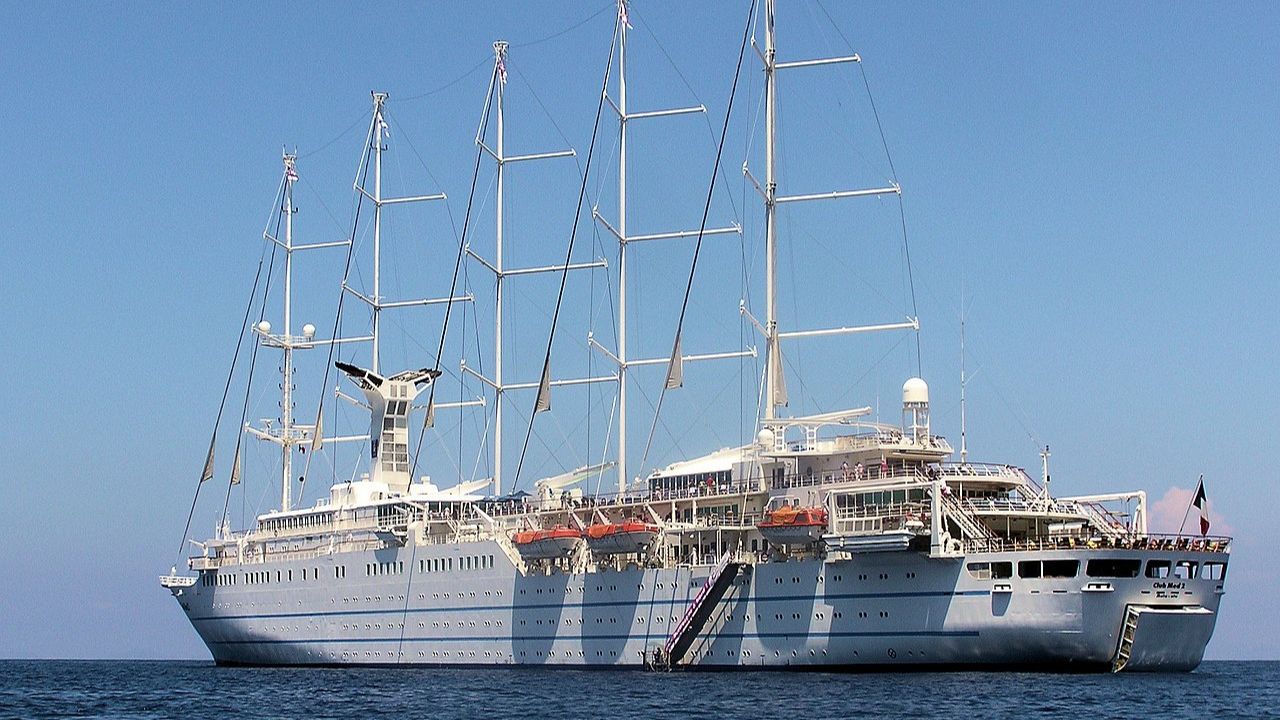
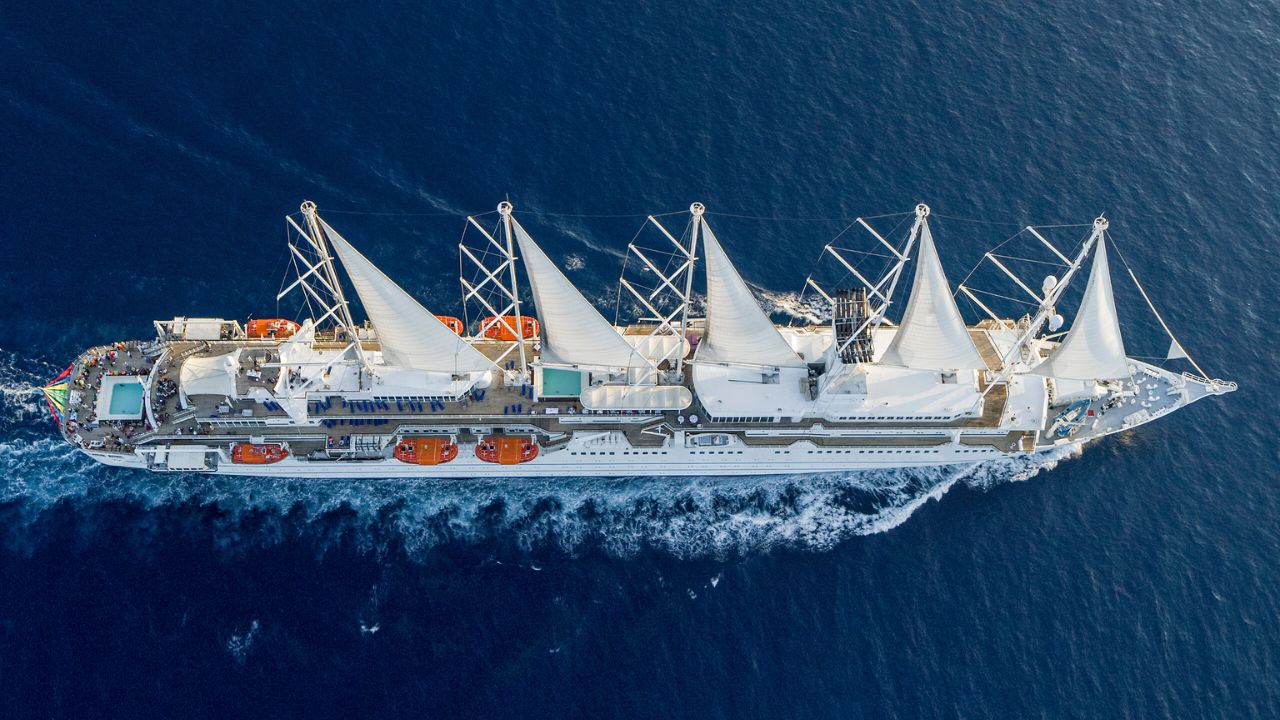
Club Med 2 is one of those rare cruise ships that instantly stands out because of its tall sails, calm presence, and timeless charm. Launched in 1992, this five-masted sailing ship has remained a favorite for travelers who want comfort, peaceful sea journeys, and a touch of old-world elegance. Its graceful design and smooth movement across the water create a travel experience that feels different from modern mega-ships.
Measuring about 187 meters in length and weighing nearly 15,000 tons, the ship is designed to offer a steady and comfortable journey. It can carry around 380–390 passengers, supported by a professional and well-trained crew of about 214 people. Club Med 2 sails at an average speed of 16 knots, powered by a combination of computer-controlled sails and diesel-electric engines, giving it both efficiency and a more natural sailing feel.
The interior of the ship is just as impressive as its exterior. It underwent a major redesign in 2008, followed by another upgrade in 2022, which refreshed its lounges, restaurants, and guest areas. With 184 cabins, including suites and sea-view rooms, the ship offers a warm and comfortable living space. Its wide teak decks — nearly 2,000 square meters — allow passengers to enjoy the sea breeze and open views throughout their journey.
Club Med 2 follows seasonal routes that make it even more attractive. In the summer, it sails through the Mediterranean and the Aegean Sea, visiting historic ports and scenic islands. During winter, it moves to the Caribbean, offering warm-weather cruising. At certain times of the year, the ship also completes transatlantic crossings, giving passengers a true deep-sea sailing experience.
With its mix of luxury, calm sailing, and beautiful destinations, Club Med 2 continues to represent a special type of travel. It is ideal for anyone who wants to explore historic coasts, relax on clear blue waters, or simply enjoy the gentle rhythm of a classic sailing cruise. Every journey on this ship feels personal and memorable.
Club Med 2 (Cruise Ship)

| Ship Name | Club Med 2 |
| Type | Five-masted luxury sailing cruise ship |
| Launch Year | 1992 |
| Builder | Le Havre, France |
| Length | ~187 meters |
| Gross Tonnage | ~14,983 tons (≈15,000 tons) |
| Passenger Capacity | 380–390 passengers |
| Crew Members | Around 214 |
| Cabins | 184 cabins (including suites & sea-view rooms) |
| Speed | ~16 knots |
| Propulsion | Diesel-electric engines + computer-controlled sails |
| Number of Sails | 5 masts with 7 computer-controlled sails |
| Deck Space | ~2,000 m² teak deck |
| Major Refit | 2008 |
| Latest Renovation | 2022 (restaurants, bars, lounges, décor updated) |
| Summer Routes | Mediterranean & Aegean Sea |
| Winter Routes | Caribbean Sea |
| Transatlantic Crossings | Yes (spring & autumn) |
| Specialty | Luxury sailing, calm travel experience, scenic routes |
Historical Context and Development
China’s pursuit of a dedicated attack helicopter like the Changhe Z-10 emerged from a broader modernization effort within the People’s Liberation Army (PLA) during the late 20th century. Until the 1990s, China’s rotary-wing fleet relied heavily on transport and utility helicopters retrofitted for combat roles, which lacked the precision, armor, and firepower of purpose-built attack helicopters used by Western militaries.
The conceptual groundwork for the Z-10 was laid in the early 1990s, as military planners identified the need for a platform capable of countering armored threats and supporting ground forces in complex terrain. The program was formally initiated in 1998 under the designation WZ-10, with Changhe Aircraft Industries Corporation (CAIC) taking the lead in manufacturing, and the China Helicopter Research and Development Institute (CHRDI) handling design responsibilities.
Early development benefited from limited international technical input, particularly from companies in Russia and South Africa, and possibly support in areas like powertrain design and ballistics analysis. This approach allowed China to accelerate development while maintaining control over the platform’s overall design and strategic direction.
By 2003, the first prototype had completed ground trials and achieved its maiden flight, marking a milestone in Chinese rotorcraft engineering. Over the next decade, iterative testing and upgrades led to the integration of more advanced targeting, propulsion, and avionics systems, eventually resulting in the induction of the Z-10 into active service around 2012.
The Z-10’s development reflects a turning point in China’s military aviation capabilities—moving from adaptation to innovation—while also setting the stage for future rotorcraft programs aimed at export and indigenous use.
Research and Development Programs
The development of the Changhe Z-10 was anchored in a long-term research and engineering program designed to create China’s first indigenous attack helicopter. The effort, known internally as the WZ-10 program, began in the late 1990s and involved collaboration between the China Helicopter Research and Development Institute (CHRDI) and Changhe Aircraft Industries Corporation (CAIC). It was supported by the Aviation Industry Corporation of China (AVIC), the country’s main state-owned aerospace conglomerate.
A central challenge was China’s limited experience in designing dedicated attack helicopters. To accelerate development, Chinese engineers studied existing foreign models such as the AH-64 Apache and Eurocopter Tiger while tailoring their designs to local operational needs. The design emphasized modularity, survivability, and compatibility with future upgrades in avionics and weapon systems.
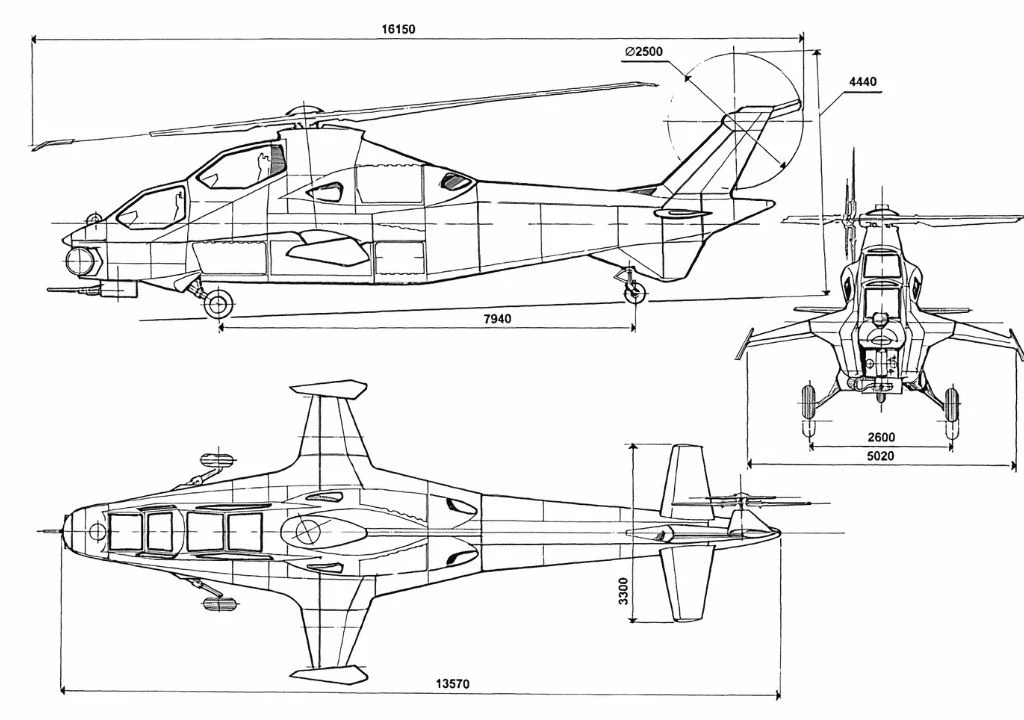
During early phases, technical assistance was reportedly acquired from foreign partners on a component level. Russian firms were believed to have consulted on rotor dynamics and flight stability, while South African experts contributed to survivability and systems integration. However, the core architecture, mission systems, and airframe were developed domestically.
Initial prototypes were tested by 2003, with extensive wind tunnel and systems integration trials conducted throughout the mid-2000s. The Z-10 program ran parallel to broader PLA modernization efforts, allowing for continuous refinement based on real-time military feedback.
By the time of its first public appearance in 2012, the Z-10 represented over a decade of targeted research, marked by a progressive transition from conceptual design to combat-ready platform.
Gallery