Table of Contents
Soyuz MS-28 (Russian Crewed)
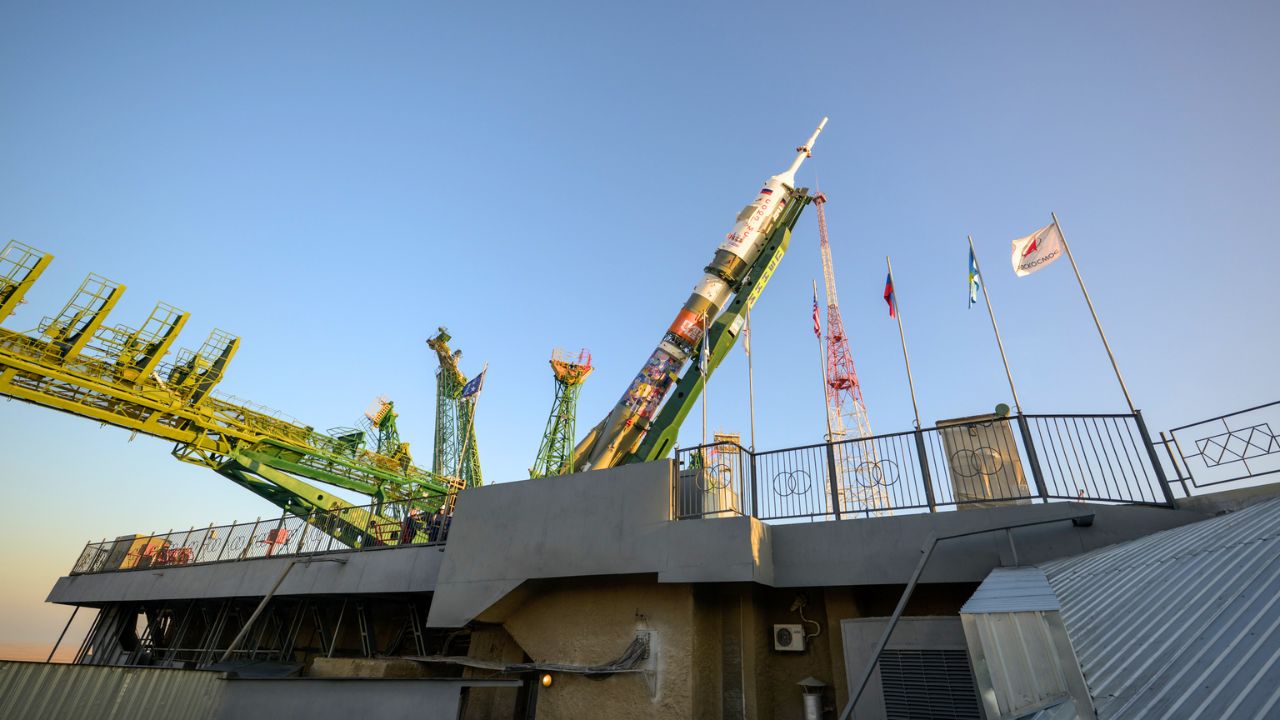
On the morning of 27 November 2025, the Soyuz MS-28 spacecraft lifted off from Site 31/6 at the Baikonur Cosmodrome in Kazakhstan at 09:27:57 UTC, marking a significant chapter in human space exploration. This mission carried three astronauts to the International Space Station (ISS): Russian cosmonauts Sergey Kud-Sverchkov (commander) and Sergey Mikayev (flight engineer), alongside American astronaut Christopher Williams (flight engineer). Their mission represents not only routine crew transfer but also continued international collaboration in space research.
A few hours after launch, at 12:34 UTC, Soyuz MS-28 successfully docked with the ISS at the Rassvet module, starting an eight-month expedition. The crew is scheduled to return to Earth in July 2026, continuing their critical work in scientific experiments, maintenance, and station operations. This seamless docking highlights the reliability of the modern Soyuz-MS spacecraft, part of Russia’s ongoing effort to maintain a strong presence in low Earth orbit.
Originally, the mission was planned with spacecraft No. 759, but it was replaced by No. 753 due to pre-flight heat-shield issues. This last-minute adjustment demonstrates the flexibility and resilience of space agencies in ensuring mission objectives are met without compromising safety or schedule.
Despite the successful launch and docking, Soyuz MS-28’s mission was accompanied by an unexpected ground-side challenge: the mobile service platform at Site 31/6 collapsed into the flame trench shortly after lift-off. This incident temporarily rendered Russia’s only operational crewed-launch pad at Baikonur unusable, raising questions about scheduling for upcoming missions. Immediate repair plans were announced, but the event highlighted the critical importance of ground infrastructure in human spaceflight.
Ultimately, Soyuz MS-28 is a testament to teamwork, technological expertise, and international cooperation. The crew’s arrival at the ISS ensures the continuation of vital experiments and station operations, reinforcing that in 2025, space exploration continues to be a field driven by resilience, curiosity, and human ingenuity.
Soyuz MS-28 (Russian Crewed)
| Mission Name | Soyuz MS-28 |
| Launch Date | 27 November 2025 |
| Launch Time (UTC) | 09:27:57 |
| Launch Site | Site 31/6, Baikonur Cosmodrome, Kazakhstan |
| Spacecraft Vehicle | No. 753 |
| Crew Members | Sergey Kud-Sverchkov (Commander), Sergey Mikayev (Flight Engineer), Christopher Williams (NASA, Flight Engineer) |
| Destination | International Space Station (ISS) |
| Docking Date & Time | 27 November 2025, 12:34 UTC |
| Mission Duration | Approx. 8 months (Return planned July 2026) |
| Purpose | Crew transfer, ISS research, maintenance, and international cooperation |
| Significant Event | Baikonur launchpad service platform collapse during lift-off |
| Significance | Continues ISS expeditions, highlights international collaboration, and demonstrates spacecraft reliability |
| Nationality | Russian-American Crew |
| Agency | Roscosmos & NASA |
Mission
The Soyuz MS-28 mission was designed to transport a three-member crew to the International Space Station (ISS) and support ongoing research, maintenance, and operational activities aboard the station. The crew included Russian cosmonauts Sergey Kud-Sverchkov (commander) and Sergey Mikayev (flight engineer), along with NASA astronaut Christopher Williams (flight engineer). Their presence strengthened international collaboration in space and ensured that scientific experiments and station upkeep continued without interruption.
The mission used spacecraft No. 753, after the originally planned vehicle, No. 759, was withdrawn due to pre-flight heat-shield issues. Launching from Baikonur Cosmodrome’s Site 31/6 on 27 November 2025 at 09:27 UTC, Soyuz MS-28 successfully reached orbit and docked with the ISS at 12:34 UTC on the same day. This rapid and precise docking ensured the crew could immediately begin their planned activities on the station.
During their eight-month stay, the crew is responsible for scientific research, including biology, materials science, and Earth observation experiments. They also perform station maintenance, conduct spacewalks, and assist with the operation of new technology and instruments onboard the ISS.
The mission also emphasized resilience and flexibility. Despite challenges on the ground, including the launchpad damage at Baikonur, the spacecraft successfully delivered its crew safely to the station. This demonstrated the robustness of the Soyuz-MS series and the coordinated efforts of international space agencies.
Overall, the Soyuz MS-28 mission highlights the importance of continuous human presence in low Earth orbit, international teamwork, and the ability to adapt to unforeseen technical challenges, keeping the ISS operational and productive.
Crew
The Soyuz MS-28 crew consisted of three highly trained astronauts representing Russia and the United States, highlighting the continued international cooperation aboard the International Space Station (ISS).
Sergey Kud-Sverchkov (Commander, Roscosmos) – Kud-Sverchkov led the mission, responsible for overall spacecraft operations, docking procedures, and crew safety. He is an experienced cosmonaut who has participated in prior space missions, bringing vital expertise to Soyuz MS-28.
Sergey Mikayev (Flight Engineer, Roscosmos) – Mikayev supported the commander in managing spacecraft systems and conducting scientific experiments aboard the ISS. His role is crucial for monitoring technical operations and assisting with station maintenance.
Christopher Williams (Flight Engineer, NASA) – Representing the United States, Williams assisted with both spacecraft and station operations. He contributed to ongoing research, coordinated international experiments, and participated in station maintenance and operational tasks during the mission.
Together, this team combines experience, technical skill, and international collaboration. Their eight-month expedition aboard the ISS is aimed at advancing scientific research, maintaining station systems, and ensuring smooth operation of ongoing international projects.
The selection of this crew reflects the high standards of both Roscosmos and NASA, demonstrating careful planning to ensure mission success even in the face of technical challenges, such as the unexpected launchpad damage at Baikonur Cosmodrome.
Launch & Docking
The Soyuz MS-28 mission lifted off from Baikonur Cosmodrome’s Site 31/6 on 27 November 2025 at 09:27 UTC, aboard a Soyuz 2.1a rocket. The launch was executed with precision, delivering the spacecraft into low Earth orbit and setting the stage for a smooth journey to the International Space Station (ISS). The successful lift-off marked another milestone for Russia’s crewed space program, even as the mission faced the challenge of a last-minute spacecraft switch from No. 759 to No. 753 due to thermal shield issues.
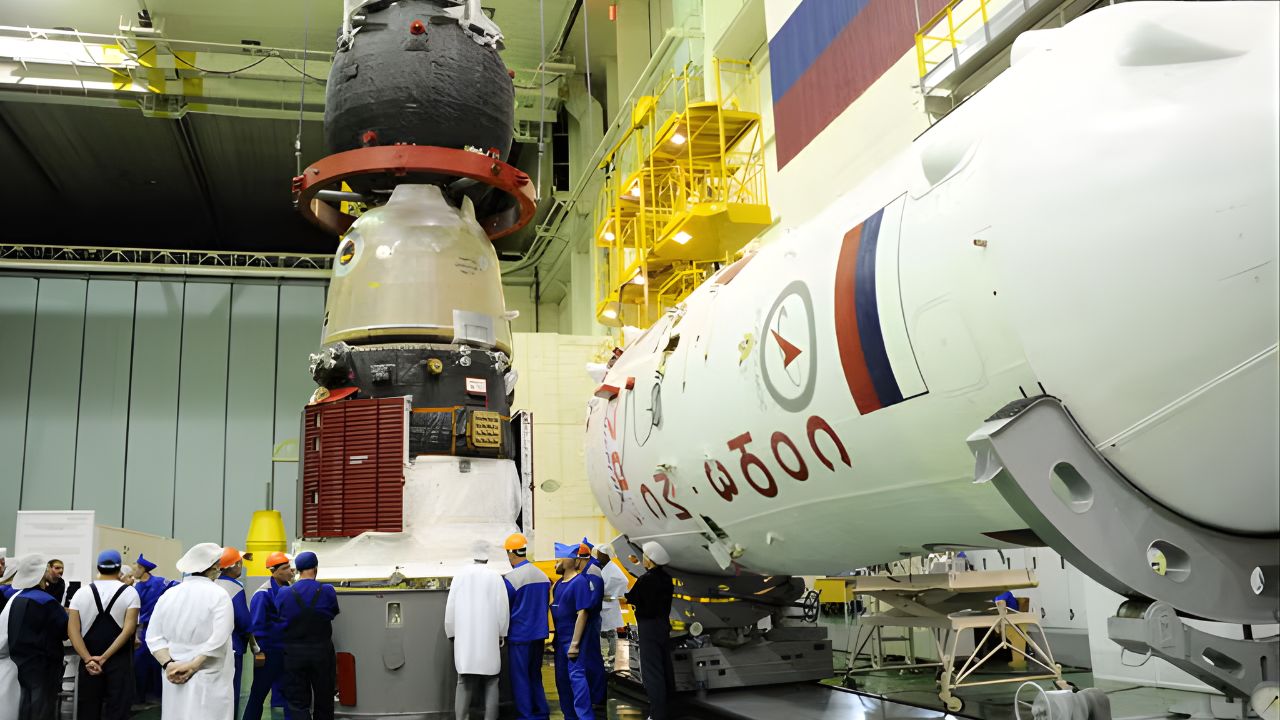
After reaching orbit, Soyuz MS-28 followed an automated flight trajectory, performing orbital corrections to align with the ISS. The docking procedure was completed at 12:34 UTC on the same day, attaching the spacecraft to the Rassvet module of the station. The docking was carried out seamlessly using the spacecraft’s automated guidance system, allowing the crew to enter the station without delay.
This precise and timely docking ensured that the crew could begin their planned scientific experiments, maintenance work, and station operations immediately upon arrival. The efficiency of the launch and docking process demonstrated the reliability of the Soyuz-MS series and highlighted the importance of careful pre-flight preparation and international coordination.
Despite the technical success, the mission was not without challenges. Shortly after launch, it was reported that the mobile service platform at Baikonur Site 31/6 collapsed into the flame trench, temporarily disabling Russia’s only operational crewed-launch pad. This incident underlined the critical role of ground infrastructure in space missions and emphasized the importance of backup plans for future launches.
Overall, the launch and docking of Soyuz MS-28 reaffirmed the effectiveness of the Soyuz spacecraft, the skill of its crew, and the strength of international cooperation in maintaining continuous human presence aboard the ISS.
Mission Objectives & Research
The primary objective of the Soyuz MS-28 mission is to safely transport its crew to the International Space Station (ISS) and support ongoing operations, experiments, and station maintenance. Beyond crew transfer, the mission plays a critical role in sustaining the continuous human presence in low Earth orbit and advancing international space collaboration.
During their eight-month stay, the crew is tasked with a wide range of scientific research. This includes experiments in biology, materials science, human physiology, and Earth observation, contributing valuable data to both Russian and international space programs. Their work helps scientists understand the effects of long-duration spaceflight on the human body and supports technological development for future missions.
In addition to research, the crew participates in station maintenance and operational tasks. This includes monitoring life support systems, performing repairs, and ensuring the functionality of the ISS’s complex systems. Such work is essential for the safety and efficiency of the station, allowing other international crews to carry out scientific experiments without interruption.
The mission also highlights resilience and adaptability. The crew successfully executed their mission despite the Baikonur launchpad incident, proving the effectiveness of contingency planning and the robustness of the Soyuz-MS spacecraft. Their work underscores how technical expertise, careful planning, and teamwork are essential for long-duration space missions.
Overall, the Soyuz MS-28 mission continues to advance scientific knowledge, maintain the ISS’s operational capabilities, and strengthen international cooperation in space exploration, making it a vital part of humanity’s ongoing journey beyond Earth.
Significance & Challenges
The Soyuz MS-28 mission holds great significance in the realm of human spaceflight. By transporting a mixed crew of Russian cosmonauts and an American astronaut to the International Space Station (ISS), it reinforces the importance of international collaboration in space exploration. The mission ensures continuity of ongoing scientific research and maintenance aboard the ISS, which is crucial for the success of both current and future space programs.
One of the mission’s key achievements is the demonstration of reliability and flexibility. Despite technical hurdles — including the last-minute replacement of the spacecraft from No. 759 to No. 753 due to heat-shield issues — the crew was launched safely, and the docking with the ISS was executed flawlessly. This highlights the robust design of the Soyuz-MS series and the preparedness of the ground and flight teams.
However, the mission also faced notable challenges. Shortly after lift-off, the mobile service platform at Baikonur Cosmodrome’s Site 31/6 collapsed into the flame trench, temporarily disabling Russia’s only operational crewed-launch pad. This unexpected incident underscored the critical importance of ground infrastructure in supporting human spaceflight and emphasized the need for effective contingency plans.
The mission’s success, despite these challenges, demonstrates the capability of international space agencies to manage risks and maintain continuous human presence in orbit. The crew’s work onboard the ISS not only advances scientific knowledge but also strengthens the framework for future long-duration space missions.
In conclusion, Soyuz MS-28 serves as a reminder that human spaceflight is a complex endeavor requiring teamwork, technical expertise, and adaptability. Its success reinforces global confidence in crewed space programs while highlighting areas — like infrastructure resilience — that need continuous attention.
Gallery