Table of Contents
Evika Siliņa (Politician)
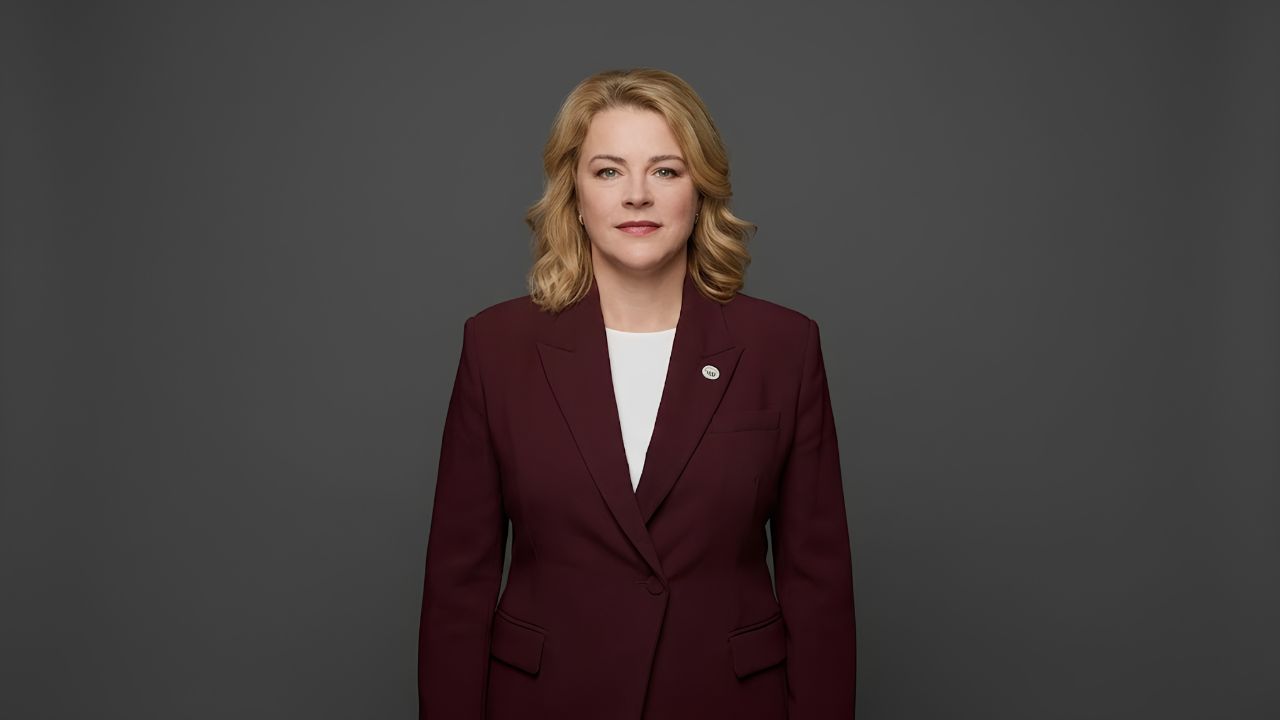
Evika Siliņa is a Latvian politician and lawyer who currently serves as the Prime Minister of Latvia, and her life story reflects a remarkable journey from a Riga courtroom to the highest office in Latvian government. Born on August 3, 1975, she is a trained lawyer, a seasoned public servant, and currently the Prime Minister of Latvia — only the second woman in the nation’s history to hold that distinction. Her path to leadership was neither sudden nor accidental. It was built steadily, over decades of legal practice, ministerial work, and quiet political dedication.
Before stepping into the Prime Minister’s role, Siliņa had already earned a reputation as a capable and transparent public official. She served as Minister of Welfare, where her focus on social policy and minimum income reform showed a clear commitment to improving everyday lives. Her colleagues and the press recognized her for being direct, accessible, and principled — qualities that are not always easy to maintain in political life.
She is a member of the New Unity party and leads a coalition government with a broad and ambitious agenda. From strengthening Latvia’s national security to advancing education in the Latvian language, her priorities signal a leader thinking long-term. Personally, she is a mother of three and is married to Aigars Siliņš. Her story is one of consistent effort — legal training, public service, and ultimately, national leadership.
| Full Name | Evika Siliņa |
| Date of Birth | August 3, 1975 |
| Age | 50 years old |
| Place of Birth | Riga, Latvia |
| Nationality | Latvian |
| Profession | Lawyer, Politician |
| Political Party | New Unity (Jaunā Vienotība) |
| Current Office | Prime Minister of Latvia (since September 15, 2023) |
| Previous Role | Minister of Welfare, Parliamentary Secretary to the Prime Minister |
| Education | Bachelor of Law, University of Latvia; Master of Social Sciences (International & European Law), Riga Graduate School of Law |
| Legal Career | Independent Attorney — International & Domestic Business Law (2003–2012) |
| Historical Significance | Second woman to serve as Prime Minister of Latvia (after Laimdota Straujuma) |
| Spouse | Aigars Siliņš |
| Children | Three |
| Languages | Latvian (native), English, Russian |
| Zodiac Sign | Leo |
| Residence | Riga, Latvia |
| Height | Not publicly disclosed |
| Religion | Not publicly disclosed |
| Net Worth | Not publicly disclosed |
Evika Siliņa Parents and Early Life
Riga, the capital of Latvia, is where Evika Siliņa first came into the world. Growing up in a city known for its rich legal and cultural history, she developed an early appreciation for structure, justice, and public life. While much of her personal upbringing remains private — as she has consistently kept her family background away from the public eye — what is clear is that her early environment shaped a disciplined and intellectually curious mind.
Latvia in the late Soviet era and its transition toward independence was a country undergoing profound change. Growing up during this period of national transformation almost certainly influenced Siliņa’s later commitment to public service and governance. For a generation of young Latvians, the restoration of independence brought with it a renewed sense of national identity and civic responsibility — values that Siliņa would carry into her professional life.
From an early age, she demonstrated a clear inclination toward law and governance. Rather than pursuing business or the arts, she gravitated toward legal study, a path that demands precision, patience, and a deep understanding of societal systems. Her roots in Riga — a city that sits at the crossroads of European politics and culture — gave her both the exposure and the motivation to engage with the world beyond Latvia’s borders. That foundation, built quietly in her early years, would eventually carry her to the country’s highest office.
Siliņa has not publicly named her parents or discussed their professions in any official interview or media appearance. She was born and raised in Riga during Latvia’s transition from Soviet rule to independence — a formative period that shaped her civic values — but the identities and backgrounds of her parents remain outside the public record. This is consistent with her broader approach to personal life: she shares what is relevant to her public role and protects everything else. Her parents’ influence, though undisclosed, is reflected in the disciplined and principled approach she has demonstrated throughout her career in law and government.
Education
Siliņa’s academic path was deliberate and focused. She chose law — a field that demands not just intellectual ability but also a strong sense of ethics and social responsibility. Her undergraduate studies took place at the University of Latvia, one of the country’s most respected institutions, where she completed a Bachelor’s degree in Law and earned her qualification as a jurist. Those years gave her a rigorous grounding in legal theory, civil procedure, and the foundations of both domestic and international law.
What set her apart, even at this stage, was her decision to go further. Rather than entering legal practice immediately after her undergraduate degree, she pursued advanced education at the Riga Graduate School of Law — an institution internationally recognized for its high academic standards and its focus on European and international legal frameworks. There, she earned a Master’s degree in Social Sciences, with a specialization in International Law and European Law.
That specialization would prove significant. Throughout her career, Siliņa would go on to represent Latvia in major international bodies, navigate EU policy frameworks, and lead negotiations at the highest governmental level. Her academic training was not merely a credential — it was a practical toolkit that she applied directly in public service. For a politician who later championed EU funds policy and international conventions, her educational choices were remarkably well-suited to the work that followed.
Career
Before politics claimed her full attention, Evika Siliņa spent nearly a decade building a serious legal practice. Working as an independent attorney, she focused primarily on international and domestic business law — a demanding field that required both technical precision and the ability to navigate complex cross-border legal environments. Her clients and cases spanned the private sector, giving her firsthand experience of how law functions not just in theory but in the real world of commerce and contracts.
One of the more distinctive aspects of her legal work during this period was her involvement in public electronic communication services. This included legal matters related to telecommunications and internet services — sectors that were rapidly evolving and increasingly important to Latvia’s modernizing economy. Working in this space required her to stay ahead of fast-changing regulations, both domestically and at the European level.
Alongside her private practice, Siliņa also contributed to the non-governmental sector. She was involved in establishing and advising NGOs, work that kept her connected to civil society and public interest causes even while operating primarily in private law. This combination — commercial legal expertise paired with civic engagement — gave her a broader perspective than most practicing attorneys carry. By the time she transitioned toward public service, she was not a politician learning law. She was a lawyer stepping into politics — a distinction that would define her approach to governance for years to come.
Early Political Steps
Siliņa’s entry into formal politics was not an overnight decision. Her first electoral attempt came when she ran as a candidate for Zatlers’ Reform Party in Riga during a parliamentary election. She did not secure a seat on that occasion — a setback that, rather than discouraging her, appeared to deepen her commitment to public service through other channels. Many politicians who eventually reach the highest offices begin with precisely this kind of early, quiet persistence.
Her government career began in earnest when she joined the Latvian Ministry of the Interior as a legal adviser. Within a year, she was appointed Parliamentary Secretary — a role she would hold for several years and one that brought her considerable public recognition. What distinguished her during this period was her relationship with the press. Journalists noted her willingness to explain the Ministry’s positions clearly and honestly, a quality that is far rarer in government than it should be. She was not evasive. She communicated. That transparency became something of a professional trademark.
Her substantive work during these years was equally notable. She took a leading role in efforts to combat the spread of synthetic cannabinoids in Latvia — a public health and law enforcement challenge that required coordination across multiple government bodies. She also represented Latvia in significant international forums, including the United Nations, INTERPOL, and CEPOL, gaining experience in multilateral diplomacy that would serve her well in later roles.
Parliamentary Secretary to the Prime Minister
Following her tenure at the Ministry of the Interior, Siliņa moved into the role of Parliamentary Secretary to the Prime Minister, working directly under PM Krišjānis Kariņš. This position placed her at the center of executive decision-making, exposing her to the full scope of government operations and coalition management. It was, in many ways, the final stage of preparation before her own leadership chapter began.
Her election to the Saeima under the New Unity banner marked a clear escalation in her political standing. Shortly after, she was appointed Minister of Welfare — a portfolio that aligned naturally with her long-standing interest in social policy. In this role, her primary focus was raising the minimum income, a reform with direct and meaningful impact on Latvia’s most economically vulnerable citizens.
She was also appointed to a Thematic Committee on European Union Funds, reflecting the government’s trust in her understanding of EU policy frameworks. Her Ministry additionally advanced the ratification of the Istanbul Convention — a significant and, at the time, politically sensitive step that demonstrated her willingness to pursue progressive policy even without full coalition consensus.
Prime Minister of Latvia
The path to Latvia’s highest office opened unexpectedly when Prime Minister Krišjānis Kariņš resigned, creating a vacancy that New Unity moved quickly to fill. The party nominated Siliņa as their candidate — a choice that reflected both her ministerial experience and her growing stature within the party. President Edgars Rinkēvičs formally invited her to form a government, setting in motion a process that would prove more complex than straightforward.
Coalition building rarely goes smoothly, and Siliņa’s experience was no exception. The United List declined to join her initially proposed four-party coalition, forcing her to recalibrate. Rather than retreating, she pivoted with purpose — signaling her intention to build a new parliamentary majority with the Union of Greens and Farmers and The Progressives. It was a decisive move that demonstrated political flexibility without sacrificing direction. Within days, she had mapped out a government composition that distributed ministries across three parties, giving each coalition partner meaningful responsibility.
When the confidence vote came before the Saeima, her government secured it with 53 votes — enough to govern and enough to signal genuine parliamentary support. On that same day, her cabinet held its first meeting, wasting no time in beginning the work ahead.With that vote, Siliņa made history. She became only the second woman to serve as Prime Minister of Latvia, following Laimdota Straujuma, who had held the role a decade earlier.
The significance of that milestone was not lost on observers inside or outside Latvia. But Siliņa herself appeared more focused on the work than the symbolism — a characteristic that had defined her public career from its earliest days. Her government came into office with a clear and ambitious agenda, and she moved immediately to pursue it.
Political Views & Key Policies
Siliņa governs from a position that is difficult to reduce to simple labels. Her policy priorities reveal a leader who is pragmatic above all else — someone who weighs national security alongside social welfare, and who understands that a small nation on the eastern edge of the European Union cannot afford to be naive about its geopolitical environment. On national security, her position is unambiguous. She has committed to increasing Latvia’s military budget and to completing the construction of a physical barrier along Latvia’s borders with Russia and Belarus.
These are not abstract policy positions — they reflect a clear-eyed assessment of the security situation facing the Baltic states and a determination to ensure Latvia is not caught unprepared. At the same time, her social instincts are genuine. Her work on minimum income reform during her time as Minister of Welfare was not performative — it was a policy she pursued with consistent focus. She carries that same commitment into her current role, where improving living standards remains a core government objective.
On the question of Latvia’s Russian-speaking minority, Siliņa has expressed a notably inclusive stance. She has emphasized the importance of integration rather than exclusion, while simultaneously supporting an education system firmly centered on the Latvian language. It is a nuanced position — one that acknowledges demographic reality without compromising national identity.
Her support for EU frameworks, including her role on the EU Funds Committee, further confirms a leader who sees European integration not as a constraint but as a strategic asset for Latvia’s long-term development.
Personal Profile
Evika Siliņa age is a detail that carries its own quiet significance. Born on August 3, 1975, she is currently 50 years old — and at that age, she holds one of the most demanding executive positions in the Baltic region. For many politicians, fifty represents a peak of accumulated experience meeting sustained energy. In Siliņa’s case, that description fits precisely. She came to the Prime Minister’s office not as a newcomer to public life but as someone who had spent decades preparing for exactly this kind of responsibility.

She was born and raised in Riga, Latvia’s capital — a city whose complex history, European character, and political weight left a clear imprint on the woman she became. Her nationality is Latvian, and her identity as a Latvian public servant has been central to both her career choices and her policy priorities throughout.
In terms of personal profile, Siliņa presents as measured and professional in public. She is not known for theatrical political gestures or media spectacle. Her communication style — noted even in her earlier ministerial roles — tends toward clarity and directness. Colleagues and journalists alike have described her as someone who prepares thoroughly and speaks carefully.
She is fluent in three languages — Latvian, English, and Russian — a linguistic range that reflects both her international legal background and the multicultural reality of the country she now leads. Her zodiac sign is Leo, born in the height of summer.
Evika Siliņa Husband and Family
Evika Siliņa is married to Aigars Siliņš. The couple have three children together. Despite holding one of the most public offices in Latvia, Siliņa has consistently maintained a firm boundary between her professional life and her personal world. Her husband Aigars Siliņš is rarely mentioned in official government communications, and their children have never been named or featured in public-facing media by Siliņa herself.
This deliberate privacy is not unusual among Baltic politicians, but it is particularly consistent in Siliņa’s case. She has spoken in general terms about the demands of balancing family life with the responsibilities of high office, but has not invited media scrutiny into her household. Her three children grow up outside the political spotlight — a boundary she appears to actively protect.
As Prime Minister, Siliņa’s family life remains largely her own. What is publicly known is that she and Aigars Siliņš have built a life in Riga, the city where she was born and where she now leads the government. For a politician whose communication style is defined by directness and substance, the same discipline that marks her policy work also governs what she shares — and what she does not — about the people closest to her.
Evika Siliņa Height
Evika Siliņa’s exact height has not been disclosed in any official government biography or verified media source. She has not addressed this detail publicly, and no credible record places a specific figure on her physical measurements. This is consistent with her broader approach to personal information — she keeps details that are not relevant to her public role firmly out of the spotlight. Among Baltic heads of government, physical attributes are rarely part of official profiles, and Siliņa is no exception to that norm.
Evika Siliņa Religion
Evika Siliņa has not publicly declared a religious affiliation. No official biography, government profile, or credible media report has identified her as a member of any specific religious denomination. Latvia has a mixed religious landscape — Lutheran and Catholic traditions are most prominent, alongside a significant non-religious population — but Siliņa has made no public statements connecting her personal identity to any faith tradition. She does not appear to use religion as a political signal, and no verified source attributes any religious belief or practice to her. Until she chooses to address this publicly, her faith remains a private matter.
Evika Siliņa Net Worth
Evika Siliņa’s net worth has not been officially confirmed by any government source or verified financial disclosure. Latvian public officials are subject to annual asset and income declaration requirements under the country’s integrity and anti-corruption framework — but these declarations cover declared assets and income, not net worth as a calculated figure. As Prime Minister, she receives a government salary consistent with Latvia’s executive compensation structure. No credible estimate of her personal wealth has been published by any reliable source, and figures circulating online remain unverified. Her financial profile, like much of her personal life, stays outside the public domain.
Career Statistics
| Prime Minister of Latvia | |
| Position | 24th Prime Minister of Latvia |
| Status | Incumbent |
| Assumed Office | 15 September 2023 |
| President | Edgars Rinkēvičs |
| Preceded By | Krišjānis Kariņš |
| Minister of Welfare | |
| Office Period | 14 December 2022 – 15 September 2023 |
| Prime Minister | Krišjānis Kariņš |
| Preceded By | Gatis Eglītis |
| Succeeded By | Uldis Augulis |
| Member of the Saeima (14th) | |
| Service Period | 1 November 2022 – Present |
| Constituency | Riga |
| Political Party | New Unity (Jaunā Vienotība) |
| Parliamentary Secretary to the Prime Minister | |
| Office Period | 23 January 2019 – November 2022 |
| Prime Minister | Krišjānis Kariņš |
| Parliamentary Secretary — Ministry of the Interior | |
| Office Period | January 2013 – 23 January 2019 |
| International Representation | United Nations, INTERPOL, CEPOL |
| Legal Adviser — Ministry of the Interior | |
| Service Period | 2011 – 2012 |
| Personal Information | |
| Full Name | Evika Siliņa |
| Date of Birth | August 3, 1975 |
| Place of Birth | Riga, Latvia |
| Nationality | Latvian |
| Spouse | Aigars Siliņš |
| Children | Three |
| Languages | Latvian, English, Russian |
| Education | LLB — University of Latvia; MSc International & European Law — Riga Graduate School of Law |
FAQ: Everything You Need to Know About Evika Siliņa
Key questions answered about Latvia's Prime Minister, her age, career, and personal life
She reached this milestone while serving as the Prime Minister of Latvia — one of the most demanding executive roles in the Baltic region. Her age reflects decades of accumulated experience across law, public administration, and national politics, making her one of the most seasoned leaders in Latvia's modern political history.
Her nomination followed the resignation of Prime Minister Krišjānis Kariņš. President Edgars Rinkēvičs invited her to form a government, and after navigating complex coalition negotiations, she successfully built a three-party majority with New Unity, the Union of Greens and Farmers, and The Progressives.
The first female Prime Minister of Latvia was Laimdota Straujuma, who held the office from 2014 to 2016. Siliņa's appointment nonetheless represents a significant moment in Latvian political history, reinforcing the presence of women at the very top of the country's governance structure.
She was nominated as New Unity's candidate for Prime Minister following Kariņš's resignation. She had previously represented the party in the Saeima after winning a parliamentary seat, and her appointment as Minister of Welfare also came under the New Unity banner. The party currently leads Latvia's coalition government.
Her undergraduate studies qualified her as a jurist, while her postgraduate specialization in International Law and European Law gave her the expertise she would later apply across multiple government roles. Her academic background directly informed her legal career and her approach to international representation and EU policy frameworks.
The couple have three children together. Siliņa has consistently kept her family life out of the political spotlight, maintaining a clear boundary between her public role and her personal world. Her husband and children are rarely discussed in official or media contexts, reflecting her preference for privacy in personal matters.
Her multilingual ability is directly relevant to her role as Prime Minister of a country with a significant Russian-speaking minority and deep ties to European institutions. Her English proficiency supports her engagement with international organizations and EU forums, while her Russian allows her to communicate with a major segment of Latvia's domestic population.
She also worked as an independent attorney for nearly a decade, specializing in international and domestic business law. Her career path was unusually broad — spanning private legal practice, civil society, ministerial administration, and parliamentary politics — giving her a comprehensive understanding of both law and governance before reaching the country's top office.
She was born and raised in Riga, Latvia, and grew up during the country's transition from Soviet rule to independence. This privacy regarding her family background is consistent with her broader approach to keeping her personal life firmly outside the political spotlight.
No official biography or verified media source identifies her with a specific denomination. Like other personal details, religion appears to be a matter she keeps private and separate from her public role as Prime Minister of Latvia.