Table of Contents
Fête Nationale du Québec (Canadian Holiday)
Fête Nationale du Québec is one of Canada’s most vibrant and culturally rich provincial holidays, celebrated every June 24 across the province of Quebec. It honors Saint John the Baptist, the patron saint of French Canadians, while also marking the warm arrival of summer. But this holiday is far more than a single day of festivity. It represents centuries of French Canadian resilience, a deep pride in the French language, and a collective memory that has been carefully passed down through generations.
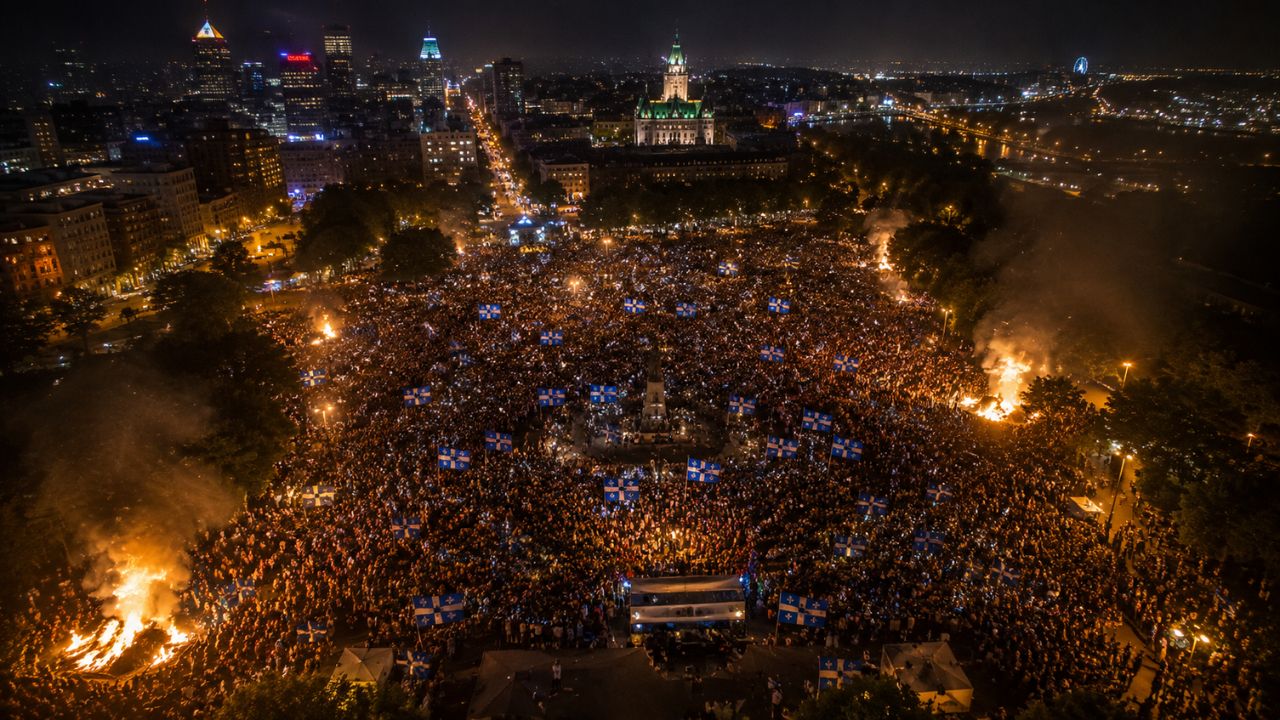
Every year, celebrations begin the evening before, with bonfires lighting up the night sky, families gathering in parks, and the sound of traditional folk songs filling the air. By morning, parades move through the streets of major cities, and outdoor concerts bring together local and national artists in front of massive crowds. Communities both large and small across Quebec take part, each adding their own regional flavor to the festivities.
What makes this holiday particularly meaningful is what it stands for beyond the celebrations. It is a statement of identity. French Canadians both inside and outside Quebec see this day as an opportunity to affirm who they are, where they come from, and what they wish to preserve. Over the years, the holiday has grown to welcome people of all backgrounds, reflecting the diverse and evolving face of modern Quebec.
From its early religious roots to its current status as an official provincial holiday, Fête Nationale du Québec continues to grow in meaning with every passing year. It is not simply a date on the calendar. It is a celebration of a people, a language, and a culture that refuses to be forgotten.

| Official Name | Fête Nationale du Québec |
| Also Known As | Saint-Jean-Baptiste Day / National Holiday of Quebec |
| Date | June 24 (annually) |
| Location | Quebec, Canada |
| Type | Public Statutory Holiday |
| First Celebrated | 1834 (organized by Ludger Duvernay) |
| Statutory Holiday Since | 1925 (Quebec Legislature Declaration) |
| Official National Recognition | 1977 (Decree by Premier René Lévesque) |
| Patron Saint | Saint John the Baptist (Jean Baptiste) |
| Organized By | Saint-Jean-Baptiste Society |
| Traditional Customs | Bonfires, folk songs, parades, Catholic Mass, community feasts |
| Unofficial Anthem | Gens du pays (by Gilles Vigneault) |
| Key Symbol | Fleur-de-lis Flag of Quebec |
| Major Event | Parc Maisonneuve Mega-Concert, Montreal |
| Cultural Significance | Celebration of French Canadian language, heritage, and identity |
| Observed By | French Canadians in Quebec and diaspora communities worldwide |
What is Fête Nationale du Québec?
Fête Nationale du Québec is a vibrant provincial holiday celebrated annually on June 24 across Quebec, Canada. It honors Saint John the Baptist, the patron saint of French Canadians, while commemorating the culture, history, language, and collective resilience of French Canadians through bonfires, parades, folk music, and community festivities.
History and Origins
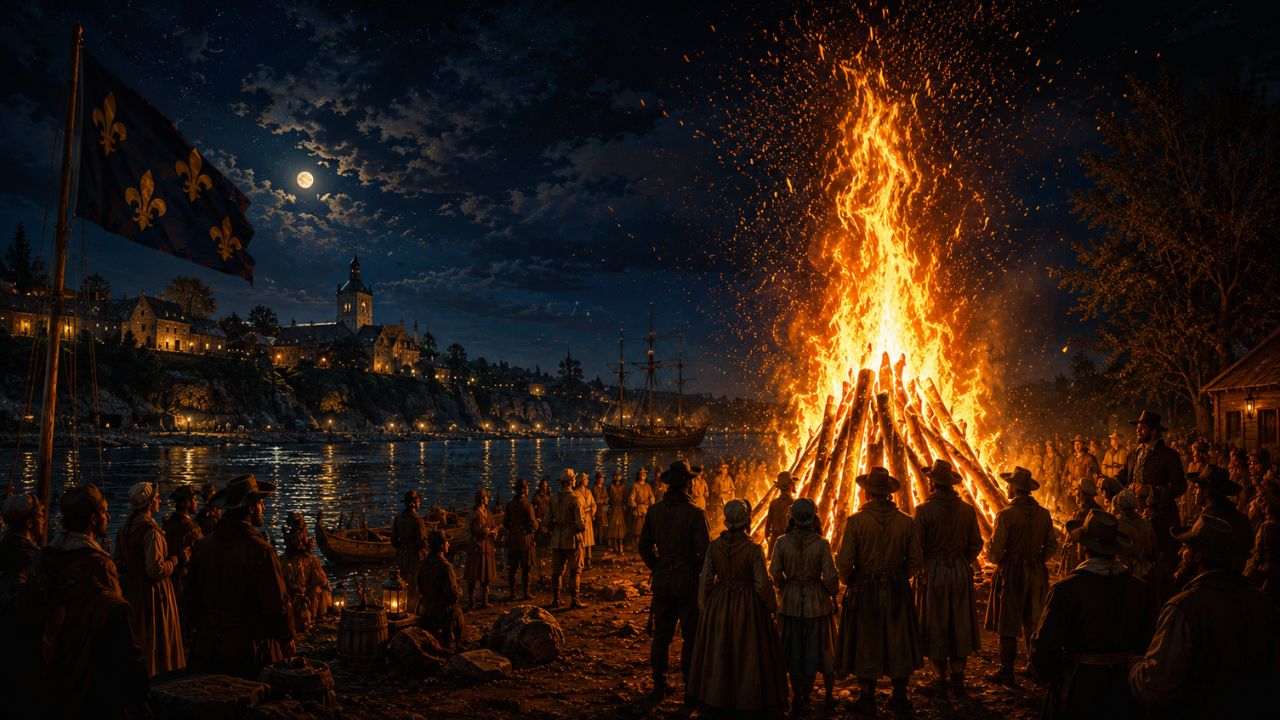
Long before Fête Nationale du Québec took its modern form, the seeds of this celebration were planted in an ancient European tradition. French settlers arriving in the New World brought with them a custom deeply rooted in Gallic and pagan culture — the lighting of bonfires to mark the summer solstice. This practice, observed for centuries across Europe, carried powerful symbolism. Fire represented community, renewal, and the triumph of light during the longest days of the year.
As the Catholic Church grew in influence among French Canadian settlers, this pagan tradition did not disappear. Instead, it merged gracefully with the religious feast of Saint John the Baptist. The bonfire became a symbol of both spiritual devotion and communal identity. Two very different traditions — one ancient and pagan, one deeply Catholic — found common ground in the hearts of French Canadians, and a uniquely Quebec celebration began to take shape.
Ludger Duvernay and the First Celebration
The holiday as an organized event owes its existence to one determined man. Ludger Duvernay was a journalist, publisher, and passionate French Canadian nationalist who believed his people needed a unifying celebration — something that could inspire pride and solidarity the way Saint Patrick’s Day did for the Irish. He looked at how immigrant communities used cultural holidays to strengthen their identity and felt French Canadians deserved the same.
In Montreal, Duvernay organized the first formal celebration, gathering community leaders, intellectuals, and ordinary citizens together under a shared sense of purpose. That gathering marked a turning point. It was no longer just a folk tradition or a religious observance. It was becoming something political, something intentional. Out of that same spirit, Duvernay founded the Saint-Jean-Baptiste Association, an organization dedicated to protecting and promoting French Canadian culture, language, and heritage. The association would go on to play a central role in keeping the holiday alive and growing for generations.
From Religious Holiday to National Holiday
For many decades, June 24 remained an important date on the Quebec calendar, but its official status continued to evolve. Eventually, the Quebec legislature took a formal step and declared June 24 a statutory public holiday, giving workers across the province a recognized day off and cementing the celebration’s place in public life.
The most significant political moment came when then-premier René Lévesque issued an official government decree recognizing the day as the national holiday of Quebec. This was a deliberate and powerful act. By using the word “national,” Lévesque was making a statement about Quebec’s distinct identity and its people’s right to celebrate that identity on their own terms. The holiday’s name also shifted over time, moving away from its purely religious association toward the broader, more inclusive title of Fête Nationale — the National Holiday — a name that reflected a maturing, self-aware Quebec society ready to define itself on its own terms.
The Saint-Jean-Baptiste Society
Few organizations have played a more lasting role in shaping Quebec’s cultural identity than the Saint-Jean-Baptiste Society. It was founded by Ludger Duvernay as the Saint-Jean-Baptiste Association, born out of the same gathering that produced the holiday’s first organized celebration. From its very first days, the organization carried a clear and passionate mandate — to protect the French language, preserve French Canadian traditions, and unite a community that feared being absorbed into an English-speaking majority.
Decades after its founding, the association underwent a formal renaming, becoming the Saint-Jean-Baptiste Society. The new name reflected a broader, more structured vision for the organization’s future. It was no longer simply a social club. It had become a cultural institution with real influence over public life in Quebec.
Throughout the years, the Society took on the primary responsibility of organizing the annual Fête Nationale celebrations, coordinating parades, bonfires, and public gatherings across the province. Its role ensured that the holiday remained consistent, meaningful, and well-attended generation after generation.
Currently, the Saint-Jean-Baptiste Society remains active in Quebec public life. It advocates for the French language, supports cultural initiatives, and continues to organize Fête Nationale events. In a province where language and identity remain deeply personal issues, the Society’s work is as relevant today as it was at its founding.
Significance of Fête Nationale du Québec
For Quebecers, this holiday is not simply a day off work. It is an annual reminder of who they are and where they come from. The French language, the folk traditions, the music, the food, and the community gatherings all come together on this one day to paint a vivid picture of what makes Quebec distinct within Canada. In a country built on cultural diversity, Quebec occupies a unique space — a French-speaking society with its own laws, its own artistic traditions, and its own way of seeing the world. Fête Nationale du Québec is the single day that brings all of that into sharp, proud focus.

Political Significance
The holiday has never existed in a purely cultural vacuum. Its growth has always been tied to the broader story of Quebec’s political awakening. During the Quiet Revolution, a period of rapid social and political transformation in Quebec, the celebration took on deeper meaning. French Canadians were asserting their right to govern themselves, to work in their own language, and to define their future on their own terms. The holiday became an expression of that energy.
The sovereignty movement further deepened the holiday’s political weight. For many Quebecers who believed in an independent Quebec, June 24 was more than a celebration — it was a declaration. When René Lévesque formally recognized the day as a national holiday, his choice of the word “national” was deliberate and deeply symbolic. It positioned Quebec not merely as a province but as a nation with its own identity, its own history, and its own right to self-determination.
Linguistic Significance
Language sits at the very heart of this holiday. Quebec’s French language is not simply a means of communication — it is the cornerstone of the province’s identity and the thread that connects generations. The passage of Bill 101, the French Language Charter, was one of the most significant legislative acts in Quebec’s history, enshrining French as the official language of the province in every area of public life.
Fête Nationale du Québec and Bill 101 share the same spirit. Both are expressions of the same deeply held conviction — that the French language in Quebec must be protected, celebrated, and passed on. Every song sung, every speech delivered, and every parade organized in French on June 24 is a living demonstration of that commitment.
Traditional Customs and Symbols
Few images capture the spirit of this holiday more powerfully than a bonfire burning against the night sky. This tradition stretches back centuries, rooted in an ancient Gallic custom that French settlers carried with them to the New World. Fire has always carried deep symbolic meaning — warmth, community, renewal, and the driving away of darkness. When French Canadians gather around a bonfire on the eve of June 24, they are participating in something far older than the holiday itself. It is a gesture that connects the present to a distant past, reminding everyone present of how long this culture has endured.
Folk Songs and Music
Music is the soul of Fête Nationale du Québec. No song captures the mood of the day better than “Gens du pays,” a beloved Quebec folk song that has become the unofficial anthem of the celebration. Written by Gilles Vigneault, it is sung at gatherings large and small, its lyrics carrying a message of belonging, pride, and solidarity. Alongside it, traditional chansons québécoises fill the air throughout the day — songs passed down through generations that carry the history and emotion of an entire people within their melodies.
The Fleur-de-lis Flag
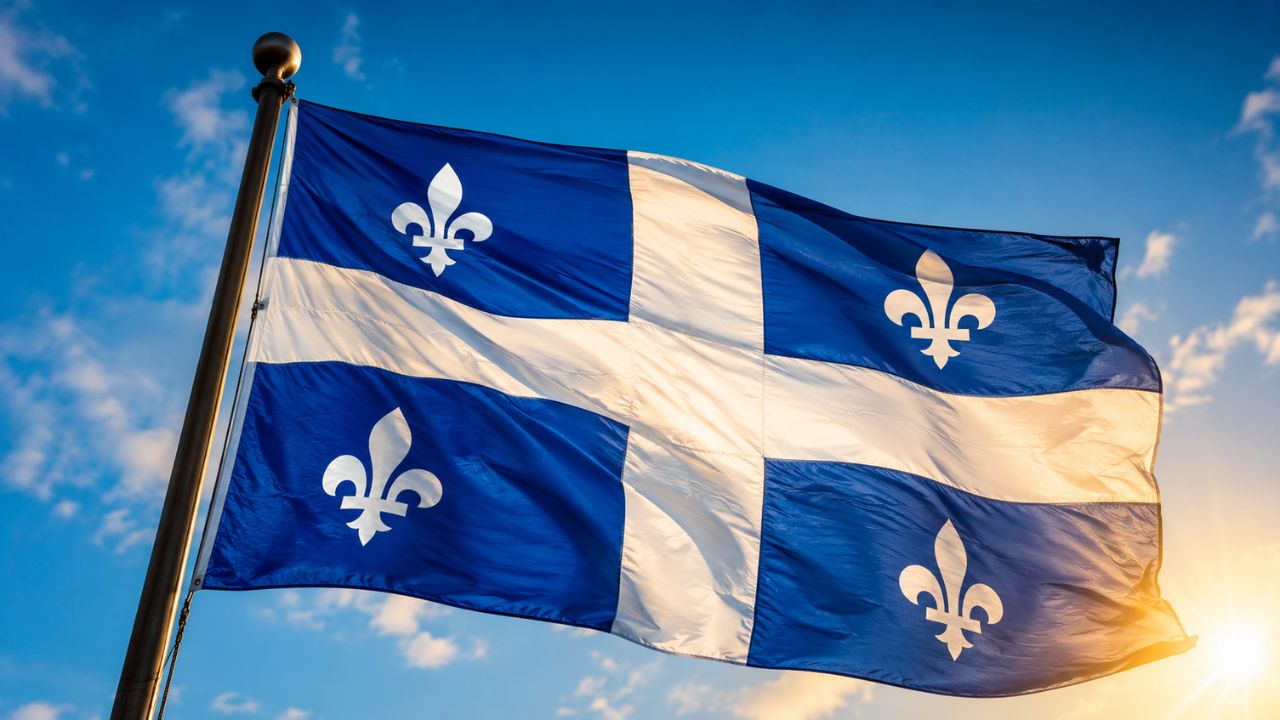
The blue and white fleur-de-lis flag of Quebec is everywhere on this day. Draped from balconies, carried through parades, and waved proudly by children and elders alike, it serves as the most visible symbol of French Canadian heritage during the celebrations. The fleur-de-lis itself has deep historical roots in French royal tradition, and its presence on Quebec’s flag is a constant reminder of the province’s origins. On Fête Nationale, that symbol takes on an added emotional weight, representing not just history but living, breathing cultural pride.
Traditional Foods
No celebration is complete without food, and Fête Nationale du Québec is no exception. Community feasts bring neighbors together around tables filled with Quebec’s most beloved dishes. Poutine, the iconic combination of fries, cheese curds, and gravy, is a staple of the day. Tourtière, a hearty meat pie with deep roots in Quebec culinary tradition, appears at family gatherings across the province. Maple-based treats remind everyone of one of Quebec’s most treasured natural gifts. Food on this day is never just nourishment — it is an act of cultural memory.
Parades and Processions
As morning arrives on June 24, the streets of Quebec’s major cities come alive with parades. Floats, marching bands, community groups, and cultural organizations move through the streets as crowds line the sidewalks waving flags and cheering. In many communities, a Roman Catholic Mass is held as part of the day’s observance, honoring the holiday’s original religious roots and the role the Church played in preserving French Canadian identity through some of the most difficult periods in Quebec’s history. The parade and the Mass together reflect the dual nature of this holiday — both deeply spiritual and joyfully communal.
Modern Celebrations
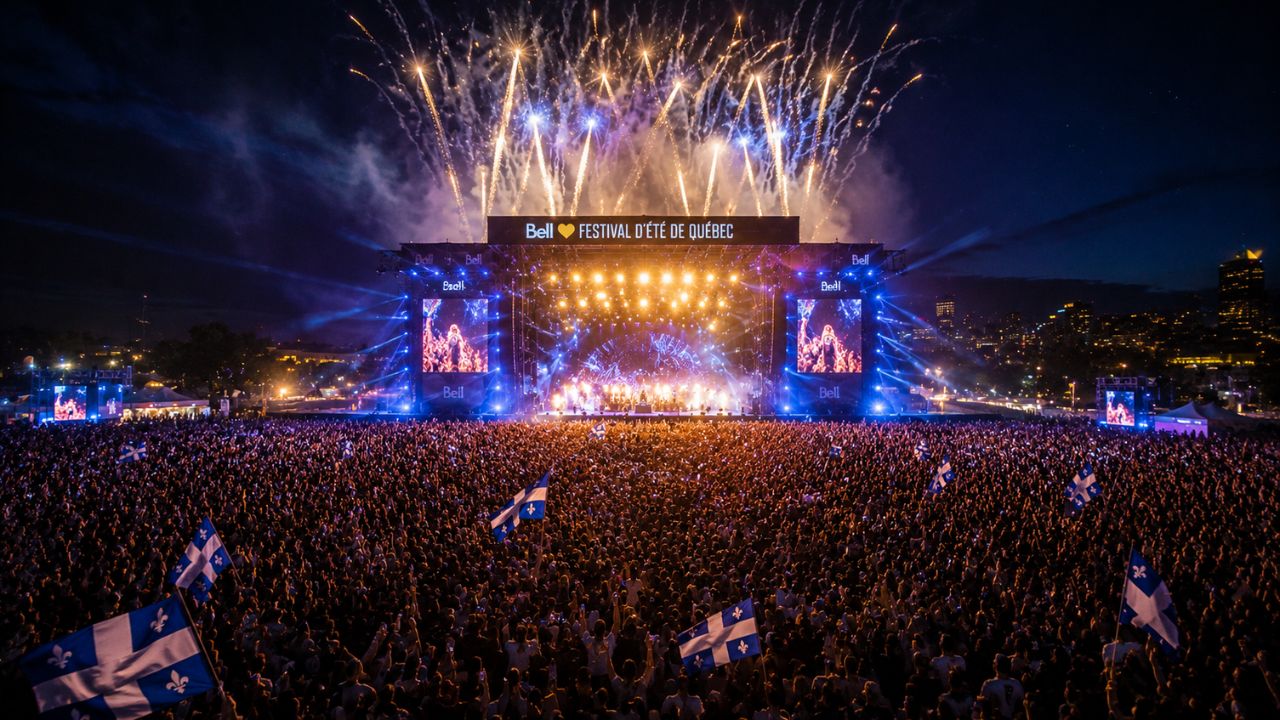
Over the decades, Fête Nationale du Québec has grown from intimate community gatherings into large-scale provincial events that draw hundreds of thousands of people. The most iconic of these is the mega-concert held at Parc Maisonneuve in Montreal. Every year, this massive outdoor venue fills with an enormous crowd gathered to watch some of Quebec’s most celebrated performers take the stage. The concert has become a landmark cultural event in its own right, featuring local artists who sing in French alongside nationally and internationally recognized names. Quebec City hosts its own equally passionate celebrations, with the historic backdrop of the Old Town adding a dramatic sense of depth and meaning to the festivities. Together, these two cities set the tone for celebrations happening simultaneously across every corner of the province.
Fireworks and Public Gatherings
As evening falls on June 24, the sky above Quebec lights up. Fireworks displays take place in cities and towns across the province, drawing families outside to watch together. Parks, waterfronts, and public squares fill with people of all ages. The atmosphere is warm, relaxed, and inclusive. Community organizations set up family-friendly activities throughout the day, ensuring that the celebrations are welcoming to children and newcomers alike. These public gatherings carry a quiet but important message — that this holiday belongs to everyone who calls Quebec home.
Technology and Social Media
The reach of Fête Nationale du Québec has expanded far beyond the province’s borders, thanks in large part to technology. Live television broadcasts bring the Montreal and Quebec City concerts into living rooms across Canada and beyond, allowing those who cannot attend in person to feel connected to the celebrations. Social media has added another dimension entirely. Every June 24, the hashtag #FêteNationale trends across platforms as Quebecers share photos, videos, and messages of pride from wherever they are in the world. For members of the French Canadian diaspora living far from Quebec, these digital connections are deeply meaningful. A live stream watched from a small apartment in another country becomes a thread back home, a reminder that identity does not stop at a border.
Regional Celebrations Across Quebec
While the national broadcasts and mega-concerts tend to dominate the headlines, the true heart of Fête Nationale du Québec often beats loudest in the quieter corners of the province. Across Quebec, every region brings its own personality to the celebrations, making June 24 a genuinely diverse experience depending on where you are standing.

Montreal offers the grandest scale. As Quebec’s largest and most multicultural city, its celebrations reflect that diversity. Neighborhoods across the island organize their own local events, and the city’s multicultural population participates enthusiastically, making the holiday feel genuinely inclusive rather than exclusive to any one community.
Quebec City carries a different energy entirely. Celebrating within the walls of one of North America’s oldest and most historically preserved cities adds a layer of meaning that no other setting can replicate. The cobblestone streets, the ancient architecture, and the St. Lawrence River in the background create a celebration that feels rooted in the very soil of Quebec’s history.
Rural Quebec tells yet another story. In small towns and villages scattered across the province, celebrations are intimate and deeply communal. Neighbors gather around bonfires, local musicians play in town squares, and parades move through streets where everyone knows everyone. There are no massive stages or light shows — just people, tradition, and a shared sense of belonging that city celebrations sometimes struggle to match.
Each version of the holiday is authentic. Together they form a complete picture of a province that is far more varied and layered than any single celebration could capture.
French Canadians Outside Quebec
The celebration of June 24 does not stop at Quebec’s borders. Across Canada and beyond, French Canadian communities have carried this holiday with them wherever they have settled, keeping it alive as a powerful expression of shared identity far from home.
In Ontario, New Brunswick, and Manitoba, Francophone communities organize their own Fête Nationale events. Local associations arrange gatherings, music performances, and communal meals that mirror the spirit of what is happening simultaneously across Quebec. New Brunswick holds a particularly strong connection to this tradition, given its large Acadian and French Canadian population with deep historical roots in the region.
French Canadians living in the United States, particularly in New England states like Maine, Vermont, and Massachusetts, also mark the occasion. Many of these communities descend from generations of Quebec workers who migrated south in search of opportunity, and June 24 remains one of the strongest threads connecting them to their origins.
Francophone organizations play a critical role in keeping these celebrations alive outside Quebec. Groups such as the Fédération des communautés francophones et acadienne work to support French language culture across Canada, ensuring that distance does not mean disconnection. For diaspora communities, celebrating Fête Nationale is less about politics and more about memory — a way of honoring where they came from and passing that identity on to the next generation.
Controversy and Different Perspectives
Like any holiday tied to national identity, Fête Nationale du Québec has not been without its tensions. For most Quebecers, the day is a straightforward and joyful celebration of culture and heritage. For others, it raises more complicated questions about who the holiday is really for and what it represents.
Non-French Quebecers, including English-speaking residents and newer immigrant communities, have at times experienced the holiday as something that does not fully include them. When celebrations center heavily on French language and culture, those outside that tradition can feel like observers rather than participants. This perception — of an ethnic celebration rather than a truly provincial one — has been a point of quiet tension for decades, even as the holiday has gradually become more inclusive in its programming.
The federalist versus sovereigntist divide adds another layer of complexity. For Quebec nationalists and sovereignty supporters, June 24 carries deep political meaning. It is a declaration of Quebec’s nationhood. For federalists who believe strongly in Quebec’s place within a united Canada, the holiday’s nationalist overtones can feel uncomfortable. The same date, the same fireworks, the same songs — interpreted in entirely different ways depending on where one stands politically.
The Quebec government has made consistent efforts over the years to reframe the holiday as a celebration that welcomes all residents of the province, regardless of language or background. Multicultural programming, multilingual event materials, and deliberate outreach to immigrant communities have all been part of that effort. Progress has been real, though the conversation about identity, belonging, and who gets to feel at home in Quebec’s celebrations continues.
Public Holiday Status and Legislation
The official recognition of June 24 as a public holiday was not a single event but a gradual process that unfolded over many decades. Each step forward reflected a growing political will to formalize what the people of Quebec had long celebrated on their own.
The first major legislative milestone came when the Quebec legislature formally declared June 24 a statutory holiday, giving the date legal standing and ensuring that workers across the province were entitled to the day off. This was a significant step — it moved the celebration from the realm of tradition into the realm of law.
The second and more symbolically powerful moment arrived when the provincial government issued an official decree formally naming the day as Quebec’s national holiday. The language of that decree was carefully chosen. Calling it a “national” holiday was a deliberate political statement, one that aligned with the broader movement to assert Quebec’s distinct status within Canada.
Currently, all provincially regulated employees in Quebec are entitled to June 24 as a paid statutory holiday. Employers are legally required to either give workers the day off with pay or provide appropriate compensation if the nature of the work requires them to remain on duty. Federally regulated workers in Quebec are governed by separate legislation, though the day is widely observed across both categories. The legal framework surrounding the holiday ensures that its observance is not left to individual choice but is protected as a right for Quebec’s workforce.
FAQ: Everything You Need to Know About Fête Nationale du Québec
Key questions answered about Quebec's National Holiday, its history, traditions, and cultural significance
The date of June 24 was chosen because it coincides with the Catholic feast of Saint John the Baptist and aligns closely with the summer solstice — a date that has carried cultural and spiritual significance for French Canadians since the earliest days of European settlement in the New World.
All provincially regulated employees in Quebec are legally entitled to June 24 as a paid day off. Federally regulated workers in Quebec are governed by separate legislation, though the day is widely observed across both categories. Outside Quebec, the holiday holds no official statutory status, though French Canadian diaspora communities across Canada and beyond mark the occasion through their own local events and gatherings.
The bonfire tradition traces back to an ancient Gallic custom brought to the New World by French settlers, later merged with the Catholic feast of Saint John the Baptist. Today, large outdoor concerts — particularly the mega-concert at Parc Maisonneuve in Montreal — draw hundreds of thousands of attendees and are broadcast live across the province and beyond.
Inspired by the way Saint Patrick's Day united Irish communities, Duvernay envisioned a similar unifying celebration for French Canadians. His gathering in Montreal brought together community leaders and ordinary citizens under a shared sense of cultural pride. The organization he founded — later renamed the Saint-Jean-Baptiste Society — went on to organize and protect the holiday for generations, playing a central role in its evolution from a local event into a provincial institution.
Communities in Ontario, New Brunswick, Manitoba, and parts of the United States — particularly New England — organize their own June 24 events to keep the tradition alive. Francophone organizations such as the Fédération des communautés francophones et acadienne play a key role in supporting these celebrations. For diaspora communities, the holiday is less about politics and more about cultural memory — a way of honoring their roots and passing their identity on to the next generation.
Gallery