Table of Contents
Intermission (interval)
Imagine being swept away by the emotional tide of a Shakespearean tragedy or gripped by the twists of a Bollywood blockbuster — and just when the intensity peaks, the lights dim, the screen fades, and everything pauses. That perfectly timed interruption is what we call an intermission (or interval, depending on where you are in the world). More than just a break, it’s a purposeful pause — a structured moment built into the very architecture of storytelling, performance, and audience experience.
Whether in the grandeur of Kabuki theatre, the meticulous flow of Western operas, or the dramatic storytelling of Indian cinema, the intermission serves multiple roles: rest, reflection, refreshment, and sometimes even suspense. Interestingly, this practice took hold during the 18th and 19th centuries when performances often exceeded three hours. Venues quickly realized that audiences needed a breather — and that breather became an opportunity for both physical relief and narrative tension.

Statistically, studies in audience behavior show that people begin to lose concentration after about 90–120 minutes, reinforcing the functional need for a break in lengthy productions. Psychologically, intermissions also allow viewers to step outside the fictional world, process what they’ve just witnessed, and reset their emotional palette before diving back in.
But in today’s age of digital streaming, where binge-watching prevails and pause buttons are just a tap away, the traditional intermission is evolving — and in some cases, disappearing. Still, in many live performance cultures and film industries (especially in India and the UK), the interval remains a key storytelling device, marking shifts in mood, tone, or narrative direction.
This article explores the origin, purpose, and modern transformation of the intermission. We’ll uncover how this simple pause enhances storytelling, shapes audience psychology, and adapts across different art forms — from theatrical traditions and cinematic conventions to its virtual extinction in digital media. Ready to hit “pause” and explore what lies behind the curtain? Let’s begin.
Understanding Intermission
In the world of entertainment, an “intermission” refers to a short break or pause that occurs between segments of a performance, such as a theatrical play, opera, film, concert, or even sporting events like hockey. The term is widely recognized in American English, while the British equivalent is often “interval.” Regardless of regional terminology, the purpose remains the same: to provide a pause in the performance allowing the audience time to rest, refresh, and reflect.
The intermission meaning varies slightly depending on the context. In cinema, especially in traditional Indian or older Western films, an intermission typically appears midway through a longer feature, dividing the storyline into two distinct halves. In theater, it offers a break between acts, often coinciding with scene or costume changes. Meanwhile, in sports such as ice hockey, a “hockey intermission” occurs between periods, lasting approximately 15 to 20 minutes — enough time for players to recover and strategize, and for viewers to engage in refreshments or analysis.
Modern streaming platforms and shorter films have contributed to a decline in cinematic intermissions, yet the concept remains deeply ingrained in traditional and live performance culture. Venues often capitalize on these breaks by offering concessions, merchandise, and restroom access, making the intermission a functional and commercial component of the entertainment experience.
Intermission vs. Interval: Are They the Same?
Though the terms “intermission” and “interval” are frequently used interchangeably, subtle distinctions exist, particularly in regional dialects and cultural practices. In American English, “intermission” is the preferred term, especially in reference to breaks in theatrical performances or films. In contrast, “interval” is more common in British and Indian English and is used across stage performances, classical music concerts, and cinema.
For example, a British theatergoer would expect an “interval” during a West End play, whereas an American might anticipate an “intermission” during a Broadway show. Indian cinema, which often features films exceeding two hours, routinely includes an “interval” to break the narrative and accommodate the audience’s comfort and commercial breaks. Despite these regional naming preferences, both terms serve the same function — to interrupt a continuous experience with a planned, meaningful pause.
The semantic distinction also extends to audience expectations. While an “intermission” may imply a longer, more structured break with concessions and music (sometimes even an intermission number in musicals), “interval” may suggest a shorter pause, depending on cultural norms. However, in global usage today, both are widely understood as a necessary and appreciated respite in long-form storytelling and performance.
Origin and Historical Background
The practice of inserting breaks into performances has its roots in early theater traditions. The concept of the intermission can be traced back to classical antiquity, where open-air Greek and Roman theaters occasionally included pauses for scene transitions or public engagement. However, the formalized “intermission” as we understand it today began to take shape in the Renaissance and Baroque eras of European theater.
By the 17th and 18th centuries, as theatrical productions grew more elaborate — featuring multiple acts, complex staging, and ornate costumes — these breaks became essential for logistical as well as audience-related reasons. In 1763, French Enlightenment philosopher Jean-François Marmontel described the intermission not as a pause in the story, but as a moment where the action continued off-stage, suggesting its theatrical importance beyond mere convenience.
The 19th century marked a turning point. During this period, especially in Victorian England and Europe, plays and operas often ran for several hours. Intermissions, or intervals, allowed audiences time to socialize, dine, and return rejuvenated for the remainder of the performance. This practice later extended to early cinema, particularly in Indian and European film industries where movies often spanned over three hours. The intermission trailer or title card became a fixture, especially in Bollywood, to signal a dramatic turning point.
In modern contexts, while some digital and streaming formats have eliminated intermissions altogether, they remain a vital part of live entertainment, sports, and legacy cinema. The Marines Career Intermission Program in the U.S. military even uses the term “intermission” metaphorically — offering service members a structured pause in their careers for personal or educational growth, underlining the broad cultural adoption of the term. Thus, whether experienced in a theater, stadium, or career path, the intermission stands as a timeless device — honoring the need for pause, reflection, and renewal across diverse human experiences.
The Role of Intermission in Entertainment
The intermission has long played a pivotal role in shaping the structure and pacing of live performances and cinematic experiences. Historically, the purpose of intermission was both practical and psychological. In early theatrical traditions, particularly during the Renaissance and Enlightenment periods, performances were often lengthy and divided into multiple acts. Intermissions were introduced not merely as pauses but as logistical necessities—providing time for elaborate set changes, costume adjustments, and preparation for new scenes. In addition, they gave performers essential rest, allowing for enhanced endurance and more consistent delivery throughout extended shows.
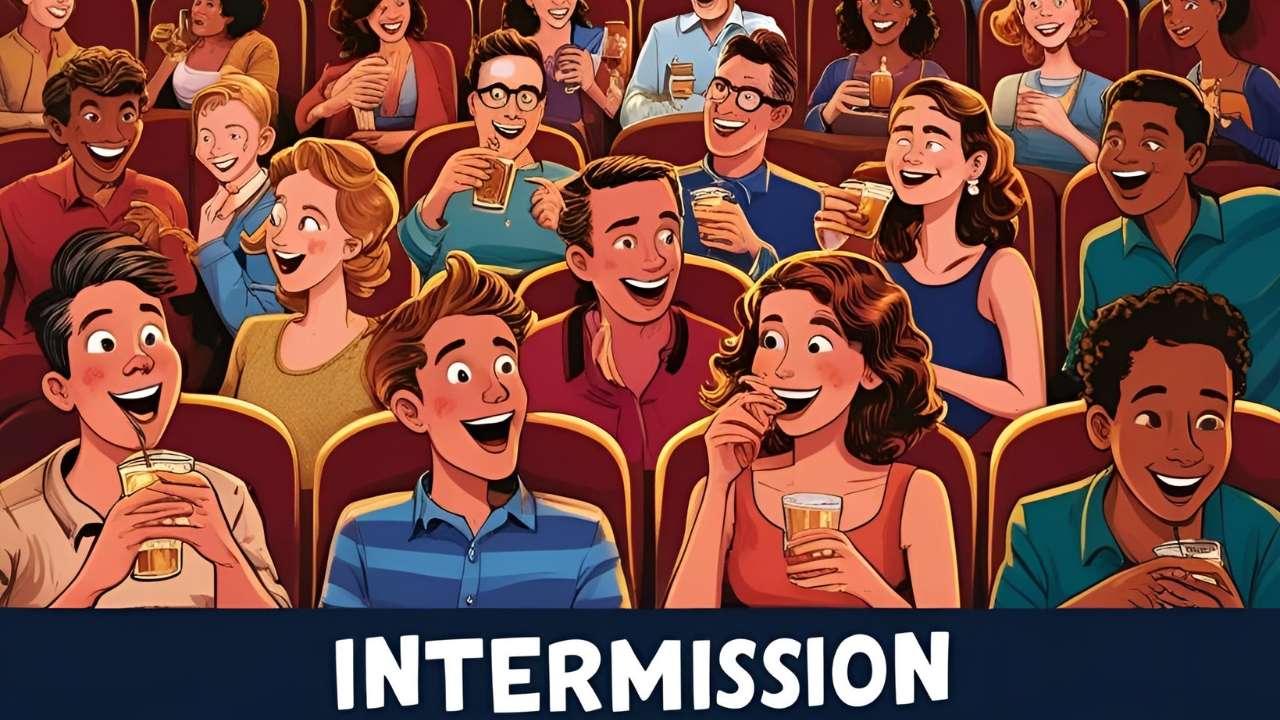
In film, the tradition of including an intermission gained prominence during the early to mid-20th century, especially for epic or long-form films like Gone with the Wind (1939), Lawrence of Arabia (1962), and Ben-Hur (1959). These movies, often running beyond three hours, strategically used a break in the movie to divide the narrative into two balanced halves. The intermission also served commercial purposes—allowing theaters to sell refreshments and accommodate restroom needs without disrupting the viewing experience. In Indian cinema, the intermission meaning remains strongly embedded, with most Bollywood films still incorporating a built-in interval, often marked by a climactic twist or dramatic turning point.
Beyond tradition and convenience, intermissions fulfill a critical structural role, offering a moment for reflection and anticipation. Whether in Shakespearean drama or modern musicals, the pause between acts builds tension, renews focus, and enhances narrative impact.
Psychological and Physiological Importance of Breaks
Intermissions are not merely a luxury—they address vital psychological and physiological needs that influence both audience engagement and comprehension. Numerous studies in cognitive psychology suggest that human attention span—particularly in passive viewing scenarios—begins to decline after approximately 45–60 minutes. Without a break, audiences may experience cognitive fatigue, reducing their ability to absorb complex narratives or emotionally resonate with characters.
The mental reset during shows that intermissions offer is crucial. A well-timed break allows the brain to process what it has already consumed, consolidate information, and recharge for what follows. For live theater, this is particularly important when audiences are navigating Shakespearean language, intricate plots, or emotionally intense scenes. An intermission provides space for reflection and mental clarity, ensuring that the second half of a performance is approached with renewed focus and emotional availability.
Physiologically, intermissions address basic needs—hydration, restroom breaks, and movement. Sitting for prolonged periods can lead to discomfort, reduced blood circulation, and restlessness, especially in older audience members or children. From a design standpoint, venues often plan intermission time around audience flow, concession access, and restroom availability to optimize the break’s effectiveness.
Importantly, this concept extends beyond traditional performance spaces. Even the Marines Career Intermission Program (CIP) in the United States military draws on the broader metaphor of “intermission” to allow active-duty personnel a sanctioned break in service to pursue education, family responsibilities, or personal development—underlining the universal value of structured pauses in maintaining performance, motivation, and mental well-being.
Duration and Timing: How Long is an Intermission?
The duration of an intermission is not arbitrary; it is carefully calibrated based on the nature of the event, the audience demographic, and logistical constraints of the venue. On average, theatrical intermissions last between 15 to 20 minutes, a span long enough to provide a meaningful rest without disrupting narrative continuity or audience immersion.
In Broadway and West End productions, 15 minutes is standard, though more complex productions may extend to 20 minutes or longer. For example, operas like Die Meistersinger von Nürnberg—with run times exceeding five hours—may have multiple intermissions ranging from 20 to 30 minutes each to accommodate the physical demands on both performers and viewers.
In the context of sports, such as ice hockey, the hockey intermission between periods is typically 17 minutes. This break allows athletes time for recovery, strategy discussions, and equipment checks, while fans take advantage of concessions and in-game entertainment. Similar timing is observed in professional basketball and some international football (soccer) matches when extended halftime programming is planned.
In cinema, intermissions have become less common in Western markets due to shorter film lengths and commercial considerations. However, in Indian cinema—where movies often exceed 150 minutes—intermissions remain a staple. These breaks usually last 10 to 15 minutes, strategically placed at a high-tension moment in the storyline to create anticipation for the film’s second half.
Even in experimental or immersive theater, where traditional rules are often bent, intermissions are occasionally reimagined rather than removed. Some productions use intermission music, background storytelling, or interactive moments to keep audiences engaged during the break.
As with many performance conventions, the intermission’s duration evolves with technology, cultural expectations, and changing audience behaviors. While digital streaming platforms have rendered the traditional intermission obsolete in some contexts, its enduring relevance in live performance and long-form cinema highlights a simple truth: human beings need time to pause, reflect, and reengage—whether they’re watching a Shakespearean tragedy, a hockey match, or a military career unfold.
Intermission in Traditional Performing Arts
Intermissions have long held a significant place in the structure and rhythm of live performance across cultures, serving both functional and artistic roles. Long before modern cinema or stadium spectacles, traditional performing arts embraced the concept of breaks—not merely as pauses, but as integral intervals designed to enhance the theatrical experience. From the playhouses of Elizabethan England to the elaborate stages of Japanese Kabuki and Noh, intermissions have evolved as vital moments of transition, reflection, and audience engagement.

William Shakespeare’s Use of Intermissions
In the Elizabethan era, intermissions were not formally structured as they are in contemporary theatre, yet their essence was embedded within the pacing and segmentation of performances. William Shakespeare, arguably the most iconic figure in English theatre, wrote plays that were typically divided into five acts—a structure borrowed from classical Roman playwrights like Seneca and Terence. Although there is no concrete evidence that his productions featured explicit intermissions as we understand them today, many scholars argue that the natural division between acts allowed for informal breaks.
Performances at The Globe Theatre and other venues often lasted between two to three hours and were conducted in daylight, without artificial lighting or amplified sound. Audiences were free to move, talk, or even leave during transitions between acts. Vendors sold food and drink throughout the venue, which gave the audience ample opportunity to refresh themselves—functioning as a practical “break in the play” even if not formally named an intermission. By the 18th century, with the rise of indoor theatres and more sophisticated lighting, structured intermissions became common practice, standardizing what had once been an informal necessity.
Japanese Theatre: Kabuki and Noh Practices
Japanese traditional theatre offers some of the earliest formalized uses of intermissions, particularly in Kabuki and Noh, which date back to the Edo period and earlier. Kabuki, known for its vibrant costumes, elaborate makeup, and dynamic storytelling, often includes “nakairi” (中入り)—an intermission typically occurring between the second and third act. These breaks can last from 20 to 30 minutes, allowing audiences to eat, use restrooms, and reflect on the complex narratives unfolding on stage.
In Kabuki, intermissions are also functional for actors and stagehands. Costume changes, scenery alterations, and preparation for emotionally or physically demanding scenes require downtime. The intermission thus becomes a ritualistic pause—respected and expected by performers and audiences alike. It reflects the traditional Japanese value of “ma” (間)—the space or pause that gives meaning to time and rhythm.
Noh theatre, a much older and more austere form of Japanese performance, employs a subtler use of breaks. While full intermissions (as in Kabuki) may not be standard, longer Noh programs often consist of several short plays interspersed with kyōgen—comic interludes that function both as entertainment and as a psychological reset. These brief performances serve the same purpose as a Western intermission, providing contrast, levity, and a mental shift between emotionally intense Noh acts.
Other Historic Global Theatre Traditions
Beyond Europe and Japan, intermissions in traditional theatre took varied forms depending on cultural expectations and performance style. In ancient Greek theatre, plays were typically performed in trilogies (e.g., Aeschylus’ Oresteia) followed by a satyr play. While there were no structured intermissions, breaks naturally occurred between plays, often accompanied by choral performances or public commentary. These pauses allowed time for social interaction, reflection, and even civic discussion—making the theatre a participatory public forum as much as an entertainment venue. In classical Indian Sanskrit theatre, particularly in plays by Kalidasa or Bhāsa, performances often lasted several hours and included intermissions known as ‘vishranti’. These pauses were embedded into the structure of the play, providing time for performers to rest and audiences to digest the moral or philosophical implications of the story. The Natya Shastra, a seminal text on dramaturgy, acknowledges the need for rhythm and pacing, reinforcing the idea that emotional resonance often requires moments of stillness.
In Chinese opera, such as Peking Opera, intermissions were often informal and based on the length and intensity of each act. Given the demanding nature of the performance—requiring vocal acrobatics, martial arts, and elaborate costume transitions—short breaks were occasionally integrated, either with instrumental music or comic skits, allowing both mental and physical recuperation. Across these global traditions, intermissions have proven to be more than mere interruptions. They are carefully considered moments that reflect cultural aesthetics, physical demands, narrative flow, and the audience’s need for space and time. Whether in the bustling theatres of 17th-century London or the refined wooden stages of Kyoto, the intermission is a timeless theatrical device—one that continues to evolve, but whose core purpose remains rooted in the human need to pause, reflect, and prepare for what comes next.
Intermission in Cinema and Modern Media
The concept of an intermission has long played a significant role in cinema, providing a break between the unfolding of a film’s narrative. Over the decades, the use of intermissions has evolved, reflecting changes in filmmaking, audience expectations, and technological advances. While the tradition of film intermissions remains a vital element in some regions, it has become increasingly rare in mainstream cinema, particularly in Western media. However, the practice continues to hold importance in certain film industries and formats, providing valuable context and cultural insight into the history of cinema.

Intermissions in Indian Cinema (Bollywood and Beyond)
Intermissions in cinema are perhaps most famously associated with Indian cinema, particularly in Bollywood, where they have become an integral part of the filmgoing experience. Films in India, especially those produced in the Hindi-language film industry, often feature an interval around the mid-point of the movie, dividing the narrative into two distinct parts. This tradition dates back to the early days of Indian cinema when films were longer in duration and the inclusion of an intermission allowed audiences to take a break, especially in the absence of modern amenities like air conditioning or comfortable seating.
The length of these intermissions varies but typically lasts between 10 and 20 minutes. During this time, audiences can stretch, refresh, and socialize, while vendors may also sell snacks or refreshments, adding to the social aspect of cinema in India. The tradition of the intermission was heavily influenced by the lengthy nature of Bollywood films, which often ran over three hours. As the films became more elaborate in their storytelling, music, and choreography, the need for an interval grew as well.
Interestingly, the interval has also been employed creatively in Bollywood films. It often marks a significant turning point or a dramatic shift in the plot, encouraging audience reflection before the second half of the film begins. This break can enhance the emotional impact of the film, as it provides time to digest the narrative and build anticipation for the conclusion.
Even in modern Indian cinema, the interval persists. While films in other countries have largely phased out the practice, Indian filmmakers and producers continue to use intermissions in part due to audience preference and tradition. Despite the rise of shorter films and streaming platforms, the intermission remains a beloved and essential element in many Indian cinematic experiences.
Use in Western Films (Past and Present)
In Western cinema, the use of intermissions has been far less consistent and has largely fallen out of favor, particularly in Hollywood films. However, intermissions were once a significant feature of longer films, particularly during the “Golden Age” of Hollywood. Early films, especially those presented in widescreen formats like Cinemascope or Todd-AO, were often longer in duration—sometimes stretching beyond two and a half hours. As these films often ran for extended periods, intermissions became essential for giving audiences a chance to rest.
One of the most notable examples of intermissions in Western cinema was during the 1950s and 1960s, when epic films like Ben-Hur (1959), Lawrence of Arabia (1962), and Gone with the Wind (1939) featured intermissions. These films were presented in wide formats that demanded a more comfortable viewing experience. The intermission served both as a break for the audience and as a practical tool for film projectionists, who needed time to switch reels during longer films.
In the 1970s and 1980s, with the rise of shorter films and the shift toward multiplex theaters, intermissions began to fall out of favor. The blockbuster era, ushered in by films like Jaws (1975) and Star Wars (1977), saw a change in audience expectations, with shorter runtimes and a preference for continuous action that kept audiences engaged without a pause.
Today, intermissions in Western films are rare, though they can still be found in certain instances, particularly with films that run over three hours, such as The Lord of the Rings: The Return of the King (2003) or Avengers: Endgame (2019). However, even in these instances, the intermission is often eliminated for home viewing and is instead used primarily in special theatrical releases or festival screenings.
Do Streaming Services Offer Intermissions?
With the rise of streaming services such as Netflix, Amazon Prime Video, and Disney+, the concept of an intermission has experienced a digital transformation. Unlike traditional cinema, where an intermission was often a physical necessity, streaming platforms offer users more control over their viewing experience. For instance, viewers can pause the film at any point, take a break, and resume watching without the constraints of an official intermission.
However, this flexibility has led to some interesting developments in how audiences approach breaks during streaming content. Some users may create their own “intermission” by pausing films or shows during natural narrative breaks. Others, particularly those watching longer films or binge-watching television series, may use the pause function to create their own intermission-like pauses between episodes or parts of a movie. Streaming platforms have also adapted by offering features like auto-play to keep the viewer engaged without the need for breaks, though this can be toggled off for those who prefer periodic pauses.
In 2021, Netflix introduced a feature allowing viewers to create intermission-style breaks for select movies, especially for films longer than two hours. This allows for a more traditional cinema-like experience at home, where the break is a part of the viewing experience rather than a convenience feature. While still in its early stages, this feature suggests that streaming platforms may seek to revive the intermission for certain types of content.
Interestingly, this digital shift has also led to the emergence of new forms of viewing experiences that mimic traditional cinema in ways that were previously thought to be obsolete. The rise of virtual cinema screenings and film festivals now includes digital intermissions, where viewers can interact and discuss films before continuing. These new formats reflect a growing interest in reintroducing the communal and reflective aspects of cinema in the digital era.
Intermission in Live and Broadcast Events
Intermissions are not only common in cinema but also play a significant role in various live and broadcast events. Whether in theatre performances, concerts, or sports events, intermissions serve both practical and artistic purposes. They offer a break for the audience, performers, and organizers, while also enhancing the overall experience. Each type of live event utilizes intermissions differently, often reflecting the unique needs of the performance or competition. This section delves into the intermission structures in theatre, concerts, and sports, exploring their history, function, and evolution.

Theatre and Stage Performances
Intermissions have long been a standard feature of theatre and stage performances. The tradition of taking breaks during long plays dates back centuries, with the intermission offering audiences a moment to rest, socialize, and digest the events unfolding on stage. Historically, performances would run for hours, and the intermission provided not only a respite but also a chance for performers to prepare for the second act.
In Western theatre, intermissions are typically scheduled after the first act, and the length can vary from 15 to 30 minutes, depending on the duration of the entire performance. The intermission is an integral part of the theatre-going experience, offering a natural break in the narrative. For the audience, it provides an opportunity to discuss the play, grab refreshments, or visit the restroom. For the production team, it’s an essential time for stagehands to make adjustments, change scenery, or prepare for the second act.
The use of intermissions in theatre also contributes to the pacing of a performance. Much like films, the intermission can serve as a narrative device, providing a pause that highlights significant plot shifts or dramatic tension. Iconic plays like Hamlet, Les Misérables, and The Phantom of the Opera have used the intermission to enhance their storytelling, ensuring that the audience remains engaged throughout the often lengthy performances.
As theatrical productions have evolved, some have experimented with the timing and frequency of intermissions. For instance, avant-garde theatre may forgo a traditional intermission to maintain a continuous, immersive experience. Nonetheless, the standard intermission remains a fundamental aspect of most stage performances, adapting to both the practical needs of the performance and the comfort of the audience.
Concerts and Live Music Events
Intermissions are also prevalent in concerts and live music events, though their structure can vary greatly depending on the genre, venue, and scale of the performance. In classical music concerts, intermissions serve as an essential part of the performance structure, allowing musicians and conductors to rest and prepare for the second half of the concert. Traditionally, these breaks occur after the first set of pieces, with the duration ranging from 10 to 20 minutes.
The intermission in classical music is often an important part of the event, offering the audience time to reflect on the performance and socialize. This is particularly evident in large venues like concert halls or operas, where long performances might include multiple sets or acts. For instance, opera performances, such as those by Giuseppe Verdi or Richard Wagner, often feature multiple intermissions, allowing the audience time to digest the dramatic and musical complexity of the performance.
In contrast, pop music concerts or rock shows tend to have shorter breaks, with some artists opting for no intermission at all, especially in fast-paced, high-energy performances. However, larger-scale events, such as music festivals, may include extended intermissions to accommodate stage changes, equipment setups, and the shifting of crowds. These intermissions, although less structured, allow the audience to rest, hydrate, or simply enjoy the social aspects of the event.
The timing of intermissions in music concerts is often carefully planned to maintain the audience’s engagement. Concert organizers may use the break to showcase promotional material, conduct contests, or play background music that keeps the energy alive. In large-scale events such as music festivals or superstar concerts, intermissions can serve as a logistical necessity to manage crowd flow and transitions between acts.
Sports and Competitive Events
In the realm of sports and competitive events, intermissions play a pivotal role in providing athletes with rest, recovery, and strategy adjustments. These breaks, commonly known as halftime or intervals, are crucial for maintaining the flow and intensity of the event while ensuring the safety and performance of the participants. In team sports like football, basketball, and rugby, the halftime break is a central feature. During this time, players retreat to their locker rooms to receive coaching, make tactical adjustments, and hydrate. The length of halftime varies depending on the sport and the event but typically lasts around 15 minutes. In the NFL, for example, halftime can extend to around 20 minutes during regular-season games, while the Super Bowl often features an extended halftime show, further enhancing the spectacle of the event.
In contrast to halftime, the term interval is more commonly used in individual sports like tennis and cricket. An interval refers to a break between sets or between innings, providing players with a chance to regroup and strategize. In tennis, the interval occurs between sets and typically lasts around 10 minutes, allowing players to rest, receive advice from coaches, and prepare for the next set. Similarly, in cricket, the interval is taken between innings, with players taking a break to rest before the next session of play.
In hockey, the term “intermission” is used to describe the break between the first and second periods, typically lasting around 15 minutes. This break allows players to recover and make adjustments to their tactics before continuing the game. The interval’s length can vary depending on the sport and the level of competition, but it generally serves as a valuable period for both teams to assess their performance and make adjustments.
The intermission in sports also provides an opportunity for broadcasters and event organizers to engage with the audience. During these breaks, commercials are often aired, providing revenue for the event while keeping viewers entertained. In major sporting events, such as the Olympics or World Cup, the intermission is also used for interviews, analysis, and highlights, adding to the overall viewer experience.
Cultural Significance and Global Variations
Intermissions have a unique and varied cultural significance across the globe, influenced by local entertainment traditions, audience expectations, and the type of performance. While some countries have retained the tradition of intermissions in live and broadcast events, others have seen a shift toward shorter formats or a complete absence of breaks during performances. Understanding the cultural context and global variations of intermissions sheds light on how these pauses in events contribute to audience experience, social behavior, and entertainment culture worldwide.

Countries Where Intermission is Still a Norm
The intermission is still very much a norm in many countries, particularly in India, where it holds significant cultural importance in both cinema and live performances. In India, the tradition of taking an intermission during movies has been ingrained for decades. Bollywood films, especially those with longer runtimes, typically include a 10 to 20-minute break after the first half of the movie. This break not only allows the audience to rest but also provides an opportunity to discuss the film, grab refreshments, or socialize. The practice is deeply rooted in Indian cinema, and while shorter films may forgo the break, longer epics, particularly those in the action or drama genres, continue to observe this tradition.
The concept of intervals in entertainment is widespread in South Asia, with theatre performances and live concerts also observing intermissions. For example, in Pakistan, Sri Lanka, and Bangladesh, intermissions in movies and plays offer a moment for the audience to relax and engage with the atmosphere of the event. These breaks are not only a logistical necessity but have become a cultural moment where social exchanges take place, especially in larger public events like film screenings or theatrical performances.
In contrast, Western countries like the United States and much of Europe have moved towards shorter, more continuous formats for entertainment. Intermissions in Hollywood films are less common, with movies now typically being edited to run without a break. However, in the theatre, the intermission remains common, especially for lengthy plays or musicals, such as those seen on Broadway or London’s West End.
Cultural Expectations and Audience Behavior
The behavior and expectations surrounding intermissions vary greatly depending on the cultural context. In some cultures, the intermission is an anticipated social event, where audience members leave their seats to socialize, visit concession stands, or even engage in informal discussions about the performance they have just seen. This is particularly evident in theatre and live concert settings, where patrons often meet up during the break, exchanging thoughts on the performance and sharing opinions. In countries where intermission culture is prevalent, such as India and Japan, the break is often an essential part of the overall event experience. In Japanese cinema, for instance, films with lengthy runtimes may incorporate a brief interval, which allows viewers to stretch their legs, visit the bathroom, or simply reflect on the story so far. During this time, the audience’s behavior can be quite reserved, reflecting the country’s traditionally polite and quiet cinema-going habits.
In contrast, in places like the United States, the intermission is more likely to be a time for quick refreshments or restroom breaks rather than a social affair. In sports events, especially basketball or American football, the halftime interval is a time for fans to grab snacks, take part in promotional activities, or enjoy entertainment in the form of halftime shows, giving them a break from the intensity of the game. In Western cultures, where cinema intermissions are less common, the absence of breaks has led to a shift in audience behavior. Instead of leaving their seats for a break, viewers tend to remain glued to their seats for the duration of the movie, particularly in mainstream cinema. The shorter format of modern films is tailored to cater to the fast-paced entertainment culture where time is of the essence.
However, the intermission culture in theatre continues to thrive, particularly in the more traditional and longer performances. For instance, operatic performances often allow the audience to take part in an intermission, where they can engage in social activities in the lobby or enjoy a drink in a nearby bar. This break offers a shift in the intensity of the performance, allowing the audience to process the emotions and music they’ve just experienced. Beyond the performance itself, the intermission also serves as a moment for cultural expression, with many events featuring live entertainment, advertisements, or announcements during the break. This is particularly notable in sports events, where halftime may be filled with musical performances, interviews, or promotional clips, offering a moment of entertainment while also maintaining audience engagement.
Iconic Films That Had Famous Intermissions
Several films with intermission have left an indelible mark on pop culture, often turning the break itself into a memorable event. The tradition of incorporating an intermission into films has evolved, with some iconic films turning the intermission into a cinematic moment. Ben-Hur (1959), one of the most celebrated films in history, was designed to have a theatrical intermission that broke up the epic narrative, allowing audiences to pause and reflect on the grandeur of the spectacle.
The famous intermission scene in Gone with the Wind (1939) is another example, where the intermission itself became a moment of anticipation, as viewers were given a chance to discuss the film’s emotionally charged moments before continuing with the story. Similarly, Lawrence of Arabia (1962), a film known for its stunning cinematography and length, featured a notable intermission, giving the audience a chance to absorb the movie’s epic scale before the second half.
Even modern films, although generally shorter and with fewer intermissions, occasionally use the concept of an intermission as a theatrical device. Movies like The Hateful Eight (2015), directed by Quentin Tarantino, famously featured an intermission as a tribute to classic Hollywood filmmaking, providing a nostalgic nod to a bygone era of cinema.
Intermission Music, Announcements, and Trailers
The use of intermission music, announcements, and trailers has been a key aspect of live events and films, with many filmmakers and event organizers choosing to fill the intermission with creative entertainment. In the cinema, it is not uncommon to hear intermission music playing during the break, providing a soothing or playful atmosphere that helps keep the audience engaged. Famous film composers like John Williams and Ennio Morricone have created music specifically for intermissions, adding a layer of artistic value to the break.
Film trailers often play during intermissions, particularly in longer theatrical releases, providing audiences with a glimpse of upcoming attractions. These trailers serve both as an effective marketing tool and a way to maintain audience interest during the break. Intermission announcements, such as the famous “Please be seated” messages, have also become a part of cinematic lore, further enhancing the intermission experience.
In the world of live performances, such as concerts or theatre, the intermission provides an opportunity for announcements, raffles, or updates, maintaining audience engagement. The intermission song or brief musical interlude, sometimes performed by a small ensemble or DJ, helps create a seamless transition between the two parts of the performance, keeping the audience entertained and involved.
The Future of Intermissions in the Digital Age
As the digital landscape continues to evolve, the question of whether traditional intermissions will endure in the age of streaming and on-demand content is increasingly relevant. Historically, intermissions were a necessary break during lengthy theatrical films, allowing audiences time to stretch, refresh, and engage with the surrounding amenities, like concessions. However, the rise of streaming platforms such as Netflix, Amazon Prime, and Disney+ has significantly altered the viewing experience, bringing films and television shows directly to users’ screens, without the need for intermissions.

In the streaming era, viewers have the autonomy to pause or resume content at their convenience, eliminating the need for a designated intermission. This flexibility has changed audience expectations, as people no longer have to adhere to rigid schedules or take breaks according to the structure of the media they consume. Furthermore, the rise of binge-watching has led to longer, uninterrupted viewing sessions, with audiences choosing when and where to take a break.
Despite this shift, there are instances where intermissions still make an impact, particularly with long-form content. For example, certain series or films released on streaming platforms may include breaks, but these are often either self-imposed or presented as part of a longer viewing experience. A notable example is the recent trend in multi-part series where the format mimics that of episodic television, allowing for natural pauses between sections. This approach has its roots in traditional television broadcasts, where shows were split into acts with breaks in between for commercial purposes.
Nevertheless, some filmmakers and content creators continue to experiment with maintaining intermissions in a digital setting. High-profile releases, such as the 2022 film Killers of the Flower Moon, directed by Martin Scorsese, were intentionally formatted to include breaks for theatrical screenings, but they may be bypassed on streaming services. The evolving nature of viewing habits, influenced by digital platforms, will determine whether intermissions can coexist with the increasingly on-demand world of entertainment.
Potential Revivals in Immersive and AR Entertainment
While traditional intermissions may seem to be on the decline, immersive and augmented reality (AR) entertainment could present opportunities for their revival. The concept of intermissions may undergo a transformation, especially in the realm of virtual and interactive media. Augmented reality, virtual reality (VR), and other immersive technologies have introduced new ways to engage viewers, potentially making breaks more integral to the experience rather than simply interludes between segments.
In immersive formats, such as VR theater experiences, intermissions could be designed to enhance the immersive environment. For instance, during VR plays or interactive cinema, breaks could serve to allow viewers to engage with their surroundings or even participate in interactive elements, making the intermission a dynamic part of the overall experience. This new type of intermission could be filled with activities like exploring virtual environments, participating in a live Q&A with cast members, or engaging with other users through multiplayer features, all of which could further enrich the story or theme.
Additionally, with the rise of AR-based entertainment experiences—such as live concerts or interactive events where users participate through augmented devices—intermissions could offer a unique opportunity to further immerse participants in the content. For example, augmented reality games that blend live action with digital elements could integrate break periods where the audience can engage with bonus content, mini-games, or augmented environments, which would make the intermission an exciting and integral part of the entertainment package.
As immersive technologies evolve, the role of intermissions may shift from simply offering a break to enhancing the user experience. These new breaks could transform the way audiences interact with content, paving the way for a more interactive and engaging form of entertainment that redefines traditional viewing experiences. In this context, intermissions could not only survive but thrive, evolving into immersive pauses that provide as much value as the main content itself.
In conclusion, while the traditional intermission may be facing challenges in the streaming age, its potential resurgence in immersive and AR entertainment offers a glimpse into a future where intermissions could be redefined and revitalized. As technology continues to reshape the way people consume entertainment, the intermission might evolve to meet new demands, blending the old with the new in a way that keeps it relevant for future generations.
Gallery