Table of Contents
Lenora Darlene Bailey (American Healer)
Lenora Darlene Bailey’s age at the time of her death — 65 years old — is one of the few details the world knows for certain about a woman who spent most of her life deliberately out of the spotlight. Born on December 4, 1953, in Bakersfield, California, Lenora was not a performer, not a public figure, and never sought recognition for herself. Yet her name became part of music history in a way that few people outside the industry ever achieve.
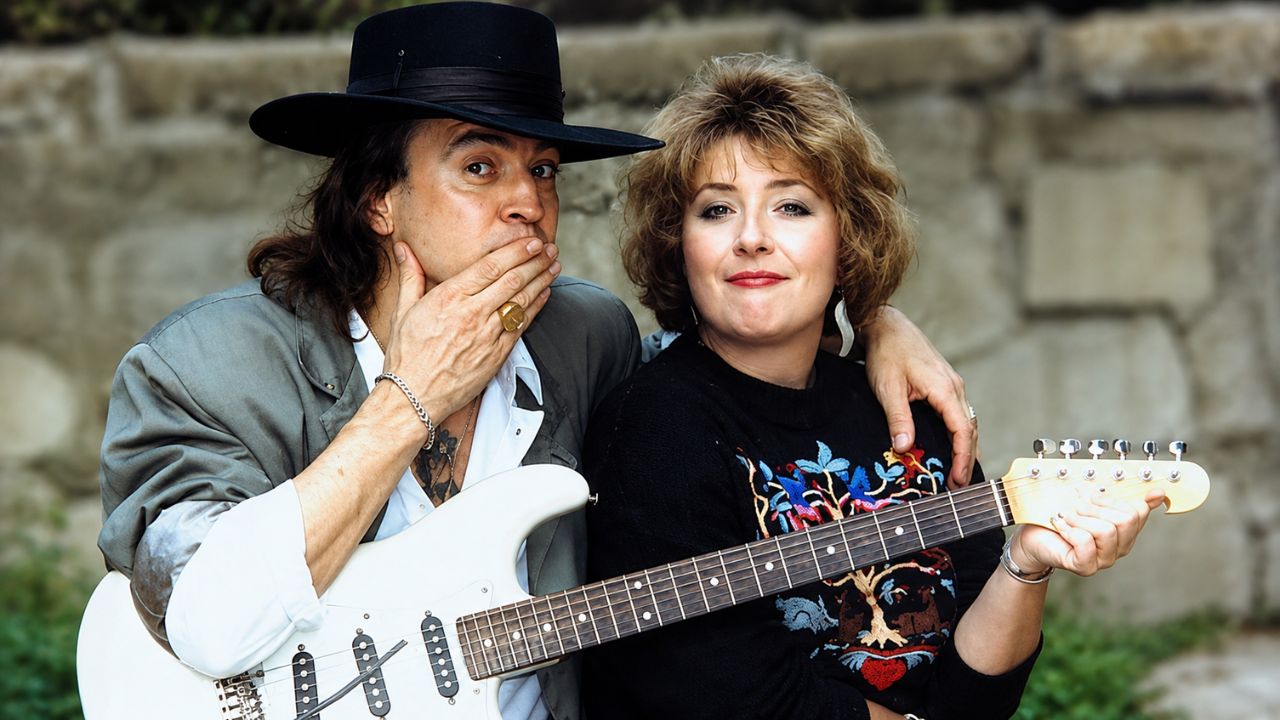
She was the first wife of Stevie Ray Vaughan, the blues guitarist widely regarded as one of the greatest to ever play the instrument. During their marriage, which began in Austin, Texas in December 1979, Vaughan named his iconic guitar after her — a 1965 Fender Stratocaster that would later become one of the most celebrated guitars in rock and blues history. He also wrote and recorded the instrumental track “Lenny” in her honor. That song endures. So does her name.
Away from the fame of her former husband, Lenora built a life rooted in healing. She trained in acupuncture at a teaching hospital in China, graduated in the discipline, and became a certified Reiki Master — credentials that reflected both serious commitment and years of study. She remarried after her 1988 divorce, had a daughter named Crystal Cobb, and spent her final years living quietly in Mexico. She passed away on July 27, 2018, in Isla Mujeres, Quintana Roo.

| Full Name | Lenora Darlene Bailey (birth name); Lenora Darlene Vaughan (after first marriage); Lenora Darlene Cobb (after second marriage) |
| Nickname | Lenny |
| Date of Birth | December 4, 1953 |
| Date of Death | July 27, 2018 |
| Age at Death | 65 years old |
| Place of Birth | Bakersfield, Kern County, California, United States |
| Place of Death | Isla Mujeres, Quintana Roo, Mexico |
| Nationality | American |
| Ethnicity | Not publicly available |
| Profession | Acupuncture Healer, Reiki Master |
| Employer | Not publicly available (private practice) |
| Education | Acupuncture — graduated from teaching hospital in China; Certified Reiki Master |
| Known For | Marriage to blues guitarist Stevie Ray Vaughan; inspiration behind the guitar and instrumental track “Lenny” |
| First Husband | Stevie Ray Vaughan (married December 23, 1979 — divorced 1988) |
| Second Husband | Ray Cobb |
| Children | Crystal Cobb (daughter, with Ray Cobb) |
| Father | Don Richard Bailey (US Army veteran — Korean War and Vietnam War) |
| Mother | Lenora Belle Wilson Bailey |
| Siblings | Zana Bailey (sister); Katrina Bailey (sister) |
| Estimated Net Worth | Not publicly available |
| Salary | Not publicly available |
| Last Known Residence | Isla Mujeres, Quintana Roo, Mexico |
Who is Lenora Darlene Bailey?
Lenora Darlene Bailey, born on December 4, 1953, in Bakersfield, California, was an American woman best known for her marriage to blues guitarist Stevie Ray Vaughan from 1979 to 1988. A trained acupuncture healer and certified Reiki Master, she lived privately after her divorce and passed away on July 27, 2018, in Mexico at age 65.
Early Life and Education
Lenora Darlene Bailey was born on December 4, 1953, in Bakersfield, Kern County, California — a fact confirmed by genealogical records on WikiTree and her Find a Grave memorial. She grew up in a working-class city shaped by oil fields, agriculture, and a distinct cultural identity that drew migrant families from across the United States during the mid-twentieth century. Bakersfield in the 1950s was not a glamorous place. It was a city of working people, and that environment left a mark on those who grew up there.
Childhood and Family Background
Lenora came from a family with deep roots and a strong sense of identity. Her father, Don Richard Bailey, was a United States Army veteran who served in both the Korean War and the Vietnam War — a detail that speaks to the kind of disciplined, service-oriented household she was raised in.
Her mother, Lenora Belle Wilson Bailey, passed the name “Lenora” down through the generations. According to available genealogical records, Lenora Darlene was the fourth generation in her family to carry that name — a tradition that connected her to something larger than herself before she even understood what that meant.
She was not an only child. She had two younger sisters, Zana and Katrina. According to her daughter Crystal Cobb’s tribute on Find a Grave, Lenora was protective of her sisters from a young age — recalled fondly for sneaking them into live music venues in East Austin and holding their hands as she ran them across the street to safety. That image captures something essential about who she was: someone who led quietly, kept people close, and found joy in music long before she married someone famous for making it.
Educational Journey
Details about Lenora’s formal schooling are not publicly available. No records of the schools she attended or any undergraduate degree have been documented in credible sources. What is known, however, tells a more deliberate story.
Rather than following a conventional academic path, Lenora pursued healing as both a discipline and a vocation. She studied acupuncture at a teaching hospital in China — a commitment that required serious training far from home. She graduated in acupuncture and went on to become a certified Reiki Master, a credential that requires sustained practice, mentorship, and demonstrated proficiency in energy-based healing methods.
She also held multiple additional certifications in the healing arts. Her education was self-directed and holistic. It reflected a woman who chose depth over convention — someone more interested in the work itself than in the recognition it might bring.
Career
Lenora Darlene Bailey’s professional life was built not on fame or public recognition, but on service. She worked as an acupuncture healer and certified Reiki Master — disciplines that require years of dedicated training and genuine commitment to the wellbeing of others. While the world came to know her name through her marriage to Stevie Ray Vaughan, those who knew her personally remembered her first and foremost as a healer.
Early Career
The specific timeline of Lenora’s early career has not been documented in any publicly available source. What is clear, however, is that her path toward the healing arts began early in life. She gravitated toward holistic health practices long before formal training gave those instincts structure. According to accounts from people close to her, she was drawn to both Eastern and Western healing traditions — an unusual combination that pointed toward someone genuinely curious about how the human body and spirit respond to care.
That curiosity eventually took her abroad. She traveled to China to study acupuncture at a teaching hospital, a level of commitment that goes well beyond casual interest. This was not a short course or a weekend certification. Training at a Chinese teaching hospital involves clinical practice, supervised treatment, and rigorous study of traditional Chinese medicine.
She completed that program and graduated — a milestone that formed the foundation of her professional identity as a healer. The exact years in which she began practicing professionally are not part of the public record. What is documented is the seriousness with which she approached her craft.
Professional Identity and Practice
Lenora practiced as both an acupuncture healer and a Reiki Master — two distinct but complementary disciplines. Acupuncture is a branch of traditional Chinese medicine involving the precise placement of needles to regulate energy flow and address physical and emotional conditions. Reiki is a Japanese energy healing practice focused on channeling life force energy to support the body’s natural healing process. Mastery of either requires years of study. Lenora held credentials in both.
Those who knew her described healing not as a job she performed, but as a calling she answered. According to her daughter Crystal Cobb’s tribute, published on Find a Grave, Lenora touched many lives through her kindness, wisdom, and healing touch — from her early years in California through to her final years in Mexico.
She was known in both healing and musician circles in Austin, Texas, where she lived during and after her marriage to Stevie Ray Vaughan. Her workplace and employer throughout her career have not been publicly documented. She practiced privately and kept her professional life, like most of her personal life, away from public record.
Major Achievements
Lenora Darlene Bailey’s achievements were not the kind that appear in press releases or award ceremonies. They were quieter — and in some cases, more lasting. Her graduation from an acupuncture program at a teaching hospital in China stands as a significant academic and professional milestone.
Few practitioners in the United States undertook that level of immersive overseas training, particularly during the decades when she would have pursued it. It placed her among a small group of Western healers with direct clinical experience in Chinese medicine at its source.
Her certification as a Reiki Master represents a separate and equally demanding achievement. Reiki mastery is not a single exam or a short course. It involves progressing through multiple levels of practice — typically over several years — under the guidance of an established master, before earning the right to teach and certify others. Lenora reached that level.
Her most enduring legacy, however, came not from her own hands but from the hands of her former husband. Stevie Ray Vaughan wrote and recorded the instrumental track “Lenny” in her honor — a piece now widely regarded as one of the most beautiful compositions in blues guitar history. The song appeared on his 1983 debut album Texas Flood and has been celebrated by musicians and critics ever since.
The guitar behind that song carries equal weight. Lenora organized the gift of a 1965 Fender Stratocaster to Vaughan — gathering contributions from friends to purchase it for his birthday. Vaughan named that guitar “Lenny” after her. It became one of the instruments he played most during his career and is now considered one of the most iconic guitars in blues rock history. After Vaughan’s death in a helicopter crash on August 27, 1990, the guitar passed into the hands of collectors and has since been displayed and celebrated as a piece of American music heritage.
Lenora never spoke publicly about these tributes. She did not seek credit for them. But the song remains, the guitar remains, and her name is permanently woven into one of the most celebrated chapters in blues music history.
Lenora Darlene Bailey Net Worth and Financial Profile
Lenora Darlene Bailey was not a public figure in any financial sense. She did not hold a corporate title, release commercial work, or build a brand that would generate documented income. Her professional life was centered on healing — acupuncture and Reiki — practiced privately and away from any public record. As a result, her financial profile is one of the least documented aspects of her life, and any attempt to assign specific figures to it would require speculation rather than evidence.
⚠️ Disclaimer: No verified salary or net worth figures exist for Lenora Darlene Bailey in any public record. Any figures circulating online are estimates or speculation and have not been confirmed by credible sources. This section reflects only what is factually documented.

Salary Details
No verified salary information for Lenora Darlene Bailey exists in any public record. Her income as an acupuncture healer and Reiki Master was never disclosed, reported, or documented by any credible source. Private healing practitioners typically earn through individual client sessions, and rates vary widely depending on location, specialization, and years of experience. None of those specific details have been made available in Lenora’s case.
Following her divorce from Stevie Ray Vaughan in 1988, she withdrew entirely from public life. She did not give interviews, did not pursue media attention, and left no financial trail that reached the public domain. Her salary at any point in her career remains unknown and is not publicly available.
Net Worth Estimate
No verified net worth figure for Lenora Darlene Bailey has been confirmed by any credible or primary source. She was not a celebrity. She was not a public figure in financial terms. She lived privately — first in Texas, and later in Mexico — and there is no documented evidence of significant business ventures, investments, real estate holdings, or other assets that would form the basis of a reliable estimate.
Some websites have published net worth figures attributed to Lenora Darlene Bailey. Readers should treat those figures with caution. None of them are supported by verified financial disclosures, court records, estate filings, or statements from people with direct knowledge of her finances. They are speculative at best, and fabricated at worst.
For context, Stevie Ray Vaughan — her former husband — achieved significant commercial success during his career. His album sales in the United States exceeded fifteen million units, and his estate has continued to generate revenue through posthumous releases and licensing since his death on August 27, 1990.
However, Lenora and Vaughan divorced in 1988, two years before his death. Any financial connection between them ended with that divorce. Their estates and financial profiles are entirely separate and should not be conflated. Lenora Darlene Bailey’s net worth remains not publicly available. That is not an evasion — it is the honest answer, and it is the only responsible one to give.
Personal Life — Siblings & Family
Lenora Darlene Bailey lived her personal life the way she lived everything else — quietly, on her own terms, and away from public attention. She was married twice. She raised a daughter. She built a life that had nothing to do with fame, even though fame touched her more than once. What is known about her personal life comes largely from genealogical records, music biographies, and a tribute written by her daughter after her death in 2018.
First Marriage — Stevie Ray Vaughan
Lenora came into Stevie Ray Vaughan’s life during the years when he was still building his name on the Austin, Texas music scene — before the record deals, before the Grammy nominations, before the sold-out arenas. The exact circumstances of how they met have not been documented in any public source. What is known is that their connection was real, and it moved quickly toward something serious.
They married on December 23, 1979, at the Rome Inn in Austin, Texas — a club that was part of the live music world both of them inhabited. Stevie called her “Lenny” — a nickname that would outlast the marriage and attach itself permanently to two of the most celebrated objects in blues rock history.
During their years together, Lenora was present for the rise of one of the most important careers in American music. According to accounts documented in multiple Stevie Ray Vaughan biographies — including James Dickerson’s The Fabulous Vaughan Brothers — she attended shows, traveled with the band, and supported Vaughan through the grinding early years of touring and recording. She was not a passive figure in the background. She was part of that chapter of his life in a direct and meaningful way.
The marriage, however, carried serious weight on both sides. Vaughan was developing what would become a severe dependency on cocaine and alcohol. Accounts from people close to the couple describe a household shaped by the chaos of addiction — at one point, according to published reports, a member of Vaughan’s road crew made it a point to ensure he had eaten before he began drinking for the day. That was the reality Lenora lived alongside. Growing fame brought additional pressure. The couple argued frequently. Allegations of jealousy and infidelity entered the picture as Vaughan’s career expanded and his personal life became increasingly unstable.
By the time Vaughan entered rehabilitation and began working toward sobriety, the damage to the marriage had accumulated beyond repair. They divorced in 1988 — the same year Vaughan released In Step, the album widely regarded as his most mature and personally reflective work, recorded as a sober man.
The musical legacy Lenora left on Vaughan’s career is permanent. He wrote and recorded the instrumental “Lenny” in her honor — a piece that appeared on his 1983 debut album Texas Flood and has since been recognized as one of the most tender and accomplished compositions in blues guitar. He also named his most beloved guitar after her — a 1965 Fender Stratocaster that friends helped Lenora purchase as a birthday gift for Vaughan.
That guitar, known simply as “Lenny,” became one of the primary instruments of his career and is now considered one of the most iconic guitars in the history of American music. Both tributes outlived the marriage. Both outlived Vaughan himself, who died in a helicopter crash on August 27, 1990, in East Troy, Wisconsin.
Second Marriage — Ray Cobb
After her divorce from Stevie Ray Vaughan in 1988, Lenora stepped away from the music world and the media attention that had surrounded her years in Austin. She remarried — her second husband was Ray Cobb — and built a new life that was, by every available account, deliberately private.
The details of her second marriage have not been documented in public sources beyond the existence of the union and the family it produced. No wedding date, location, or timeline has been confirmed. What is known is that Lenora and Ray Cobb had a daughter together, and that Lenora spent the years following her divorce living outside the orbit of fame entirely.
Her final years were spent in Mexico. She settled in Isla Mujeres, a small island off the Caribbean coast of the Yucatán Peninsula in the state of Quintana Roo — a place known for its calm pace and close-knit community. It was there that she died on July 27, 2018, at the age of 65. The cause of her death was not publicly disclosed.
Children
Lenora Darlene Bailey had one known child — a daughter named Crystal Cobb, born from her marriage to Ray Cobb. No children from her marriage to Stevie Ray Vaughan have been documented in any public record. Crystal Cobb’s presence in the public record comes primarily from a tribute she wrote for her mother’s memorial on Find a Grave — one of the few firsthand accounts of who Lenora was as a person rather than as a historical figure.
In that tribute, Crystal recalls her mother taking her out dancing when she was just four years old. She describes a woman who loved live music, dinner parties, and meditative silence in equal measure — someone who was warm, funny, and deeply connected to the people around her.
Crystal also recalls her mother sneaking her younger sisters Zana and Katrina into a nightclub in East Austin years earlier — holding their hands and running them across the street, laughing at the memory even decades later. That story, small as it is, carries more of Lenora’s character than any biographical entry could. She was someone who brought people together. She did it quietly. And the people who knew her best remembered her for exactly that.
FAQ: Everything You Need to Know About Lenora Darlene Bailey
Key questions answered about Lenora Darlene Bailey's age, life, marriage to Stevie Ray Vaughan, and legacy
Born on December 4, 1953, in Bakersfield, California, she was not a public figure by choice. She trained in acupuncture at a teaching hospital in China and became a certified Reiki Master. Stevie Ray Vaughan named his iconic 1965 Fender Stratocaster guitar and the instrumental track "Lenny" after her — cementing her place in blues music history. She passed away on July 27, 2018, in Isla Mujeres, Mexico, at the age of 65.
She was born on December 4, 1953, in Bakersfield, Kern County, California. She died in Isla Mujeres, Quintana Roo, Mexico. Her cause of death was not publicly disclosed.
She married Stevie Ray Vaughan on December 23, 1979, at the Rome Inn in Austin, Texas. The marriage lasted nearly a decade before they divorced in 1988. She later remarried Ray Cobb, with whom she had her daughter Crystal Cobb. She lived privately with her second family until her death in 2018.
No children from her marriage to Stevie Ray Vaughan have been documented in any public record. Crystal Cobb wrote a tribute to her mother on Find a Grave, recalling memories of dancing together and her mother's love of live music, dinner parties, and healing others.
She worked as a private acupuncture healer and Reiki Master and lived away from public life after her divorce from Stevie Ray Vaughan in 1988. Any net worth figures published on third-party websites are speculative and unverified. Her financial profile was never part of the public record.
Vaughan struggled with severe dependencies on cocaine and alcohol throughout much of their marriage. Accounts from people close to the couple describe frequent arguments and mounting personal pressures as his career expanded. By the time Vaughan entered rehabilitation, the marriage had broken down beyond repair. Their divorce was finalized in 1988.
Vaughan named the guitar after her and went on to use it as one of his primary instruments throughout his career. He also wrote and recorded the instrumental track "Lenny" in her honor, which appeared on his 1983 debut album Texas Flood. Both the guitar and the song are now considered iconic parts of blues rock history.
She grew up in Bakersfield — a working-class city shaped by oil fields and agriculture. Her father, Don Richard Bailey, was a US Army veteran who served in both the Korean and Vietnam Wars. She was the fourth generation in her family to carry the name "Lenora." She had two younger sisters, Zana and Katrina.
Gallery