
Table of Contents
Repurchase Agreement (Repo or RP)
Have you ever wondered how the world’s biggest financial institutions stay afloat overnight, sometimes borrowing or lending trillions of dollars daily? Welcome to the invisible engine room of global finance: the repurchase agreement, more commonly known as a repo or RP. On the surface, a repurchase agreement may sound like a simple transaction: one party sells securities to another with an agreement to repurchase them at a slightly higher price shortly after, often the very next day. But this deceptively basic deal is a cornerstone of short-term liquidity, quietly powering everything from central bank operations to Wall Street’s daily funding needs.
The U.S. repo market alone processes over $4 trillion in transactions daily, making it one of the largest and most critical components of the global financial system. It’s the go-to tool for institutional investors, hedge funds, and central banks to manage liquidity, collateral, and risk, often in real-time. And when this market stutters — as it did in the 2008 financial crisis and again in September 2019 — the ripple effects can destabilize the entire economy. So why should you care? Because repos influence interest rates, shape monetary policy, and determine the flow of institutional capital that affects nearly every sector of the economy. Understanding repos is no longer just for economists — it’s essential knowledge for anyone seeking clarity on how financial systems operate beneath the surface.
In this article, you’ll learn what repurchase agreements are, how they function in practice, the types and structures involved, and their strategic roles in markets worldwide. Whether you’re a student, researcher, or financial enthusiast, this guide will provide actionable insights into one of the most underappreciated yet fundamentally powerful tools in modern finance. Let’s decode the world of repos and explore why they matter more than ever.
Repurchase agreement

| Full Name | Repurchase Agreement (Repo) |
| Nickname | Repo, RP |
| Definition | A financial transaction where one party sells a security to another with the agreement to repurchase it at a later date for a higher price. |
| Counterparty Types | Banks, Financial Institutions, Central Banks, Hedge Funds, Asset Managers, Brokers |
| First Usage | Developed in the 18th century in Europe, modern repo market growth started in the 1960s. |
| Primary Purpose | Short-term borrowing and liquidity management for financial institutions. |
| Standard Maturity Periods | Overnight, 1-7 days, typically up to 30 days, though longer repos are also available. |
| Key Technological Innovation | Blockchain integration, smart contracts, and digital collateral management systems. |
| Repo Rate in 2025 (approx.) | The repo rate is highly variable, often set by the central bank to influence short-term interest rates and liquidity, ranging between 0.10% to 4.5%. |
| Global Repo Market Size (2025) | Estimated to exceed $4 trillion in daily transactions globally. |
Definition and Core Concept
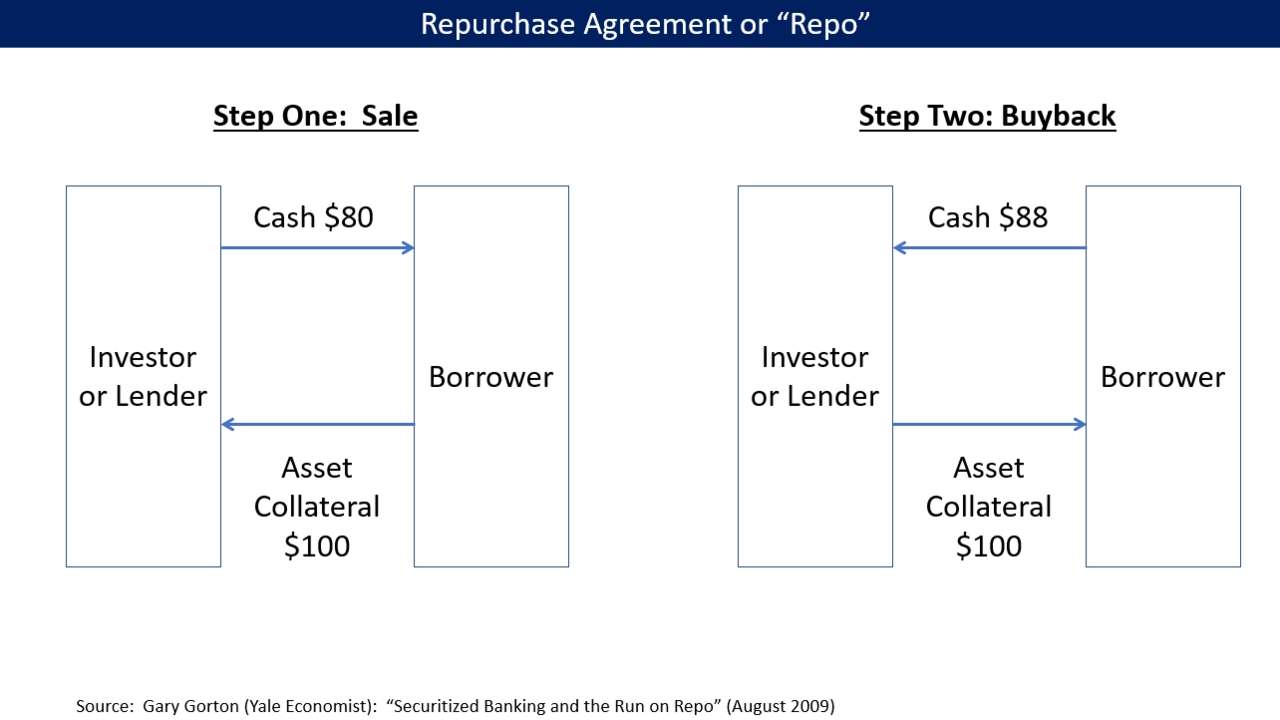
A repurchase agreement, commonly referred to as a repo, is a short-term borrowing mechanism primarily used in the money markets to manage liquidity and collateral. In essence, it is a form of collateralized loan where one party sells securities to another with a legal commitment to repurchase those same securities at a specified future date and price. The repurchase price is usually slightly higher than the original sale price, effectively embedding an interest rate into the transaction — known as the repo rate.
Meaning and Legal Framework
At its core, a repo agreement is not merely a sale and subsequent purchase of securities but a secured lending transaction governed by a legally binding contract. The legal classification varies slightly depending on jurisdiction, but internationally, repos are recognized as title transfer financial arrangements rather than mere pledges. This distinction is crucial: under most legal frameworks, the buyer in a repo transaction becomes the legal owner of the collateral (usually government securities or other high-quality instruments) until the repurchase occurs.
The standard legal document used to formalize these arrangements is known as a Master Repurchase Agreement (MRA). First published by the Securities Industry and Financial Markets Association (SIFMA) in the United States and the International Capital Market Association (ICMA) in Europe, MRAs outline the terms and conditions, default provisions, margin requirements, and dispute resolution mechanisms, thereby mitigating counterparty risk. Repos are subject to national financial regulations and are often overseen by central banks. In the U.S., for instance, the Federal Reserve utilizes repurchase and reverse repurchase agreements as critical tools in open market operations, influencing short-term interest rates and managing liquidity in the banking system.
Key Parties Involved in a Repo Transaction
A typical repo transaction involves two key counterparties:
Cash Lender (Buyer of Securities): This party provides cash in exchange for securities and earns interest via the repo rate. Common lenders include money market funds, pension funds, insurance companies, and central banks.
Cash Borrower (Seller of Securities): This party sells the securities and receives cash with an obligation to repurchase them. Most often, these are investment banks, broker-dealers, or commercial banks seeking overnight or short-term liquidity.
A third party, known as a tri-party agent, may also be involved, especially in larger or institutional settings. Major clearing banks like JPMorgan Chase or BNY Mellon serve as intermediaries, managing collateral, settlement, and custody services on behalf of both parties.
Operational Mechanism and Basic Workflow
The operational mechanics of a repurchase agreement are deceptively simple but serve a vital role in financial markets. Here’s how a basic repo works:
Initiation of the Transaction: The borrower agrees to sell securities to the lender, usually for overnight or short-term funding (though longer terms exist, known as term repos).
Collateral Transfer: The securities — often U.S. Treasury bills, agency debt, or mortgage-backed securities — are transferred to the lender as collateral. The market value of the collateral usually exceeds the cash lent, creating a margin known as the haircut.
Repurchase Agreement: Simultaneously, both parties agree on a future repurchase date and price. The repurchase price includes the original cash amount plus implied interest — the repo rate.
Closing the Deal: On the agreed repurchase date, the borrower returns the cash (plus interest) to the lender, and the lender transfers back the securities, completing the repo transaction cycle.
The reverse repo (or reverse repurchase agreement) is simply the same transaction viewed from the lender’s perspective — where the securities are purchased and then sold back later.
Repos can be structured as:
Overnight repos: Mature within one business day.
Term repos: Have fixed maturity periods longer than one day.
Open repos: Have no fixed maturity date and can be rolled over daily until terminated by either party.
Context and Importance in Financial Markets
The repo market plays a foundational role in modern finance by enhancing liquidity, facilitating leveraged trading, and supporting monetary policy implementation. Institutions use repos to finance inventories of securities, manage cash positions, and arbitrage interest rate differentials. For central banks like the Federal Reserve, repos and reverse repos serve as core tools to control the federal funds rate, influence money supply, and maintain stability in short-term markets.
Historically, the strategic importance of repurchase agreements became glaringly evident during periods of crisis. During the 2008 global financial crisis, a sudden contraction in repo market confidence led to widespread liquidity shortages. More recently, in September 2019, the Federal Reserve had to inject billions into the repo market when overnight rates spiked unexpectedly — underscoring how pivotal repos are to the financial plumbing of the economy.
Structural Components and Mechanisms
Repurchase agreements (repos) involve a range of structural components that ensure the functionality, security, and efficiency of these transactions in the broader financial market. These components are essential for understanding how repos work and the risks and benefits they offer to both counterparties. The mechanisms at play in repo transactions include collateral types and their valuation, haircuts, settlement processes, and the different types of repos used in the market. These factors are critical for managing risk and ensuring smooth operations in short-term financing.

Collateral Types and Valuation
In a repurchase agreement, the underlying collateral is a fundamental element, typically consisting of high-quality, liquid assets. The most common collateral used in repos includes government securities, such as U.S. Treasury bonds, Treasury bills, and agency debt. These assets are chosen for their stability, liquidity, and low credit risk, ensuring that the lender is protected in the event of a default.
The valuation of these securities is a key process, as it determines how much cash the borrower can receive in exchange for the collateral. The value of the collateral is marked-to-market regularly, ensuring that it reflects the current market price of the securities. This allows for adjustments in the repo agreement based on fluctuations in the value of the collateral. The repo rate — the interest rate embedded in the agreement — is influenced by the type and quality of the collateral involved. High-quality collateral, such as U.S. Treasury securities, typically results in lower repo rates due to the reduced risk, whereas lower-quality collateral may lead to higher rates.
Haircuts and Overcollateralization Practices
In repo agreements, the haircut refers to the difference between the market value of the collateral and the amount of cash lent in the transaction. It is a protective measure designed to mitigate risk for the lender. For example, if the borrower provides $100 million in government bonds as collateral but the lender only accepts $95 million in cash, the haircut is 5%. This means that the lender has an added cushion in case the collateral’s value declines.
Overcollateralization is a closely related practice, where the value of the collateral exceeds the loan amount. This provides an extra layer of security for the lender, ensuring that even if the value of the collateral decreases slightly, they will still be protected against potential losses. The size of the haircut and overcollateralization varies depending on the type of collateral and the creditworthiness of the parties involved. In general, high-quality collateral such as U.S. Treasury securities requires a smaller haircut than riskier assets.
Settlement, Maturity, and Term Classifications
The settlement process in repo transactions involves the actual transfer of securities from the borrower to the lender, alongside the cash payment. The securities act as collateral, and the cash payment represents the amount borrowed. This process typically takes place overnight or on the same day for most repos, but it can extend for longer periods, depending on the terms agreed upon by both parties.
Repos are classified into different maturity categories, including:
Overnight repos: These are the most common form of repo, where the transaction is settled on the following business day. Overnight repos are used primarily for managing short-term liquidity needs.
Term repos: These have longer maturities, ranging from a few days to several months. Term repos are used by financial institutions to secure longer-term funding while still benefiting from the collateralized nature of the transaction.
Open repos: These repos do not have a fixed maturity date. Instead, they are automatically renewed until one party decides to terminate the agreement. Open repos are generally used for ongoing short-term liquidity management.
The maturity of a repo determines the interest rate and the level of risk associated with the transaction. Longer-term repos often carry slightly higher interest rates due to the added uncertainty associated with extended time horizons.
Tri-Party vs Bilateral Repos
There are two primary types of repo transactions based on the number of parties involved: tri-party repos and bilateral repos.
Tri-Party Repos: In these repos, a third-party institution, known as a tri-party agent, plays a central role in managing the collateral, ensuring its safekeeping, and performing the necessary settlement. The most commonly used tri-party agents are large clearing banks such as JPMorgan Chase and Bank of New York Mellon. These agents provide an added layer of security by overseeing the collateral and making sure that it meets the required specifications, thus reducing counterparty risk for both the borrower and the lender.
Bilateral Repos: These are simpler arrangements where two parties, without the involvement of a third party, directly exchange securities and cash. While bilateral repos are generally more flexible and faster to execute, they carry additional risks due to the lack of an intermediary overseeing the collateral. These repos are more common in transactions between large financial institutions with established credit lines and strong counterparty trust.
Both types of repos are widely used in the repo market, with tri-party repos providing greater operational convenience and risk mitigation for institutional investors, and bilateral repos being more common in direct dealings between large counterparties.
Sell/Buybacks vs Classic Repos
In addition to the traditional repo agreement, there are also sell/buybacks, which are conceptually similar but differ in execution. In a sell/buyback, the seller agrees to sell securities with a commitment to repurchase them at a later date, usually for a higher price. While this structure is functionally similar to a classic repo, the key difference lies in the legal framework: in a repo, the seller temporarily transfers the title of the securities to the buyer, whereas in a sell/buyback, the title remains with the seller.
Sell/buybacks are often used in jurisdictions where repos are not as prevalent or in situations where the parties prefer a more straightforward structure. However, classic repos are generally preferred for their standardized legal framework and broader acceptance in financial markets.
Types of Repurchase Agreements
Repurchase agreements (repos) are essential tools in the financial market, facilitating short-term borrowing and lending between parties, typically for the purpose of managing liquidity. Over time, various types of repurchase agreements have emerged, each serving different purposes and designed to meet the specific needs of market participants. These agreements primarily differ in terms of the parties involved, the structure of the transaction, and the types of assets used as collateral. Below, we explore the main types of repurchase agreements: tri-party repos, bilateral repos, hold-in-custody repos, equity repos, whole loan repos, and the distinction between securities lending and repos.
Tri-Party Repos
Tri-party repurchase agreements involve three parties: the borrower, the lender, and a third-party custodian (often a large clearing bank). The third-party custodian plays a crucial role in managing the collateral, ensuring its safekeeping, and ensuring that the terms of the repo are met. The custodian handles the transfer of collateral and cash between the parties and verifies that the transaction complies with the terms agreed upon.
Tri-party repos are commonly used in institutional settings where multiple transactions occur frequently, as the third party can streamline the process, minimizing administrative burdens and risk. By using a third party, these repos help mitigate counterparty risk, as the custodian ensures the proper handling of collateral. This type of repo is particularly common in the repo market, where securities such as Treasury bills or agency securities are often used as collateral.
The market for tri-party repos began to grow in the late 1980s as financial markets became more complex and institutions sought more efficient ways to conduct large volumes of short-term financing transactions. Major clearing banks like JPMorgan Chase and the Bank of New York Mellon serve as tri-party agents in the majority of such transactions.
Bilateral Repos
In contrast to tri-party repos, bilateral repos involve just two parties: the borrower and the lender. There is no intermediary in the transaction, and the parties are responsible for managing their own collateral and ensuring that the terms of the agreement are followed. While bilateral repos can be more flexible and less expensive due to the absence of a third-party custodian, they can also carry higher risks for the parties involved. This type of repo is typically seen between large financial institutions with established relationships, as they have the infrastructure and trust needed to ensure that collateral is properly handled.
Bilateral repos are often used in more private transactions where the counterparties are well-known to each other and the terms are negotiated directly. While the lack of a third party may reduce operational complexity, it places more responsibility on the parties to manage collateral and monitor the transaction throughout its term.
Hold-in-Custody (Due Bill) Repos
A hold-in-custody repo, sometimes referred to as a due bill repo, is a unique variation where the collateral remains in the physical possession of the borrower for the duration of the agreement. The lender, however, retains the legal right to the collateral. While the securities might be held in an account at a third-party custodian for safekeeping, the defining characteristic is the borrower’s continued possession. This structure carries more risk for the lender, who relies on the borrower’s creditworthiness and the legal agreement to ensure the collateral is available if needed.
This type of repo is often used in specific situations where the borrower needs to retain access to the collateral for a short time but still wants the liquidity that the repo provides, often with trusted counterparties. It is generally considered riskier for the lender compared to repos where they or a tri-party agent hold the collateral directly and is not a standard practice, particularly for high-quality, liquid assets.
Equity Repos
An equity repo is a specialized form of a repurchase agreement where equity securities, such as stocks, are used as collateral. Similar to traditional repos where government securities or bonds serve as collateral, the borrower agrees to repurchase the equity securities at a future date, usually at a slightly higher price to account for the interest or repo rate.
Equity repos became more prevalent in the 1990s as equity markets grew and financial institutions sought efficient ways to raise capital or manage short-term funding needs using equity as collateral. These transactions are often used by investment banks and hedge funds to access liquidity quickly without needing to sell their equity holdings. The use of equities in repos requires careful monitoring of market prices, as the value of stocks can fluctuate more significantly than government bonds or other less volatile assets.
Whole Loan Repos
A whole loan repo is a type of repurchase agreement that involves the sale and repurchase of an entire loan, as opposed to securities or bonds. This type of repo is less common but is used primarily in the mortgage market, where whole loans—such as residential mortgages or commercial loans—are pledged as collateral.
In a whole loan repo, the borrower provides a pool of loans (rather than individual securities) as collateral for the short-term loan. The whole loan repo allows lenders to raise funds against these illiquid assets while still retaining the eventual ownership of the loans. Whole loan repos are more complicated due to the unique nature of the collateral, as loans involve underwriting standards and servicing arrangements that must be carefully evaluated by both parties involved.
Securities Lending and Repo Distinctions
While securities lending and repos may appear similar, they differ significantly in terms of their structure and objectives. Both transactions involve the temporary transfer of securities, but the key distinction lies in the underlying purpose and legal framework.
In securities lending, the borrower borrows the securities, often to facilitate short-selling. The borrower sells these borrowed securities in the market and intends to repurchase equivalent securities later to cover their short position. The lender receives a fee for lending the securities and often requires the borrower to provide cash collateral to protect against potential losses in the security’s value. The transfer of securities is the primary purpose, not the borrowing of cash.
On the other hand, in a repo, the borrower (seller of securities) uses their securities as collateral to borrow cash from the lender (buyer of securities), agreeing to repurchase the same or equivalent securities at a later date with interest. Repos are fundamentally short-term financing agreements.
The distinction lies in the intention and the initial cash flow. Repos are about borrowing cash using securities as collateral, with the clear intention of repurchase. Securities lending is about borrowing securities (often with cash collateral provided by the borrower) for purposes like short-selling, without a direct agreement to repurchase from the original lender.
Applications and Institutional Usage
Repurchase agreements (repos) are widely utilized in both developed and emerging markets, playing an essential role in short-term funding, liquidity management, and investment strategies. These agreements are critical instruments for central banks, commercial institutions, investment firms, and asset managers. Their usage extends to operations by the Federal Reserve System, Reserve Bank of India, and significant financial entities such as commercial banks and investment firms. However, repos have also seen instances of misuse, most notably in the case of Lehman Brothers during the 2008 financial crisis, which highlighted the dangers of off-balance sheet accounting.
Federal Reserve System Operations
In the United States, the Federal Reserve System (Fed) has utilized repurchase agreements extensively as part of its monetary policy operations. Repos enable the Fed to control short-term interest rates, specifically the federal funds rate, which is a crucial tool in influencing economic activity.
A repo agreement allows the Fed to inject liquidity into the financial system by purchasing securities from financial institutions with the agreement to sell them back in the near future. Conversely, a reverse repo is when the Fed sells securities to financial institutions with an agreement to repurchase them at a later date, which drains liquidity from the system. These operations are part of the Fed’s broader strategy to manage market liquidity and maintain economic stability.
Historically, the Fed’s involvement in repos can be traced back to the early 20th century, but it became more prominent after the 2008 global financial crisis. During this period, the Fed used repos and reverse repos to stabilize the economy by ensuring that financial institutions had sufficient access to short-term funds. Repos have since become one of the primary tools used by the Fed to adjust the money supply and implement monetary policy.
In recent years, the Fed reverse repo market has expanded, especially with the advent of quantitative easing. The Fed’s reverse repo operations have allowed it to maintain control over interest rates even in an environment of abundant liquidity. Through these actions, the Fed influences short-term borrowing costs and ensures that the repo rate remains in alignment with its economic targets.
Reserve Bank of India
In emerging markets, central banks like the Reserve Bank of India (RBI) also use repurchase agreements to manage liquidity and stabilize the financial system. In India, repos play a crucial role in the monetary policy framework by allowing the RBI to manage short-term interest rates and control inflation. The RBI uses repos and reverse repos as tools for open market operations (OMO), which help it maintain the liquidity needs of the banking system while ensuring that credit growth does not exceed sustainable levels.
Repos in India also facilitate the government bond market, where they are used by financial institutions to manage their cash positions. By engaging in repo agreements, commercial banks and investment firms can gain access to liquidity by temporarily selling their holdings of government securities to the RBI or other market participants. In doing so, they can meet their short-term funding needs without having to liquidate their long-term investments.
Emerging market economies are increasingly adopting repos as a tool for liquidity management, especially as financial markets become more integrated into the global economy. As countries such as India move toward adopting more advanced financial market practices, the role of repos in monetary policy will continue to grow, providing essential tools for managing economic stability.
Commercial Banks, Investment Firms, and Asset Managers
Commercial banks, investment firms, and asset managers regularly engage in repos to manage their liquidity positions and optimize their short-term funding. These institutions use repos as a means of obtaining low-cost funding by using their government securities or corporate bonds as collateral. This practice is especially important for banks, as repos offer a way to manage their reserve requirements while avoiding the risks associated with unsecured borrowing.
For investment firms and asset managers, repos serve as a way to efficiently leverage their portfolios and obtain the necessary capital for larger investments. By entering into repurchase contracts, these entities can access capital at lower interest rates compared to traditional borrowing methods. In many cases, the securities used in repos are high-quality assets, such as U.S. Treasury bills, which minimizes the risk for the lender and lowers the cost of borrowing for the borrower.
Repos also serve as a means of collateral management, especially for institutions involved in securities lending or managing large portfolios of fixed-income assets. For example, mutual funds or hedge funds may use repos to temporarily sell securities to raise cash, which they can then use to make additional investments or meet short-term obligations.
The use of repos by commercial and investment banks was particularly crucial during the 2007-2008 financial crisis, when many banks faced liquidity shortages and relied on repo markets to meet their immediate cash needs. The availability of repo funding allowed these institutions to avoid more severe disruptions to their operations.
Lehman Brothers and Off-Balance Sheet Accounting
The role of repurchase agreements in the 2008 financial crisis highlights a darker side of repo transactions, particularly with regard to off-balance sheet accounting. One of the most notable examples of this was the Lehman Brothers collapse, where the firm used repos as part of its broader strategy to manage its financial health, but ultimately this strategy contributed to its downfall.
Lehman Brothers used repo transactions to disguise the true extent of its liabilities and leverage. By engaging in repo transactions that were not properly accounted for on its balance sheet, Lehman was able to present itself as more financially stable than it actually was. These off-balance sheet transactions allowed Lehman to hide its short-term borrowing and the risk associated with these agreements, leading investors and regulators to underestimate the level of risk in the firm’s operations.
When Lehman Brothers filed for bankruptcy in September 2008, it was revealed that the firm had over $600 billion in liabilities, much of which was tied to repo transactions and other short-term funding arrangements. The misuse of repos for window dressing and the subsequent collapse of Lehman Brothers served as a critical turning point in the crisis, prompting widespread regulatory changes and a re-evaluation of financial reporting practices across the banking industry.
The aftermath of Lehman’s bankruptcy highlighted the need for better oversight and transparency in the repo market, leading to stricter regulations around repo transactions and their treatment in financial accounting. The crisis also underscored the importance of understanding the full impact of off-balance sheet financing on financial stability, and regulators have since worked to implement more robust monitoring systems for repo markets to prevent similar situations in the future.
Mathematical Representation
A repurchase agreement (repo) is a short-term borrowing arrangement used primarily by financial institutions. The core of a repo transaction involves the sale of securities with a commitment to repurchase them at a later date for a higher price, which includes an interest component. The repo rate is essentially the cost of borrowing in the repo market and is determined by the price difference between the securities sold and repurchased, as well as the duration of the agreement.
The mathematical representation of a repo rate can be expressed using the following formula:


Here:
Repurchase Price is the amount paid when repurchasing the securities.
Sale Price is the initial price of the securities at the time of the transaction.
Days of Agreement refers to the length of the repo contract (typically overnight or a few days).
The factor of 360 is used to annualize the rate, assuming a 360-day year in financial calculations.
The repo rate reflects the risk and liquidity in the market. For example, if the repo rate is low, it indicates that borrowing costs are cheap, signaling ample liquidity. Conversely, higher rates signal tighter liquidity, often reflecting higher perceived risk in the market.
Impact on Market Liquidity and Interest Rates
Repos play a significant role in influencing market liquidity and interest rates. The repo market serves as a crucial mechanism for short-term funding for institutions, particularly in managing liquidity and maintaining required reserve levels. Through repo transactions, institutions can effectively access capital without needing to liquidate their assets.
For central banks like the Federal Reserve, repos are a vital tool in monetary policy. By buying or selling securities, central banks can influence the repo rate, which in turn affects short-term interest rates across the economy. A lower repo rate indicates cheaper borrowing costs, which can stimulate economic activity by encouraging lending and investment. Conversely, a higher repo rate can signal tighter monetary conditions, slowing down economic activity.
The overnight repo market, in particular, is sensitive to daily fluctuations in liquidity needs. During periods of financial uncertainty or economic stress, demand for overnight repos tends to surge, increasing the repo rate and tightening short-term liquidity. This was evident during the 2008 financial crisis when repo market disruptions exacerbated liquidity shortages and contributed to broader financial instability.
Market Size, Volume, and Growth Trends
The repo market is one of the largest and most liquid financial markets globally. According to estimates by the Bank for International Settlements (BIS), the global size of the repo market was valued at over $10 trillion in 2020, with the United States accounting for the largest share of these transactions. The U.S. repo market alone sees daily trading volumes exceeding $2 trillion, with a substantial portion of these transactions involving government securities like U.S. Treasury bonds.
The growth of the repo market is closely tied to the overall growth of the financial system, the demand for short-term liquidity, and the implementation of monetary policies. Following the 2008 financial crisis, the repo market has seen further development, particularly with the expansion of reverse repos conducted by central banks as a tool to manage liquidity and interest rates. The increasing use of central bank reverse repo operations has helped stabilize the market during periods of economic instability.
The market continues to grow with innovations such as tri-party repo transactions, where a clearing bank acts as an intermediary between the borrower and lender, reducing operational risk. These innovations are helping to expand the market further, particularly in emerging economies, where repo usage is becoming increasingly popular among central banks and financial institutions seeking to manage liquidity efficiently.
Credit and Counterparty Risk
One of the key risks in repo transactions is credit risk, which arises from the possibility that the counterparty in the agreement may fail to repurchase the securities as agreed. If a counterparty defaults, the lender is left with the collateral, but the market value of the collateral may fall, leading to potential losses. This counterparty risk is particularly concerning in bilateral repo transactions, where there is no central clearinghouse to manage and guarantee the transaction.
To mitigate this risk, market participants typically use high-quality collateral, such as government bonds, which have a relatively stable value. Additionally, collateral haircuts are applied, where the value of the collateral is reduced to account for potential price fluctuations. For example, if a lender requires a 5% haircut on a security worth $100, the actual value of the collateral is considered to be $95 in the transaction.
Liquidity Risk and Market Volatility
Liquidity risk is another important consideration in the repo market. This risk occurs when an institution cannot sell or repurchase securities as needed due to a lack of buyers or a freeze in the repo market. Market volatility can exacerbate liquidity risk, particularly during periods of economic uncertainty or financial crises. The repo rate tends to rise sharply during such periods as institutions seek to secure funding, leading to tightening liquidity and higher borrowing costs.
During the 2008 financial crisis, liquidity risk became a prominent concern as several major financial institutions faced funding shortfalls. The collapse of Lehman Brothers and the subsequent repo market disruptions highlighted the vulnerability of the financial system to liquidity shocks. Since then, central banks have taken steps to enhance the stability of the repo market, including offering emergency liquidity facilities and increasing transparency in repo transactions.
Legal and Regulatory Frameworks
The legal and regulatory framework surrounding repos has evolved significantly, particularly in the aftermath of the global financial crisis. In many countries, repo markets are governed by a combination of national regulations, central bank guidelines, and international standards set by organizations such as the BIS and International Monetary Fund (IMF). These regulations aim to ensure the transparency and stability of repo transactions, minimize risks to financial institutions, and protect the broader economy from systemic shocks.
In the U.S., the Securities and Exchange Commission (SEC) and Federal Reserve play key roles in regulating the repo market. The Dodd-Frank Act, passed in 2010 following the financial crisis, included provisions that sought to improve the transparency and oversight of repos, particularly by requiring that repo transactions involving securities collateral be cleared through central counterparties.
Operational Risks in Tri-party and Bilateral Models
Repos can be structured in bilateral or tri-party models. The bilateral model involves direct transactions between two parties, where each party manages the collateral and the terms of the agreement independently. While this model is more flexible, it introduces operational risks related to collateral management and counterparty monitoring.
In contrast, the tri-party repo model involves a third-party intermediary, typically a clearing bank, that assumes responsibility for managing collateral and ensuring the timely settlement of the transaction. While this model reduces operational risk and enhances transparency, it still carries certain risks related to the reliability of the clearing bank and the ability to manage large volumes of transactions efficiently. Both models require careful monitoring of the collateral quality, transaction execution, and settlement processes to minimize risks and ensure smooth operations.
Comparative Instruments and Market Alternatives
Both repurchase agreements (repos) and securities lending are financial instruments that enable the temporary transfer of securities between two parties. However, while they share some similarities, they differ in structure, purpose, and the nature of the transaction. A repurchase agreement (repo) is a short-term borrowing transaction where the seller of securities agrees to repurchase the same securities at a later date for a slightly higher price. This difference in price represents the repo rate, which is essentially the interest charged on the loan. The primary purpose of repos is to provide liquidity in the financial markets, typically on an overnight or short-term basis. The repo market is essential for short-term funding, as it allows financial institutions to access capital while using high-quality securities, such as government bonds, as collateral.
In contrast, securities lending involves the temporary transfer of securities from a lender to a borrower, typically for a specified period. The borrower of the securities pays a lending fee to the lender. Unlike in repos, securities lending does not involve an agreement to repurchase the securities at a later date. Instead, the borrower is typically required to return equivalent securities or cash collateral of comparable value at the end of the lending period.
The key difference lies in the purpose and collateral. In repos, the primary motivation is short-term funding, while in securities lending, the goal is often related to investment strategies such as short-selling, where the borrower sells the borrowed securities with the intent to repurchase them at a lower price. Repos are also generally considered safer because of the repurchase agreement, which ensures that the seller will repurchase the securities. Conversely, securities lending can carry greater counterparty risk because there is no such guarantee.
Comparison with Buy/Sell Back Agreements
The buy/sell back agreement is another financial instrument that shares some similarities with a repurchase agreement (repo), but with notable differences in structure and settlement. In a buy/sell back agreement, one party sells securities to another party with an agreement to buy them back later, similar to a repo. However, the transaction in a buy/sell back is typically more straightforward, without the complex repo agreements found in other repo transactions. The settlement of the buy/sell back agreement is typically done separately from the initial sale, unlike in a repo where the buyback and initial sale are conducted simultaneously.
The main distinction between a repo and a buy/sell back agreement lies in the timing of the transaction and the method of settlement. In a repo, the transaction is instantaneous, and the repurchase occurs on the agreed-upon future date. In contrast, a buy/sell back involves a two-step process: a sale and then a separate buyback, which can create slight differences in how the pricing structure works and the way the market reacts to these instruments.
In practical terms, buy/sell back agreements are generally used for liquidity management or short-term financing, much like repos. However, repos are more common in the banking system, as they provide a direct and immediate source of funding. The buy/sell back agreement, however, is often favored in corporate finance where the flexibility of settlement over time is preferred.
Differences Between Repos and Derivatives
While repurchase agreements (repos) and derivatives both belong to the broader category of financial instruments, their fundamental purposes, structures, and risks differ significantly. Repos are primarily used for short-term financing, while derivatives are more complex contracts used for managing risk, speculating, or leveraging investments. A derivative is a financial contract whose value depends on the price of an underlying asset, such as stocks, bonds, or commodities. Common types of derivatives include futures, options, and swaps. These instruments are often used by traders and investors to hedge against potential price movements or speculate on market directions. For example, a futures contract allows investors to agree to buy or sell an asset at a future date for a pre-determined price, based on the expectation of price fluctuations.
In contrast, a repo involves a direct agreement to sell and repurchase securities, typically government bonds, at a specified price over a short period. The repo market is mainly driven by the need for liquidity, rather than speculation or risk management like in derivatives markets.
The key difference between repos and derivatives lies in their use cases. Repos are generally utilized by institutions for short-term funding needs or liquidity management, whereas derivatives are more complex financial instruments used for speculation, hedging, or risk management. Moreover, while repos involve the temporary transfer of securities, derivatives are based on contractual agreements and do not require the actual transfer of the underlying asset in most cases.
From a risk perspective, derivatives are often considered to have a higher level of risk due to their speculative nature and the leverage involved, whereas repos are generally considered to be low-risk, as they are secured by high-quality collateral. The repo rate is influenced by factors like market liquidity, while derivatives are primarily influenced by market volatility and underlying asset prices.
Historical Development and Market Evolution
The concept of repurchase agreements (repos) dates back to the early 20th century, evolving out of practices in the securities and money markets. Initially, these agreements were used as a form of short-term borrowing and liquidity management by financial institutions. The repo market began to gain traction in the United States during the 1960s when the Federal Reserve started using repos as a tool for monetary policy. The initial form of repos was simple: a seller of securities would agree to repurchase them later at a slightly higher price, with the difference representing the interest charged for the loan.

Repos gained significance in the global financial market during the 1980s as international trade and financial markets expanded. The increasing demand for liquidity and the need for efficient capital management in global markets contributed to the repo market’s rapid growth. By the 1990s, repos had become a cornerstone of financial markets in the United States and Europe, with institutions relying on these agreements for short-term financing and liquidity management.
As global financial markets grew more interconnected, the repo market expanded beyond the U.S., especially in Europe and Asia. International financial institutions, central banks, and institutional investors began to adopt repo agreements as a core component of their funding strategies. This expansion was driven by the growing need for efficient and flexible instruments that allowed participants to obtain short-term financing at relatively low costs, leveraging the collateral of high-quality government securities, such as U.S. Treasury bonds.
Regulatory Reforms Post-2008 Crisis
The 2008 global financial crisis marked a significant turning point in the development and regulation of the repo market. Prior to the crisis, the repo market had grown rapidly, with a lack of comprehensive oversight or regulation. However, the collapse of major financial institutions such as Lehman Brothers and the near-collapse of others highlighted vulnerabilities in the financial system, including the risks associated with short-term borrowing and collateralized lending.
In response to the crisis, regulators in the United States and Europe began to implement more stringent financial regulations to ensure the stability and transparency of the repo market. One of the most significant reforms was the Dodd-Frank Wall Street Reform and Consumer Protection Act (2010), which introduced a series of regulations aimed at reducing systemic risk in the financial markets. This included increased oversight of the repo market, with a focus on the quality of collateral and the management of counterparty risk.
Another important regulatory change was the implementation of Basel III (agreed upon in 2010 and gradually phased in by 2019), which introduced new capital and liquidity requirements for financial institutions. These changes were designed to ensure that banks and other financial institutions maintained adequate capital buffers, reducing the risk of default in times of financial stress. Basel III also introduced new rules for liquidity coverage and leverage ratios, which had a direct impact on the way repos were used for short-term financing.
Following the crisis, the repo market began to be recognized as a critical component of the global financial system, with regulators focusing on improving its transparency and reducing risks associated with counterparty default. As part of these reforms, central banks began to play a more active role in the repo market, using reverse repos and repo operations to manage short-term interest rates and provide liquidity to the banking system.
Major Global Events Impacting Repo Markets
Over the years, various global events have shaped the development of the repo market, influencing its structure and dynamics. The 2008 financial crisis was one of the most significant events, but other events have also had a profound impact on the repo market’s evolution. For instance, the Eurozone debt crisis (2010–2012) placed additional pressure on the repo markets in Europe. As several European countries, including Greece, Ireland, and Portugal, faced sovereign debt crises, market participants became more cautious about the quality of collateral used in repo transactions. This led to a shift towards higher-quality assets, such as German bunds and U.S. Treasury securities, which became more highly sought after as collateral in the repo market. During this period, the European Central Bank (ECB) also implemented policies aimed at stabilizing the repo market, including liquidity support measures for financial institutions.
In recent years, the COVID-19 pandemic (2020) caused significant volatility in global financial markets, leading central banks to once again intervene in the repo market. With global economies facing unprecedented shutdowns and economic uncertainty, central banks, including the U.S. Federal Reserve, took aggressive action to ensure liquidity in the financial system. The Federal Reserve launched massive repo operations, injecting liquidity into the financial system through overnight repos and term repos. This was part of a broader strategy to stabilize financial markets and prevent a liquidity crisis similar to that experienced during the 2008 financial crisis.
Additionally, the rise of digital currencies and blockchain technology has begun to have an impact on the repo market. The tokenization of assets and the development of central bank digital currencies (CBDCs) could alter the landscape of the repo market in the coming years. These technological advancements could offer greater transparency and efficiency in repo transactions, potentially reducing reliance on traditional financial intermediaries. As central banks and financial institutions explore the use of digital assets in repo transactions, this could lead to new developments in how repos are structured and executed.
Gallery