Table of Contents
Changhe Z-10 (Aircraft)
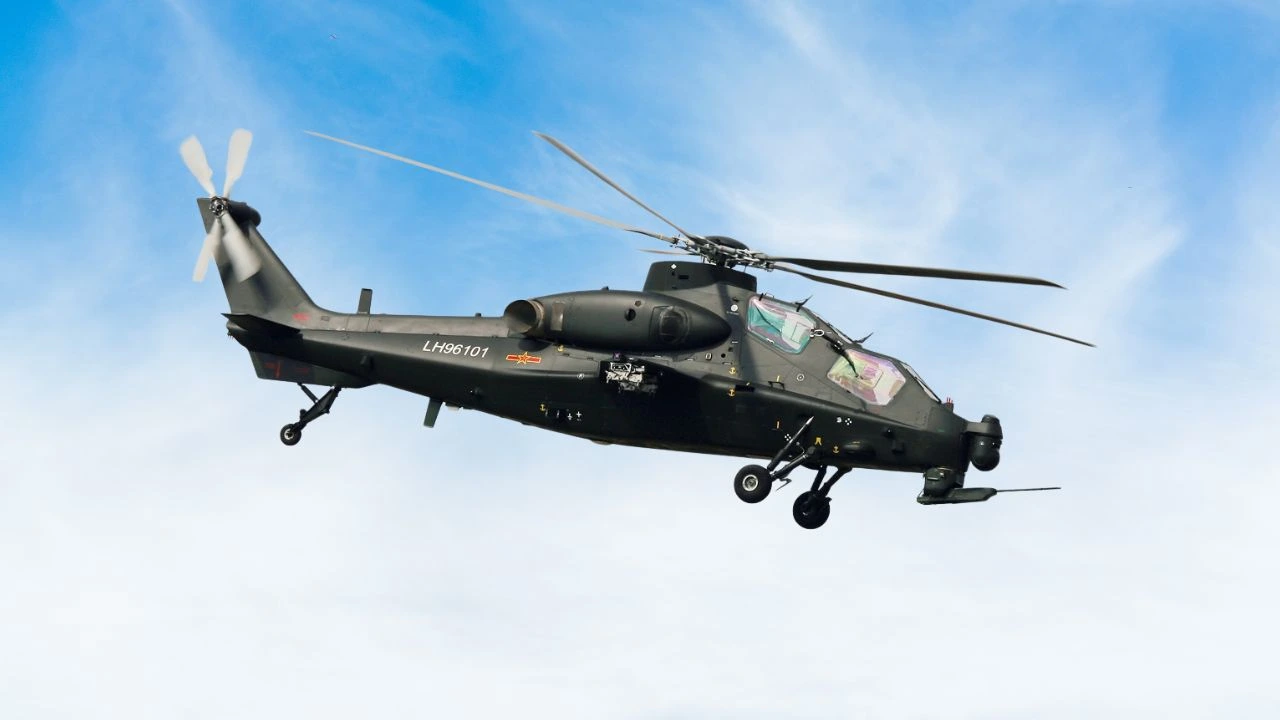
The Changhe Z-10 is a modern attack helicopter developed by China to fulfill the needs of its armed forces for a dedicated close air support and anti-tank platform. Designed primarily by the state-owned Changhe Aircraft Industries Corporation (CAIC), the Z-10 marks a significant shift in China’s military aviation strategy — moving from imported designs or multi-role helicopters to a purpose-built combat rotorcraft.
Development of the Z-10 began in the late 1990s, with the project gaining momentum in the early 2000s under the codename “WZ-10.” The design process was supported by international consultancy in the early stages, including limited collaboration with foreign aerospace firms for technical guidance on components such as engines and flight control systems. By 2003, the prototype was undergoing ground tests, and the aircraft conducted its maiden flight in April 2003.
The Z-10 became operational with the People’s Liberation Army Ground Force (PLAGF) around 2012, representing China’s first domestically developed attack helicopter designed for frontline assault missions. It is often compared to the American AH-64 Apache and the Russian Ka-52 in terms of role and configuration, though it is somewhat lighter in payload and armor.
Its streamlined fuselage, tandem cockpit, and modular weapon capabilities give it both agility and tactical versatility. Over time, newer variants such as the Z-10K and Z-10ME have been introduced, showcasing advancements in survivability, electronics, and export readiness.
Pakistani and Chinese
| Role | Attack Helicopter |
| Manufacturer | Changhe Aircraft Industries Corporation (CAIC) |
| Designer | 602 Research Institute (AVIC) |
| First Flight | April 29, 2003 |
| Entered Service | 2009 (with the People’s Liberation Army Ground Force) |
| Primary Users | China (PLA), Pakistan (limited), export interest in Africa & Asia |
| Crew | 2 (pilot and gunner) |
| Length | 14.1 m (46 ft 3 in) |
| Rotor Diameter | 13.0 m (42 ft 8 in) |
| Maximum Takeoff Weight | 8,000 kg (17,637 lb) |
| Engine Type | 2 × WZ-9 turboshaft engines |
| Maximum Speed | 300 km/h (186 mph) |
| Range | 800 km (497 mi) |
| Armament | 30 mm cannon, HJ-10 anti-tank missiles, TY-90 air-to-air missiles, rocket pods |
| Avionics | Helmet-mounted sight, FLIR, fire control radar (in upgraded variants) |
| Notable Features | Stealthy fuselage design, tandem seating, modular weapon systems |
Historical Context and Development
China’s pursuit of a dedicated attack helicopter like the Changhe Z-10 emerged from a broader modernization effort within the People’s Liberation Army (PLA) during the late 20th century. Until the 1990s, China’s rotary-wing fleet relied heavily on transport and utility helicopters retrofitted for combat roles, which lacked the precision, armor, and firepower of purpose-built attack helicopters used by Western militaries.
The conceptual groundwork for the Z-10 was laid in the early 1990s, as military planners identified the need for a platform capable of countering armored threats and supporting ground forces in complex terrain. The program was formally initiated in 1998 under the designation WZ-10, with Changhe Aircraft Industries Corporation (CAIC) taking the lead in manufacturing, and the China Helicopter Research and Development Institute (CHRDI) handling design responsibilities.
Early development benefited from limited international technical input, particularly from companies in Russia and South Africa, and possibly support in areas like powertrain design and ballistics analysis. This approach allowed China to accelerate development while maintaining control over the platform’s overall design and strategic direction.
By 2003, the first prototype had completed ground trials and achieved its maiden flight, marking a milestone in Chinese rotorcraft engineering. Over the next decade, iterative testing and upgrades led to the integration of more advanced targeting, propulsion, and avionics systems, eventually resulting in the induction of the Z-10 into active service around 2012.
The Z-10’s development reflects a turning point in China’s military aviation capabilities—moving from adaptation to innovation—while also setting the stage for future rotorcraft programs aimed at export and indigenous use.
Research and Development Programs
The development of the Changhe Z-10 was anchored in a long-term research and engineering program designed to create China’s first indigenous attack helicopter. The effort, known internally as the WZ-10 program, began in the late 1990s and involved collaboration between the China Helicopter Research and Development Institute (CHRDI) and Changhe Aircraft Industries Corporation (CAIC). It was supported by the Aviation Industry Corporation of China (AVIC), the country’s main state-owned aerospace conglomerate.
A central challenge was China’s limited experience in designing dedicated attack helicopters. To accelerate development, Chinese engineers studied existing foreign models such as the AH-64 Apache and Eurocopter Tiger while tailoring their designs to local operational needs. The design emphasized modularity, survivability, and compatibility with future upgrades in avionics and weapon systems.
During early phases, technical assistance was reportedly acquired from foreign partners on a component level. Russian firms were believed to have consulted on rotor dynamics and flight stability, while South African experts contributed to survivability and systems integration. However, the core architecture, mission systems, and airframe were developed domestically.
Initial prototypes were tested by 2003, with extensive wind tunnel and systems integration trials conducted throughout the mid-2000s. The Z-10 program ran parallel to broader PLA modernization efforts, allowing for continuous refinement based on real-time military feedback.
By the time of its first public appearance in 2012, the Z-10 represented over a decade of targeted research, marked by a progressive transition from conceptual design to combat-ready platform.
Progressive Upgrades and Modernization
Since its induction into service in the early 2010s, the Changhe Z-10 has undergone a series of upgrades aimed at improving combat effectiveness, survivability, and export potential. These upgrades reflect evolving battlefield requirements and technological advancements within China’s defense sector.
Early operational feedback from the People’s Liberation Army (PLA) led to refinements in power output, avionics integration, and electronic warfare capabilities. One major limitation of initial variants was the underpowered WZ-9 turboshaft engine, which restricted performance in high-altitude and hot-weather conditions. Later iterations addressed this by enhancing the engine’s output and efficiency, with reports of new domestically produced variants offering better thrust-to-weight ratios.
Avionics systems have also been progressively modernized. Target acquisition and fire control systems were upgraded to improve lock-on accuracy, night operation capability, and threat response speed. These enhancements brought the Z-10 closer in functionality to Western counterparts such as the AH-64 Apache, although its operational doctrine remains distinctly adapted to Chinese military strategies.
The introduction of the Z-10K variant, used by the PLA Air Force’s airborne units, featured improved datalinks, digital battlefield integration, and cockpit ergonomics. In parallel, the Z-10ME (Modern Export) version was unveiled in the late 2010s as a more robust, export-ready model. It includes additional armor plating, infrared suppression, and advanced missile warning systems, targeting international clients operating in desert or jungle environments.
These incremental upgrades have enabled the Z-10 to remain a viable and competitive platform within China’s evolving military ecosystem, while offering a foundation for next-generation rotary-wing development.
Design and Technical Overview
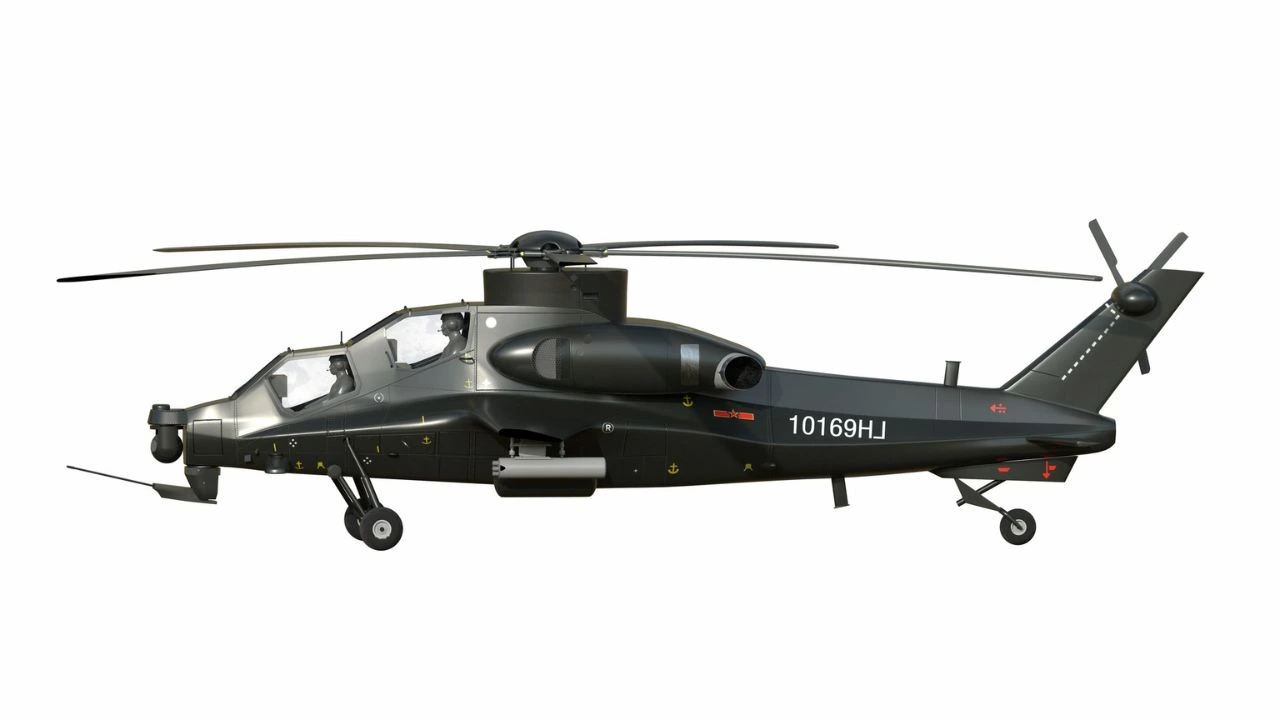
The Changhe Z-10 is a tandem-seat, twin-engine attack helicopter designed for anti-armor missions, close air support, and limited air-to-air engagements. Its architecture reflects a deliberate balance between agility, protection, and modular weapons integration, positioning it as China’s first purpose-built combat helicopter.
The fuselage features a narrow, streamlined profile with tandem seating for the pilot and gunner—an arrangement commonly seen in other attack helicopters such as the AH-64 Apache. The cockpit is armored to withstand small arms fire, and the canopy is designed with sloped surfaces to reduce radar cross-section. The main rotor is a five-blade design optimized for stability and low-vibration flight characteristics, while the tail rotor uses a standard four-blade configuration.
Composite materials are widely used in the Z-10’s airframe to reduce weight and increase survivability. Its modular design allows for easier maintenance and potential system upgrades, especially in avionics and targeting systems. The helicopter is equipped with retractable landing gear, contributing to improved aerodynamics during high-speed maneuvers.
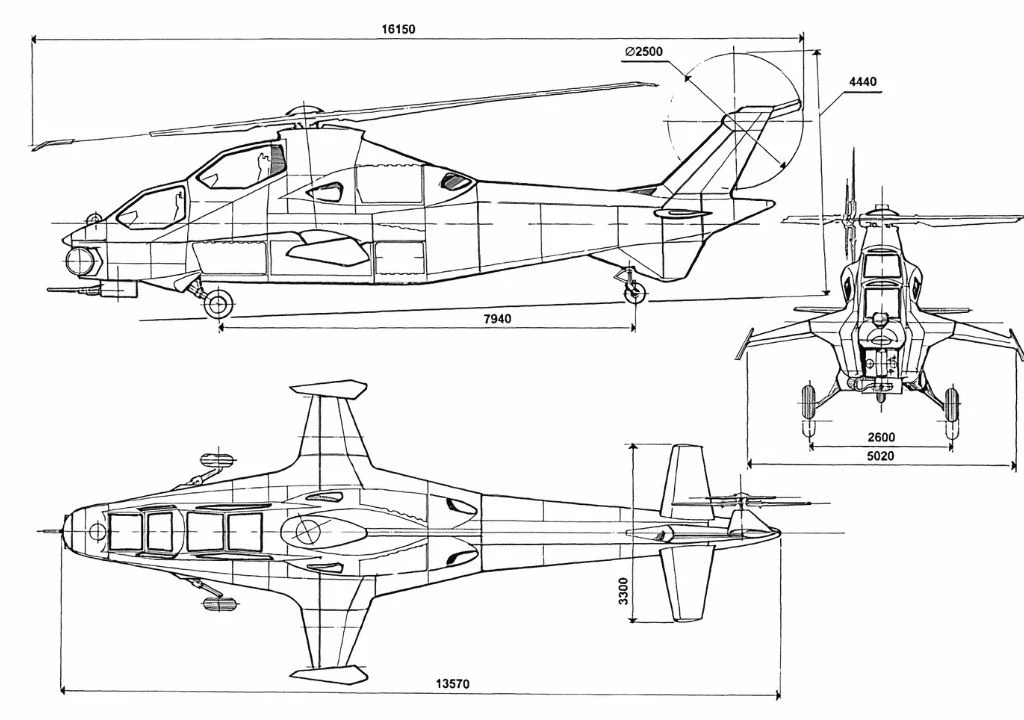
In terms of dimensions, the Z-10 is approximately 14.1 meters in length, with a rotor diameter of 13 meters and an overall height of about 3.8 meters. These specifications make it smaller and lighter than some Western counterparts, enhancing its deployment flexibility, particularly in mountainous or urban environments.
The design integrates a modern glass cockpit, advanced fly-by-wire controls, and onboard mission computers. These systems collectively enhance pilot situational awareness and platform responsiveness during high-threat operations.
Avionics and Targeting Systems
The Changhe Z-10 is equipped with an integrated suite of avionics and targeting technologies designed to support precision strike capabilities in both day and night operations. These systems enable coordinated engagement of ground and aerial threats, while also enhancing situational awareness and pilot workload management.
Central to its targeting system is a roof-mounted electro-optical (EO) sensor turret that houses infrared imaging (FLIR), TV cameras, and a laser rangefinder/designator. This system allows the gunner to detect and identify targets at long range, even in low-visibility environments. The turret is slaved to the helmet-mounted sight and display (HMSD), enabling pilots to cue weapons simply by looking at the target area.
The fire control system supports a wide range of guided and unguided munitions, including air-to-ground missiles, rockets, and a 23mm or 30mm chin-mounted cannon (variant dependent). Ballistic computer inputs from wind sensors and target movement data help increase hit probability, especially during fast maneuvering or hover attacks.
Advanced data links allow the Z-10 to share targeting information with ground units and other aircraft, enabling coordinated strikes and real-time intelligence updates. The cockpit features dual multifunction displays, digital mapping, and an autopilot system that supports terrain-following flight, improving low-altitude navigation.
Survivability and Countermeasures
Survivability has been a key focus in the Z-10’s development, with layered systems designed to reduce detectability and enhance crew protection under combat conditions. While lighter than some Western attack helicopters, the Z-10 incorporates a variety of defensive technologies.
The helicopter’s fuselage includes localized armor plating around vital components, including the cockpit and engine compartments. This armor is designed to withstand small arms fire and light shrapnel, providing basic protection without significantly increasing overall weight.
Infrared suppression devices are installed on the engine exhausts to reduce the aircraft’s thermal signature and minimize vulnerability to heat-seeking missiles. In addition, the Z-10 features radar warning receivers (RWR), laser warning receivers (LWR), and missile approach warning systems (MAWS), which alert the crew to incoming threats from multiple directions.
An integrated countermeasures suite automatically deploys chaff and flares in response to detected threats. This is often managed by an onboard electronic warfare system, which can operate in either manual or automated modes. The aircraft’s compact profile and maneuverability further contribute to survivability by making it harder to track and engage. Later variants, such as the Z-10ME, introduced enhanced armor protection and upgraded defensive suites tailored for high-threat environments, particularly in export configurations.
Cockpit and Pilot Interface
The cockpit of the Changhe Z-10 is designed for tandem operation, with the gunner seated in the front and the pilot in the elevated rear position. This layout maximizes forward visibility for both crew members while supporting effective command coordination during missions.
The interface is centered around a digital glass cockpit, featuring multifunction displays (MFDs) that consolidate flight data, targeting information, and system status. The cockpit is fully night-vision compatible and incorporates hands-on throttle-and-stick (HOTAS) controls, reducing the need for pilots to divert their attention from critical displays during flight.

Both crew members have access to helmet-mounted sight and display (HMSD) systems, which allow for intuitive weapon cueing and sensor control. The integration of voice alert systems and flight automation assists in reducing workload during high-stress operations, such as low-level attack runs or evasive maneuvers.
Cockpit armor and energy-absorbing seating contribute to crew survivability, while modular layout choices ensure that upgrades—such as new sensors or communication links—can be accommodated without major redesigns.
Weapons and Combat Payload
The Changhe Z-10 is equipped with a modular weapon system tailored for anti-armor operations, close air support, and limited aerial combat. Its armament is configured to provide flexibility across various mission profiles.
The standard under-nose cannon is a 23mm or 30mm chain gun, depending on the variant, mounted on a flexible turret to allow for independent aiming. This weapon is typically used for engaging soft-skinned vehicles, infantry positions, and low-flying aerial targets.
Each stub wing features two hardpoints, enabling the helicopter to carry a mix of guided and unguided munitions. These include:
HJ-10 (Red Arrow-10) anti-tank guided missiles, comparable in function to the U.S. Hellfire
TY-90 air-to-air missiles for self-defense against rotary and low-speed fixed-wing threats
57mm and 90mm rocket pods for area saturation and suppressive fire
The weapons are managed by an integrated fire control system that calculates targeting solutions using data from laser rangefinders, sensors, and onboard computers. Loadouts can be customized based on mission requirements, providing operational versatility.
Later models support smart munitions and compatibility with digital fire networks, enhancing the helicopter’s role in joint-force scenarios.
Operational Deployment and History
The Changhe Z-10 entered active service with the People’s Liberation Army Ground Force (PLAGF) in the early 2010s, marking a significant step in China’s development of indigenous military aviation. It was the first Chinese helicopter specifically designed for the attack role, offering capabilities that previously relied on modified utility helicopters or foreign platforms.

Initial deployment focused on select army aviation brigades, particularly in regions with challenging terrain such as Tibet and Xinjiang, where high-altitude performance was essential. Early variants were assigned to units operating in combined arms settings, providing direct support for mechanized infantry and armored formations during joint exercises.
By the mid-2010s, the Z-10 had been fully integrated into several PLA units across multiple military theaters. Public appearances during national military parades and live-fire exercises demonstrated its growing role in China’s operational doctrine. These displays often emphasized its coordination with unmanned aerial vehicles (UAVs) and ground-based command systems.
The Z-10 has also been used extensively in training operations, night-flying exercises, and simulated combat scenarios involving urban warfare and anti-armor tactics. While China has not officially confirmed combat use in external operations, the platform’s presence in border patrol missions and military drills suggests active field evaluation under realistic conditions.
In 2018, Pakistan became the first foreign country to test the Z-10ME export variant. Although the evaluation was reportedly completed without a finalized procurement contract, it marked the beginning of China’s efforts to position the Z-10 for international defense markets.
As of 2025, the Z-10 remains a core asset of China’s rotary-wing attack capability, with ongoing upgrades and regional deployments reinforcing its strategic utility.
Use in the People's Liberation Army
The Changhe Z-10 serves as the backbone of the People’s Liberation Army Ground Force (PLAGF) attack helicopter fleet. Officially entering service in the early 2010s, the Z-10 has been widely deployed across several military regions of China, with a primary role in anti-armor missions and close air support. Its integration marked a strategic step in modernizing China’s rotary-wing capabilities, previously reliant on older, imported models.
The Z-10 has been observed participating in major exercises, such as Stride and Firepower series drills, where it typically operates alongside infantry fighting vehicles and Type 96/99 tanks. Its tandem-seat design and modular weapon systems allow the helicopter to perform in high-altitude, high-humidity environments, particularly in western and southern command theaters.
Chinese military parades and official media have highlighted the Z-10’s active deployment with multiple combat brigades, notably within the 76th and 77th Group Armies in the Western Theater Command. These units are positioned along China’s mountainous borders, where the Z-10’s ability to operate in complex terrain provides a tactical advantage.
Adoption by Pakistan and International Operators
Pakistan became the first confirmed international operator of the Z-10, receiving an unspecified number of units around 2015 for evaluation and testing purposes. These helicopters, reportedly in a variant known as Z-10ME (an export-configured model), were subjected to trials under diverse operational conditions, particularly in mountainous regions along the Pakistan-Afghanistan border.
Despite initial testing, Pakistan did not proceed with a full-scale induction of the Z-10. Instead, the country opted for the Turkish T129 ATAK and continued to pursue other alternatives, including the Chinese Z-10ME for possible future procurement. Analysts have cited performance comparisons, logistical considerations, and export restrictions as possible factors influencing procurement decisions.
No other country has officially inducted the Z-10 into active service as of 2025, although China has promoted the platform in defense exhibitions targeting potential customers in Asia, Africa, and the Middle East.
Geopolitical and Strategic Significance
The Changhe Z-10 holds strategic value in China’s broader military modernization efforts, particularly in enhancing its rotary-wing strike capabilities. As a domestically produced attack helicopter, it represents a shift away from reliance on foreign platforms, reinforcing China’s defense self-sufficiency and industrial maturity.
Designed for anti-armor and close air support roles, the Z-10 contributes to the People’s Liberation Army’s (PLA) ability to conduct rapid-response and combined-arms operations. It complements ground forces by providing tactical air support in scenarios ranging from conventional battlefield engagements to localized border skirmishes. The helicopter’s deployment aligns with China’s goal of fielding a fully modern military force by 2035.
Regionally, the Z-10’s presence has implications for security dynamics in East Asia. Its induction enhances the PLA’s capabilities along contested areas, particularly in the Taiwan Strait and South China Sea. While not considered a direct rival to more advanced Western helicopters like the AH-64 Apache, the Z-10 marks a significant step in China’s evolution as a producer of advanced military aviation.
Internationally, China’s willingness to export the Z-10—albeit selectively—adds a strategic dimension. For example, its sale to Pakistan not only deepens defense ties between the two nations but also signals China’s intent to play a more active role in the global arms market.
Variants and Configurations
The Changhe Z-10 has undergone multiple upgrades since its introduction, resulting in several operational variants tailored to different combat roles and environmental conditions. These configurations reflect advances in avionics, survivability systems, and mission flexibility.
The initial production variant, often referred to as the Z-10A, entered service with the People’s Liberation Army Ground Force (PLAGF) in the early 2010s. It featured basic avionics and limited armor, primarily designed for anti-tank missions and close air support.
A more refined version, the Z-10K, was developed specifically for the People’s Liberation Army Air Force (PLAAF). It includes enhanced communication systems and is adapted for joint operations with fixed-wing aircraft, suggesting a broader interoperability focus.
The most advanced known configuration is the Z-10ME, an export-ready model revealed in 2018. This variant includes:
Improved engine power for better high-altitude performance
Infrared suppressors and radar-absorbing paint to reduce detectability
Modular armor plating for increased crew protection
Upgraded fire-control systems compatible with a wider range of precision-guided munitions
Each variant reflects China’s evolving military needs, including readiness for varied terrains such as high-altitude regions like Tibet. The modular approach also allows for future customization based on export or domestic operational requirements.
Technical and Safety Record
While the Changhe Z-10 has been in service since the late 2000s, publicly available information on incidents involving the platform remains limited, due in part to the opaque nature of military reporting in China. Nonetheless, a few documented occurrences provide insight into its operational safety and use.

In May 2013, a Z-10 crashed during a routine training flight in China’s Henan Province. The incident, which resulted in injuries to the crew, marked one of the earliest known accidents involving the helicopter. Chinese authorities attributed the crash to mechanical failure, though details were not widely disclosed.
Another reported incident occurred in 2016, when a Z-10 helicopter participating in a training exercise in central China suffered an in-flight systems malfunction. The pilot reportedly made an emergency landing, and no casualties were reported. The event underscored ongoing improvements in flight control systems and airworthiness protocols across the PLA Army Aviation branch.
Overall, the Z-10’s safety record remains relatively modest in terms of publicly disclosed accidents, especially when compared to similar platforms in long-term service. Continuous upgrades to avionics, flight stability systems, and engine reliability have been aimed at enhancing operational safety.
Current and Prospective Operators
As of 2025, the primary and only confirmed operator of the Changhe Z-10 attack helicopter is the People’s Liberation Army (PLA) of China. Specifically, it serves in both the PLA Ground Force and the PLA Air Force, playing a key role in China’s tactical support and anti-armor capabilities.
The Z-10 entered active service with the PLA around 2012, and since then, it has been widely integrated across multiple army aviation brigades. Chinese military parades and exercises have frequently featured the Z-10, often in formations alongside the lighter Z-19 scout helicopter, reflecting their complementary battlefield roles.
Interest in the Z-10 has emerged from a few foreign governments, though no significant exports have been officially confirmed as of 2025. Notably:
Pakistan evaluated the Z-10 in 2015 as part of its modernization efforts. Although a limited number were tested, Pakistan ultimately opted for the Turkish T129 ATAK for broader deployment.
Potential interest has occasionally been reported from countries in Africa and Southeast Asia, likely due to the Z-10’s cost-effectiveness compared to Western attack helicopters. However, these have not materialized into finalized deals.
Export viability remains influenced by geopolitical factors, as well as export restrictions related to the Z-10’s imported components — including its earlier reliance on French and Ukrainian engines, which may limit availability for non-Chinese operators.
Technical Specifications of the Z-10
The Changhe Z-10 is a twin-engine attack helicopter developed by China primarily for anti-armor and close air support roles. It represents a significant advancement in China’s indigenous rotorcraft capabilities, incorporating modern avionics, stealth features, and weapons systems tailored for battlefield versatility.
The Z-10 typically features a tandem-seat cockpit with armored protection for both pilot and gunner. The airframe includes sloped surfaces and a narrow profile to reduce radar cross-section. The helicopter measures approximately 14.15 meters in length, with a main rotor diameter of 13 meters and a height of about 3.84 meters.
Powered by two turboshaft engines — originally the WZ-9 and later variants like the WZ-16 — the Z-10 can reach cruising speeds of around 230 km/h and a maximum range near 800 kilometers. It has an operational ceiling of about 6,000 meters, though typical combat altitude is considerably lower.
Armament includes a chin-mounted 23mm or 30mm cannon, depending on the variant, along with hardpoints for air-to-ground missiles (such as the HJ-10 or HJ-8), unguided rocket pods, and air-to-air missiles like the TY-90. The fire-control system integrates electro-optical targeting, helmet-mounted sights, and night vision compatibility.
Recent upgrades in more advanced models, such as the Z-10ME, focus on enhanced survivability in high-threat environments. These include improved engine performance, modular armor plating, infrared suppressors, and upgraded electronic warfare suites.
Gallery