Table of Contents
Air Defense Identification Zone (ADIZ)
Every day, hundreds of aircraft cross into North American airspace — but what most people don’t realize is that long before a plane reaches the U.S. or Canadian borders, it enters a tightly monitored perimeter called the Air Defense Identification Zone (ADIZ). This zone isn’t marked on tourist maps or visible from the sky, but it plays a critical role in national security, acting as an invisible net that filters out potential threats before they come too close.
Originally created during the Cold War to detect Soviet bombers, the North American ADIZ remains just as vital in today’s era of drones, high-speed jets, and global uncertainty. Managed jointly by NORAD (North American Aerospace Defense Command), the FAA, and Transport Canada, this vast area ensures that any aircraft entering North American airspace is identified, tracked, and authorized — civilian or military, commercial or private. According to official sources, NORAD identifies and assesses over 1,500 potential incursions each year — an alarming reminder of how frequently our skies are tested.
But how exactly does the ADIZ system work? What protocols must pilots follow? And what happens when a plane violates these airspace rules? This article unpacks the full picture — from the structure and purpose of North America’s air defense zones to the interception procedures that could be triggered within minutes of non-compliance.
Whether you’re a student of geopolitics, an aviation enthusiast, or simply curious about how nations defend their skies, this comprehensive guide offers clear insights into the strategic, historical, and operational importance of ADIZ. You’ll learn about specific regions like Washington D.C.’s highly restricted airspace, the Guam extension, and why Alaska’s ADIZ is one of the most active in the world. In an age where threats don’t always come with warning signs, understanding how the Air Defense Identification Zone operates offers a rare look into the behind-the-scenes defense systems that keep millions safe every single day.
Air Defense Identification Zone (ADIZ)

| Nickname | ADIZ Zone, Air Defense Zone |
| Primary Purpose | To detect and identify aircraft entering sovereign airspace |
| First Established | The concept of ADIZ was first introduced during World War II (1940s) |
| Key ADIZ Regions in North America | – U.S. ADIZ – Canada ADIZ – Alaska ADIZ |
| Defensive Agency | NORAD (North American Aerospace Defense Command) |
| Future | – Fully automated interception systems – Blockchain for secure data sharing – Expanded drone defense technologies |
Definition and Purpose of ADIZ
An Air Defense Identification Zone (ADIZ) is a designated portion of international airspace surrounding a country, within which the identification, location, and control of all aircraft are required in the interest of national security. Although not a sovereign airspace, an ADIZ extends beyond a nation’s territorial boundaries and serves as an early warning buffer, allowing military and civilian defense authorities to detect, monitor, and potentially intercept aircraft before they enter national airspace.
The concept of the ADIZ emerged during the early Cold War era, when the rising threat of long-range Soviet bombers prompted the United States and Canada to establish advanced detection and response measures. The first American ADIZ was created in the 1950s, and over time, several zones were developed around North America’s coastlines, including over the Atlantic, Pacific, Gulf of Mexico, and the Alaskan region — the latter being among the most strategically active today.
In North America, ADIZ airspace is monitored and enforced by the North American Aerospace Defense Command (NORAD), a bi-national defense organization formed in 1958 between the United States and Canada. NORAD works in collaboration with the Federal Aviation Administration (FAA) and Transport Canada to maintain situational awareness across the vast perimeter of the North American ADIZ.
Legal Status and Sovereignty Clarification
Contrary to common belief, an ADIZ is not a declaration of sovereignty over international airspace. Instead, it is a unilaterally established identification zone that aligns with international aviation norms under the Chicago Convention. Countries cannot legally restrict overflight in ADIZ zones unless the aircraft intends to enter their sovereign airspace — typically extending 12 nautical miles from the coastline. However, aircraft flying in ADIZ regions are required to comply with identification protocols, such as filing a flight plan, maintaining two-way radio contact, and activating a functioning transponder.
The United States and Canada make it clear that the ADIZ is a defensive mechanism for pre-emptive identification, not a tool for territorial expansion. Nonetheless, failure to comply with ADIZ requirements can result in serious consequences, including military interception, especially during heightened security conditions or international tensions.
Purpose and Use in Peacetime vs Wartime
The primary purpose of an ADIZ is to provide early detection and response capability to defend against potential aerial threats. In peacetime, this includes tracking unidentified or non-compliant aircraft, coordinating with air traffic control for clarification, and scrambling fighter jets if the aircraft appears suspicious or fails to respond. According to NORAD statistics, the organization tracks an average of 1,500 aircraft entering North American ADIZ zones each year — with dozens resulting in active military responses, often involving Russian military aircraft probing the Alaska ADIZ.
In wartime or elevated alert scenarios, the rules of engagement within an ADIZ become more assertive. Military forces may engage unidentified aircraft more quickly, and authorities can declare temporary flight restrictions (TFRs) or no-fly zones, particularly over critical infrastructure or during major events. For instance, Washington D.C. is surrounded by a permanently restricted airspace known as the Flight Restricted Zone (FRZ) within the broader ADIZ, reflecting its heightened strategic importance.
In modern times, ADIZ zones are increasingly relevant not just for manned aircraft, but also for unmanned aerial vehicles (UAVs) and emerging hypersonic threats, making their function more critical than ever in national and global security strategies.
United Nations Convention on the Law of the Sea (UNCLOS)
The Air Defense Identification Zone (ADIZ) system, particularly in North America, has evolved as a crucial layer in national airspace security. Designed primarily to detect, identify, and monitor aircraft approaching sovereign airspace, ADIZ zones were developed against the backdrop of growing military aviation and intercontinental threats. The history of the North American Air Defense Identification Zone is closely tied to the emergence of global conflict in the 20th century and reflects the geopolitical anxieties of each era—from the Cold War to the post-9/11 security paradigm.

Origins of ADIZ in North America
The concept of an air defense zone predates the ADIZ as we know it today, but the formal establishment of ADIZs occurred in the early 1950s during heightened Cold War tensions. In response to the rapid development of long-range Soviet bombers capable of reaching North American targets, the United States and Canada sought to create a system to identify and track unknown aircraft before they entered sovereign airspace. The first North American ADIZ was established in 1950 under the control of the newly formed Continental Air Defense Command (CONAD) and later integrated into the North American Aerospace Defense Command (NORAD), which was jointly established by the U.S. and Canada in 1958.
At its core, an ADIZ functions as a buffer zone—typically extending beyond a nation’s territorial boundaries—within which incoming aircraft are required to identify themselves, file flight plans, and maintain radio contact. This early framework laid the foundation for what would become a vital component of American and Canadian national defense strategy. Initially, the ADIZ covered the East and West Coasts of the U.S., as well as Alaska, due to its proximity to the Soviet Union via the Arctic Circle.
Evolution During the Cold War
The Cold War period saw the rapid expansion and operational sophistication of the ADIZ zone network across North America. With the increasing threat of Soviet air and missile attacks, NORAD’s role became more central. The Alaska Air Defense Identification Zone (Alaska ADIZ), established in the 1950s, was of particular strategic importance due to its geographical location. Alaska provided the shortest route for Soviet bombers to reach the continental United States, making the Alaska ADIZ one of the most heavily monitored and patrolled zones.
Throughout the 1960s to 1980s, improvements in radar technology and satellite surveillance allowed NORAD to refine its tracking capabilities across the North American ADIZ system. Regular interceptions of Soviet Tu-95 “Bear” bombers by NORAD fighter jets became a common occurrence—especially along the Alaskan air defense identification zone. These aircraft rarely violated sovereign airspace but frequently flew into the ADIZ, prompting routine military responses as part of deterrence and identification protocols.
During this era, the ADIZ also served as a framework for testing military readiness and conducting joint exercises. It symbolized a line of first contact and strategic surveillance rather than a legal boundary, as aircraft entering an ADIZ without proper identification were not necessarily violating international law—but were viewed as potential threats requiring immediate scrutiny.
Post-9/11 Airspace Security Adjustments
The September 11, 2001 attacks marked a turning point in the operational role of ADIZs, particularly in the context of domestic aviation security. While the ADIZ had traditionally been focused on external threats, 9/11 revealed vulnerabilities from within national airspace. In the immediate aftermath, the United States Federal Aviation Administration (FAA) and Department of Defense (DoD) implemented sweeping changes, including the temporary shutdown of U.S. airspace and the reinforcement of ADIZ requirements.
One of the most significant changes post-9/11 was the establishment of a Temporary Flight Restriction (TFR) zone over Washington, D.C., and the creation of the Washington, D.C. Special Flight Rules Area (SFRA) and ADIZ, which imposed strict regulations on civilian aircraft movement around the nation’s capital. Additionally, NORAD intensified patrols and detection efforts, with increased coordination between military and civilian aviation authorities.
The ADIZ system was further enhanced by integrating real-time radar feeds, advanced identification technologies, and the continuous presence of quick-reaction alert (QRA) aircraft. Events such as NORAD’s frequent interception of Russian military aircraft in the Alaska ADIZ—which continued into the 2010s and 2020s—highlighted the ongoing relevance of the ADIZ system in an evolving threat environment.
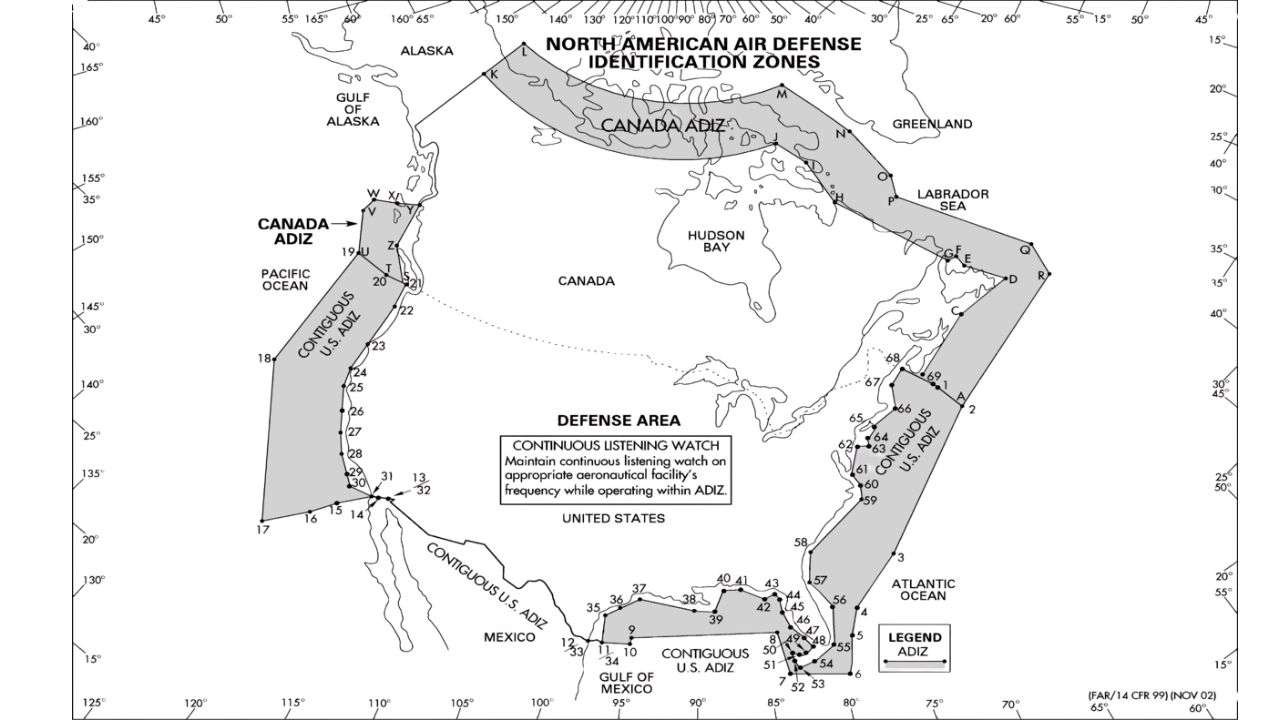
Today, the United States Air Defense Identification Zone includes several sectors, notably around the continental U.S., Alaska, Hawaii, and Guam, reflecting a comprehensive network designed to detect, deter, and respond to potential aerial threats. The concept has also inspired similar systems globally, such as the Taiwan ADIZ and China’s Air Defense Identification Zone in the East China Sea, further cementing the ADIZ as a key tool in international airspace control and defense readiness.
United States & Canadian ADIZ Zones
The Air Defense Identification Zone (ADIZ) is a critical component of the United States’ layered airspace security structure, designed to identify and monitor aircraft approaching or entering U.S. sovereign airspace. Administered primarily by the Federal Aviation Administration (FAA) and coordinated through North American Aerospace Defense Command (NORAD), the U.S. ADIZ system extends beyond national borders to enable early detection, identification, and, if necessary, interception of potential aerial threats.
The United States maintains multiple ADIZ areas strategically positioned around key national and territorial borders: the Continental United States (CONUS), Alaska, Hawaii, and Pacific island territories, including Guam. Each zone is tailored to the geographic, political, and strategic defense needs of its region, reflecting decades of evolving security priorities and geopolitical shifts.

Continental United States (CONUS) ADIZ
The Continental United States ADIZ spans the airspace surrounding the lower 48 states and forms the backbone of domestic airspace defense. Established in the early Cold War era and later expanded post-9/11, this zone acts as a buffer around the American mainland, encompassing coastal airspace along the Atlantic Ocean, Pacific Ocean, and Gulf of Mexico.
Aircraft entering the CONUS ADIZ from international airspace must file an advance flight plan, maintain two-way radio communication, and activate a transponder with altitude reporting — all part of the broader Identify Defense protocol. These requirements are not merely procedural; they form the first line of response to unauthorized or unidentified aircraft. Notably, the CONUS ADIZ overlaps with no-fly zones such as those over Washington D.C., especially the Flight Restricted Zone (FRZ) and Special Flight Rules Area (SFRA).
As part of NORAD’s air enforcement zone, this area is continually monitored for intrusions, suspicious deviations, or unauthorized operations. In cases of non-compliance, NORAD may deploy fighter jets for interception, a process known as air-ID or visual identification.
Alaska ADIZ: Strategic Positioning
The Alaska Air Defense Identification Zone (commonly referred to as the Alaska ADIZ) is one of the most geopolitically sensitive and frequently monitored U.S. air defense zones. Created during the Cold War, this zone guards the northwestern air gateway to North America and sits just a few hundred miles from eastern Russia, making it a flashpoint for aerial surveillance and military probing.
Covering over 200,000 square miles, the Alaska ADIZ stretches from the Aleutian Islands across the Bering Sea and into the Arctic region. It is regularly the site of Russian military aircraft incursions, typically long-range bombers or reconnaissance planes. According to NORAD reports, Russian aircraft have been detected inside the Alaska ADIZ on numerous occasions, prompting routine intercepts by U.S. Air Force fighter jets from Joint Base Elmendorf-Richardson and Eielson Air Force Base.
The strategic significance of the Alaska ADIZ has only increased with the melting Arctic sea ice, enabling new maritime and aerial navigation routes. As a result, NORAD has strengthened its sensor networks, radar installations, and joint operations with the Royal Canadian Air Force to maintain airspace sovereignty in this region.
Hawaii ADIZ: Pacific Gatekeeping
The Hawaii ADIZ encompasses the archipelago and adjacent Pacific airspace, acting as the primary aerial buffer zone in the Central Pacific. While geographically isolated, Hawaii’s Pearl Harbor naval base, Pacific Fleet headquarters, and Pacific Command (INDOPACOM) make it a crucial military hub, demanding constant vigilance.
Established after World War II and continually modernized, the Hawaii ADIZ has served both military and civil aviation interests. The Joint Surveillance System (JSS) operates radar coverage around the islands, enabling early tracking of inbound aircraft, especially those transiting from Asia or Oceania. Pilots entering the Hawaii ADIZ must adhere to strict FAA ADIZ requirements, including prior notification and coordination with air traffic control and NORAD’s Pacific operations center.
The zone is not only vital for aerial threat detection but also plays a key role during natural disasters or humanitarian crises, serving as a coordination point for military airlift operations in the Pacific basin.
Guam and Pacific Island Territories
The ADIZ coverage for Guam and the U.S. Pacific Island territories — including the Northern Mariana Islands and Wake Island — supports America’s forward defense posture in the Indo-Pacific. These territories are of growing strategic importance amid rising tensions in the South China Sea and around Taiwan’s ADIZ.
Guam, home to Andersen Air Force Base and a major hub for B-52, B-1, and B-2 bomber operations, is one of the most heavily fortified U.S. territories in the Pacific. Although no formal “ADIZ” is labeled around Guam in the same way as CONUS or Alaska, military-controlled airspace and restricted operating zones (ROZs) offer a comparable structure for air traffic monitoring and threat response.
With frequent Chinese military exercises in the Western Pacific and increasing U.S. surveillance patrols, the Guam sector functions as a tripwire for regional air incursions. Defense experts regard it as a critical asset in any potential conflict involving air and missile threats from Asia-Pacific adversaries.
Strategic Significance and Modern Integration
Collectively, these ADIZ areas form an integrated continental and transoceanic air defense network. Their operation is coordinated under NORAD and supported by U.S. Strategic Command, with inputs from radar, satellites, and forward-deployed surveillance assets. While ADIZs are not sovereign airspace under international law, they are an essential element of early-warning systems, giving the U.S. critical response time against unidentified, hostile, or non-compliant aircraft approaching national borders.
In an era of increasing aerial surveillance, hypersonic threats, and great-power competition, the U.S. Air Defense Identification Zones — especially the Alaska ADIZ and Pacific ADIZ sectors — remain at the forefront of North American aerospace security.
Canadian ADIZ Operations
The Canadian Air Defense Identification Zone (ADIZ) plays a critical role in maintaining the security and sovereignty of Canadian airspace. As part of North America’s collective defense strategy, it operates within the framework of NORAD (North American Aerospace Defense Command), which is responsible for detecting, monitoring, and defending Canadian and American airspace from airborne threats. This section delves into the scope of Canada’s ADIZ, its integration with U.S. air defense systems, and the critical role of NORAD in its operations.
Coverage and Responsibility
The Canadian ADIZ encompasses a vast area of airspace surrounding Canada, extending from its territorial boundaries into international airspace. The exact geographic coverage of the ADIZ is not strictly fixed, as it adapts to dynamic national security requirements. However, it generally extends up to 200 nautical miles (370 km) beyond Canada’s borders, covering much of the Arctic, Atlantic, and Pacific Ocean airspaces, as well as the regions near the U.S.-Canada border.
This zone is part of a broader effort to maintain vigilance against potential airborne threats, such as aircraft from hostile nations or terrorist groups. The purpose of the ADIZ is not only to detect and identify foreign aircraft entering or approaching Canadian airspace but also to provide an early-warning system for intercepting and neutralizing possible threats before they can reach Canadian or North American airspace.
NORAD's Role in Canadian ADIZ
NORAD, established in 1958, plays a pivotal role in the operation of the Canadian ADIZ. It is a joint Canadian-American command tasked with providing aerospace warning, air sovereignty, and defense for both countries. NORAD’s role in the Canadian ADIZ includes continuous surveillance of aircraft movements entering or exiting the zone and assessing potential threats to national security. The command operates a combination of radar, satellite surveillance, and fighter interceptors to monitor and track unidentified or suspicious aircraft in the ADIZ.
NORAD’s operational framework in the Canadian ADIZ is designed to quickly identify potential incursions. If an aircraft is detected in the zone without proper identification or flight clearance, NORAD can scramble fighter jets to investigate and, if necessary, intercept the aircraft before it crosses the threshold into Canadian or U.S. airspace. This process ensures that Canada’s airspace remains secure and that any airborne threats are neutralized before they can approach densely populated or strategically critical areas.
The partnership between Canada and the U.S. under NORAD allows for a coordinated defense strategy, where assets from both nations—such as surveillance radars, fighter aircraft, and military command centers—are used to enforce the air defense protocols of the Canadian ADIZ. The operational integration of these resources is essential for ensuring the zone’s effectiveness in an increasingly complex global security landscape.
Integration with U.S. Systems
The Canadian ADIZ is tightly integrated with the U.S. ADIZ as part of North America’s broader air defense network. This integration facilitates seamless coordination between Canadian and U.S. military forces, ensuring that both countries can respond rapidly and effectively to any threats detected in their shared airspace. Through this collaboration, NORAD ensures that threats entering from the north (such as Russian bombers) or other directions are monitored in real time, and immediate response options are in place.
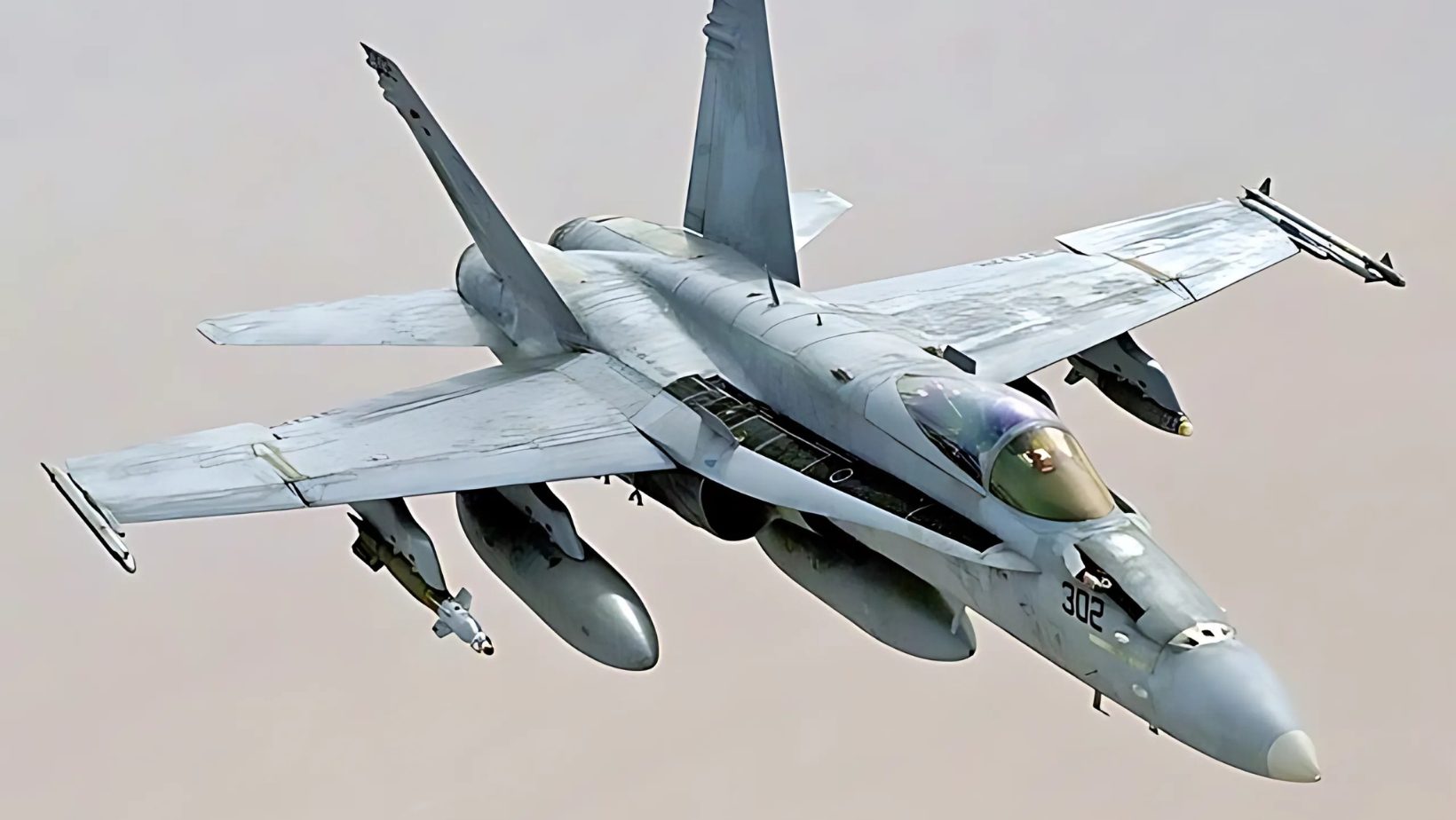
One of the key mechanisms for this integration is the use of shared surveillance data. Both countries’ radar systems feed into NORAD’s central operations, where data is analyzed and decision-making is streamlined. Additionally, NORAD’s combined aircraft fleets, such as the CF-18 Hornet (Canada) and F-22 Raptors (U.S.), can be quickly deployed to intercept any unauthorized aircraft approaching either country’s airspace, depending on the situation.
This integrated approach also extends to training exercises, where Canadian and U.S. forces collaborate in simulated air defense scenarios, ensuring that both nations remain ready to respond to real-world threats. These joint efforts enhance the overall security of the North American airspace, where threats do not respect international borders.
Significance and Evolution
Over the decades, the Canadian ADIZ has evolved in response to the changing nature of global and regional security threats. The post-9/11 era, with the rise of new threats such as terrorism, further underscored the importance of robust air defense zones. Canada’s participation in NORAD has ensured that the ADIZ remains a key element of national security, particularly as concerns about cyber warfare, missile defense, and hypersonic threats grow.
Furthermore, the increasing presence of foreign military aircraft near the Arctic and Pacific regions—areas of significant strategic importance—has prompted both Canada and the U.S. to enhance their ADIZ monitoring and response capabilities. The Arctic, in particular, has become a focal point for international attention, as it holds untapped natural resources and increasingly open shipping lanes due to climate change.
Washington, D.C. Flight Restricted Zone (FRZ)
The Washington, D.C. Flight Restricted Zone (FRZ) is a crucial component of the United States’ air defense infrastructure, designed to protect the nation’s capital from potential airborne threats. Established after the terrorist attacks of September 11, 2001, this zone is part of a broader airspace security framework, which includes the Washington ADIZ (Air Defense Identification Zone). The FRZ restricts civilian aircraft from entering a designated area around Washington, D.C., unless specific conditions are met. This section provides an in-depth look at the creation, purpose, protocols, and notable incidents associated with the Washington D.C. Flight Restricted Zone.

Creation and Security Purpose
The Washington, D.C. Flight Restricted Zone was created in the wake of the 9/11 attacks, which highlighted vulnerabilities in U.S. airspace security, particularly over key governmental locations. Before 9/11, the airspace around Washington, D.C. was not as strictly regulated. However, following the attacks, there was a significant increase in security measures to prevent similar threats. The Federal Aviation Administration (FAA), in cooperation with the Department of Defense and other agencies, established the FRZ as part of a broader initiative to protect critical infrastructure, such as the White House, the U.S. Capitol, and the Pentagon, from potential aerial attacks.
The Washington FRZ extends 15 nautical miles (approximately 28 kilometers) around the heart of Washington, D.C., including its major landmarks. This zone prohibits unauthorized aircraft from entering without prior clearance. It is one of the most tightly controlled airspaces in the United States, and its primary mission is to ensure the safety of the nation’s capital from any aerial threats, particularly from individuals or groups seeking to harm high-profile governmental targets.
Protocols for Civilian Aircraft
Civilian aircraft wishing to enter the Washington, D.C. FRZ must adhere to a strict set of regulations and protocols. The FAA, in collaboration with NORAD (North American Aerospace Defense Command) and the Department of Homeland Security, oversees the enforcement of these protocols. Key elements of the FRZ regulations include:
Authorization Requirement: Pilots must receive explicit authorization from the FAA before entering the restricted zone. This typically requires advanced notice and specific clearance, especially for private and non-commercial aircraft.
Flight Plan Approval: Aircraft must file a flight plan detailing their route, and this plan must be approved by air traffic control. This ensures that every flight is tracked, monitored, and identified.
Military and Law Enforcement Escorts: In cases of non-compliance or suspicious behavior, military aircraft or law enforcement personnel may be deployed to intercept and escort the unauthorized aircraft out of the FRZ. Fighter jets like the F-16 or F-22 are sometimes scrambled to intercept and assess the situation.
No-Fly Zones for Small Aircraft: Within the FRZ, there are no-fly zones that restrict smaller aircraft such as private planes and recreational flyers. Even general aviation pilots must comply with stringent identification and security protocols.
Temporary Flight Restrictions (TFRs): In addition to the permanent FRZ, temporary flight restrictions (TFRs) can be imposed for special events, dignitary visits, or heightened security concerns, further restricting air traffic in the area.
These measures are designed to create a layered security system that can quickly identify, track, and neutralize any potential threat in the vicinity of Washington, D.C.
Notable Breach Incidents
Despite the rigorous security measures in place, the Washington, D.C. FRZ has been the site of several notable breaches. Some of these incidents have resulted in heightened military response and increased scrutiny of airspace protocols.
The 2005 Cessna 150 Incident: One of the most widely reported breaches occurred on May 11, 2005, when a pilot flying a small Cessna 150 aircraft inadvertently entered the Washington FRZ. The pilot, who was reportedly lost and unaware of the restricted airspace, was intercepted by military jets. This incident highlighted the challenges of ensuring that all pilots, including those flying small, non-commercial aircraft, were fully aware of the FRZ’s boundaries.
The 2015 Helicopter Infiltration: In 2015, a helicopter pilot flying without clearance entered the FRZ, causing a temporary lockdown of several government buildings. The helicopter was intercepted by military aircraft and forced to land at an airport near Washington, D.C. The pilot later claimed that he had not received proper clearance due to miscommunication. This incident spurred additional training and awareness campaigns for pilots flying in and around the restricted zone.
The 2020 Security Breach by a Drone: In 2020, a small drone was detected flying in the restricted airspace over Washington, D.C. The drone’s presence raised alarm among national security agencies. While the drone was not carrying any explosive materials or payload, it prompted an immediate response from local law enforcement and military personnel. This event underscored the emerging threat posed by unmanned aerial vehicles (UAVs) in restricted airspaces.
These breaches serve as reminders of the constant vigilance required to maintain airspace security around Washington, D.C. They have led to increased efforts to improve technology and protocols for monitoring and intercepting unauthorized aircraft and drones.
Airspace Monitoring and Interception Procedures
Airspace monitoring and interception procedures are crucial components of modern air defense systems. These procedures, particularly within the Air Defense Identification Zones (ADIZ), are designed to protect national airspace from unauthorized or potentially hostile aircraft. ADIZ response protocols, developed and executed by organizations like NORAD (North American Aerospace Defense Command), ensure that military and civilian authorities can detect, track, and respond to airborne threats in a timely and efficient manner. This section delves into the technology behind airspace monitoring, the steps involved in intercepting aircraft, and real-life case studies that demonstrate these procedures in action.

Detection Systems and Radar Networks
The foundation of airspace monitoring begins with sophisticated detection systems and radar networks, which play a vital role in identifying and tracking aircraft within the ADIZ airspace. The North American Air Defense Command (NORAD) is responsible for overseeing and coordinating the defense of North American airspace, working with an extensive network of radar stations, satellites, and ground-based sensors to monitor and assess air traffic.
Radar Stations and Surveillance: Radar systems are deployed throughout the United States and Canada to track both civilian and military aircraft. The ADIZ zone utilizes radar-based detection systems, including primary and secondary radar, which help differentiate between aircraft that are transmitting identification signals and those that are not. These systems provide comprehensive coverage of the airspace, ensuring that no aircraft can evade detection.
Satellite and Infrared Sensors: In addition to radar, NORAD employs satellite-based surveillance and infrared sensors to detect and track airborne threats. These sensors are particularly useful for identifying low-flying aircraft or those attempting to avoid conventional radar detection, such as stealth aircraft or drones.
Integrated Data Systems: Data collected from radar and other sensors are integrated into a central command system, allowing NORAD personnel to visualize and assess the situation in real-time. These integrated systems are designed to detect anomalies, such as aircraft veering off course or entering restricted zones, triggering immediate alerts for further analysis.
NORAD's Response Protocols
When an aircraft enters the ADIZ zone or deviates from its approved flight path, NORAD’s response protocols are swiftly activated. These protocols are designed to assess the situation, verify the identity and intentions of the aircraft, and respond appropriately. The key stages of these protocols include:
Identification and Tracking: As soon as an aircraft enters an ADIZ, NORAD initiates identification procedures. If the aircraft is not transmitting a valid identification code, NORAD must rely on radar and surveillance systems to track the aircraft. In many cases, air traffic control (ATC) will attempt to make contact with the pilot via radio communications.
Scrambling Military Aircraft: If the aircraft is unresponsive or deemed suspicious, NORAD may order the immediate launch of military interceptors. These fighter jets, often F-15s, F-16s, or F-22 Raptors, are scrambled to quickly intercept and assess the aircraft in question. The military jets are capable of closing the gap rapidly and can fly at supersonic speeds if necessary.
Visual Identification and Interception: Upon intercepting the aircraft, NORAD pilots will visually identify the aircraft to determine if it poses a threat. If the aircraft is confirmed to be hostile, military action can be taken, including escorting the aircraft out of the ADIZ or, in extreme cases, disabling it. In cases where the aircraft is non-hostile but not cooperating, a “show of force” may be executed to warn the pilot and compel compliance.
Coordination with Civilian Authorities: Throughout the interception process, NORAD works closely with civilian agencies such as the FAA and local law enforcement. If the situation warrants, the FAA may ground other aircraft in the area or enforce temporary flight restrictions (TFRs) to secure the airspace and protect critical infrastructure.
De-escalation and Resolution: Once the aircraft is identified and its intentions verified, the situation may be de-escalated. In some cases, the aircraft may be allowed to continue its flight if no threat is posed. If the aircraft is deemed to have violated the ADIZ unintentionally, it may be escorted out of the restricted area and warned against future violations.
Case Studies of Incursions
Over the years, there have been several notable cases of airspace incursions within the ADIZ, which highlight the effectiveness and speed of NORAD’s response protocols.
The 1999 Russian Bomber Incident: In 1999, a pair of Russian Tupolev Tu-95 bombers entered the Alaskan ADIZ without prior authorization. The aircraft were detected by NORAD’s radar systems and intercepted by U.S. fighter jets. After a brief encounter, the Russian bombers were escorted out of U.S. airspace. This event underscored the importance of maintaining a strong military presence in the ADIZ zones and demonstrated NORAD’s ability to respond to foreign incursions.
The 2001 Air Force One Interception: In the months following the September 11 attacks, an incident occurred involving Air Force One, the aircraft used by the President of the United States. A Cessna 172, a small private plane, violated the Washington ADIZ, triggering an immediate NORAD response. Fighter jets were scrambled, and the plane was intercepted before it could pose any danger. The situation was resolved without incident, but it highlighted the high level of alert and preparedness in the aftermath of the 9/11 attacks.
The 2017 Alaska Incident: In 2017, Russian aircraft again entered the Alaska ADIZ, prompting a response from NORAD. In this case, NORAD detected several Russian military aircraft, including Tu-95 bombers, flying near U.S. airspace. U.S. F-22 Raptors were dispatched to intercept the aircraft, which were eventually escorted out of the ADIZ without further incident. This event reaffirmed the ongoing need for vigilance and quick response to foreign military activity near U.S. borders.
The 2020 Drone Incursion Over Washington, D.C.: The increasing use of drones in airspace incursions has led to new challenges for NORAD. In 2020, a small drone entered the Washington D.C. FRZ (Flight Restricted Zone), prompting a rapid response from local law enforcement and military. The drone was intercepted and brought down before it could reach any critical infrastructure. This incident highlighted the emerging threat posed by unmanned aerial vehicles (UAVs) and led to further discussions on how to better integrate drone monitoring into air defense strategies.
ADIZ Regulations and Pilot Requirements
The Air Defense Identification Zone (ADIZ) is a designated airspace surrounding a nation’s borders that requires aircraft to adhere to specific identification, communication, and monitoring protocols. These regulations, put in place to safeguard national airspace, primarily involve mandatory communication and identification procedures, flight plan filing, squawk codes, and penalties for non-compliance. Pilots must follow these protocols to ensure safety and to avoid misidentification or interception by military authorities.

Required Communication and Identification
When entering an ADIZ, pilots are required to establish two-way communication with air traffic control (ATC) and transmit an accurate identification of their aircraft. This includes providing flight details such as the aircraft’s type, destination, and flight plan. The identification process allows air defense systems, including radar and interception teams, to confirm the aircraft’s intent and prevent potential security threats.
Aircraft are expected to use the radio frequency designated for ADIZ communication. Failure to establish proper communication could lead to an interception by military aircraft or air defense systems, as the aircraft might be presumed to be a potential threat.
Filing Flight Plans and Squawk Codes
A critical part of flying through an ADIZ is the filing of a flight plan with the Federal Aviation Administration (FAA) or relevant air traffic authority. This flight plan includes details such as the aircraft’s route, estimated time of arrival, and other relevant flight data. Filing a flight plan helps air traffic control track the aircraft’s movements, ensuring that any deviation from the planned course can be quickly addressed.
Additionally, pilots are required to use a specific transponder squawk code when flying within an ADIZ. A squawk code is a four-digit number transmitted by the aircraft’s transponder that provides identification data to ATC and military radar systems. Different codes are used for different scenarios: for example, a standard code identifies routine commercial flights, while a special code may be used for distress or emergency situations. Squawk codes are crucial for distinguishing between civilian aircraft and potential threats, allowing air defense systems to take swift action if necessary. Pilots who fail to provide an appropriate squawk code may be subject to immediate interception.
Penalties for Violations
Violating ADIZ regulations can lead to severe consequences, including fines, civil penalties, or even criminal charges. The severity of the penalties depends on the nature of the violation, such as entering the ADIZ without proper clearance, failing to file a flight plan, or refusing to identify the aircraft to ATC. For instance, unauthorized flights within the ADIZ that fail to establish communication with ATC can lead to interception by military aircraft and may result in costly fines. Repeated violations or failure to comply with specific military intercept protocols can result in more severe actions, such as aircraft impoundment, suspension of pilot licenses, or criminal prosecution.
ADIZ regulations exist to maintain national security and ensure the integrity of the air defense identification zones, especially in areas where military operations or high-security events may be taking place. Pilots are strongly encouraged to familiarize themselves with the specific ADIZ regulations and flight procedures relevant to the region they are flying in, as these regulations can vary depending on the zone’s location and the country involved.
U.S.-Canada Air Defense Cooperation
The U.S. and Canada share one of the world’s longest and most peaceful borders, and as a result, the air defense of their shared airspace is of paramount importance. The North American Aerospace Defense Command (NORAD) is responsible for monitoring and protecting this vast airspace, including the ADIZs that extend over both countries.
NORAD’s mission includes monitoring air traffic, detecting potential threats, and intercepting unauthorized or suspicious aircraft. The cooperative efforts between the U.S. and Canada in managing the ADIZ have enhanced the security of both nations by ensuring that the airspace is effectively protected against a variety of potential threats, from terrorist activity to foreign military incursions.
The joint U.S.-Canada defense framework also includes regular military drills, coordination on surveillance technologies, and shared intelligence, all of which play a crucial role in the effective enforcement of ADIZ regulations.
Tensions in Pacific and Arctic Regions
The Pacific and Arctic regions have become increasingly significant in the context of global security. Rising tensions in the South China Sea, the Arctic, and around the Russian and North Korean borders have led to heightened concerns regarding airspace violations and incursions into ADIZ zones.
In particular, the Alaska ADIZ has been a focal point for military surveillance, as Russian aircraft have repeatedly attempted to breach U.S. and Canadian airspace in these areas. These incursions, while often unintentional or routine for military exercises, pose a significant challenge to air defense systems and can lead to tense confrontations. To address these challenges, NORAD maintains a high level of readiness, frequently intercepting Russian aircraft to ensure that the U.S. and Canadian airspace remain secure.
Emerging Threats and Surveillance Needs
As global security threats evolve, so too do the strategies for airspace defense. The increasing reliance on unmanned aerial vehicles (UAVs), drones, and cyber warfare technologies has raised concerns about new vulnerabilities in the ADIZ defense systems. Moreover, emerging technologies such as hypersonic missiles and advanced stealth aircraft challenge traditional radar and interception systems, requiring constant updates to surveillance capabilities.
In response, NORAD and other international air defense agencies are investing heavily in the modernization of their monitoring technologies, including the use of artificial intelligence (AI) and machine learning to enhance threat detection. This allows for more rapid identification of potential security risks and improved coordination during interception procedures.
Overall, ADIZ regulations and their enforcement remain a critical aspect of national and international security, particularly in regions facing geopolitical tensions or the potential for military escalation. The air defense identification zones provide a vital tool for protecting a nation’s sovereignty, and their strategic importance is only expected to grow as global security dynamics continue to evolve.
Technological Advancements in ADIZ Operations
As national security threats evolve and airspace defense becomes increasingly sophisticated, the integration of advanced technologies has transformed the operations within Air Defense Identification Zones (ADIZ). These technological advancements are pivotal in enhancing detection, monitoring, and interception capabilities, helping to safeguard sovereign airspace from both conventional and emerging threats. The convergence of artificial intelligence (AI), satellite systems, radar upgrades, and cybersecurity innovations is playing a central role in these improvements.

Integration of AI and Satellite Systems
In recent years, the integration of artificial intelligence (AI) and satellite systems has significantly enhanced the operational capabilities within ADIZ zones, particularly in high-risk regions such as the Alaska ADIZ. AI-driven systems can process vast amounts of data in real time, allowing for faster identification of potential threats. For example, machine learning algorithms can analyze aircraft movement patterns, recognize anomalous behavior, and trigger alerts for air defense units. This reduces human error and response times, enabling quicker and more efficient interceptions of unauthorized or hostile aircraft.
Satellite systems also contribute by providing comprehensive, real-time surveillance of both land and air activity within an ADIZ. The use of Earth-observing satellites, such as those operated by the U.S. government and private entities, helps detect military aircraft, drones, and even potential missile launches. These satellite systems can detect objects in remote or hard-to-reach areas, such as the vast expanse of the Arctic and Pacific regions, providing early warning for interception by NORAD and other defense agencies.
Cybersecurity and Real-Time Threat Analysis
With the growing reliance on interconnected technologies, cybersecurity has become a critical concern in ADIZ operations. Hackers could potentially interfere with radar systems, disrupt communications, or provide false data, undermining the integrity of the air defense network. To combat these risks, robust cybersecurity measures are implemented to protect the communication infrastructure, radar systems, and data processing centers that monitor air traffic within ADIZ zones.
Additionally, the use of real-time threat analysis is integral to modern ADIZ operations. Advanced data analytics and AI enable continuous monitoring of aircraft entering an ADIZ, assessing their intent and behavior in real time. By leveraging vast datasets, such as previous flight paths, the aircraft’s speed, and proximity to known air defense threats, analysts can determine whether an aircraft is a potential security risk. This technology allows for preemptive action based on real-time assessments, ensuring that response times are minimized and interception is timely.
Future of Automated Airspace Defense
Looking ahead, the future of ADIZ operations seems poised for further automation, with innovations in drone detection, unmanned aerial vehicle (UAV) interception, and AI-assisted decision-making. As the number of drones and UAVs in the sky increases, traditional air defense systems must evolve to detect and respond to these smaller, faster, and more agile aircraft. New radar technologies, capable of detecting low-altitude, small objects like drones, are being integrated into ADIZ operations, further improving surveillance coverage.
Automated interception systems are also being developed, with the ability to initiate defensive measures without direct human input. These systems could work in tandem with AI to calculate the best course of action for neutralizing threats. For example, automated drones or fighter jets could be dispatched to intercept unidentified or hostile aircraft, reducing the need for human pilots and enhancing response capabilities.
Furthermore, the incorporation of blockchain technology for secure data sharing and decision-making between countries could streamline and fortify the global air defense network. As nations continue to modernize their ADIZ enforcement strategies, automated systems will become increasingly common, providing more precise, effective, and swift airspace defense.
In conclusion, the technological advancements in ADIZ operations, especially through AI, satellite systems, and real-time analytics, are crucial in maintaining national security and ensuring the integrity of airspace zones. With the ongoing development of these technologies, the future of air defense systems looks to be faster, more automated, and increasingly resilient to emerging threats. The integration of such innovations promises to revolutionize how nations defend their airspace, ultimately enhancing both safety and operational efficiency across ADIZ zones.
Gallery