Table of Contents
Changhe Z-10's Place in Modern Warfare
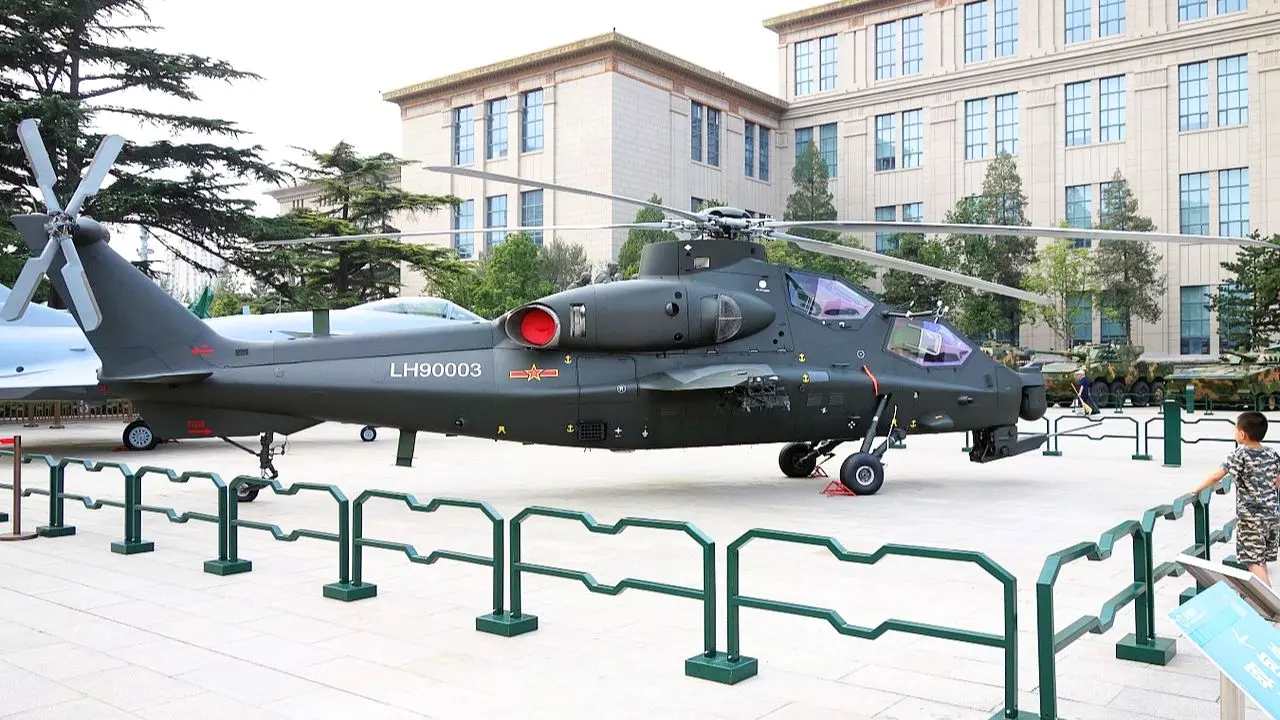
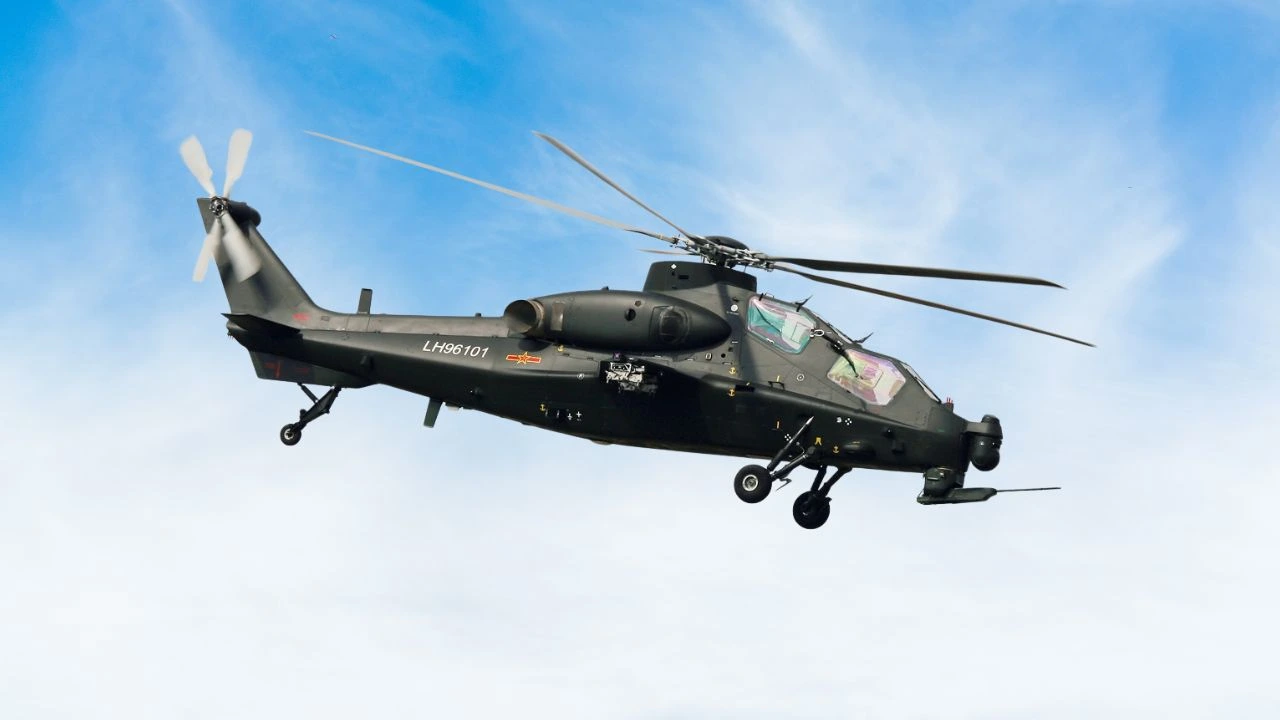
First introduced into service by the People’s Liberation Army (PLA) in the late 2000s, the Changhe Z-10 marked a pivotal advancement in China’s indigenous military aviation capabilities. Developed primarily for the anti-tank role, the Z-10 is China’s first dedicated attack helicopter, designed to rival Western models such as the AH-64 Apache and Russia’s Mi-28.
The Z-10’s deployment reflects China’s broader shift from ground-centric defense to integrated, technology-driven warfare. Its incorporation into combined arms brigades and joint force exercises demonstrates an evolving doctrine that emphasizes air support in rapid maneuver warfare. The aircraft’s tandem-seat layout, stealth-optimized fuselage, and modular weapons systems are tailored for high-intensity engagements and asymmetric battlefield scenarios.
By 2025, the Z-10 has been observed in several configurations across various units, with the Z-10ME export variant signaling China’s ambitions in the global arms market. Its use by Pakistan further underscores its strategic role in regional defense alignments.
Pakistani and Chinese
Changhe Z-10 (Aircraft) – Biography Points
10 Key Milestones in Z-10’s Development
The development of the Changhe Z-10 spanned over two decades and involved a mix of domestic innovation and international collaboration. These ten milestones chart its evolution from concept to operational deployment:
Early 1990s – China identified the need for a dedicated attack helicopter, initiating Project 941.
1995 – The program was formalized under the leadership of the China Helicopter Research and Development Institute (CHRDI).
1998 – China secretly contracted foreign assistance, notably from Russian Kamov Design Bureau, for rotor design and dynamics.
2001 – China procured Pratt & Whitney Canada PT6C engines for early prototypes, enabling functional test flights.
2003 – The first prototype of the Z-10 was completed, featuring a tandem-seat configuration and a narrow fuselage.
2004 – Maiden flight of the Z-10 prototype took place in Jingdezhen, Jiangxi Province.
2007 – Official images of the Z-10 surfaced, confirming its existence and basic capabilities.
2012 – Full-scale production began for PLA Ground Force units, with the Z-10A variant entering service.
2018 – Introduction of the upgraded Z-10ME (Modified Export) with enhanced armor and survivability for international clients.
2021–2024 – Ongoing refinement with new avionics and compatibility with advanced missiles and night operation systems.
Game-Changing Technologies Onboard
The Z-10 integrates several advanced technologies that mark a departure from legacy platforms used in China’s aviation arsenal. These innovations position it as a modern battlefield asset capable of engaging in dynamic combat environments.
One of the most critical advancements is the modular weapon system, which allows the Z-10 to carry a diverse range of payloads, including HJ-10 anti-tank missiles, TY-90 air-to-air missiles, and rocket pods. This flexibility enables mission-specific configurations without structural overhaul.
The integrated digital avionics suite features multi-function displays (MFDs), helmet-mounted sights, and fly-by-wire controls, increasing pilot situational awareness and response time. The fire-control radar and targeting systems are compatible with night vision and laser-guided munitions.
Another notable feature is its low radar cross-section design. The narrow fuselage, angled surfaces, and internal systems placement enhance stealth characteristics. Additionally, the Z-10 incorporates an infrared suppression system to reduce its heat signature.
Most Notable Engine and Propulsion Breakthroughs
The propulsion system of the Z-10 underwent significant evolution, reflecting China’s push toward engine self-reliance and performance enhancement. Early prototypes relied on imported Pratt & Whitney PT6C-76C turboshaft engines, but restrictions on military use led to the development of indigenous alternatives.
The WZ-9 engine, developed by the Aviation Industry Corporation of China (AVIC), became the primary powerplant for production models. While early WZ-9 versions had limited output, newer iterations reportedly generate up to 1,200 kW (1,600 hp), offering improved lift, agility, and endurance.
Further advancements include improved transmission systems, enabling better torque distribution under high-load conditions. The Z-10’s twin-engine configuration ensures redundancy, enhancing combat survivability and operational range in diverse terrains.
Though not yet matching Western counterparts in raw thrust, the ongoing refinement of the WZ-series engines represents a strategic shift in China’s capability to produce competitive rotary-wing propulsion systems.
Targeting Precision
The Changhe Z-10’s targeting system reflects China’s shift toward digitalized, multi-domain warfare. At its core is an integrated fire control suite designed to detect, lock onto, and engage both ground and aerial threats in varied environments, including low-visibility and night conditions.
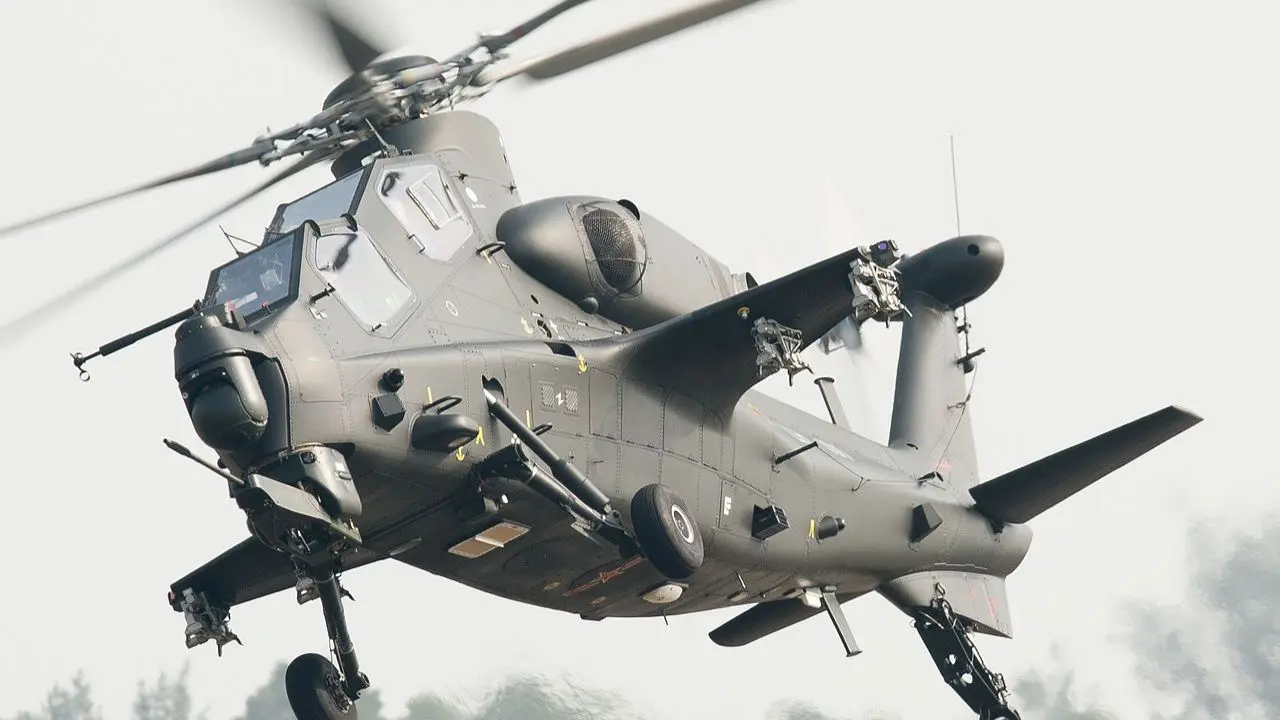
The Z-10 is equipped with a nose-mounted electro-optical targeting system, which includes a Forward-Looking Infrared (FLIR) camera, TV camera, and laser rangefinder/designator. This setup enables precise target acquisition for both pilot and gunner, allowing for simultaneous tracking and engagement of multiple threats.
Advanced targeting capabilities are enhanced by helmet-mounted sights (HMS), which link head movements to aiming systems. This allows the gunner to rapidly designate targets by simply looking at them—reducing response time in dynamic combat.
Recent versions of the Z-10 also integrate AI-assisted fire control logic, which supports target prioritization and predictive tracking. While China has not disclosed specific algorithms, this reflects a broader global trend of incorporating artificial intelligence into real-time battlefield decision-making.
Stealth and Survivability: Defensive Measures
The Z-10 was developed with a focus on reducing battlefield vulnerability through a combination of passive and active defensive systems. While not a fully stealth helicopter, its angular fuselage design, narrow cross-section, and shielded engine exhausts help lower its radar and infrared signatures.
To counter guided missile threats, the Z-10 incorporates infrared suppressors, flare dispensers, and chaff systems, which disrupt enemy tracking and targeting. In later variants like the Z-10ME, infrared decoy launchers and enhanced armor plating have been added for higher survivability in contested zones.
The cockpit is reinforced with composite armor capable of withstanding small arms fire and limited anti-aircraft rounds. Additionally, the aircraft features a crash-resistant fuel system and redundant hydraulic and flight controls, ensuring operational integrity in hostile conditions.
Weapons Loadout: From Cannons to Guided Missiles
The Z-10 is designed to perform a wide range of attack missions, supported by a modular weapons loadout system mounted on stub-wing pylons. It typically carries a mix of anti-tank, air-to-air, and rocket munitions, enabling flexible battlefield roles.
The primary fixed weapon is a 23mm or 30mm autocannon, mounted under the nose on a flexible turret. It offers high-rate fire for close air support.
For precision strikes, the Z-10 is commonly equipped with HJ-10 or HJ-8 anti-tank guided missiles, capable of penetrating modern armor.
TY-90 short-range air-to-air missiles provide self-defense against aerial threats, particularly low-flying helicopters and UAVs.
In addition, unguided rocket pods are used for area suppression and anti-personnel missions.
Weapons configurations can be rapidly changed, allowing the Z-10 to adapt to different tactical requirements. The fire-control system supports simultaneous target tracking and engagement across multiple weapon types.
Z-10 in Combat Drills and Real Engagements
Since its induction into service, the Z-10 has been a regular participant in joint military drills and high-intensity training exercises conducted by the PLA Ground Force. These drills often simulate real-world combat scenarios, including urban warfare, anti-armor strikes, and night operations.
In 2017, the Z-10 was prominently featured in the Zhurihe military training base exercises, China’s largest simulated combat zone. It was observed executing coordinated assaults with armored ground units and drones, demonstrating combined-arms tactics.
The Z-10 has also been deployed in border-region patrols and anti-terrorism operations, though official records of combat use remain limited. Notably, Pakistan’s acquisition of the Z-10ME brought the platform closer to potential real-world engagements, especially in mountainous terrain where agility and targeting precision are crucial.
Its performance in these scenarios has informed successive upgrades, particularly in survivability, sensor range, and missile compatibility.
Global Adoption
The international footprint of the Changhe Z-10 remains limited but strategically notable. China has promoted the platform to several nations through defense expos and military partnerships, especially in Asia and Africa.
Pakistan became the first confirmed foreign recipient of the Z-10ME variant, reportedly acquiring a limited number for evaluation and operational use. The Z-10ME features enhanced protection, updated avionics, and engine modifications suited for high-altitude operations, making it viable in the challenging geography of northern Pakistan.

Several other countries, including Thailand, Bangladesh, and some Middle Eastern and African nations, have shown interest or engaged in exploratory discussions. While no large-scale exports have been confirmed beyond Pakistan, the Z-10’s pricing and adaptability may appeal to militaries seeking alternatives to U.S. or Russian attack helicopters.
As of 2025, the Z-10 remains a focal point of China’s broader strategy to position itself as a competitive arms exporter in the global rotorcraft market.
Z-10: A Symbol of China's Military Modernization
The Z-10 represents a shift in China’s defense posture from import dependency to indigenous innovation. Its development—entirely led by domestic institutions such as AVIC and the China Helicopter Research and Development Institute—signaled the nation’s capacity to field specialized platforms tailored to modern warfare needs.
Appearing alongside Type 99 tanks and J-10 fighter jets in national parades and military expos, the Z-10 has become a visual representation of China’s growing aerospace capabilities. Its deployment across rapid-reaction units and joint-force training scenarios reflects an evolving doctrine that prioritizes mobility, precision, and electronic integration.
Beyond its combat role, the Z-10 functions as a diplomatic and industrial tool—appearing in export catalogs, bilateral defense deals, and as a showcase at events like the Zhuhai Airshow. It encapsulates China’s effort to modernize not just its military inventory, but its defense industry image on the global stage.
What’s Next? Future Upgrades and Tactical Roles
Ongoing updates to the Z-10 platform suggest a multi-year roadmap for continued evolution. Chinese defense analysts and official sources indicate that future variants may include higher-thrust engines, enhanced AI-based targeting, and full network integration with other platforms such as UAVs and ground command systems.
Efforts are also underway to develop composite rotor blades and reduce structural weight, potentially improving flight ceiling and endurance. Reports from late 2023 referenced trials of an enhanced fire-control radar system, likely aimed at boosting multi-target tracking and counter-stealth detection.

Tactically, the Z-10 is expected to play a more integrated role in China’s multi-domain combat strategy, supporting manned-unmanned teaming operations and contributing to anti-access/area denial (A2/AD) efforts in key theaters.
Whether through domestic upgrades or tailored export versions, the Z-10 is positioned to remain relevant in evolving battlefield environments through the 2030s.
Gallery