Table of Contents
Stenorhynchus seticornis (Arrow Crab )
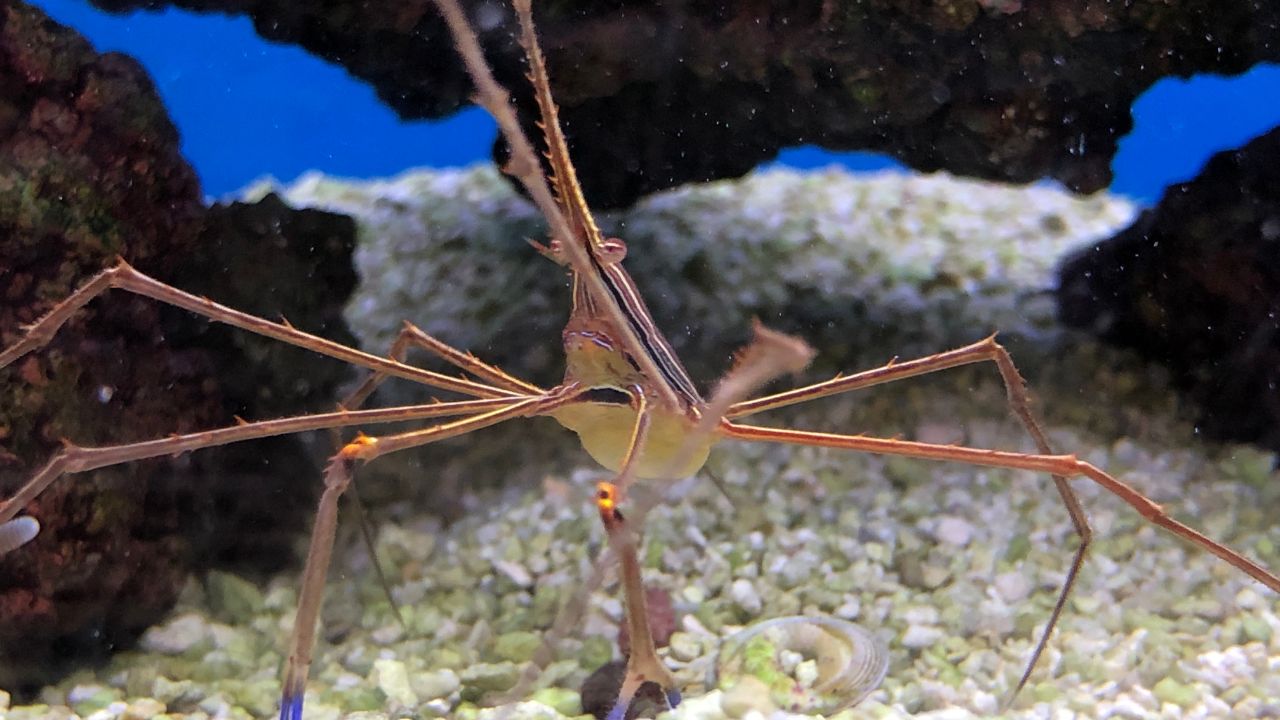
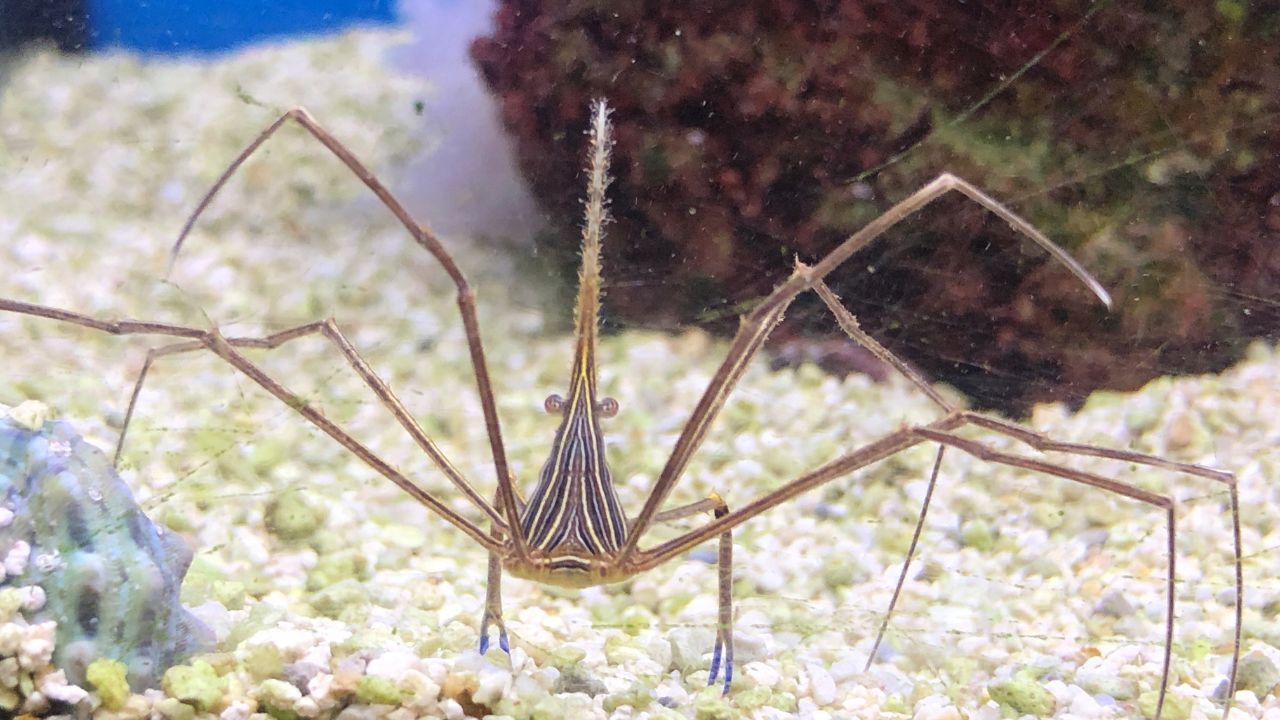
Stenorhynchus seticornis, commonly known as the yellowline arrow crab or simply arrow crab, is a fascinating marine species renowned for its distinctive features. One striking characteristic is its elongated, spider-like legs, which are more than three times the length of its body, reminiscent of a daddy long-legs spider. The crab’s body itself displays a captivating medium golden brown hue, adorned with stripes varying in color from white to brown or gold, depending on the individual. Adding to its allure, the tips of its legs boast a deep violet hue.
During growth, these crabs undergo molting, a process where they shed their exoskeleton to accommodate their increasing size. The newly exposed skin then hardens with calcium carbonate, obtained from both seawater and the ingestion of the old shell.
Found commonly in the Caribbean Sea, particularly around the island of Curaçao, yellowline arrow crabs prefer the cover of darkness, being nocturnal creatures. However, with a keen eye and a flashlight, observers can easily spot them tucked away in crevices or beneath rocks, showcasing their intriguing behaviors in their natural habitat.
Scientific Classification
| Domain | Eukaryota |
| Kingdom | Animalia |
| Phylum | Arthropoda |
| Class | Malacostraca |
| Order | Decapoda |
| Suborder | Pleocyemata |
| Infraorder | Brachyura |
| Family | Inachidae |
| Genus | Stenorhynchus |
| Species | S. seticornis |
Taxonomy
Stenorhynchus seticornis, initially documented by Johann Friedrich Wilhelm Herbst in 1788 as Cancer seticornis, and later referred to as “Cancer sagittarius” by Johan Christian Fabricius in 1793, a designation now recognized as a junior synonym of S. seticornis. The genus Stenorhynchus was formally established by Pierre André Latreille in 1818, albeit initially misspelled as Stenorynchus. In 1966, the International Commission on Zoological Nomenclature affirmed S. seticornis as the type species. These taxonomical details provide a comprehensive understanding of the historical context and classification of this intriguing marine crab species.
Binomial name
Stenorhynchus seticornis (Herbst, 1788)
Description
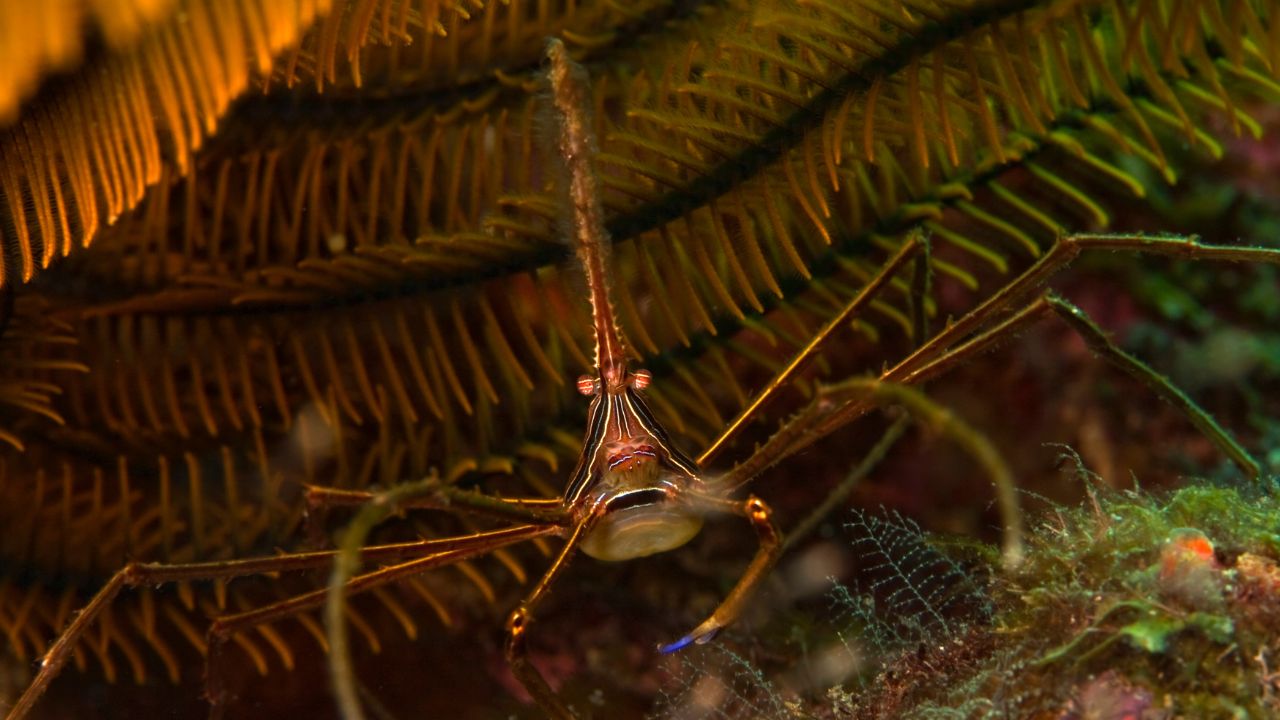
Stenorhynchus seticornis, known for its distinctive triangular body and elongated rostrum with serrated edges, exhibits striking physical features. The legs of this species are notably long and slender, reaching up to 10 cm (3.9 in) across, while the carapace can measure up to 6 cm (2.4 in) in length. Its coloration varies, ranging from golden, yellow, to cream, adorned with intricate patterns of brown, black, or iridescent-blue lines. Notably, the legs showcase hues of reddish or yellow, with claws often boasting blue or violet tips. These diagnostic traits, including the triangular body, fine dark lines on the carapace, and violet-tipped claws, distinguish Stenorhynchus seticornis. In south-eastern Brazil, it is commonly associated with anemones, often found in groups ranging from one to six individuals.
The yellowline arrow crab stands out for its unique characteristics, particularly its long, spider-like legs and sharply pointed head. With legs extending more than three times the length of its body, reminiscent of a daddy-long-legs spider, this crab boasts a medium golden brown body hue. Dorsally, it displays stripes varying in color from white, brown, to gold, with deep violet tips accentuating its legs. Molting is a regular occurrence as these crabs grow, with their new skin hardening through the intake of calcium carbonate from seawater and ingested old shells.
Often referred to as the spider crab, the arrow crab, specifically Stenorhynchus seticornis, captivates observers with its elongated legs and peculiar head protrusion. This species, commonly recognized by its yellow lines atop its rusty-colored extremities, can attain a considerable size, with a leg span reaching around 8 inches, roughly equivalent to the size of an adult’s hand. Notably, females typically remain smaller than males, adding to the intriguing dynamics within this species.
Distribution
Stenorhynchus seticornis thrives in various marine habitats, primarily inhabiting shallow sub-tidal regions characterized by rock bottoms, corals, calcareous algae, and soft sediments like shelly gravel and sand. Its geographical range spans the Occidental Atlantic, from North Carolina to Argentina. This species is predominantly distributed in the western Atlantic Ocean, extending from North Carolina and Bermuda to Brazil, encompassing the diverse ecosystems of the Caribbean Sea. Typically, it resides within coral reefs, occupying depths ranging from 10 to 30 feet (3.0 to 9.1 meters). This comprehensive overview sheds light on the preferred habitats and extensive range of Stenorhynchus seticornis, offering valuable insights into its ecological niche and distribution patterns.
| Main Points | Details |
|---|---|
| Habitat | Shallow sub-tidal areas, including rock bottoms, corals, calcareous algae, and soft sediments (shelly gravel and sand) |
| Geographical Distribution | Occidental Atlantic, from North Carolina to Argentina |
| Western Atlantic Ocean, from North Carolina and Bermuda to Brazil, including the Caribbean Sea | |
| Depth | Typically found at depths of 10–30 feet (3.0–9.1 meters) |
Behaviour and Ecology
Stenorhynchus seticornis exhibits distinct behavioral traits, being both nocturnal and territorial. Demonstrating negative phototaxis, the species actively avoids sunlight, showcasing a preference for darkness and shifting locations between day and night. Its diet primarily consists of small feather duster worms and other invertebrates in coral reef ecosystems. Remarkably, this crab often cohabits with the sea anemone, Lebrunia danae, alongside Pederson’s cleaning shrimp (Ancylomenes pedersoni) and the spotted cleaner shrimp (Periclimenes yucatanicus) within the anemone’s pseudotentacles. Notably, S. seticornis has been observed engaging in fascinating behaviors such as decorating its body for camouflage or utilizing noxious organisms as a form of aposematism to deter predators.
Furthermore, reports indicate intriguing cleaning symbiosis involving reef fish, moray eels, and squirrelfish, despite the potential risks posed by these predatory clients. This behavior witnessed primarily in Brazilian waters, suggests a complex interplay of ecological relationships within marine ecosystems. In addition, when threatened, arrow crabs can display remarkable territorial behavior, emphasizing their adaptability and survival strategies in dynamic reef environments. These behavioral insights shed light on the intricate dynamics and adaptations of Stenorhynchus seticornis in its natural habitat.
Life cycle and Reproduction
During mating, the male yellowline arrow crab initiates reproduction by depositing a spermatophore onto the female, a process where the female then utilizes the sperm to fertilize her eggs. These fertilized eggs are subsequently carried on the female’s pleopods until they reach maturity and are ready to hatch into zoea larvae. The zoea larvae, upon hatching, embark on a journey towards the ocean surface, where they feed on plankton to fuel their growth. Through a series of molts, they gradually metamorphose into their adult form. Notably, the reproductive cycle of Stenorhynchus seticornis entails distinct stages of development, with the larvae initially retaining a transparent, rounded appearance while residing in open waters. As they progress through the larval stage, they molt, eventually transitioning into the megalops stage, characterized by a more crab-like body and limb structure. This continual shedding of the exoskeleton facilitates their growth until they attain maturity, completing the reproductive cycle to begin anew. These insights into the reproductive behavior and developmental stages of the yellowline arrow crab provide a comprehensive understanding of its life cycle and reproductive strategies.
Larval stage
Larvae of the yellowline arrow crab exhibit distinct morphological variations based on their habitat depth. Notably, larvae developed in shallow water environments display observable differences compared to those grown in deeper waters. One significant discrepancy lies in the setation pattern of the endopodite of the maxilla, highlighting the adaptive responses of these larvae to their respective ecological niches.
Food Habits
The yellowline arrow crab exhibits primarily nocturnal scavenging behavior, supplemented by occasional carnivorous tendencies, as it hunts small feather duster worms and other minute creatures inhabiting coral reefs. Its preferred habitat includes rocky areas for concealment, though it can also be found nestled in sponges, urchin spines, and beneath anemones. Distributed across coral reefs spanning from North Carolina and Bermuda to Brazil and throughout the Caribbean, this crab’s omnivorous nature proves advantageous, simplifying feeding practices in aquarium settings. Arrow crabs readily consume any available food scraps, whether living or deceased, making them effective scavengers for maintaining tank cleanliness. Additionally, sinking foods such as invertebrate tablets offer a supplemental dietary source, ensuring balanced nutrition for these resilient crustaceans. With their propensity for consuming bristle worms, arrow crabs are often introduced into aquariums to manage infestations of these unwanted pests.
Summary
The yellowline arrow crab, known for its nocturnal scavenging behavior and occasional carnivorous tendencies, serves as a valuable asset in reef aquariums due to its omnivorous nature. Feeding primarily on small feather duster worms and other minute reef inhabitants, these crabs are adept at maintaining tank cleanliness by consuming any available food scraps, both living and deceased. Their preferred rocky habitats offer ample hiding spots, although they can also be found sheltering in sponges, urchin spines, and beneath anemones. Distributed across coral reefs from North Carolina to Brazil and throughout the Caribbean, their widespread presence aids in controlling bristle worm populations, making them a popular choice for pest management in aquarium settings. Additionally, sinking foods like invertebrate tablets provide a supplemental dietary source, ensuring balanced nutrition for these resilient crustaceans.