

Table of Contents
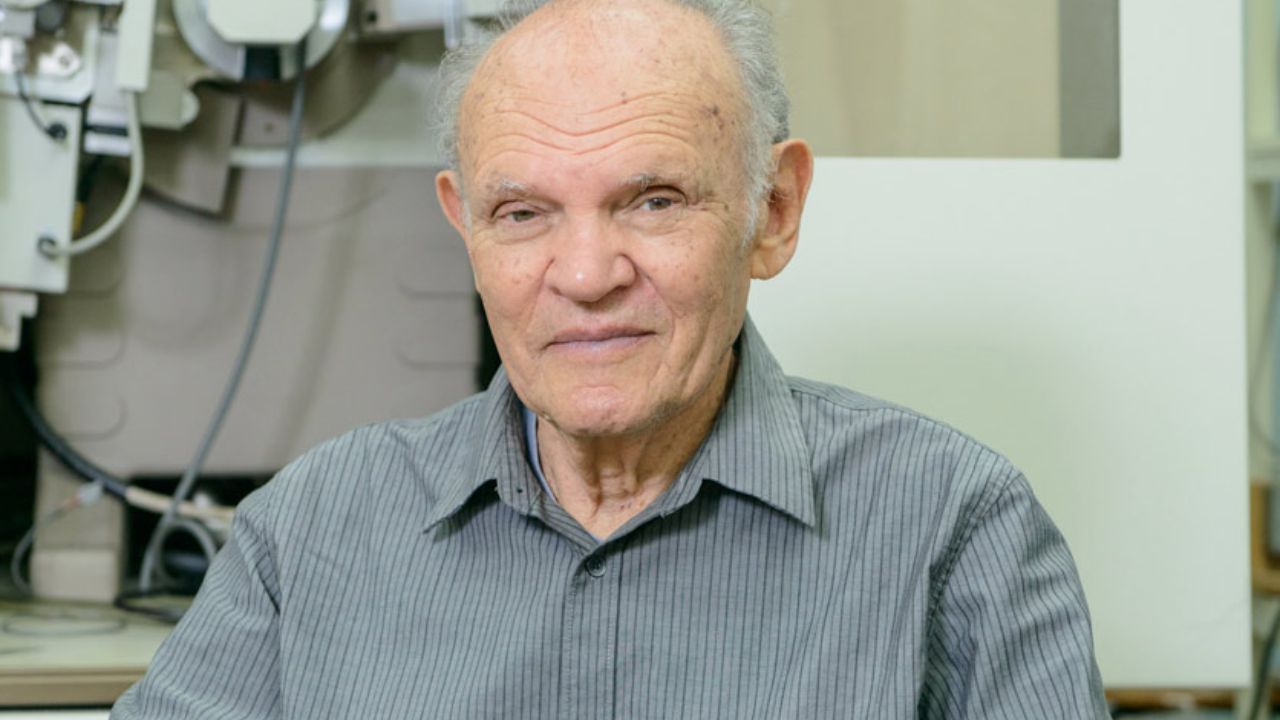
Leslie Leiserowitz (Israeli Engineer)
Leslie Leiserowitz (born April 9, 1934, in Johannesburg, South Africa) is an Israeli chemist and crystallographer renowned for his work on the crystal forms of organic molecules, conducted in collaboration with Israeli chemist Meir Lahav.
Leiserowitz earned a bachelor’s degree in electrical engineering from the University of Cape Town (UCT) in 1956. After a brief stint at Philips-Denby, a company manufacturing microwave equipment, he realized his need to understand the structures of various materials. Inspired by “X Rays and Crystal Structure” (1915) by William and Lawrence Bragg, he returned to UCT and completed a master’s degree in physics in 1959. He then moved to Israel, where he earned a doctorate in solid-state chemistry from the Weizmann Institute of Science in Rehovot in 1965.
From 1966 to 1968, Leiserowitz was a postdoctoral fellow at the University of Heidelberg, where he established the organic chemistry X-ray crystallography department. He developed computer programs using the direct method of Nobel Laureates Herbert Hauptman and Jerome Karle. Returning to the Weizmann Institute, he focused on synthesizing molecules to investigate molecular interactions using X-ray crystallography (crystal engineering). In collaboration with Danish scientists, he also used X-ray diffraction to study thin molecular films with synchrotron radiation at DESY in Hamburg.
Leiserowitz and Lahav have extensively studied the stereochemical control of crystal formation and growth using targeted impurities. In the 1970s, they began experiments with auxiliary molecules affecting the growth of chiral molecule crystals, revealing their arrangement within the crystals. This research has broad applications, including the formation of cholesterol and the study of antimalarial drugs.
Leiserowitz’s work on malaria involves using X-ray microscopy to study malaria pathogens and antimalarial drugs like quinoline compounds. He and Ronit Buller used computer simulations to model the growth of hemozoin crystals, which malaria parasites use to detoxify heme from broken-down hemoglobin. Their research explained how quinoline-based drugs inhibit crystal growth, guiding improved drug design.
Leiserowitz has received numerous accolades, including the Gregori Aminoff Prize from the Royal Swedish Academy of Science (2002), the Israel Prize (2016), the EMET Prize (2018), and the Wolf Prize in Chemistry (2021), all shared with Meir Lahav. In 1987, he received the Prelog Medal and lecture, and in 1997, he was elected to the Leopoldina. He became an associate professor in 1980, a full professor in 1983, and a professor emeritus in 2003 at the Weizmann Institute.
Leiserowitz’s contributions to chemistry and crystallography have had significant impacts on our understanding of molecular structures and the development of new therapeutic strategies.
Johannesburg, South Africa
| Leslie Leiserowitz (Israeli Engineer) | |
| 1934 | |
| Name | Leslie Leiserowitz |
| Date of Birth | 1934 |
| Birth Place | South Africa |
| Country | Israel |
| Nationality | Israeli |
| Education | Ph.D. from the Weizmann Institute of Science |
| Awards | Israel Prize in Chemistry, European Crystallographic Association’s Max Perutz Prize |
| Projects | Research on crystallization of organic compounds, collaboration with Ada Yonath on ribosome structure |
Early Life and Education
Leslie Leiserowitz was born in 1934 in South Africa. He later moved to Israel, where his scientific career flourished. Leiserowitz’s educational journey is marked by a deep-rooted passion for science and a relentless pursuit of knowledge. He completed his Ph.D. at the Weizmann Institute of Science, one of Israel’s leading research institutions. This solid foundation in science laid the groundwork for his future contributions.
Career and Contributions
Leiserowitz’s career is a testament to his dedication and ingenuity. As a chemist and crystallographer, he has focused on the study of crystal structures and the interactions between light and crystals. His work has significantly advanced the understanding of how molecules organize themselves into crystals, a fundamental aspect of material science.
One of Leiserowitz’s notable contributions is his research on the crystallization process of organic compounds. His studies have provided insights into the molecular mechanisms that drive crystal formation, which has implications for the pharmaceutical industry, particularly in drug formulation and design.
Collaboration with Ada Yonath
A pivotal point in Leslie Leiserowitz’s career was his collaboration with Ada Yonath, a fellow crystallographer and Nobel Laureate. Together, they conducted pioneering research on the ribosome, the molecular machine responsible for protein synthesis in cells. Their work utilized X-ray crystallography to decipher the complex structure of the ribosome, which has been crucial in the development of antibiotics and understanding cellular processes.
Awards and Recognition
Leslie Leiserowitz’s contributions have been widely recognized. He has received numerous accolades for his work, including the prestigious Israel Prize in Chemistry. This award is one of the highest honors in Israeli science, celebrating his lifelong achievements and impact on the field of chemistry.
In 2015, Leiserowitz was awarded the European Crystallographic Association’s Max Perutz Prize, further highlighting his influence and contributions to crystallography. His work continues to inspire and influence new generations of scientists.


