Table of Contents
Ziyarid dynasty (Iranian Dynasty)
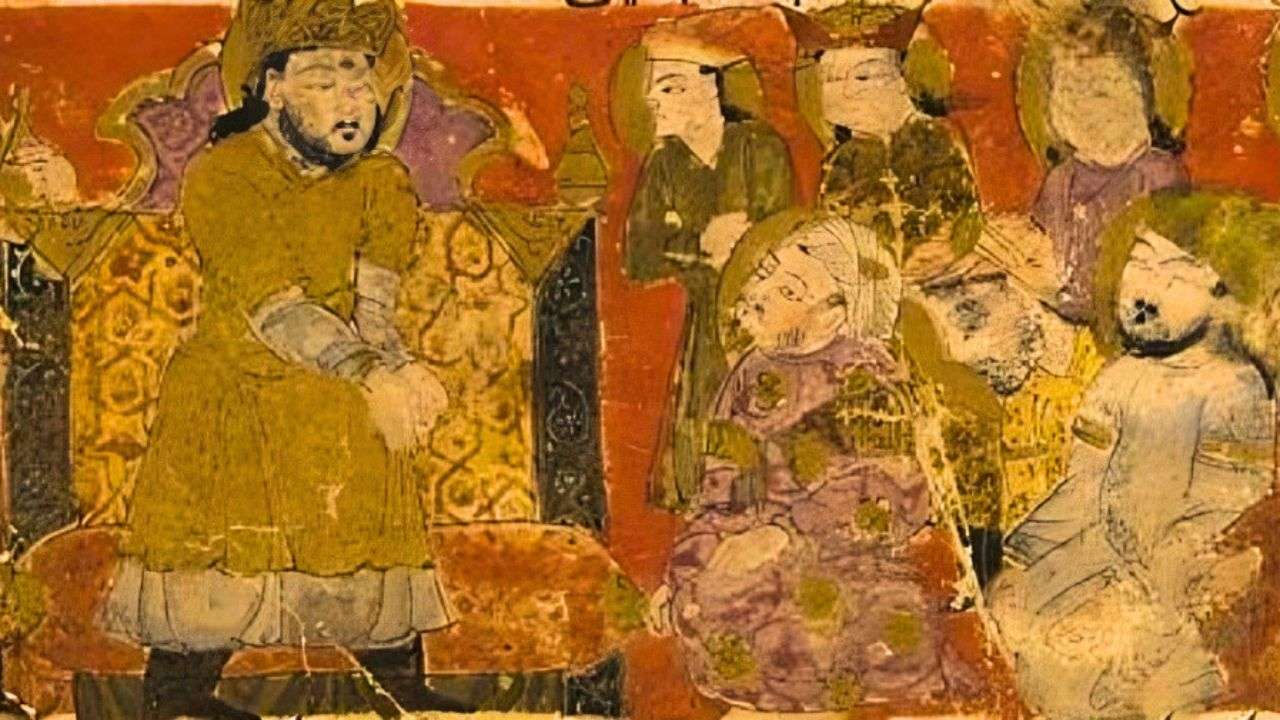
The Ziyarid dynasty (Persian: زیاریان) was an important dynasty in Iranian history, ruling the northern Iranian provinces of Gorgan, Mazandaran, and Tabaristan from 931 to 1090. The dynasty was founded by Mardavij ibn Ziyar, who ruled from 927 to 935. Mardavij seized power by taking advantage of a rebellion by the Samanid army and expanded his rule to cities such as Hamadan and Isfahan. However, after his assassination in 935, the dynasty’s power weakened. The Ziyarids changed relations with the Samanid and Buyid dynasties at various times, in order to maintain their autonomy. When the Seljuqs conquered Mazandaran in the mid-11th century, the Ziyarid dynasty was confined to the mountainous regions, where they ruled until about 1090. They established a political alliance with the Ghaznavids through marriage, which gave the dynasty temporary stability.
The Ziyarid dynasty was known for its scholarly and literary patronage. The Islamic scientist and geographer al-Biruni was associated with the court of Qaboos I ibn Vushmgir (978–1012). Similarly, Qaboos ibn Vushmgir’s grandson, Keykavus, wrote a masterpiece called the “Qaboos-nama”, which was a source of guidance for rulers. The Ziyarid dynasty reached its peak of power under Mardavij, but after his death the dynasty fell victim to internal dissensions and external attacks. Qaboos and other rulers ruled at various times, but by the end of the 11th century, attacks by the Nazari Ismaili state had ended the dynasty’s rule.
Mardavij ibn Ziyar: Founder and early ruler of the Ziyarid dynasty. Qaboos I ibn Vushmgir: Patron of learning and literature, invited al-Biruni to the court. Keykavuss: Author of the “Qaboos-nama”, a rare treasure trove of Persian literature.
The Ziyarid dynasty left a scholarly, literary, and political legacy in Iranian history. His rule promoted cultural development in the northern and western regions of Iran, and he is still considered an important part of Iranian history today.
Map of the Ziyarid dynasty

| Ziyarid Dynasty | |
| Urdu Name | زیارد خاندان |
| Capital |
|
| Common languages | Persian, Gilaki, Tabari |
| Religion | Zoroastrianism & Islam |
| Government | Monarchy |
| King |
|
| Historical era | Middle Ages |
| Established | 931 |
| Disestablished | 1090 |
| Preceded by | Abbasid Caliphate, Samanid Empire, Alid dynasties of northern Iran |
| Succeeded by | Nizari Ismaili state, Buyid dynasty |
Origin of the Ziyarid Dynasty
The Ziyarid dynasty was descended from Vardanshah, the leader of the Shahanshahvand tribe, who traced his lineage back to the legendary king Arghash Farhadan. Arghash Farhadan was a ruler of Gilan and lived during the time of Kai Khosrow. Vardanshah had a son named Ziyar, who married the sister of the Gallic king Harosindan. Ziyar’s marriage produced Mardavij, the founder of the Ziyarid dynasty. Mardavij initially served the Gallic military leader Asfar ibn Shiraviyah, but later betrayed him and captured Tabaristan and established his own empire. Mardavij named the dynasty after his father Ziyar.
The dynasty emerged as a powerful political and military influence in the Gilan and Tabaristan regions in its early days, and its historical significance is prominent in Iranian history.
History
The founder of the Ziyarid dynasty, Mardavij, aggressively expanded his empire. He killed the Gallic leader Asfar and captured several important Iranian cities from the Abbasids, such as Hamadan, Dinavar, Kashan, Isfahan, Shiraz, and Ahvaz. One of Mardavij’s great dreams was to conquer Baghdad, ending the Abbasid Caliphate and restoring the Sassanid Empire, but he was assassinated in 935 before he could put his plans into action.
After Mardavij’s death, his brother and general Vashmagir was appointed as the new ruler of the Ziyarid dynasty in Rayy. Vashmagir consolidated his power against the Samanids and liberated Gorgan from their control. However, after Mardavij’s death, the Ziyarid dynasty faced internal and external challenges.
The Buyid Dynasty's Invasion
After Mardavij’s death, the Buyid ruler Hasan ibn Buya captured Isfahan, which was a major blow to the Ziyarid regime. In addition, the Samanids also took aggressive steps against the Ziyarid Empire, but the Ziyarid rulers under the leadership of Vashmgir managed to achieve some successes.
The Ziyarid dynasty, led by Mardavij, founded a strong state in Iran and resisted the Abbasid Caliphate. However, after his sudden death, the empire faced various internal and external threats, which gradually weakened the power of the Ziyarid dynasty.
Vushmgir's Reign (930s–960s)
Vushmgir acknowledged Samanid supremacy during his leadership. In 936, he surrendered Gorgan to Makan, and later recaptured Isfahan in 938. In 939 or 940, the Samanid governor Abu Ali Chaghani attacked Gorgan, after which Vushmgir immediately sent aid to Makan. However, Gorgan fell after a long siege. Afterwards, Abu Ali Chaghani defeated Vushmgir in battle at Ray, and killed Makan. Vushmgir fled to Tabaristan, where he faced a rebellion by al-Hasan ibn al-Firozan, who was Makan’s cousin and held the Ziyarid dynasty responsible for his death. Vushmgir defeated al-Hasan, but al-Hasan persuaded Abu Ali Chaghani to attack Tabaristan. As a result, Vushmgirwas forced to re-submit to Samanid rule. In 940, Hasan recaptured Isfahan, further increasing the difficulties of the Ziyarid dynasty.
When Abu Ali Chaghani marched on Khorasan, Vushmgir recaptured Ray, but in 943 he lost the territory to Ba’id Hasan. Returning to Tabaristan, he was defeated by al-Hasan, who had previously occupied Gorgan. Vushmgir sought refuge in the mountains of eastern Tabaristan and then sought refuge at the court of the Samanid Nuh I.
The two sides continued to clash. In 945, Vushmgir captured Gorgan with Samanid support, but was unable to maintain his rule. In 947, Vushmgir succeeded in wresting Gorgan and Tabaristan from al-Hasan with the help of a Samanid army.
Final Confrontation
In 948, Hasan (who had been using the title of Rukn-ud-Dawla in Baghdad since 945) invaded Tabaristan and Gorgan and took these territories from Vushmgir. The two exchanged control of these territories several times, and by 955, in a treaty with the Samanids, Rukn-ud-Dawla promised to leave Vushmgir alone in Tabaristan.
Vushmgir recaptured Ray in 958, the capital of Rukn-ud-Dawla, but in 960 Rukn-ud-Dawla counterattacked and temporarily captured Gorgan. In 962, he briefly captured both Tabaristan and Gorgan, and may have captured them in 966, but he was unable to hold them for long.
The conflict of this period left the Ziyarid dynasty in a weakened position, which had an impact on the dynasty’s later rule.
Reign of Qaboos (970s–990s)
After Wasmgir was killed by a boar while hunting in 967, Basutan succeeded him. However, the Samanid army supported Qaboos and challenged Basutan’s rule. As a result, Basutan made a treaty with Rukn-ud-Dawla to force the Samanid army to retreat to Khorasan. In 971, the Abbasid Caliph al-Mu’ti gave Basutan the title of Zahir-ud-Dawla. Basutan later died in 977, and was succeeded by Qaboos.
Qaboos was exiled by the Buyid ruler Udud-ud-Dawla in 980, for harboring Udud-ud-Dawla’s rival and brother Fakhr-ud-Dawla. The Buyids dominated for 17 years after this, and Qaboos remained in exile in Khorasan. However, in 998, Qaboos returned to Tabaristan and reestablished his rule there.
Relations with Ghazni and the Ghaznavid Rulers
Qaboos established good relations with the Ghaznavid ruler Mahmud of Ghazni, who had taken over Khorasan. But despite being under the influence of the Ghaznavids, Qaboos maintained himself as an independent and autonomous ruler. During Qaboos’ reign, his empire was particularly attractive to scholars. The famous Islamic scientist Abu Rayhan Biruni gained Qaboos’ support. Biruni dedicated his work Chronology around 1000 to Qaboos and observed a lunar eclipse in Gorgan.
During Qaboos’ reign, the arts and sciences were greatly promoted and he made significant advances in the fields of science and education in his empire. Under his patronage, Tabaristan became a center of learning and scholarship, which played an important role in the history of the dynasty.
Later Rulers and Decline (1000–1090)
Due to Qaboos’s tyrannical rule, his own army deposed him in 1012. His son Manuchehr succeeded him. Manuchehr acknowledged the suzerainty of Mahmud of Ghazni and married his daughter to him. However, Manuchehr died in 1031, and his son Anushirwan Sharaf al-Ma’ali succeeded him. During Anushirwan’s reign, from 1032 to 1040, the real power was held by Abu Kilijar ibn Wihan, a relative of Anushirwan. In 1035, Abu Kilijar stopped paying tribute to the Ghaznavids, which led to Ghazni attacking Tabaristan and capturing Amul, the capital of the Ziyarid dynasty. Later, Abu Kilijar began to pay tribute to the Ghaznavids, which allowed Anushirwan to capture him and consolidate his power.
In 1041/1042, the Seljuqs, who had now become the new rulers of Khorasan, attacked the territories under Anushirwan. After this attack, Anushirwan was forced to submit to the Seljuqs.
Death of Anushirwan
Anushirwan died in 1059 and was succeeded by his cousin Kikaus. Kikaus was a famous writer of Persian literature and wrote the great Qaboos-nama. Kikaus died in 1087, and was succeeded by his son Gilanshah. Gilanshah’s reign was short-lived. In 1090, the Nizari Ismaili state led by Hasan Sabah invaded Tabaristan and overthrew Gilanshah’s rule. This marked the end of the Ziyarid dynasty and the end of the dynasty’s rule in Tabaristan.
Rulers of the Ziyarid Dynasty
The Ziyarid dynasty ruled parts of northern Iran, particularly the regions of Tabaristan, Gorgan, and Mazandaran, from the 10th to the 11th century. Here are some of the key rulers of the Ziyarid dynasty:
1. Mardaweh (or Mardavij) (931–935):
Mardaweh was the founder of the Ziyarid dynasty. After initially serving as a military leader under the Saffarids and Gilanis, he betrayed his commander and took control of Tabaristan (in northern Iran). He aimed to restore the Sassanid Empire and overthrew the Abbasids in the region but was assassinated in 935.
2. Vishmgir (935–960):
Mardaweh’s brother, Vishmgir, succeeded him after his assassination. He initially recognized the Samanid dynasty’s supremacy but later rebelled and regained parts of the territory. He faced challenges from both the Samanids and the Buyids. Vishmgir’s reign saw frequent conflicts and shifting alliances with neighboring powers.
3. Qabus ibn Wushmgir (976–1012):
Qabus was the son of Vishmgir and is famous for his significant contributions to Persian culture, including the writing of the famous work “Qabus Nama” (The Book of Qabus). His reign, although marked by internal conflicts and external threats, is noted for the development of Persian literature and the architectural achievement of Gonbad-e-Qabus, a towering mausoleum built in his honor. He was eventually overthrown by his own army due to his harsh rule.
4. Bisutun (or Bastan) (1012–971):
After Qabus’ overthrow, his son Bisutun briefly ruled but faced opposition from the Ghazanids and Buyids, who were expanding their influence. Bisutun’s reign ended in 971 when he was replaced by his brother Qabus.
5. Manuchehr (or Manushirvan) (1021–1031):
After Qabus’ death, his son Manuchehr took the throne. His reign was marked by increasing pressure from external forces like the Ghaznavids and the Seljuqs. He attempted to maintain the independence of the Ziyarid lands but was ultimately unsuccessful.
6. Anushirvan Sharf al-Maali (1031–1041):
The reign of Anushirvan, the son of Manuchehr, was dominated by his advisor Abu Kalijar ibn Wihyan Anushirvan’s reign was undermined by political instability, and after a series of defeats, he was forced to recognize the Ghaznavids as his overlords.
7. Kikawus (or Kiyaqub) (1042–1060):
Kikawus was a prominent Ziyarid ruler and also a famous Persian poet and writer. He is best known for his literary work Qabus Nama a significant Persian text. However, his reign was marked by invasions from the Seljuqs ealeadingo the dynasty’s decline.
8. Gilanshah (1087–1090):
Gilanshah was the last ruler of the Ziyarid dynasty. His reign ended when the Nizari Ismaili state under Hasan-i-Sabbah invaded and captured his territories, effectively bringing the Ziyarid dynasty to an end.
The Ziyarid dynasty, while relatively short-lived, made significant contributions to Persian culture, particularly in literature, art, and architecture, and played an important role in the politics of medieval Iran.
Art and Architecture
One of the most famous architectural works of the Ziyarid dynasty is the Gonbad Qavus (Dome of Qaboos). This tomb is one of the oldest post-Islamic architectural monuments in Iran. The tomb is built of fired bricks and is in the shape of a huge cylinder with a conical roof. Its circular plan is broken by 10 flanges, and its diameter is 17 meters, while the walls are 3 meters thick. Its height from base to top is 49 meters. According to tradition, Qaboos’ body was enclosed in a glass coffin that was suspended by chains from the inner dome of the tower.
Culture
Qaboos was a prominent Arabic writer and patron of Kamal al-Din Bandar of Ray, who wrote his poetry in Arabic, Persian, and Galician. Poets such as Abu al-Qasim Ziyād ibn Abbas, Muhammad al-Qamari al-Jarjanī, and Abu Bakr Muhammad ibn Ali al-Khusrāwī received his patronage. The poet Manuchehri took his pen name from his first patron, Falak al-Ma’ali Manuchehri son of Qaboos. However, by the reign of Kikaus, the Ziyarid court was Persian, and he wrote the Persian literary work Qaboos-nama, which is considered an important literary work.
Summary
The Ziyarid dynasty played a pivotal role in the history of northern Iran, especially in the regions of Tabaristan, Gorgan, and Mazandaran. Although its reign was marked by internal strife and external pressures, the dynasty’s rulers, particularly Mardaweh, Vishmgir, Qabus ibn Wushmgir, and Kikawus, contributed significantly to Persian culture and literature. Qabus’s Qabus Nama remains a remarkable literary achievement, and the Gonbad-e-Qabus mausoleum stands as a symbol of the dynasty’s architectural prowess.
Despite these cultural achievements, the Ziyarids struggled against the growing powers of the Ghazanids, Seljuqs, and the Buyids. The eventual decline of the dynasty came in the 11th century with the rise of the Nizari Ismailis and the fall of Gilanshah. The Ziyarid dynasty’s story is a testament to the challenges faced by smaller dynasties in the face of larger, more powerful neighbors, and their legacy continues to influence Persian culture today.