Table of Contents
The Fall of the Roman Empire
For centuries, the Roman Empire stood as an unrivaled superpower, shaping the course of civilization with its military strength, political innovations, and vast territorial expansion. Yet, despite its dominance, Rome eventually succumbed to a slow and agonizing collapse. But what caused the fall of the Roman Empire? Was it the relentless invasions of barbarian tribes, internal corruption, or economic turmoil? Perhaps a combination of all these factors sealed its fate. Understanding the causes and effects of the fall of the Roman Empire not only provides insight into one of history’s greatest civilizations but also offers valuable lessons on how empires rise—and inevitably fall.
The fall of Rome and the Western Empire was not a single event but a gradual decline spanning centuries. From the crisis of the third century to the infamous sack of Rome in 410 AD and the eventual deposition of the last emperor in 476 CE, historians have long debated the primary factors that led to this monumental downfall. Some argue that Rome crumbled under the weight of its own ambitions—overexpansion and military overspending stretched its resources too thin. Others point to political instability, economic decline, and the weakening of Roman legions as crucial contributors. But was Rome’s fall truly inevitable, or could it have been prevented?

Beyond military defeats and political strife, Rome faced deeper, more systemic issues. The economic troubles and overreliance on slave labor led to stagnation, while excessive taxation crippled the middle class. Corruption ran rampant, with emperors often prioritizing personal power over governance. Meanwhile, the cultural and religious landscape shifted dramatically with the rise of Christianity—some historians argue that the empire’s embrace of this new faith weakened traditional Roman values, while others believe it provided a unifying force in chaotic times. These internal struggles made the empire increasingly vulnerable to barbarian invasions, culminating in the decisive blows that marked the end of Western Rome.
But what happened after the fall of the Roman Empire? The consequences of Rome’s collapse were profound, ushering in the Middle Ages—a period of fragmented kingdoms, shifting power dynamics, and economic regression in Western Europe. However, not everything was lost. The Eastern Roman Empire, later known as Byzantium, endured for nearly a thousand years, preserving Roman culture, laws, and traditions. Moreover, the impact of Rome is still felt today in modern governance, legal systems, architecture, and language.
So, why does the fall of the Roman Empire continue to fascinate scholars, historians, and enthusiasts alike? Because it represents more than just the end of a powerful civilization—it is a cautionary tale of how even the mightiest empires can falter under the weight of internal and external pressures. By exploring the causes and consequences of Rome’s fall, we not only uncover the mistakes of the past but also gain a deeper understanding of the forces that shape our world today.
Background of the Roman Empire
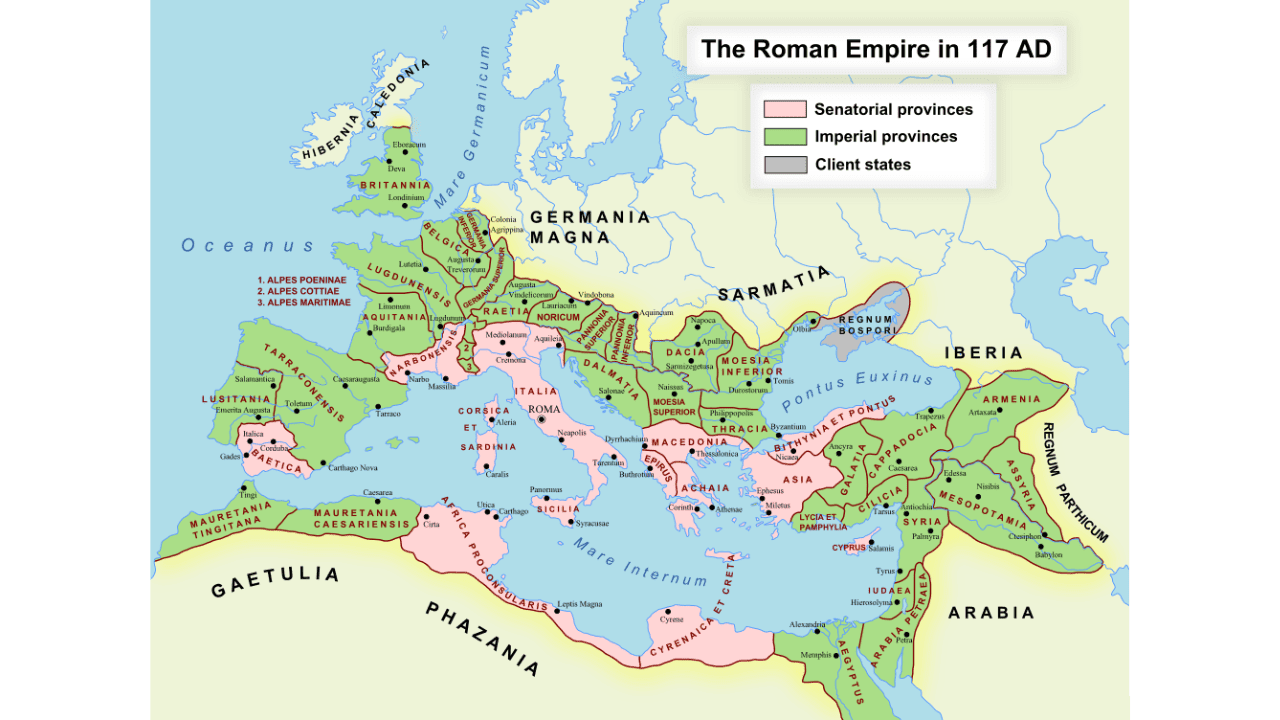
Few civilizations in history have had as profound an impact as the Roman Empire. Emerging from the humble city of Rome in the 8th century BCE, this empire expanded to dominate much of Europe, North Africa, and the Middle East. At its height, Rome was home to millions, stretching from the cold frontiers of Britain to the sun-soaked deserts of Egypt. But how did a small city-state grow into a global superpower?
The rise of Rome was fueled by a combination of military strength, political ingenuity, and economic resilience. The empire’s legions, disciplined and well-trained, conquered vast territories, while its leaders—ranging from Julius Caesar to Augustus—pioneered governance systems that would influence future civilizations. Trade flourished, roads connected distant lands, and the famous Roman legal system laid the foundation for modern law. The empire became the center of art, literature, and engineering, building structures like the Colosseum and Pantheon that still stand today.
Yet, with such unparalleled success came inevitable challenges. Rome’s expansion created internal conflicts, economic burdens, and governance difficulties. Corruption crept into politics, and as the empire grew, so did its enemies. The stability that had once defined Rome began to fracture, setting the stage for its eventual fall.
Significance of the Rise and Fall
The rise of Rome is often seen as a testament to human ambition and resilience, but its fall serves as a stark warning of overreach and internal decay. The empire’s legacy continues to shape our world in ways both visible and subtle.
So, why does Rome’s story still matter?
- Governance & Law – The Roman legal system is the foundation of modern law in many Western countries, influencing everything from property rights to trial processes.
- Architecture & Engineering – Roman innovations like aqueducts, roads, and concrete construction continue to inspire modern city planning.
- Culture & Language – Latin, the language of Rome, evolved into Spanish, French, Italian, and other Romance languages, while Roman literature and philosophy still shape education today.
- Religion & Ideology – The rise of Christianity under Roman rule changed the spiritual and political landscape of the world, making it the dominant religion in Europe and beyond.

But perhaps the most valuable lesson from Rome’s rise and fall is the fragility of even the greatest empires. Despite its military might and political sophistication, Rome ultimately succumbed to a mix of economic decline, internal corruption, and external invasions. This reminds us that no civilization, no matter how powerful, is immune to collapse.
As we explore the causes and effects of the fall of the Roman Empire, we gain insights not only into history but into the challenges facing modern societies. Could today’s superpowers suffer the same fate? And if so, what lessons can we learn from Rome’s triumphs and failures?
I. The Glory and Expansion of Rome
The Roman Empire was one of the most formidable and influential civilizations in history, leaving an indelible mark on politics, warfare, economics, and culture. From a small city-state on the Italian Peninsula, Rome expanded into a vast empire that ruled over millions across Europe, North Africa, and the Middle East. But what factors contributed to its meteoric rise? Let’s explore the empire’s political, military, and economic foundations, which enabled its glory and expansion.
The Roman Empire’s glory was built on strategic governance, military prowess, and economic prosperity. Its ability to conquer, govern, and trade effectively allowed it to dominate for centuries. However, no empire is invincible. As we explore the causes of Rome’s decline, we will see how the very factors that fueled its rise later contributed to its downfall.
A. The Rise of the Roman Empire
Rome’s transformation from a republic to an empire was a process driven by ambition, strategic warfare, and political evolution. The city was founded in 753 BCE, and by 509 BCE, Rome had established itself as a republic, where power was shared between elected officials and the Senate. This early governance system allowed Rome to maintain order while expanding its influence.
The republic faced numerous military conflicts, including the famous Punic Wars (264–146 BCE) against Carthage, Rome’s chief rival. The defeat of Carthage gave Rome control over the Mediterranean, solidifying its dominance. However, internal power struggles led to the decline of the republic, paving the way for the rise of Julius Caesar and, later, Augustus Caesar, who became Rome’s first emperor in 27 BCE. Under Augustus, Rome entered the Pax Romana (27 BCE–180 CE), a period of unprecedented peace and prosperity.
Key Factors in Rome’s Rise:
- Strategic location – Rome’s central position in the Mediterranean allowed for easy trade and military movements.
- Strong governance – The Roman Senate and later emperors implemented laws that maintained stability.
- Military excellence – Highly trained legions secured and defended Rome’s vast territories.
- Infrastructure development – Roads, aqueducts, and cities enhanced trade and communication.
B. Political and Military Strength
At the heart of Rome’s success was its political and military power. The Roman government evolved to support the empire’s expansion, with emperors implementing policies that ensured order and unity. The Twelve Tables, Rome’s first legal code, laid the foundation for justice, while later reforms allowed emperors to centralize authority.
The Roman military was equally formidable. Legions, composed of professional soldiers, followed rigorous training and discipline. These legions were stationed across the empire, preventing invasions and crushing rebellions. Military innovations, such as siege weapons, cavalry units, and advanced battlefield tactics, gave Rome a tactical edge over its enemies.

Rome’s Military Advantages:
✅ Superior training – Soldiers underwent years of rigorous discipline.
✅ Advanced weaponry – Swords (gladius), spears (pilum), and catapults gave Rome an advantage.
✅ Strategic formations – The use of the testudo (tortoise formation) protected soldiers in battle.
✅ Strong fortifications – Cities and borders were protected by walls and garrisons.
This powerful combination of political stability and military strength allowed Rome to conquer and hold territories as far as Britain, Egypt, and Mesopotamia.
C. Economic Growth and Trade Networks
Rome’s economic system was a key driver of its expansion and sustainability. The empire controlled vast trade routes that connected Africa, Asia, and Europe, making it one of the wealthiest civilizations of its time. The construction of Roman roads allowed merchants to transport goods efficiently, while ports and harbors facilitated Mediterranean trade.
Key Elements of Rome’s Economic Success:
📌 Agriculture – Grain from Egypt, olive oil from Spain, and wine from Italy fueled the empire.
📌 Trade routes – The Silk Road connected Rome to China, bringing silk, spices, and precious metals.
📌 Currency system – Roman coins (denarius, sestertius) standardized trade across vast regions.
📌 Slavery-based economy – Enslaved people provided labor for agriculture, mining, and construction.
The economy flourished under the Pax Romana, with urban centers like Rome, Carthage, and Alexandria becoming major trade hubs. Markets bustled with goods from India, Persia, and beyond, showcasing the empire’s economic dominance.
However, this reliance on wealth and expansion would later contribute to Rome’s downfall. Economic inequality, heavy taxation, and reliance on slave labor weakened the empire’s foundations, making it vulnerable to internal decline and external threats.
II. Internal Decay: The Corruption Within
While the Roman Empire stood as a beacon of power and prosperity for centuries, its internal weaknesses slowly eroded the very foundations that had once made it great. The fall of Rome was not a sudden event but rather a gradual decline fueled by weak leadership, government corruption, economic mismanagement, and deep social divisions. As emperors lost control and political institutions crumbled, the empire became vulnerable to both internal decay and external threats. Let’s explore the internal factors that led to Rome’s irreversible decline.
While Rome’s military might had once been unmatched, it was the empire’s own internal decay that made its fall inevitable. Poor leadership, corruption, economic failure, and social divisions shattered the unity that had held Rome together for centuries. Was Rome doomed from the start, or could these failures have been avoided? The decline of such a powerful empire serves as a warning for future civilizations—an empire collapses not just from external threats but from the weaknesses within.
A. Weak Leadership and Political Instability
One of the most glaring reasons for Rome’s decline was its lack of strong and capable leadership. The early emperors, particularly during the Pax Romana, provided stability and governance, but by the 3rd century CE, the empire was plagued by constant power struggles, assassinations, and military coups.
Between 235 and 284 CE, a period known as the Crisis of the Third Century, Rome saw over 26 emperors rise and fall, many of whom were either murdered or overthrown by their own soldiers. This instability weakened the central authority, leading to:

- Frequent civil wars that drained resources.
- A decline in imperial prestige, making it easier for enemies to challenge Rome’s authority.
- Military interference in politics, where generals seized power for personal gain rather than for Rome’s benefit.
With emperors focused on securing their rule rather than governing effectively, Rome’s decline became inevitable.
B. Government Corruption and Bureaucratic Inefficiency
As political instability grew, so did corruption within the government. Many officials sought personal enrichment over public service, leading to:
✅ Bribery and favoritism – Government positions were sold to the highest bidder rather than awarded based on merit.
✅ Tax evasion by the elite – Wealthy landowners avoided taxes, shifting the burden to the poor.
✅ Overexpansion of bureaucracy – The government became bloated with unnecessary officials, increasing inefficiency.
✅ Misuse of public funds – Lavish spending on entertainment and luxury rather than military or infrastructure.
This corrupt system alienated the common people, creating a growing divide between the wealthy ruling class and the struggling lower classes.
C. Economic Mismanagement and Hyperinflation
Rome’s economic strength had once been the backbone of its success, but poor fiscal policies led to severe financial crises. Several factors contributed to this economic collapse:
📉 Over-reliance on slave labor – As Rome expanded, it depended on enslaved people for agriculture and industry. When expansion slowed, so did the supply of enslaved workers, leading to labor shortages.
📉 Debasement of currency – To fund wars and extravagant lifestyles, emperors devalued Roman coins by reducing their silver content, causing hyperinflation.
📉 Heavy taxation – To compensate for lost revenue, the government imposed excessive taxes on the lower classes, further worsening public discontent.
📉 Disrupted trade – As Rome’s economy faltered, merchants and businesses suffered, and the empire became economically stagnant.
With inflation soaring and the economy collapsing, Rome could no longer afford to sustain its massive military or infrastructure, making it vulnerable to both internal rebellion and external invasions.
D. Social Stratification and Public Discontent
The Roman Empire was deeply divided by class, and as the economy and government crumbled, social unrest became widespread.
⚡ A widening gap between rich and poor – The elite lived in luxury while the majority of the population struggled to afford basic necessities.
⚡ A decline in civic pride – As corruption spread, people lost faith in Rome’s institutions, leading to widespread apathy and disengagement.
⚡ The rise of mercenary armies – Rome’s military, once composed of loyal citizen-soldiers, increasingly relied on foreign mercenaries, many of whom had little loyalty to the empire.
⚡ Urban decline – Cities, once vibrant centers of trade and culture, fell into disrepair, with rising crime and decreasing public services.
By the time the Western Roman Empire collapsed in 476 CE, Rome had already lost its identity, unity, and strength. Internal corruption, economic mismanagement, and social instability had weakened it from within, paving the way for external forces to deliver the final blow.
III. Military Decline and Overextension
At its peak, the Roman Empire stretched across three continents, encompassing vast territories from Britain to the Middle East and North Africa. While this territorial expansion was a testament to Rome’s military prowess, it also became one of its greatest weaknesses. Managing such a vast empire proved increasingly difficult, and as internal instability grew, so did Rome’s inability to defend its borders. Overexpansion, a declining military, and rising costs weakened the empire’s once-unshakable defenses, ultimately making it vulnerable to external threats.
The Roman Empire’s military decline was not the result of a single event but a combination of overexpansion, reliance on mercenaries, financial strain, and internal power struggles. Once the world’s most disciplined and feared army, Rome’s legions gradually lost their strength, loyalty, and effectiveness. By the time barbarian invasions reached their peak, Rome no longer had the means to defend itself, leading to the empire’s ultimate collapse in 476 CE.
Had Rome focused on strengthening its core military, maintaining manageable borders, and preventing internal strife, could it have survived longer? The fall of Rome serves as a powerful lesson on the dangers of military overreach, economic mismanagement, and political instability—lessons that remain relevant even today.
A. Overexpansion and Difficulty in Managing Borders
One of the fundamental causes of Rome’s military decline was its overambitious expansion. As the empire grew, so did the logistical challenges of governing and defending its vast borders, leading to:
📍 Difficulty in controlling distant provinces – Far-flung territories like Britannia, Dacia, and Mesopotamia required large military garrisons, draining resources.
📍 Increased pressure from external invasions – Barbarian groups such as the Goths, Vandals, and Huns constantly tested Rome’s frontier defenses.
📍 Inefficient communication – Messages and orders took weeks, if not months, to travel across the empire, slowing response times.
📍 Weakened central authority – Local commanders in distant provinces often acted independently, undermining imperial control.
Had Rome maintained a more manageable size, it might have been able to consolidate its power rather than stretch itself thin across unstable borders.
B. Reliance on Mercenaries and Decline in Military Discipline
In its early days, the Roman military was a highly trained, disciplined, and loyal force, primarily composed of Roman citizens. However, as the empire expanded and internal issues arose, Rome became increasingly dependent on mercenaries, leading to:
⚔️ A lack of loyalty – Many mercenaries were Germanic tribesmen, who had no true allegiance to Rome and often defected to enemy forces.
⚔️ Lower training and discipline – Unlike traditional Roman legions, these foreign recruits lacked the rigorous training and discipline that had once made Rome’s army formidable.
⚔️ Cultural and language barriers – With soldiers from different backgrounds, communication and coordination within the army became difficult.
⚔️ Betrayals and revolts – Some mercenary leaders, such as Alaric the Visigoth, turned against Rome, leading devastating invasions.
By depending on foreign soldiers, Rome compromised its military integrity, making its once-mighty army an unstable and unreliable force.
C. Rising Costs of Military Maintenance
As Rome’s borders expanded, so did the cost of maintaining its military. A massive empire required massive defense expenditures, which led to:
💰 Heavy taxation – Citizens and businesses were burdened with high taxes to fund the military, leading to economic strain.
💰 Debasement of currency – To cover costs, emperors reduced the silver content of coins, leading to hyperinflation.
💰 Struggles to pay soldiers – Many troops went unpaid for long periods, leading to desertions and mutinies.
💰 Neglect of infrastructure – Roads, fortifications, and supply chains fell into disrepair, weakening Rome’s ability to defend itself.
Eventually, Rome could no longer afford to sustain its military, leaving its once-strong legions underfunded, underprepared, and vulnerable.

D. Internal Power Struggles Among Generals and Emperors
As Rome faced increasing threats from barbarian invasions, its internal power struggles further destabilized the empire. Generals, often more focused on personal power than Rome’s survival, engaged in:
⚠️ Civil wars – Military leaders frequently fought each other for the throne, rather than defending against external enemies.
⚠️ Assassinations and coups – Emperors were often overthrown by their own generals or Praetorian Guard.
⚠️ Rival armies – Competing generals raised their own private armies, dividing Rome’s military strength.
⚠️ Political instability – Frequent leadership changes weakened strategic military planning and left borders unguarded.
This infighting meant that Rome was often too distracted with internal conflicts to effectively respond to outside threats, further accelerating its decline.
IV. External Threats and Barbarian Invasions
As Rome’s internal struggles weakened the empire, external forces took full advantage of its vulnerabilities. For centuries, the empire had successfully defended its borders from barbarian incursions, but by the late 4th and 5th centuries AD, these threats escalated into full-scale invasions. The once-mighty Roman army, plagued by political instability, economic decline, and reliance on mercenaries, could no longer hold back the waves of Germanic tribes, the Huns, and other migrating peoples. These invasions did not happen overnight—they were the result of long-standing tensions, population movements, and Rome’s diminishing ability to respond effectively.
The fall of the Western Roman Empire in 476 AD was the result of a perfect storm of internal decay, external invasions, and strategic failures. Rome’s inability to manage its borders, combined with the relentless pressure from Germanic tribes and the Huns, sealed its fate. While the Eastern Roman Empire (Byzantium) continued for centuries, the fall of Rome marked the end of the ancient world and the beginning of the Middle Ages.
Could Rome have survived longer had it adapted to these challenges? The empire’s collapse offers valuable lessons in political stability, economic sustainability, and military strategy, lessons that remain relevant even in today’s world.
A. The Rise of the Germanic Tribes
For much of its history, Rome had uneasy relations with the Germanic tribes, which lived beyond the empire’s northern borders. Initially seen as primitive barbarians, these tribes evolved into formidable warriors who gradually eroded Rome’s defenses.
Key developments included:
🛡️ Early conflicts and alliances – Some Germanic tribes, like the Franks and Goths, fought against Rome, while others served as allies and mercenaries.

🛡️ Pressure from external threats – The westward migration of the Huns forced many Germanic tribes to seek refuge within Roman territories.
🛡️ Roman mismanagement of diplomacy – Instead of integrating Germanic migrants peacefully, Rome often mistreated them, leading to rebellions.
🛡️ Rise of powerful tribal leaders – Figures like Alaric I (Visigoths) and Odoacer (Heruli) emerged as key players in the empire’s collapse.
By the late 4th century, the Germanic tribes had gone from being Rome’s occasional adversaries to some of its most dangerous enemies.
B. The Huns and the Migration Crisis
Perhaps the most feared external threat to Rome was the arrival of the Huns, a nomadic warrior people from Central Asia. Their rapid movement and brutal warfare tactics sent shockwaves through both the Roman Empire and the Germanic world. Their impact included:
🔥 Triggering mass migrations – As the Huns pushed westward, they displaced Germanic tribes, forcing them into Roman lands.
🔥 The leadership of Attila the Hun – Known as the “Scourge of God,” Attila led devastating invasions into both the Eastern and Western Roman Empires.
🔥 Siege of major Roman cities – Attila’s forces invaded Gaul and Italy, nearly capturing Rome itself in 452 AD.
🔥 Rome’s desperate alliances – At times, Rome even allied with other barbarian groups against the Huns, highlighting its declining power.
Although Attila’s sudden death in 453 AD led to the rapid collapse of the Hunnic Empire, the damage had been done—Germanic tribes, now inside Rome’s borders, grew more aggressive and independent.
C. The Sack of Rome (410 AD & 455 AD)
One of the most shocking moments in the history of the Roman Empire was the Sack of Rome in 410 AD by the Visigoths, led by Alaric I. This was the first time in 800 years that Rome had fallen to a foreign army, symbolizing the empire’s weakened state. Contributing factors included:
⚔️ Broken promises – The Visigoths had initially sought peaceful settlement within the empire, but Roman officials betrayed them.
⚔️ Rome’s economic decline – A struggling economy left the empire unable to pay its mercenary forces, leading to desertions.
⚔️ Strategic failure – The Roman army, already stretched thin, was unable to prevent the Visigoths from reaching the capital.
Though Rome recovered temporarily, the city suffered another devastating sack in 455 AD—this time by the Vandals, a Germanic tribe that plundered Rome far more destructively than the Visigoths. The word “vandalism” originates from this event, as the Vandals left the city in ruins.
D. The Final Blow: The Fall of Rome in 476 AD
By the mid-5th century, the Western Roman Empire was little more than a shadow of its former self. The army was weakened, emperors had lost authority, and barbarian generals controlled much of the military. The final collapse came in 476 AD, when:
🏛️ Odoacer, a Germanic chieftain, deposed the last Roman emperor, Romulus Augustulus – This marked the official end of the Western Roman Empire.
🏛️ The Roman military was no longer Roman – By this time, Rome’s armies were almost entirely made up of non-Roman mercenaries.
🏛️ No strong resistance remained – Unlike earlier periods, there was no significant effort to restore imperial power.
🏛️ The Eastern Roman (Byzantine) Empire survived – While the Western Empire collapsed, the Byzantine Empire (Eastern Roman Empire) continued for nearly a thousand more years.
Though Rome itself was gone, its legacy endured in laws, architecture, language, and governance, shaping medieval and modern Europe.
V. The Role of Christianity and Cultural Transformation
As the Roman Empire faced mounting internal and external challenges, another significant transformation was taking place—one that would shape the future of Europe and Western civilization: the rise of Christianity. Over the centuries, Rome had been deeply rooted in its polytheistic traditions, worshipping gods like Jupiter, Mars, and Venus. However, by the 4th century AD, the empire underwent a profound cultural and religious shift, moving from paganism to Christianity. While this transformation brought unity to some, it also contributed to political and social upheavals, ultimately influencing Rome’s decline.
The rise of Christianity was one of the most transformative events in Roman history. It provided a new moral and spiritual foundation for the empire but also contributed to cultural and political changes that weakened Rome’s traditional structures. The shift from paganism to Christianity altered Roman identity, affecting its military discipline, political stability, and sense of national unity. By the time the Western Roman Empire fell in 476 AD, Christianity had already laid the groundwork for the medieval European world. The Roman Empire may have collapsed, but its religious transformation ensured that its influence lived on through the Catholic Church and the Byzantine Empire, shaping the future of Western civilization.
A. The Shift from Paganism to Christianity
For much of its history, Rome was a polytheistic society, where religious practices were closely tied to the state. Public sacrifices, temple worship, and festivals honored the gods, reinforcing the idea that Rome’s strength depended on divine favor. However, the emergence of Christianity in the 1st century AD introduced a new set of beliefs that challenged Rome’s traditional religious and political structures.
Key moments in this transition included:
✝️ Persecution of Christians (1st–3rd centuries AD) – Early Christians were seen as a threat because they refused to worship Roman gods and did not participate in state rituals. As a result, they were often persecuted, with some becoming martyrs.
✝️ Constantine’s Conversion (312 AD) – Emperor Constantine the Great saw Christianity as a unifying force and, after his victory at the Battle of the Milvian Bridge, converted to the faith. In 313 AD, he issued the Edict of Milan, granting religious tolerance to Christians.
✝️ Christianity Becomes the Official Religion (380 AD) – Under Emperor Theodosius I, paganism was officially banned, and Christianity became the state religion. Pagan temples were closed, and Christian doctrine became central to Roman governance.
✝️ The Decline of Pagan Traditions – Many long-standing religious customs and festivals were replaced by Christian practices, changing the cultural fabric of Rome.
This shift from polytheism to monotheism marked a dramatic break from Rome’s past and set the stage for the medieval Christian world.
B. Christianity’s Impact on Roman Military and Politics
As Christianity gained prominence, it profoundly influenced the Roman military and political systems. The shift away from traditional Roman religious values led to debates about the empire’s strength and unity. Some historians argue that Christianity contributed to Rome’s decline by changing the warrior ethos and political priorities.
Key impacts included:
⚔️ The Decline of Traditional Military Values – Roman soldiers had long been driven by a sense of duty to the gods and the empire. However, as Christianity emphasized peace, humility, and salvation, some argued that military discipline weakened.
⚔️ Religious Division Among Leaders – While Constantine promoted Christianity, later emperors like Julian the Apostate (361–363 AD) attempted to revive paganism, leading to religious conflicts within the empire.
⚔️ Church vs. State Power Struggles – The rise of the Christian church as a political force led to tensions between secular rulers and religious leaders. Bishops and clergy gained influence over laws and policies, sometimes challenging imperial authority.
⚔️ A Shift in Loyalty – Instead of ultimate allegiance to the emperor, many Romans shifted their loyalty to the Christian Church, which became an alternative center of power.
Though Christianity brought a new moral framework to the empire, its influence on Rome’s military and political structures may have contributed to the loss of cohesion and strategic focus.
C. The Decline of Traditional Roman Values
One of the greatest strengths of early Rome was its deeply ingrained values—discipline, duty, honor, and patriotism. These principles, known as mos maiorum (the customs of the ancestors), guided Roman society for centuries. However, as Christianity became dominant and the empire faced economic and military struggles, many believed that these traditional values were eroding.
Key aspects of this decline included:
🏛️ Less Focus on Civic Duty – In the early days of the republic, Romans took pride in serving the state. However, by the late empire, many elites prioritized personal wealth and luxury over public service.
🏛️ Shift from Earthly Glory to Spiritual Salvation – Christianity emphasized heavenly rewards rather than earthly power, which some Romans saw as weakening the traditional ambition that had built the empire.
🏛️ Decline in Pagan Rituals and National Identity – The removal of state-sponsored religious festivals and temples led to a loss of shared cultural identity, further weakening Rome’s unity.
🏛️ Social Divisions and Political Chaos – As the empire struggled with invasions and economic decline, internal conflicts worsened, with Christian and pagan factions sometimes clashing over power.
While Christianity did not directly cause the fall of Rome, it played a crucial role in reshaping Roman identity, contributing to the decline of values that had once defined the empire’s greatness.

VI. The Division of the Empire: East vs. West
As the Roman Empire expanded across vast territories, it became increasingly difficult to govern under a single ruler. The immense size, administrative complexity, and external pressures forced emperors to reconsider their approach to leadership. This challenge culminated in one of the most significant decisions in Roman history—the division of the empire into Eastern and Western halves. While this strategic move aimed to stabilize governance, it ultimately exacerbated Rome’s decline, with the Eastern Roman Empire thriving while the Western Roman Empire crumbled.
The division of the Roman Empire was a turning point in world history. Diocletian’s reforms temporarily stabilized the empire, but they also deepened the divide between East and West. The Eastern Roman Empire adapted and thrived, while the Western Roman Empire fell into chaos and ultimately collapsed. This division shaped the course of European history, paving the way for the rise of the Byzantine Empire in the East and the feudal kingdoms of medieval Europe in the West. Though the Roman Empire fell, its legacy endured, influencing politics, culture, and governance for centuries to come.
A. Diocletian’s Decision to Split the Empire
By the late 3rd century AD, Rome faced a series of crises—military defeats, economic decline, and political instability. The empire was simply too large for one ruler to control, leading Emperor Diocletian (r. 284–305 AD) to implement radical reforms.
His solution? Divide the empire.
⚖️ The Tetrarchy System (293 AD) – To ensure better administration, Diocletian created the Tetrarchy, or “Rule of Four,” splitting the empire into East and West, each ruled by an Augustus (senior emperor) and a Caesar (junior emperor and successor).
⚖️ The Eastern and Western Empires – The Eastern Roman Empire was governed from Nicomedia (later Constantinople), while the Western Roman Empire remained centered in Milan and later Ravenna.
⚖️ Strengthening Bureaucracy – Diocletian expanded the imperial bureaucracy, increasing government efficiency but also adding financial strain on the empire.
⚖️ Temporary Stability – This division allowed for better military defense and regional governance, stabilizing Rome—for a while.
Though Diocletian’s reforms delayed Rome’s collapse, they also planted the seeds of permanent division, weakening the Western Empire in the long run.
B. The Strength of the Eastern Roman Empire (Byzantium)
While the Western Roman Empire struggled, the Eastern Roman Empire (later known as Byzantium) flourished. The East was more economically stable, militarily resilient, and culturally rich, allowing it to survive for another 1,000 years after the fall of the West.
🏛️ A Wealthier Economy – The Eastern Empire controlled key trade routes, including access to the Silk Road and the Mediterranean Sea, bringing in immense wealth.
🏛️ Stronger Cities – Major cities like Constantinople (founded by Constantine in 330 AD) were well-fortified and strategically located, making them resistant to invasions.
🏛️ A More Stable Government – The Eastern emperors maintained a stronger centralized administration, avoiding many of the political upheavals that plagued the West.
🏛️ Military Advantages – The Eastern Roman army was better trained, better equipped, and more disciplined, enabling it to repel Persians, Goths, and later, the Huns.
While the Western Empire collapsed in 476 AD, the Eastern Roman Empire endured, evolving into the powerful Byzantine Empire, which would shape medieval European and Middle Eastern history.
C. The Weakness of the Western Roman Empire
In stark contrast, the Western Roman Empire became increasingly fragile, eventually succumbing to barbarian invasions, economic decay, and internal disorder. Several factors contributed to its weakness:
⚠️ Economic Decline – Unlike the East, the Western Empire suffered from crippling inflation, declining trade, and an overreliance on a failing tax system.
⚠️ Political Instability – Frequent civil wars, weak emperors, and power struggles drained Rome’s resources, making it vulnerable to external threats.
⚠️ Barbarian Pressures – The West faced continuous invasions from Visigoths, Vandals, and Franks, culminating in the sacking of Rome in 410 and 455 AD.
⚠️ Lack of Military Strength – The Western Empire relied heavily on mercenaries, many of whom were former enemies. This led to an undisciplined and unreliable army.
⚠️ Rome Falls (476 AD) – The final blow came when the Germanic leader Odoacer deposed the last Western emperor, Romulus Augustulus, marking the official fall of the Western Roman Empire.
With the West in ruins, the Eastern Empire remained as the last vestige of Rome, carrying forward its laws, traditions, and cultural influence through the Byzantine era.
VII. Long-Term Effects of the Fall of Rome
The fall of the Western Roman Empire in 476 AD was not merely the end of an era—it was the beginning of a new world order. While Rome’s once-mighty empire crumbled under the weight of internal decay and external invasions, its legacy lived on, shaping the course of history in ways that still influence us today. From the feudal societies of medieval Europe to the foundations of modern governance, Rome’s impact endured long after its political demise.
The fall of Rome was not just the collapse of an empire; it was the beginning of a new era. From the rise of feudalism to the birth of modern governance, the remnants of Rome shaped the world in profound ways. Even today, its legal systems, architectural marvels, linguistic heritage, and cultural achievements continue to influence our daily lives. Rome’s legacy is eternal, proving that while an empire may fade, its ideas, innovations, and impact endure for millennia.
A. The Birth of the Middle Ages and Feudalism
With the fall of Rome, Western Europe descended into a period of fragmentation and chaos, marking the start of what we now call the Middle Ages or the Dark Ages (roughly 500–1000 AD). Without a strong central government, power shifted to local rulers and warlords, leading to the rise of feudalism.
🏰 Feudal Society – In the absence of Roman law and military protection, small kingdoms and noble families established a system based on land ownership and loyalty.
⚔️ Lords and Vassals – Wealthy landowners (lords) granted land to warriors (vassals) in exchange for military service, creating a rigid social hierarchy.
🌾 Manorial Economy – With trade networks disrupted, society became self-sufficient, relying on agricultural estates (manors) to sustain local populations.
⛪ Rise of the Church – The Catholic Church emerged as the most powerful institution, preserving literacy, knowledge, and governance in the absence of Roman rule.
While Rome’s fall marked the end of classical civilization in the West, it paved the way for new social and political structures that would define medieval Europe for centuries.
B. The Influence of Roman Law and Governance on Modern Societies
Though Rome’s political empire collapsed, its legal and governmental systems remained deeply embedded in Western civilization. Even today, many modern governments owe their structures, laws, and political principles to Rome.
⚖️ Roman Law as a Foundation – The Justinian Code (Corpus Juris Civilis), compiled in the Byzantine Empire, preserved Roman legal principles and influenced the legal systems of Europe, including modern civil law.
🏛️ Republican Ideals – Concepts such as separation of powers, checks and balances, and representative government inspired the frameworks of modern democracies, including the United States and European parliamentary systems.
📜 Legal Rights and Citizenship – Roman principles of innocent until proven guilty, trial by jury, and equal treatment under the law remain fundamental to modern judicial systems worldwide.
Rome may have fallen, but its legal traditions and political philosophies continue to shape the world we live in today.
C. The Preservation of Roman Culture in Byzantium
While the Western Roman Empire disintegrated, the Eastern Roman Empire (Byzantium) thrived for nearly 1,000 more years. The Byzantines considered themselves true Romans, preserving and expanding upon Roman laws, traditions, and culture.
🏛️ The Capital of Rome Moves East – Emperor Constantine had already shifted power to Constantinople (modern-day Istanbul) in 330 AD, ensuring the survival of Roman governance.
📖 Preserving Knowledge – The Byzantines safeguarded Roman and Greek literature, philosophy, and science, passing them on to future generations and eventually fueling the Renaissance.
✝️ Christianity and the Byzantine Church – Byzantium became the center of Eastern Orthodox Christianity, influencing religious traditions across Russia, Eastern Europe, and the Middle East.
🏗️ Architectural Marvels – Structures like the Hagia Sophia reflect the grandeur of Roman engineering, blending classical and medieval influences.
Through Byzantium, Rome’s cultural and intellectual legacy endured, ensuring that its contributions were not lost to history.
D. The Legacy of Rome in Art, Architecture, and Language
Even in the modern world, we continue to see Rome’s influence in art, architecture, and language. Roman culture was not only preserved but also adapted, inspiring civilizations for centuries.
🏛️ Architectural Influence – The use of arches, domes, aqueducts, and concrete construction revolutionized building design. Today, capitols, courthouses, and monuments still reflect Roman aesthetics.
🖼️ Art and Sculpture – Roman realism in sculpture influenced the Renaissance and beyond, with artists like Michelangelo drawing inspiration from classical forms.
📜 Latin: The Language of Rome – Though spoken Latin declined, it evolved into the Romance languages (Italian, Spanish, French, Portuguese, Romanian) and remained the foundation for scientific and legal terminology.
🎭 Literary and Philosophical Impact – Roman works like Cicero’s rhetoric, Virgil’s Aeneid, and Seneca’s stoic philosophy remain influential in Western thought and education.
The beauty and ingenuity of Roman culture continue to shape modern society, proving that while empires may fall, their ideas and innovations live on.
VIII. The Final Years of the Western Roman Empire
The last decades of the Western Roman Empire were marked by political instability, military defeats, and the relentless pressure of external invasions. With each passing year, Rome’s ability to govern, defend its borders, and maintain order deteriorated, leading to its final collapse in 476 AD. The empire became a battleground for power-hungry generals, barbarian warlords, and ambitious emperors who struggled to hold onto a crumbling legacy.
The final years of Rome were a tragic but inevitable decline. Political corruption, economic ruin, military defeats, and external invasions all contributed to its downfall. While the empire may have vanished from the map, its cultural, legal, and intellectual legacy continued to shape the world for centuries to come. Rome may have fallen, but its spirit endures, influencing modern governments, law, architecture, and society. The story of Rome serves as a powerful lesson in the rise and fall of civilizations, reminding us that even the greatest empires are not invincible.
A. 433–454: The Ascendancy of Aetius and the Loss of Carthage
One of the last great Roman generals, Flavius Aetius, rose to prominence during these years. Known as the “Last of the Romans,” Aetius wielded significant influence, using alliances with barbarian mercenaries to maintain a fragile stability.
- 🏛 Aetius’ Power – From 433 to 454, Aetius dominated Roman politics, controlling the empire through military strength rather than imperial authority.
- ⚔️ The Vandal Conquest of Carthage (439) – The most devastating loss came when the Vandals, led by King Genseric, captured Carthage, the economic heart of Rome’s African provinces. This severed Rome’s access to grain and wealth, further weakening the empire.
- ⚖️ Aetius’ Assassination (454) – In a desperate move, Emperor Valentinian III assassinated Aetius, hoping to reassert control. Instead, this act left Rome defenseless against its enemies.
Without Aetius, the Western Empire was left vulnerable and leaderless, accelerating its decline.
B. 444–453: The Attacks of Attila the Hun
If Rome’s internal struggles weren’t enough, the empire faced an even greater external threat: Attila the Hun, one of history’s most feared conquerors.
- 🏹 The Invasion of Gaul (451) – Attila led a massive Hunnic army into Gaul, causing widespread destruction. The combined forces of Aetius and the Visigoths managed to stop him at the Battle of the Catalaunian Plains—one of Rome’s last major victories.
- 🏛 The Sack of Northern Italy (452) – In the following year, Attila invaded Italy, devastating cities and forcing Emperor Valentinian III to flee Rome. Only the intervention of Pope Leo I, who persuaded Attila to withdraw, saved the city.
- ⚔️ Attila’s Death (453) – Rome’s greatest enemy died mysteriously in 453, bringing temporary relief, but the empire remained too weak to recover.
Despite Rome’s survival against Attila, the damage had already been done. The empire had exhausted its resources, and its decline was now irreversible.

C. 455–456: The Failure of Avitus and Further Losses in Gaul
After the assassination of Valentinian III in 455, Rome’s leadership became increasingly unstable. The newly appointed emperor, Avitus, proved ineffective in restoring order.
- 🏛 The Sack of Rome (455) – The Vandals, now the dominant force in the Mediterranean, sacked Rome once again, looting its treasures and taking thousands of captives.
- ⚔️ Further Losses in Gaul – Meanwhile, in Gaul, the empire lost control of key territories to the Visigoths and Burgundians, further shrinking its domain.
- 🔥 Avitus Deposed (456) – Avitus was quickly overthrown, proving that Rome’s emperors were now mere puppets of the military elite.
With each failed ruler, Rome’s authority crumbled, leaving the empire at the mercy of barbarian factions and warlords.
D. 457–467: The Resurgence Under Majorian and the Rise of Ricimer
For a brief moment, the empire found a glimmer of hope under Emperor Majorian (457–461).
- ⚔️ Majorian’s Military Reforms – Unlike his predecessors, Majorian sought to restore Roman strength, launching campaigns to retake lost territories.
- 🚢 The Failed African Expedition (460) – He attempted to recover Carthage, but his fleet was destroyed by the Vandals before it could reach Africa.
- 🏛 The Control of Ricimer – Majorian’s successes made him a threat to the real power behind the throne—Ricimer, a powerful barbarian general, who ultimately forced Majorian’s abdication and execution in 461.
With Majorian gone, Ricimer installed and removed emperors at will, turning the Western Roman Empire into his personal military dictatorship.
E. 467–472: Anthemius and the Eastern Empire’s Last Attempt to Save the West
Hoping to stabilize the crumbling Western Empire, the Eastern Roman Emperor Leo I appointed Anthemius (467–472) as Western emperor.
- ⚔️ Another Failed African Campaign (468) – The Eastern and Western Empires united to retake Carthage, but their fleet was destroyed by the Vandals, costing an astronomical 100,000 pounds of gold.
- ⚔️ Conflict with Ricimer – Anthemius clashed with Ricimer, leading to civil war in Italy.
- ⚔️ Anthemius’ Death (472) – Ricimer ultimately besieged Rome and executed Anthemius, further destabilizing the empire.
By this point, the Western Roman Empire was effectively dead, with its rulers acting as puppets for barbarian generals.
F. 472–476: The Last Puppet Emperors and the End of Rome
The final years of Rome were marked by a rapid succession of weak emperors, none of whom held real power.
- 🏛 Olybrius (472) – Placed on the throne by Ricimer, he died shortly after.
- 🏛 Glycerius (473–474) – Deposed by the Eastern Empire.
- 🏛 Julius Nepos (474–475) – Fled Italy after a coup, later assassinated.
- 🏛 Romulus Augustulus (475–476) – A boy-emperor, controlled by his father, the warlord Orestes.
On September 4, 476, the Germanic chieftain Odoacer deposed Romulus Augustulus, officially ending the Western Roman Empire.
G. From 476 Onward: The Last Emperor and the Rump States
Although 476 AD is often cited as the official fall of the Western Roman Empire, remnants of Rome’s authority lingered.
- 🏛 Odoacer ruled Italy as “King” but acknowledged the Eastern Roman Emperor.
- 🏛 Julius Nepos, the former emperor, ruled Dalmatia until his assassination in 480.
- 🏛 The Eastern Roman Empire (Byzantium) survived for another 1,000 years, continuing Roman traditions.
The fall of the Western Roman Empire marked the end of ancient civilization in Europe and the beginning of the Middle Ages, forever altering the course of history.
IX. Frequently Asked Questions (FAQ)
1. What were the key reasons for the fall of the Roman Empire?
The fall of the Roman Empire was caused by a combination of internal weaknesses and external pressures. Key factors included:
- Political instability and corruption weakened the government.
- Economic decline, including hyperinflation and heavy taxation.
- Military failures, including reliance on mercenaries and overexpansion.
- Barbarian invasions, including attacks from the Visigoths, Vandals, and Huns.
- The weakening of Roman traditions, partially due to cultural and religious changes.
These issues gradually eroded Rome’s ability to govern effectively, leading to its collapse in 476 AD.
2. How did corruption impact the fall of Rome?
Corruption in the Roman government undermined stability and trust. Key effects included:
- Bribery and favoritism, leading to incompetent leadership.
- Heavy taxation, enriching elites while burdening common citizens.
- Political assassinations and power struggles, causing frequent changes in leadership.
- Declining efficiency in administration, making Rome slow to respond to crises.
As corruption spread, the government lost control, making Rome more vulnerable to internal rebellion and external invasion.
3. Who invaded Rome and caused its collapse?
Several barbarian groups invaded and weakened the Western Roman Empire, including:
- The Visigoths – Led by Alaric, they sacked Rome in 410 AD.
- The Vandals – Under Genseric, they sacked Rome again in 455 AD.
- The Huns – Led by Attila, they ravaged Roman territories but never conquered Rome itself.
- The Ostrogoths – In 476 AD, the Germanic leader Odoacer deposed Romulus Augustulus, the last emperor.
The fall of Rome was not one single event but a series of invasions that overwhelmed its defenses.
4. Did Christianity contribute to the fall of Rome?
The role of Christianity in Rome’s fall is debated, but it had significant effects:
- Shift in values – Traditional Roman virtues of duty and discipline were replaced with a focus on spiritual salvation.
- Church vs. State conflicts – The Christian Church gained power, sometimes challenging the authority of emperors.
- Reduced military participation – Some argue that Christian teachings discouraged military service.
However, Christianity also helped preserve Roman culture and played a major role in the rise of the Eastern Roman (Byzantine) Empire.
5. What was the role of economic problems in Rome’s decline?
Rome faced severe economic problems that weakened the empire, including:
- Hyperinflation – The government debased currency, making money worthless.
- Heavy taxation – Burdened the middle and lower classes while the rich evaded taxes.
- Decline in trade – As territories were lost, key resources became scarce.
- Overreliance on slave labor – Reduced innovation and economic flexibility.
With a collapsing economy, Rome couldn’t afford to sustain its military or infrastructure, accelerating its downfall.
6. How long did the Roman Empire last before falling?
The Roman Empire lasted for over 1,000 years. Key dates include:
- 27 BC – Augustus became Rome’s first emperor, marking the start of the empire.
- 285 AD – Emperor Diocletian split the empire into East and West.
- 476 AD – The fall of the Western Roman Empire.
- 1453 AD – The Eastern Roman Empire (Byzantium) fell to the Ottoman Turks.
Although the Western Roman Empire fell in 476 AD, its eastern counterpart survived for another 1,000 years.
7. What happened after the fall of the Roman Empire?
After Rome’s fall in 476 AD, Europe entered the Middle Ages, marked by:
- The rise of feudalism, where local lords controlled lands instead of a central government.
- The dominance of the Catholic Church, which preserved much of Roman culture.
- The fragmentation of the Western Empire into small, warring kingdoms.
Despite Rome’s fall, its laws, language (Latin), and architecture influenced European civilization for centuries.
8. How did the Eastern Roman Empire survive after the West fell?
The Eastern Roman Empire (Byzantine Empire) survived because:
- Stronger economy – Byzantium had better trade routes and financial stability.
- Well-defended capital – Constantinople’s massive walls protected it from invasions.
- Efficient administration – Byzantine emperors reformed taxes and governance.
- A powerful military – The Byzantines developed new tactics, including Greek fire.
The Eastern Roman Empire thrived for nearly 1,000 years, finally falling to the Ottoman Turks in 1453 AD.
Conclusion: The End of an Empire
The fall of the Roman Empire was not just the collapse of a powerful civilization—it was a turning point in world history. Have you ever wondered how an empire so vast, so sophisticated, could disintegrate? The truth is, Rome didn’t fall overnight. It crumbled under the weight of its own contradictions—military dominance yet internal weakness, economic prosperity yet financial mismanagement, cultural advancement yet moral decay. It was a slow unraveling, shaped by political corruption, military failures, economic instability, and relentless external invasions.
But does the fall of Rome mean the end of its influence? Absolutely not. If anything, Rome’s legacy is more alive today than ever before. Look around you—modern legal systems, architectural marvels, and even the foundations of Western governance all trace their roots back to the Roman Empire. The Eastern Roman Empire (Byzantium) carried the torch for another thousand years, preserving knowledge and traditions that would later fuel the Renaissance.
More importantly, Rome’s story serves as a lesson. History has a way of repeating itself, and the rise and fall of great powers follow eerily similar patterns. Political instability, economic decline, social unrest—these were the symptoms of Rome’s downfall, and they continue to challenge nations today. Can modern societies learn from Rome’s mistakes, or are we destined to repeat them?
Despite its fall, Rome remains eternal. It lives on in our laws, languages, and infrastructure. It shaped the world we live in, proving that even the mightiest of empires may fall, but their ideas endure. So, as we reflect on Rome’s journey, one question remains—how will future civilizations look back on us? Will we be remembered for our strength and innovation, or will we too face the fate of Rome? Only time will tell.