Table of Contents
Antimonumento +72
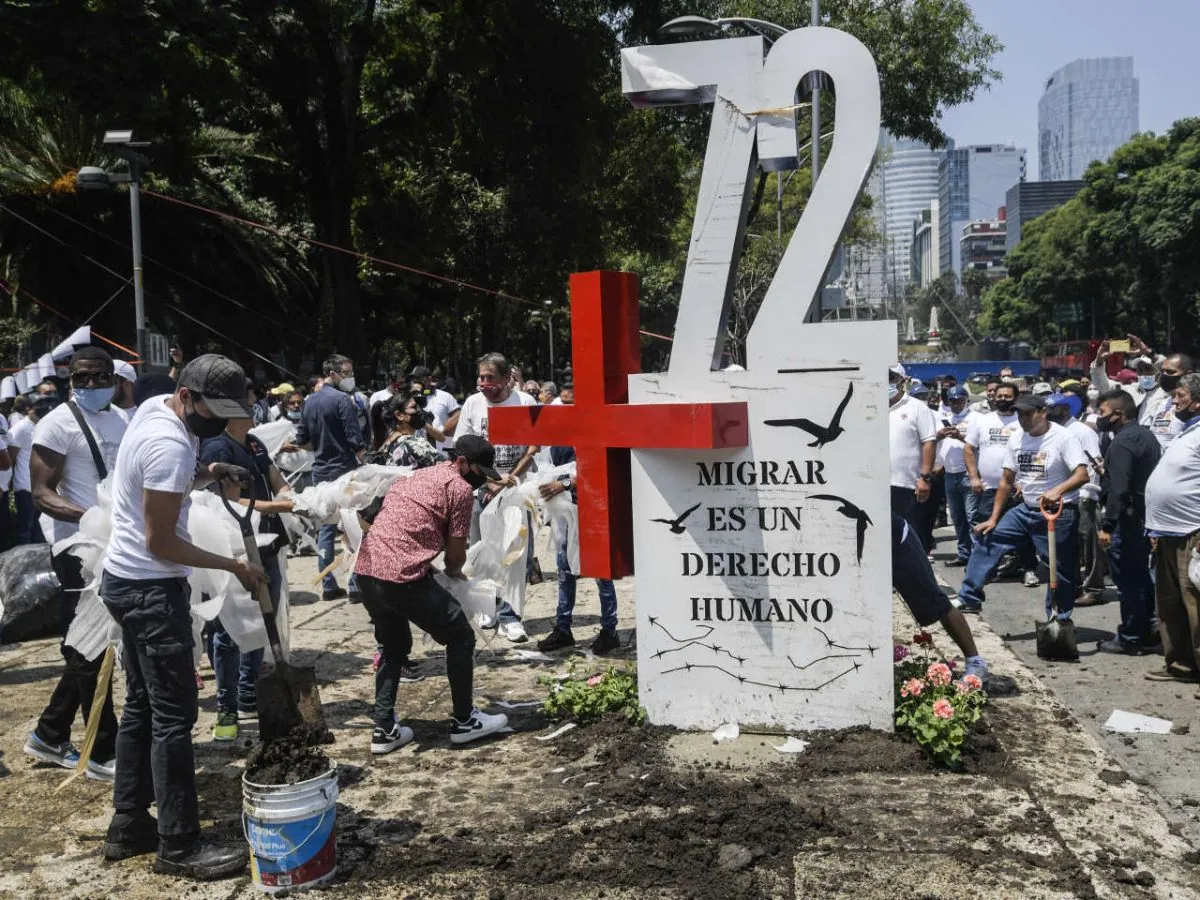
Antimonumento +72 stands as an anti-monument situated on the pavement opposite the United States Embassy in Mexico City, positioned along Paseo de la Reforma in the Cuauhtémoc borough. Crafted from steel, the installation features a white numeral 72 accompanied by a red plus sign, set upon a white pedestal adorned with dove imagery and the phrases “Migration is a human right” and “No one is illegal in the world” in Spanish. This sculpture was created in commemoration of the seventy-two migrants who tragically lost their lives in 2010 at El Huizachal village, within the San Fernando municipality of Tamaulipas. These migrants were victims of violence after being apprehended by the Los Zetas drug cartel. The piece has not received an official title; its creators simply referred to it as Antimonumento.
On the noon of August 22, 2020, protesters set up the anti-monument, coinciding with the tenth anniversary of the tragic San Fernando massacre. This installation served as both a plea for justice regarding the massacre and other migrant-related crimes, and as a means to ensure that the authorities and society do not forget this tragic incident. The creators of the installation voiced their opposition to the stringent laws concerning the Mexico–United States border crisis, which hindered free passage across the international border. This stance was taken even prior to the presidency of Donald Trump (2017–2021) and his proposal of a border wall. Concurrently, they criticized the challenges migrants faced while traversing Mexico, highlighting the crimes and harassment they encounter, including those perpetrated by their fellow citizens.
Paseo de la Reforma, Mexico
| Antimonumento +72 | |
| August 22, 2020 | |
| Location City | Paseo de la Reforma, Mexico |
| Country | U.S.A |
| Designer | Anonymous Demonstrators |
| Type | Anti-monument |
| Height | 3 m (9.8 ft) |
| Material | Steel |
| Weight | Almost 500 kg (1,100 lb) |
| Opening date | 22 August 2020 |
| Dedicated to | The victims of the 2010 San Fernando massacre, and disappeared and murdered migrants |
History
At 10:00 AM on August 22, 2020, a gathering of activists, families of missing individuals, migrants, and non-governmental organizations converged in front of the United States Embassy in Mexico City to mark the solemn tenth anniversary of the massacre. An hour later, a truck transported a steel sculpture to the scene, positioning it on the sidewalk across from the embassy building. As part of the installation process, a tree was carefully uprooted and replanted 5 meters (16 feet) away, and the sculpture was firmly anchored into place using cement. Subsequently, a mass was conducted to provide support to the grieving families and strengthen their resolve in pursuing justice.
The location was chosen due to the assertion by the organizers that the dominance of the United States in terms of economy and geography has compelled residents of other countries to seek emigration, resulting in a cycle of violence against migrants. The idea to create this anti-monument emerged a year earlier when relatives of the victims journeyed from their respective homelands to Mexico City to stage a protest in front of the National Palace, the official residence of the Mexican president.
The steel sculpture itself features a white numeral “72” fashioned from metal, accompanied by a red plus symbol, all set atop a white pedestal adorned with imagery of doves and the phrases “Migration is a human right” and “No one is illegal in the world” in Spanish. This monument stands at a height of 3 meters (9.8 feet) and weighs approximately 500 kilograms (1,100 pounds).
Events after its installation
On December 18, International Migrants Day, demonstrators congregate at the anti-monument as a symbol of remembrance and advocacy. Following the tragic incident of the Ciudad Juárez migrant center fire on March 27, 2023, in which 40 migrants lost their lives, migrants and supporters from pro-migrant organizations erect a memorial at the site of the anti-monument. Alongside this tribute, they express criticism regarding the continued leadership of Francisco Garduño Yáñez, the director of the National Institute of Migration. Despite a formal indictment from the Attorney General of Mexico, Garduño Yáñez remains in his position, prompting further outcry and calls for accountability.