Table of Contents
Crop Insurance : Agricultural Risk Management
Crop insurance is a specialized risk management tool purchased by agricultural producers to mitigate financial losses stemming from crop failure or market volatility. Modern policies primarily function through two mechanisms: crop-yield insurance, which protects against physical loss from natural disasters such as drought, floods, and frost; and crop-revenue insurance, which safeguards against income fluctuations caused by declines in agricultural commodity prices.
In 2026, the global crop insurance market has entered a transformative era, projected to exceed $57 billion in annual premiums as climate-driven weather extremes become more frequent and severe. Governments worldwide have responded by significantly increasing financial support. In the United States, for instance, the implementation of the One Big Beautiful Bill (OBBBA) Act has modernized the federal crop insurance policy framework, increasing premium subsidies for area-based plans like the Supplemental Coverage Option (SCO) to 80%. This shift effectively transforms the farm crop insurance system from a simple disaster safety net into a proactive income stabilization program.
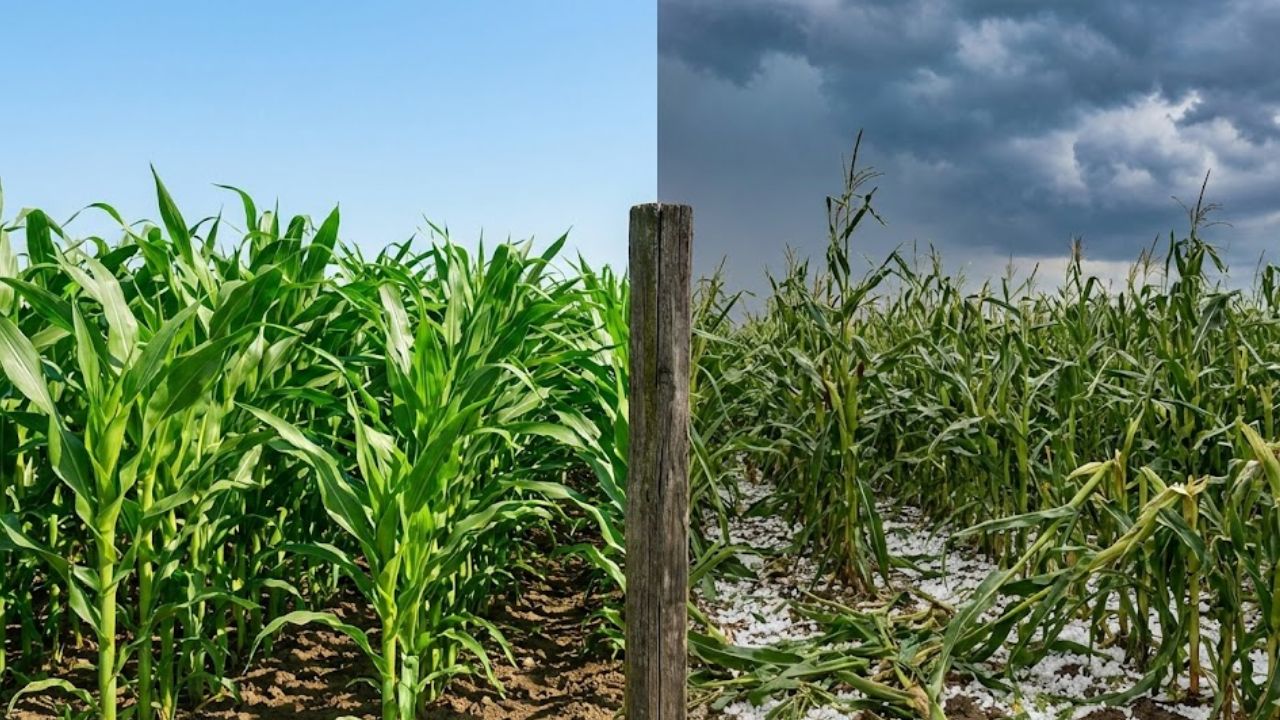
Systemic Risk in Agriculture: Drought's Impact

While North America remains the dominant market, international systems such as Canada’s AgriInsurance and India’s National Agriculture Insurance Scheme (NAIS) have also integrated satellite-based remote sensing and AI-driven claims processing to enhance food security. By stabilizing farm income, crop insurance ensures that producers can remain solvent after a catastrophic season, maintaining the continuity of the global food supply chain amidst an increasingly unpredictable environment.
What is Crop Insurance?
At its core, a crop insurance policy is a contractual agreement between a producer and an insurance provider designed to stabilize farm income against unpredictable yield or revenue losses. While a standard homeowner’s policy protects a physical asset—the house itself—farm crop insurance is unique because it protects the future potential of a biological asset. It safeguards the financial investment a farmer makes in seeds, fertilizer, and labor before the harvest even exists.
Why Crop Insurance is Unique: The Challenge of Systemic Risk
Standard property insurance relies on the “law of large numbers,” where risks are independent; if one house burns down, the neighboring houses usually do not. Agriculture, however, is defined by Systemic Risk. This occurs when a single event—such as a regional drought, a widespread freeze, or a collapse in global commodity prices—impacts thousands of producers simultaneously.
Because systemic events can bankrupt private insurers, most modern programs function as public-private partnerships. Understanding how crop insurance works in this context requires looking at three distinct pillars:
Yield Protection: Coverage against physical loss from “unavoidable perils” like hail, frost, or insect infestations.
Revenue Protection: A safeguard against price volatility, ensuring that even if a crop grows well, a sudden market crash won’t leave the farm insolvent.
Government Reinsurance: A backstop where the state absorbs catastrophic systemic losses, allowing private companies to offer affordable premiums to individual growers.
By mitigating these large-scale threats, crop insurance serves as a primary driver of global food security, ensuring that one bad season does not lead to a permanent exit from the industry.
Primary Categories of Coverage
Agricultural protection is not a one-size-fits-all model; it is structured to address specific environmental and economic threats. The most comprehensive form is Multi-Peril Crop Insurance (MPCI), which covers a vast array of natural “acts of God,” including drought, excessive moisture, and disease. Because MPCI is heavily regulated and often subsidized, it remains the cornerstone of modern risk management.
In contrast, Crop-Hail Insurance is typically a private policy that focuses on localized events. Unlike systemic risks, hail damage is often spotty, destroying one field while leaving another untouched. Producers often use this as a supplement to their primary crop insurance policy because it can be purchased at any point in the growing season. For those seeking higher-tier protection, the Enhanced Coverage Option (ECO) provides an additional area-based trigger, covering smaller yield “dips” that fall below the standard deductible of a typical plan.
MPCI vs. Crop-Hail Insurance Comparison

Multi-Peril Crop Insurance (MPCI)
Multi-Peril Crop Insurance (MPCI) is the fundamental protective layer for the majority of modern agricultural operations. Unlike specialized policies that cover only a single event, multi peril crop insurance provides broad-spectrum coverage against nearly all unavoidable natural causes of loss. It is federally regulated and subsidized, making it the most cost-effective risk management tool for protecting a farm’s “Actual Production History” (APH).
To qualify for an indemnity, a producer must demonstrate that a covered peril directly caused their yield or revenue to fall below a pre-determined trigger level—typically between 50% and 85% of their historical average. The scope of mpci crop insurance is extensive, specifically designed to handle:
Adverse Weather: Protection against catastrophic drought, excessive moisture/flooding, freezing temperatures, and windstorms.
Biological Threats: Coverage for unavoidable damage caused by plant diseases or insect infestations, provided that standard control measures were followed.
Other Perils: Natural events such as fire, earthquake, and even damage from local wildlife.
Because MPCI must be purchased before a crop is planted (often with a Spring deadline of March 15 in the U.S.), it requires proactive planning. By bundling these diverse risks into one policy, it ensures that a single bad season—whether characterized by a dry summer or a late-season frost—does not result in total financial insolvency for the farm.
Crop-Hail Insurance
While federal programs handle broad disasters, crop-hail insurance is a private-sector product designed to protect against the specific, high-velocity impact of hailstorms. Hail is uniquely destructive because it can decimate a high-yielding field in minutes while leaving a neighboring farm completely untouched. Because this risk is localized rather than systemic, these policies are not part of the Federal Crop Insurance Program and do not receive government subsidies.
Producers often utilize crop hail insurance coverage as a precision supplement to their existing MPCI policies. A key advantage of this coverage is its flexibility; unlike federal plans that require enrollment before planting, a private hail policy can typically be purchased at any point during the growing season—even as a storm is forecasted.
Core features of these private policies include:
Acre-by-Acre Protection: Farmers can insure specific high-value fields rather than the entire farm unit, allowing for targeted risk management.
Low or No Deductibles: Claims are often triggered by the physical percentage of damage to the plant, providing faster payouts that help cover immediate debris cleanup or replanting costs.
Expanded Perils: Many carriers bundle additional “private perils” into the policy, such as protection against fire, lightning, vandalism, and even transit coverage while hauling grain to the elevator.
By layering this private protection over a base federal policy, producers can secure their full expected revenue, ensuring that a single afternoon hailstorm doesn’t erase an entire year’s profit margin.
Specialty Crops & ECO (Enhanced Coverage Option)
Specialty crops—defined by the USDA as fruits, vegetables, tree nuts, and nursery crops—represent a high-value sector of agriculture that historically faced limited coverage options. However, as of 2026, the Enhanced Coverage Option (ECO) has become a critical tool for these producers, particularly those managing high-input organic orchards and vineyards.
The eco crop insurance endorsement is an area-based supplemental policy that allows producers to protect a much higher percentage of their expected revenue. While standard policies often leave a 15% to 25% “deductible gap,” ECO allows growers to insure up to 90% or 95% of their expected yield or revenue. This “shallow loss” protection is vital for specialty crops like almonds, walnuts, and citrus, where even a minor dip in market price or regional yield can cause significant financial strain due to high production costs.
Key features for specialty and organic growers include:
High Subsidy Rates: For the 2025/2026 cycle, the USDA increased the ECO premium subsidy to 65%, significantly lowering the out-of-pocket cost for farmers.
Independent Triggers: ECO pays out based on county-level data. This means a grower can receive an ECO indemnity if the county suffers a loss, even if their individual farm remains productive.
Expanded Eligibility: New federal rules have expanded ECO to include more perennial crops and organic practices, allowing for enterprise units that distinguish between organic and conventional acreage.
By utilizing ECO, specialty producers can protect the thin margins associated with organic and high-value produce, ensuring that regional volatility does not jeopardize their operation’s liquidity.
Global Perspectives & Regional Systems
Crop insurance is not a monolithic global entity; instead, it operates through highly localized systems tailored to regional climates and economic structures. As of 2026, the global market has diversified into a patchwork of Public-Private Partnerships (PPPs), with regional models reflecting a nation’s specific agricultural priorities. While high-income nations like the United States and Spain utilize deeply integrated, heavily subsidized insurance frameworks to protect industrial-scale farms, emerging economies are increasingly adopting index-based models that utilize satellite data for rapid, automated payouts.
Regionally, the landscape is defined by distinct governance styles:
North America: Dominated by the U.S. and Canada, these systems rely on massive federal subsidies and a robust network of private carriers to manage comprehensive revenue and yield risks.
Asia-Pacific: Led by India’s PMFBY and China’s policy-based systems, this region focuses on high-volume coverage for smallholder farmers, often bundling insurance with agricultural credit.
Europe: Countries like Spain (Agroseguro) lead with sophisticated multi-peril pools, whereas others maintain purely private markets for specific risks like hail.
Emerging Markets: In Africa and parts of Latin America, the focus has shifted toward “parametric” insurance, where payouts are triggered by environmental data (like rainfall levels) rather than individual field inspections.
The United States System (RMA & FCIC)
The United States utilizes a unique public-private partnership model to deliver mpci crop insurance, managed by two distinct but interconnected federal entities within the USDA: the Federal Crop Insurance Corporation (FCIC) and the Risk Management Agency (RMA). This structure ensures that while private companies sell and service the policies, the federal government provides the financial backing and regulatory oversight necessary to maintain market stability.
To understand how does crop insurance work at the institutional level, it is important to distinguish the specific roles of these two bodies:
Federal Crop Insurance Corporation (FCIC): Founded in 1938, the FCIC is a government-owned corporation that acts as the “banker” and reinsurer for the program. It provides the premium subsidies that make insurance affordable for farmers and absorbs the catastrophic “systemic risk” that private insurers cannot handle alone.
Risk Management Agency (RMA): Established in 1996, the RMA serves as the administrative and regulatory arm of the FCIC. The RMA is responsible for setting premium rates, developing new insurance products—such as the 2026 Margin Coverage Option (MCO)—and ensuring the actuarial soundness of every crop insurance policy offered in the market.
For the 2026 crop year, these agencies have significantly expanded their scope under the “One Big Beautiful Bill” (OBBBA) Act. This legislation has tasked the RMA with implementing higher subsidy levels for area-based plans and streamlining the digital reporting process for producers. By providing this dual layer of support, the U.S. system protects over 500 million acres of farmland, ensuring that individual farm losses do not escalate into national food security crises.
Canada’s AgriInsurance Program
Canada’s approach to agricultural protection, managed under the Sustainable Canadian Agricultural Partnership (Sustainable CAP), is a decentralized model that prioritizes regional flexibility. Unlike the U.S. system, which relies on private insurance companies to sell and service policies, Canada’s AgriInsurance is delivered almost exclusively through provincial crown corporations or government agencies, such as the Saskatchewan Crop Insurance Corporation (SCIC) and Ontario’s Agricorp.
The Cost-Sharing Difference
The primary “topic gap” between the two nations lies in their financial architecture. While the U.S. federal government (via the FCIC) absorbs the majority of subsidy costs and administrative burdens, Canada employs a strict Federal-Provincial-Producer cost-sharing formula:
Premium Costs: Total premiums are typically split three ways: the federal government contributes 36%, provincial governments contribute 24%, and the producers pay the remaining 40%.
Administrative Expenses: Costs to run the program—such as staffing and field adjusting—are shared on a 60:40 basis between the federal and provincial governments, respectively, with no cost to the producer.
Governance: Because provinces contribute 40% of the administrative funding and 24% of premiums, they maintain significant authority to customize plans. For example, a province can develop specific “Wildlife Compensation” or “Honey Bee Health” plans that are unique to its local ecosystem.
This model ensures that Canadian provinces have “skin in the game,” resulting in programs that are often more targeted to local climate risks than the broader, more centralized U.S. federal programs.
India’s PMFBY (Pradhan Mantri Fasal Bima Yojana)
Launched in 2016, the Pradhan Mantri Fasal Bima Yojana (PMFBY) is one of the world’s largest crop insurance programs by farmer participation. It operates on a “One Nation, One Scheme” theme, providing a uniform, low premium rate for farmers: 2% for Kharif crops, 1.5% for Rabi crops, and 5% for commercial or horticultural crops. The remainder of the actuarial premium is shared equally between the Central and State governments.
The Technology Shift: Solving the High-Volume Claim Problem
The primary “topic gap” in traditional Indian insurance was the delay in claim settlements caused by manual Crop Cutting Experiments (CCEs). With millions of smallholder plots, manual yield assessment was slow, prone to disputes, and administratively overwhelming. To solve this, India has pioneered a technology-first approach for the 2025-2026 cycle:
YES-TECH (Yield Estimation System based on Technology): This system uses satellite remote sensing, AI, and machine learning to estimate yields. As of 2026, technology-derived yield data is given a mandatory weightage (starting at 30% and moving toward 100% in states like Madhya Pradesh), significantly reducing reliance on manual CCEs.
Drones and UAVs: In over 100 districts, drones are deployed to capture high-resolution imagery for rapid loss assessment after localized calamities like hailstorms or flooding. This allows for “centimeter-level” accuracy that satellites cannot achieve during heavy cloud cover.
WINDS (Weather Information Network and Data System): A network of Automatic Weather Stations (AWS) at the block level and Rain Gauges at the panchayat level provides hyper-local weather data. This data triggers automatic “index-based” payouts when rainfall or temperature thresholds are breached.
DigiClaim Module: By integrating the National Crop Insurance Portal (NCIP) with the Public Finance Management System (PFMS), claims are now disbursed directly into farmers’ bank accounts, bypassing administrative bottlenecks.
By blending satellite “big data” with drone-level “ground truth,” India has created a scalable model that settles high-volume claims in weeks rather than months, a feat previously thought impossible for a developing agricultural economy.
The Philippine Crop Insurance Corporation (PCIC)
The Philippine Crop Insurance Corporation (PCIC) is a government-owned and controlled corporation (GOCC) mandated to provide socialized national crop insurance to the country’s agricultural sector. As an attached agency of the Department of Finance, the PCIC serves as the primary safety net for subsistence farmers and fisherfolk who are highly vulnerable to the Philippines’ average of 20 typhoons per year, along with risks from floods, droughts, and volcanic eruptions.
Key Programs and 2026 Modernization
The PCIC goes beyond standard plant protection, offering a “holistic” insurance suite that covers the entire livelihood of the producer. For the 2026 fiscal year, the Philippine government has proposed a significant budget increase—aiming for ₱8 billion—to expand coverage to 4.2 million agricultural workers.
Core insurance lines include:
Rice and Corn: The “bread and butter” of the PCIC, protecting the nation’s primary food staples against natural calamities and pest infestations.
High-Value Crops: Protection for coconut, coffee, cacao, and banana—sectors where the PCIC is currently expanding through public-private partnerships to better reflect true production costs.
Non-Crop Agricultural Assets: Coverage for warehouses, tractors, irrigation facilities, and other essential equipment against fire, lightning, and earthquakes.
Fisheries and Livestock: Specialized protection for fisherfolk and livestock raisers against accidental death of animals or loss of unharvested aquatic stock.
Innovation: Parametric Payouts
A major “topic gap” in the Philippine system was the long delay in field-based damage assessments. To address this, the Philippine Crop Insurance Corporation is piloting parametric insurance in 2026. This system uses remote sensing to measure wind velocity and rainfall intensity; if a typhoon crosses a specific “trigger” threshold, payouts are processed automatically within three to five days, providing a critical lifeline for recovery before the next planting season begins.
2025-2026 Critical Timelines
Adhering to federal and private timelines is the most critical aspect of maintaining a valid crop insurance policy. In the agricultural insurance sector, dates are non-negotiable; missing a deadline by a single day can result in a total loss of coverage for the entire year. For the 2025 and 2026 cycles, these timelines are divided into three primary phases: sales, planting, and reporting.
The Sales Closing Deadline
The Sales Closing Date (SCD) is the final opportunity for a producer to apply for coverage, change their coverage level, or cancel an existing policy. For most spring crop insurance—including corn and soybeans—this date is March 15. By this deadline, all administrative decisions must be finalized with a certified agent to secure protection for the upcoming growing season.
Earliest and Final Planting Dates
Planting dates are geographically specific and determined by the Risk Management Agency (RMA) to ensure crops are sown during an optimal agronomic window. Planting too early can disqualify a farmer from replanting payments, while planting too late reduces the insurance guarantee.
Iowa: In the 2025-2026 cycle, the iowa crop insurance planting dates 2025 for corn begin with an earliest date of April 10 statewide. For soybeans, the earliest date is April 10 in southern counties and April 15 for the rest of the state.
Final Deadlines: The final planting date to receive a 100% guarantee for Iowa corn is May 31, and for soybeans, it is June 15.
Late Planting Period: A 25-day late planting period follows these dates. During this window, the insurance guarantee typically drops by 1% per day, eventually reaching a “prevented planting” floor.
Acreage Reporting and Billing
The final administrative hurdle is the Acreage Reporting Date, which for most spring-seeded crops is July 15. Producers must report the exact number of acres planted, the date they were planted, and their share of the crop. Following this, crop insurance deadlines 2025 culminate in the premium billing date on August 15, with interest beginning to accrue if payments are not settled by September 15.
The Industry Landscape: Providers & Carriers
The delivery of federal crop insurance relies on a specialized group of private entities known as Approved Insurance Providers (AIPs). These companies operate under a Standard Reinsurance Agreement (SRA) with the USDA’s Risk Management Agency, granting them the authority to sell and service policies. While the government sets the rates and terms, these AIPs handle the vital “boots-on-the-ground” work, including policy administration, localized agent support, and claims adjustment.
MPCI vs. Crop-Hail Insurance Comparison
Leading AIPs and Market Specialists
As of 2026, the landscape is defined by several dominant carriers that leverage advanced technology and extensive agent networks to manage billions in agricultural risk:
RCIS (Rural Community Insurance Services): One of the largest and oldest AIPs in the nation, RCIS crop insurance is highly regarded for its diverse portfolio of private products that supplement federal plans. Their 2026 offerings include precision-ag integrations that allow for near-instantaneous acreage reporting.
Hudson Crop: A division of Hudson Insurance Group, hudson crop insurance is recognized for its specialized focus on high-value and specialty crops. They have pioneered several digital tools to streamline the application process for complex perennial operations.
Rain and Hail: A Chubb company, rain and hail crop insurance maintains a massive presence across North America. They are noted for their financial stability and a robust mobile platform that enables adjusters to process claims directly from the field following a storm.
The Role of National Crop Insurance Services (NCIS)
While AIPs compete for business, they collaborate through national crop insurance services (NCIS). This non-profit organization serves as the industry’s central hub for actuarial data and research. NCIS is responsible for developing standardized crop loss adjustment procedures and providing comprehensive training to thousands of adjusters. By pooling data and setting industry-wide standards, NCIS ensures that regardless of which carrier a farmer chooses, the integrity and accuracy of the claim settlement process remain consistent across the United States.
Careers in Agricultural Risk
The agricultural insurance sector has evolved into a high-tech field, blending traditional agronomy with advanced data science. As climate volatility increases the demand for sophisticated risk management, crop insurance careers are projected to grow by approximately 6% through 2026. This professional landscape offers two primary paths: sales and consultation through agency work, or technical field analysis through loss adjustment.
The Role of the Crop Insurance Agent
A crop insurance agent acts as a strategic consultant for farm operations. Unlike general insurance brokers, these specialists must possess deep knowledge of USDA Risk Management Agency (RMA) regulations and local commodity markets. Their primary responsibility is to help producers navigate complex policy endorsements, such as the Enhanced Coverage Option (ECO), to ensure the farm’s “Actual Production History” (APH) is adequately protected. To enter this field, candidates typically need a state insurance license and a background in agribusiness or finance.
The Field Specialist: Crop Insurance Adjuster Jobs
For those who prefer a technical, field-based environment, crop insurance adjuster jobs offer a unique blend of outdoor work and forensic analysis. Adjusters are responsible for verifying the cause of loss—whether from drought, disease, or pests—and measuring the physical extent of the damage.
In the 2026 job market, the requirements for these roles have shifted significantly toward “digital agronomy.” Modern adjusters are now expected to use:
Drone Surveillance: For rapid, high-resolution damage mapping after hailstorms.
Precision-Ag Data: Analyzing combine yield maps to verify production reports.
Satellite Imagery: Utilizing remote sensing data to cross-reference weather events with field-level performance.
Entry-level crop insurance jobs, such as claims interns or junior underwriters, often require a high school diploma and basic agricultural knowledge. However, senior-level positions and independent adjusters must complete the Crop Adjuster Proficiency Program (CAPP) or equivalent federal competency testing. This rigorous certification ensures that all claims are settled according to the strict actuarial standards of the Federal Crop Insurance Corporation (FCIC).
Legal, Ethical, and Fraud Prevention
The integrity of the federal crop insurance program is maintained through a rigorous system of audits, field inspections, and legal oversight. Because the program is subsidized by taxpayers, the USDA’s Risk Management Agency (RMA) and the Office of Inspector General (OIG) treat any intentional misrepresentation as a federal crime. For the 2026 crop year, the “Expanding Access to Risk Protection” (EARP) rules have further strengthened digital reporting requirements to ensure every crop insurance policy reflects the true production history of the farm.
Identifying and Preventing Crop Insurance Fraud
Crop insurance fraud typically involves the intentional falsification of records to trigger an indemnity payment that would not otherwise be owed. Common fraudulent practices include:
Hiding Commodities: Producers may harvest a crop and sell it under a different name (or for cash) while simultaneously filing a claim for a “total crop loss.”
Backdating Documents: Falsifying the date a policy was purchased to cover a loss that has already occurred.
Quality Misrepresentation: Claiming a crop is of “sample grade” or unmarketable quality to receive a higher payout when it is actually of marketable grade.
The Consequences: The Steven McBee Sr. Case
A high-profile example of these consequences concluded in late 2025 with the sentencing of reality TV star Steven McBee Sr. Following a multi-year investigation, McBee was sentenced to two years in federal prison and ordered to pay over $4 million in restitution.
According to court records, the mcbee crop insurance fraud scheme involved underreporting corn and soybean yields by hundreds of thousands of bushels to collect over $3.1 million in unauthorized benefits and subsidies. Beyond prison time, such convictions lead to permanent debarment from all federal farm programs, effectively ending a producer’s ability to participate in the agricultural safety net.
Whistleblower Programs and Ethical Standards
To combat systemic abuse, the RMA manages a robust Whistleblower Program. Under the Federal False Claims Act, individuals who report fraud against the government may be entitled to a portion of the recovered funds. In 2026, the use of AI-driven “data mining” has also increased; the RMA now cross-references satellite imagery with warehouse receipts and bank records to identify statistical anomalies that suggest fraudulent activity before a claim is even paid.
FAQ: People Also Ask (PAA)
Common questions and clear answers about crop insurance (2025–2026)
MPCI covers a wide range of natural risks such as drought, flood, and disease, while Crop-Hail Insurance is a private policy that focuses on localized damage caused by hail or fire. Additional programs like the Enhanced Coverage Option (ECO) provide extra area-based protection for producers seeking higher coverage levels.
In the United States, many crop insurance policies are subsidized by the federal government. If a covered event occurs, such as a natural disaster or a major drop in market prices, the producer files a claim and may receive an indemnity payment based on the policy terms.
This date applies to major crops like corn and soybeans and is the final deadline to purchase a new policy or change coverage levels. For winter crops, deadlines usually occur in the autumn, often around September 30. Producers should always confirm exact dates with a local crop insurance agent.
Coverage applies when the loss was unavoidable and the producer followed recognized good farming practices. Damage caused by neglect or failure to use standard pest control methods is not covered under crop insurance policies.
Yield Protection (YP) insures against reduced production caused by natural disasters. Revenue Protection (RP) is broader, protecting farmers from low yields as well as declining market prices, helping ensure a guaranteed level of total farm income.
Gallery