Table of Contents
Bill Deedes (British Politician)
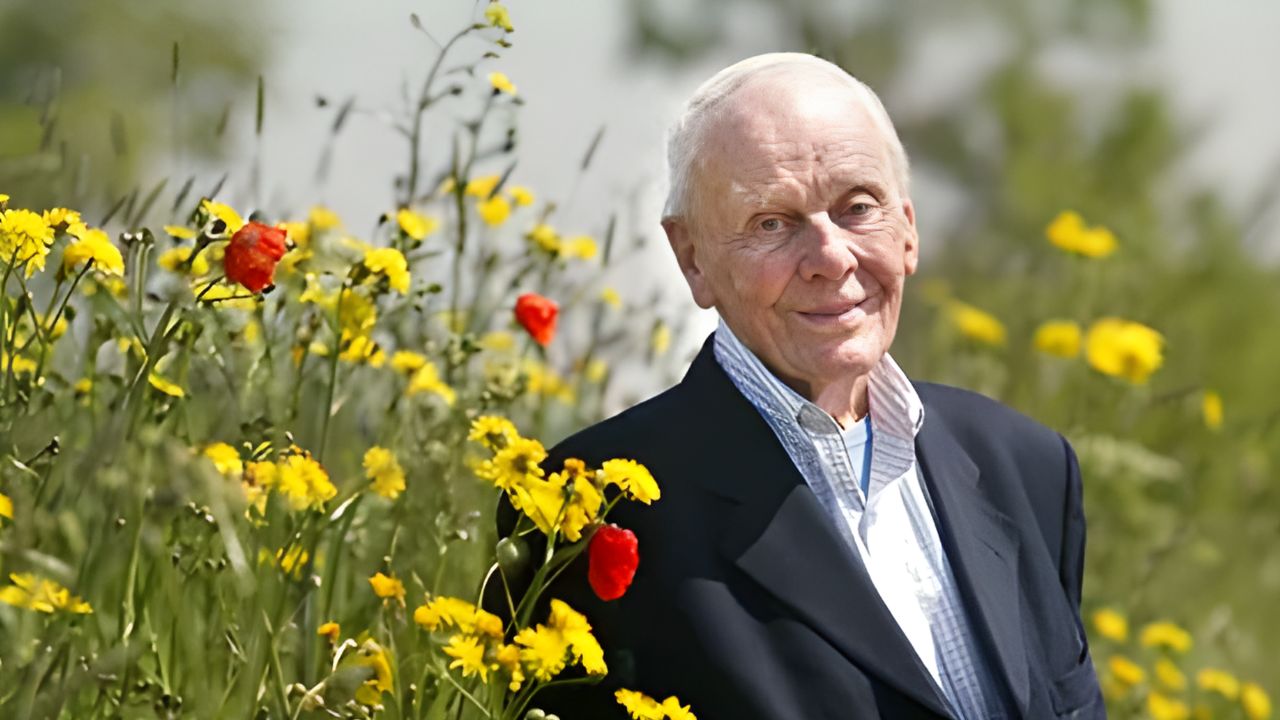
Bill Deedes (British Politician) — William Francis Deedes, Baron Deedes, KBE, MC, PC (1 June 1913 – 17 August 2007) was a British journalist, army officer, and Conservative politician who achieved something no other person in British history has managed: serving both as a Cabinet minister and as editor of a major national newspaper, The Daily Telegraph.
His life was one of remarkable range. From the battlefields of Europe to the corridors of Westminster, and from the editor’s desk to conflict zones he reported from well into his eighties, Deedes never settled into one identity. He was, at various points, a war hero, a parliamentarian, a newspaper editor, and one of Britain’s most trusted voices in public life.
Born into a family with deep roots in British public service, he faced early hardship when the Great Depression stripped his family of its fortune. Rather than slow him down, that setback pushed him toward journalism at an unusually young age. His courage under fire in the Netherlands earned him the Military Cross. His decades at The Daily Telegraph earned him the respect of generations of readers and fellow journalists alike.
Elevated to the House of Lords as Baron Deedes of Aldington, he carried his commitment to honest reporting and principled public service until his final years. Few figures in modern British life have left such a clear mark across so many different worlds.

| Full Name | William Francis Deedes, Baron Deedes, KBE, MC, PC |
| Date of Birth | 1 June 1913 |
| Date of Death | 17 August 2007 (aged 94) |
| Place of Birth | Hampstead, London, England |
| Place of Death | Kent, England |
| Nationality | British |
| Profession | Journalist, Newspaper Editor, Politician, Army Officer |
| Political Party | Conservative Party |
| Education | Harrow School (left early due to family financial difficulties caused by the Great Depression) |
| Career Start | Morning Post, London (joined as reporter aged 18) |
| Parliamentary Role | Member of Parliament for Ashford, Kent (1950–1974) |
| Cabinet Role | Minister without Portfolio under Prime Minister Harold Macmillan (1962) |
| Editorial Role | Editor, The Daily Telegraph (1974–1986) |
| Military Service | Queen’s Westminsters, King’s Royal Rifle Corps — Second World War |
| Military Honours | Military Cross (MC) — awarded for rescuing wounded soldiers at Hengelo, Netherlands, April 1945 |
| Honours | KBE (Knight Commander of the Order of the British Empire), PC (Privy Counsellor), MC (Military Cross) |
| Life Peerage | Baron Deedes of Aldington (created 1986) |
| Spouse | Evelyn Hilary Branfoot |
| Children | Five (two sons, three daughters) |
| Notable Coverage | Italian Invasion of Abyssinia, Second World War, post-retirement international reporting into his eighties |
| Key Distinction | First and only person in British history to serve at Cabinet level and edit a major national newspaper |
| Popular Culture | Widely cited as inspiration for William Boot in Evelyn Waugh’s Scoop; subject of Private Eye’s long-running “Dear Bill” feature |
Early life and Education
William Francis Deedes was born on 1 June 1913 in Hampstead, London, into a family with a long and established tradition of British public service. That heritage shaped him quietly but profoundly, instilling in him a sense of duty that would define every chapter of his adult life.
His early years were comfortable, but not for long. The Great Depression struck his family’s finances with considerable force, making it impossible for Deedes to complete his formal education at Harrow School. He left earlier than planned — a disruption that might have derailed a lesser character. Instead, he continued his studies privately, developing the disciplined, self-directed habits that would serve him well across three distinct careers.
The influence of his family’s public service background never left him. According to biographical accounts, it was this tradition, combined with his own natural curiosity and restlessness, that drew him toward journalism rather than a more conventional path.
He began his professional life at the Morning Post at just eighteen years old. It was an ambitious start for someone still finding his footing. Yet even in those early days, colleagues noted his determination, his eye for detail, and a willingness to go where the story demanded — qualities that would later take him to Abyssinia and the battlefields of Europe.
Journalism Beginnings and Abyssinia Assignment
Bill Deedes began his journalism career at the Morning Post, joining the newspaper as a junior reporter while still a teenager. It was an era when Fleet Street demanded thick skin, long hours, and an appetite for the unexpected. Deedes had all three. He learned his craft quickly, developing a direct, unsentimental writing style that would become his signature across seven decades of reporting.
His move to The Daily Telegraph followed naturally, bringing him into contact with a broader readership and more demanding assignments. But nothing in his early career could have prepared him for what came next.
The Abyssinia Assignment
When Italy launched its invasion of Abyssinia, editors across Britain scrambled to send correspondents to East Africa. Deedes was dispatched to cover the conflict — one of the most consequential and widely watched military campaigns of that period. He arrived in Addis Ababa carrying nearly 600 pounds of luggage, a detail that became almost as famous as his dispatches. It spoke to the mixture of youthful boldness and inexperience that marked his first major foreign assignment.
Despite that awkward arrival, his reporting was anything but amateurish. Deedes documented Italian military excesses with clarity and moral seriousness, ensuring that the wider world understood what was happening on the ground. His dispatches helped shape international awareness of the conflict at a time when many governments preferred to look away.
The William Boot Connection
That Abyssinian adventure carried an unexpected literary afterlife. Evelyn Waugh, who was also covering the conflict as a correspondent, later wrote his celebrated satirical novel Scoop, featuring a hapless, over-equipped reporter named William Boot. Deedes was widely identified as a key inspiration for the character. He himself acknowledged, with characteristic good humour, that his early inexperience and the notorious luggage episode may well have contributed to Waugh’s portrait.
The experience in Abyssinia did something more lasting than inspire a novel, however. It fundamentally shaped Deedes’ philosophy as a journalist. He returned convinced that foreign correspondence carried a moral responsibility — that reporting from conflict zones was not merely about filing copy but about bearing witness. That conviction stayed with him for the rest of his career, guiding his editorial decisions at The Daily Telegraph and his continued field reporting long into old age.
Military Career
When the Second World War broke out, Bill Deedes set aside his journalism career without hesitation and answered the call to serve. He was commissioned as an officer in the Queen’s Westminsters, a regiment forming part of the King’s Royal Rifle Corps — a unit with a proud and distinguished history in British military service. For a man already shaped by the discipline of Fleet Street and the hardships of foreign correspondence, military life felt like a natural extension of the values he already carried.
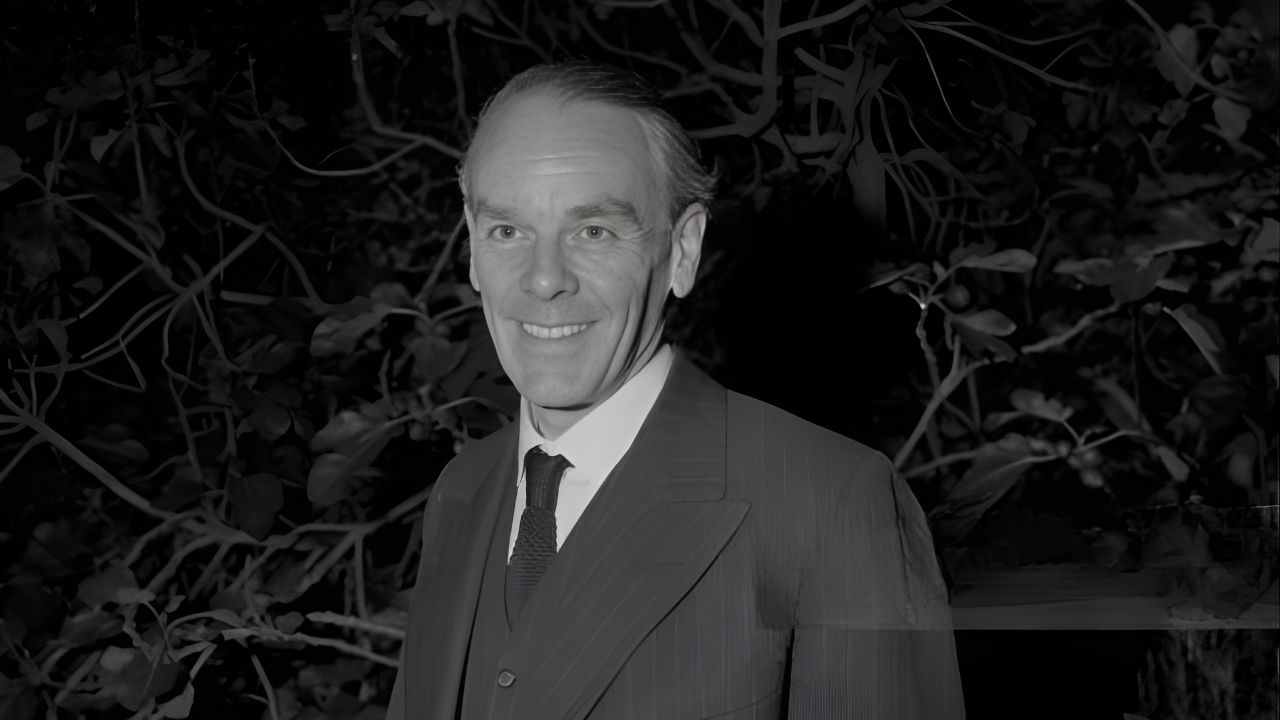
His service took him into active combat across Europe, where the realities of modern warfare were far removed from anything he had encountered as a correspondent in Abyssinia. The front lines of Europe demanded not just courage but sustained leadership under conditions of extreme pressure. Deedes met those demands steadily, earning the respect of the men who served alongside him.
The Action at Hengelo
The defining moment of his military career came in April 1945, near the Dutch town of Hengelo in the Netherlands, during the final stages of the war in Europe. Under enemy fire, Deedes displayed extraordinary personal bravery by rescuing wounded soldiers from immediate danger. It was the kind of action that required complete disregard for personal safety — a split-second decision made under the most unforgiving circumstances imaginable.
For his courage at Hengelo, he was awarded the Military Cross, one of Britain’s most respected decorations for gallantry in the face of the enemy. The honour recognised not a career of distinguished service in the abstract, but a specific, verifiable act of bravery that saved the lives of fellow soldiers. According to regimental records and biographical accounts, the episode at Hengelo remained one of the moments Deedes himself spoke about with the greatest quietness and gravity.
From Soldier to Statesman
The war left a permanent mark on Bill Deedes — not as trauma, but as formation. The discipline he absorbed as an officer, the responsibility of leading men in dangerous conditions, and the moral weight of combat all shaped the way he later approached both journalism and politics. He understood, at a level that only direct experience can teach, what it cost ordinary people when governments made poor decisions or when the press failed to hold power to account.
Those lessons were visible throughout the rest of his career. His writing carried a sobriety and authority that younger journalists noted. His political judgements were tempered by an understanding of real-world consequences. And his editorial leadership at The Daily Telegraph reflected a belief, forged in wartime, that institutions had obligations to the people who depended on them. The Military Cross was an honour. But the deeper legacy of his military service was the character it confirmed and refined.
Politics and Parliamentary Career
Returning from the war with the Military Cross and a deepened sense of public duty, Bill Deedes turned his attention to politics. He stood for Parliament as the Conservative candidate for Ashford in Kent and was elected in 1950 — beginning a parliamentary career that would last nearly a quarter of a century. Ashford suited him well. It was a constituency that rewarded straight talking and genuine engagement, and Deedes delivered both consistently throughout his time as its representative.
His approach to parliamentary life was never that of the ambitious careerist. Colleagues on both sides of the House described him as pragmatic, measured, and genuinely motivated by public duty rather than personal advancement. He listened carefully to his constituents, maintained close ties with the community he represented, and brought to Westminster the same reporter’s instinct for ground-level truth that had defined his journalism.
Minister Without Portfolio
The clearest mark of the trust placed in Deedes by his party came in 1962, when Prime Minister Harold Macmillan appointed him Minister without Portfolio — a Cabinet-level position carrying significant responsibility despite the absence of a specific departmental brief. The role required someone of broad judgement and political sensitivity, a person who could contribute meaningfully to government decision-making across multiple areas without being confined to a single policy domain.
Deedes filled the position with characteristic quiet competence. He brought to Cabinet the perspective of a man who had reported from conflict zones, served in active combat, and spent years listening to ordinary people — a combination that gave his contributions a grounding that purely career politicians sometimes lacked. His time in Cabinet was relatively brief, but it was consequential, and it cemented his reputation as one of the more thoughtful figures in Conservative politics during that period.
A Career Defined by Integrity
Throughout his twenty-four years in Parliament, Deedes maintained an unusual relationship with the press. As a working journalist turned politician, he understood both sides of the equation more clearly than most of his contemporaries. He was never hostile to scrutiny, never dismissive of the media’s role in public life, and never tempted to use his political position to settle journalistic scores or promote personal interests.
He stepped down from Parliament in 1974, choosing to return full-time to journalism at The Daily Telegraph. It was a decision that surprised some observers but made complete sense to those who knew him well. Politics had been a chapter, not a destination.
That decision also completed what remains a genuinely unique distinction in British public life. Bill Deedes is the only person in the history of British journalism and politics to have served at Cabinet level and subsequently edited a major national newspaper. No one before him achieved it. No one since has come close. It is a record that speaks not to ambition but to an exceptional breadth of ability and a lifelong refusal to be defined by any single role.
Journalism Career and The Daily Telegraph
When Bill Deedes walked back into The Daily Telegraph newsroom as its editor, he brought with him something most editors never possess — the lived experience of a war correspondent, a Cabinet minister, and a front-line soldier. That combination of perspectives shaped every editorial decision he made and gave his leadership of the newspaper a depth and authority that was immediately felt, both inside the building and among its readership.
His appointment as editor marked the beginning of a twelve-year tenure that would define the modern identity of The Daily Telegraph. He took charge of a newspaper that already commanded respect, and his task was not to reinvent it but to sharpen it — to ensure that its journalism remained honest, its reporting remained grounded, and its voice remained one that readers could trust without reservation.
Editorial Vision and Direction
Deedes believed, with complete conviction, that a newspaper’s first obligation was to its readers rather than to any political interest or commercial pressure. Under his editorship, The Daily Telegraph became known for balanced and rigorous reporting, a commitment to investigative journalism, and a willingness to pursue stories that mattered even when they were inconvenient. He encouraged his reporters to go where the news was, to ask the questions others avoided, and to write with clarity rather than complexity.
His own background as a foreign correspondent meant he valued field reporting above almost everything else. Correspondents sent overseas during his editorship knew they had an editor who understood precisely what they were facing, because he had faced it himself. That understanding created a culture of genuine trust between the editorial desk and the reporters working in difficult and sometimes dangerous conditions abroad.
He also brought a political literacy to the editorship that few of his peers could match. Having sat in Cabinet, he understood how governments worked from the inside — what was said publicly, what was decided privately, and where the two diverged. That knowledge informed the newspaper’s political coverage throughout his tenure and gave The Daily Telegraph a particular authority when reporting on Westminster affairs.
Life After the Editor's Chair
Deedes stepped down as editor in 1986, the same year he was elevated to the House of Lords as Baron Deedes of Aldington. Most men of his age and achievements would have retreated into comfortable retirement. He did the opposite.
He continued writing a regular column for The Daily Telegraph, producing work that was as sharp, direct, and engaged as anything he had written decades earlier. More remarkably, he continued travelling to conflict zones and politically volatile regions well into his eighties, filing reports from places that younger correspondents approached with considerable caution. His dispatches from these later years were admired not merely as the output of a veteran journalist but as genuinely valuable reporting that stood on its own merits.
Seven Decades of Journalism
Taken as a whole, Bill Deedes’ journalism career stretched across seven decades — from his first assignments at the Morning Post as a teenager to his final columns for The Daily Telegraph in his early nineties. Few journalists in British history have maintained that level of output, quality, and engagement across so long a span.
His career demonstrated something that the journalism industry frequently debates but rarely proves: that great reporting is not a function of youth or energy alone, but of curiosity, integrity, and an unshakeable belief that the public deserves to know the truth. Those qualities never left him. They were present in his Abyssinia dispatches, in his wartime service, in his parliamentary speeches, in his editorials, and in the columns he was still writing long after most of his contemporaries had fallen silent.
Awards and Honours
Across a life that spanned nearly a century and touched three distinct fields of public service, Bill Deedes accumulated honours that reflected genuine achievement rather than ceremonial recognition. Each award marked a specific contribution — to his country in wartime, to the machinery of government, and to the standards of British public life more broadly. Taken together, they form a portrait of a man whose distinction was earned rather than inherited.
Military Cross
The earliest and perhaps most personally significant of his honours was the Military Cross, awarded for his actions near Hengelo in the Netherlands during the final weeks of the Second World War. The MC is awarded specifically for acts of exemplary gallantry during active operations against the enemy — it is not a long-service medal or a diplomatic courtesy. It requires a specific act of courage, verified and recommended through the chain of command.
Deedes received it for rescuing wounded soldiers under enemy fire, a moment of immediate and selfless bravery that his fellow soldiers witnessed directly. According to biographical records, he spoke about the award with characteristic modesty throughout his life, deflecting attention toward the men he served alongside rather than toward his own actions. The Military Cross nonetheless remained a permanent part of his public identity, appearing after his name for the rest of his life as a mark of what he had done when it mattered most.
Privy Counsellor
His appointment as a Privy Counsellor reflected his service at the highest levels of British government. The honour is granted to senior politicians, senior judges, and other figures who have served the Crown in positions of significant constitutional responsibility. For Deedes, it recognised his time in Cabinet under Harold Macmillan and his broader contribution to Conservative public service across more than two decades in Parliament.
The title carries with it the prefix “The Right Honourable,” a form of address that acknowledged both his parliamentary career and the trust placed in him by the Crown and the government of the day. It was an honour that placed him formally within the inner circle of British constitutional life — a recognition of integrity and seniority that went beyond party politics.
Knight Commander of the Order of the British Empire
The award of Knight Commander of the Order of the British Empire recognised Deedes’ contribution to British journalism and public life more broadly. The KBE is one of the senior grades of the Order of the British Empire, conferred for contributions of national significance. In Deedes’ case, it acknowledged a career that had served the public interest across multiple fields — as a reporter, an editor, and a parliamentarian — over an extraordinary length of time.
The honour entitled him to use the prefix “Sir,” though by the time it was conferred he was more commonly known by the title that followed.
Life Peerage — Baron Deedes of Aldington
The most enduring of his formal honours came with his elevation to the House of Lords as Baron Deedes of Aldington in 1986, the same year he stepped down as editor of The Daily Telegraph. The life peerage placed him permanently within the upper chamber of the British Parliament, recognising a career of exceptional public service that had genuinely crossed boundaries few others had approached.
The choice of Aldington as his territorial designation was a personal one, rooting his title in the part of Kent he knew well and had represented for so many years. As Lord Deedes, he continued to contribute to public debate, bringing to the Lords the same directness and moral clarity that had defined his journalism and his politics.
Beyond the formal honours, Bill Deedes holds a distinction that no title fully captures. He remains the only person in British history to have served at Cabinet level and subsequently edited a major national newspaper. That achievement required not just talent in two demanding fields, but the credibility to be trusted at the highest levels of both — a combination so rare that it has not been repeated before or since. His honours acknowledged parts of that achievement. The achievement itself stands on its own.
Popular Culture and Public Image
Few British journalists of the twentieth century found themselves woven so thoroughly into the fabric of popular culture as Bill Deedes. His public image was shaped not only by his serious achievements in politics and the press but also by a series of cultural references that made him recognisable to audiences who may never have read a word of his journalism. He occupied that rare space where genuine distinction and gentle public mockery coexist comfortably — a mark, in Britain, of a figure who has truly arrived.
Evelyn Waugh and Scoop
The most celebrated of all cultural connections to Deedes is his widely acknowledged role as the inspiration for William Boot, the hapless foreign correspondent at the centre of Evelyn Waugh’s satirical novel Scoop. Waugh and Deedes had both been sent to cover the Italian invasion of Abyssinia, and their time together in Addis Ababa gave Waugh ample material to work with.
Deedes himself acknowledged, with the kind of self-deprecating honesty that characterised his public manner, that his early inexperience and the now-legendary episode of arriving with nearly 600 pounds of luggage may well have contributed to Waugh’s portrait of Boot. He spent, as he put it, a considerable portion of his later life brushing aside the comparison — though never with any real conviction. The resemblance was too obvious and the story too good for either him or the public to abandon it entirely.
What the comparison obscured, however, was the quality of the journalism Deedes actually produced from Abyssinia. Despite his youth and his spectacular over-packing, his reporting on Italian military conduct was serious, accurate, and morally engaged. William Boot he may have resembled in luggage; in substance, he was something considerably more capable.
Private Eye and "Dear Bill"
If Waugh gave Deedes a literary afterlife, the satirical magazine Private Eye gave him a comedic one. For years, Private Eye ran a long-running feature built around spoof letters addressed to “Dear Bill” — with Deedes cast as the recipient of correspondence from Denis Thatcher, husband of Prime Minister Margaret Thatcher. The letters, written in a tone of cheerful upper-class exasperation, portrayed Denis as confiding his uncensored views on political life to his old golfing companion.
The feature worked because it was rooted in something real. Deedes and Denis Thatcher were genuinely close friends, and the image of the two men escaping the pressures of Downing Street for a round of golf was not entirely a satirical invention. Private Eye simply took that friendship and amplified it into a running joke that lasted for years and became one of the magazine’s most fondly remembered features.
Deedes’ distinctive speech patterns also contributed to his public image during this period. His particular way of expressing himself — measured, slightly old-fashioned, and entirely his own — became a source of affectionate editorial mimicry that extended well beyond Private Eye into the broader media culture of the era.
Friendship with the Thatchers
His relationship with Margaret Thatcher and her husband Denis was one of the more unusual personal connections in British public life. Deedes was close to both, maintaining a friendship that bridged the professional and the social in a way that was genuinely rare between a senior newspaper editor and a serving Prime Minister.
The golf that he and Denis shared was more than recreation. It provided both men with a space away from the relentless pressure of their respective public roles — a few hours of normality in lives that had very little of it. Deedes spoke warmly of Denis Thatcher throughout his life, and the Private Eye caricature, far from offending him, seemed to amuse him in the way that good satire amuses people who are secure enough in themselves not to need protecting from it.
Television and Media Retrospectives
Deedes appeared in numerous television documentaries and media retrospectives across his later decades, each of which attempted — with varying degrees of success — to capture the full range of a life that resisted easy categorisation. He featured on the long-running television programme This Is Your Life, a broadcast that brought together figures from across his military, political, and journalistic careers to reflect on what he had built and who he had been along the way.
In his later years, historians, journalists, and broadcasters continued to return to his story as an example of what public life could look like when conducted with integrity, curiosity, and genuine breadth of purpose. His image — the quietly spoken editor, the decorated soldier, the parliamentary veteran, the man who kept filing copy into his nineties — became something of a touchstone for conversations about standards in British public life.
Personal Life
Behind the public achievements — the editorship, the parliamentary career, the Military Cross, the life peerage — Bill Deedes was, by all accounts, a deeply private man who placed enormous value on the relationships he built away from the public eye. His personal life was not the kind that generated headlines or controversy. It was steady, warm, and rooted in the same values of loyalty and quiet commitment that characterised everything else he did.
Marriage and Family
Deedes married Evelyn Hilary Branfoot, and together they built a family that remained the constant backdrop to an otherwise extraordinarily varied public life. They had five children — two sons and three daughters — who grew up in a household shaped by the rhythms of journalism and public service. The demands of his career were considerable, taking him away from home for extended periods across decades of foreign assignments, parliamentary sessions, and editorial responsibilities. That Deedes maintained a stable and loving family life alongside those pressures speaks to the strength of the partnership he and Evelyn built together.
Those who knew the family describe a home that reflected the man himself — unpretentious, grounded, and quietly hospitable. Deedes did not use his family as a public relations asset or parade his domestic life before the cameras. They were his private world, and he kept them that way with deliberate care.
Personality and Social Circle
In person, Bill Deedes was remarkably different from the grave, decorated figure that his public biography might suggest. Colleagues, friends, and family members consistently describe a man of genuine warmth, self-deprecating humour, and an almost complete absence of pomposity. He wore his honours lightly. He laughed easily. He listened more than he spoke in social settings, which made the moments when he did speak all the more worth hearing.
His social circle was wide and genuinely varied. Politicians, journalists, military figures, writers, and public servants all moved through his life over the decades. He was close to Margaret Thatcher and her husband Denis, maintaining a friendship with both that extended well beyond the professional obligations that connected a newspaper editor to a serving Prime Minister. That friendship was built on mutual respect and shared values rather than political convenience, and it endured long after both had left their most prominent public roles.
He was also liked, rather than merely respected, by the reporters who worked under him at The Daily Telegraph — a distinction that matters enormously in a newsroom. Editors who are feared produce a certain kind of newspaper. Editors who are liked and respected produce a better one. By most accounts, Deedes achieved the latter, and the warmth his former colleagues express when speaking of him is notably genuine.
Later Years
What distinguished Deedes in his later years was not simply that he continued working — though the fact that he was filing reports from conflict zones and politically volatile regions well into his eighties was remarkable enough — but that the quality of his thinking remained entirely undimmed. He was mentally sharp, intellectually curious, and as engaged with the events of the world as he had been at any point in his career.
He continued to write his column for The Daily Telegraph into his early nineties, producing work that younger colleagues openly admired. Physically, he remained active far longer than most men of his generation, a fact that those who knew him attributed partly to the discipline instilled by his military service and partly to a temperament that simply did not know how to be idle.
Death and Remembrance
Bill Deedes passed away on 17 August 2007 at his home in Kent, England. He was ninety-four years old. The tributes that followed his death came from across the full range of British public life — from Fleet Street and Westminster, from former soldiers and foreign correspondents, from readers who had followed his columns for decades and from colleagues who had worked alongside him at every stage of his career.
What those tributes shared, almost universally, was an emphasis not on his titles or his honours but on his character. He was remembered as a man who had been genuinely good at an unusual number of things, and who had remained, throughout all of it, straightforwardly decent. In a public life as long and as varied as his, that is perhaps the most difficult achievement of all — and the one that endures longest in the memories of those who knew him.
Legacy and Impact
Some legacies are built on a single remarkable achievement. Bill Deedes’ legacy rests on something considerably more difficult — a lifetime of consistent excellence across fields that rarely overlap, conducted with an integrity that never appeared to waver regardless of the pressures surrounding him. He did not leave behind one institution or one defining moment. He left behind a standard, and standards are harder to forget than monuments.
A Distinction That Stands Alone
The most frequently cited element of his legacy is the one that no subsequent figure has managed to replicate. Bill Deedes remains the only person in British history to have served at Cabinet level and later edited a major national newspaper. That distinction is not merely a biographical curiosity. It represents something genuinely significant about the kind of public servant he was — someone whose abilities and credibility were recognised at the highest levels of two entirely different worlds, each of which demands its own particular form of excellence.
Political life and editorial life pull in different directions. Politicians require loyalty to party, sensitivity to constituency, and the discipline of collective decision-making. Editors require independence of judgement, scepticism toward power, and the courage to publish what those in authority would prefer to suppress. That Deedes was trusted and effective in both roles suggests a character of unusual range — someone who could inhabit very different professional cultures without compromising what he fundamentally was.
Influence on British Journalism
His influence on British journalism was felt most directly during his twelve years as editor of The Daily Telegraph, but it extended well beyond that tenure. The standards he set — for accuracy, for moral seriousness, for the value of foreign correspondence, and for the belief that a newspaper’s first obligation is to its readers rather than its proprietors — became reference points that colleagues and successors continued to invoke long after he had left the editor’s chair.
Journalists who worked under him at The Daily Telegraph have spoken consistently about the culture he created in the newsroom — one in which good reporting was recognised and rewarded, in which reporters felt trusted to pursue difficult stories, and in which the editor’s own conduct set the tone rather than merely the editorial line. That kind of influence is difficult to measure and impossible to fully document, but it is the kind that shapes careers and, through those careers, the broader standards of an industry.
His continued output after retirement also carried a particular kind of authority. When a man who has covered conflicts since the nineteen thirties continues to travel to war zones in his eighties and files copy that stands on its own merits, it makes a quiet but powerful argument about what journalism is actually for. It is not a young person’s game or a career stage. It is a vocation, and Deedes embodied that understanding more completely than almost anyone of his generation.
Tributes and Public Recognition
The tributes that followed his death in August 2007 were notable both for their breadth and for their consistency of tone. Colleagues from The Daily Telegraph spoke of an editor who had been humane as well as demanding. Former parliamentary contemporaries recalled a figure of genuine integrity who had never mistaken political ambition for public service. Military historians noted the quiet courage that had earned him the Military Cross and the modesty with which he had always carried that honour.
Writers and historians have continued to cite his life in the years since his death as an example of what public service can look like when conducted without vanity or self-interest. His career appears in discussions of press freedom, of the relationship between journalism and politics, and of the standards that public institutions should aspire to maintain. He is quoted, referenced, and returned to not as a nostalgic figure from a simpler era but as a genuinely useful example for contemporary debates.
What His Career Represents
Beyond the specific achievements, Bill Deedes’ career represents something that British public life periodically needs to be reminded of — that it is possible to serve across multiple domains without being corrupted by any of them. He moved between journalism and politics and back again without losing the qualities that made him valuable in each. He accumulated honours without becoming defined by them. He maintained friendships across political and social divides without compromising his editorial independence.
His impact on Conservative politics was that of a figure who demonstrated that principle and pragmatism were not incompatible — that it was possible to be a loyal party member and an honest journalist, a Cabinet minister and an independent thinker. His impact on press freedom was subtler but no less real: an editor who believed that newspapers existed to serve readers and hold power to account, and who acted on that belief consistently throughout twelve years at the helm of one of Britain’s most influential publications.
How He Is Remembered Today
Today, Bill Deedes is remembered as one of the last great figures of a British public life that valued breadth, integrity, and genuine service over narrow specialisation and personal brand-building. Writers who invoke his name do so to make an argument about standards. Journalists who cite his career do so to illustrate what the profession can be at its best. Historians who study his era return to him as a reliable witness — someone whose account of events can be trusted precisely because he never allowed his judgements to be purchased or his voice to be borrowed.
That, in the end, is the most durable legacy of all. Not the titles, not the honours, not even the unique distinction of Cabinet minister turned national newspaper editor. What endures is the reputation of a man who could be trusted — in print, in Parliament, under fire, and in private — to tell the truth as clearly and as honestly as he could see it.
FAQ: Everything You Need to Know About Bill Deedes
Key questions answered about the British politician, war hero, and editor of The Daily Telegraph
Born on 1 June 1913 in Hampstead, London, he is the only person in British history to have served at Cabinet level and subsequently edited a major national newspaper. His career spanned over seven decades, taking him from the battlefields of Europe to the editor's chair of one of Britain's most respected publications. He passed away on 17 August 2007 in Kent, England, at the age of 94.
He is also widely known for his Military Cross, awarded for rescuing wounded soldiers at Hengelo in the Netherlands during the Second World War, and for his widely reported connection to William Boot, the fictional correspondent in Evelyn Waugh's satirical novel Scoop. His life peerage as Baron Deedes of Aldington further cemented his place in British public life.
The Military Cross is one of Britain's most respected decorations for gallantry in active combat. Deedes displayed extraordinary personal bravery during the final weeks of the Second World War, placing himself in direct danger to save the lives of fellow soldiers. He served as an officer in the Queen's Westminsters, part of the King's Royal Rifle Corps, throughout his wartime service.
Both Waugh and Deedes were sent to cover the Italian invasion of Abyssinia, and Deedes himself acknowledged that his youthful inexperience and his arrival in Addis Ababa with nearly 600 pounds of luggage may well have contributed to Waugh's portrait of Boot. Despite the unflattering comparison, Deedes spoke about it with characteristic good humour throughout his life. His actual reporting from Abyssinia was, by contrast, serious and morally engaged.
He was appointed editor upon returning full-time to journalism after stepping down from Parliament, and he held the position until he was elevated to the House of Lords as Baron Deedes of Aldington. Under his editorship, The Daily Telegraph became known for balanced reporting, investigative journalism, and a strong commitment to foreign correspondence. Even after leaving the editor's chair, he continued writing columns and reporting internationally well into his eighties.
His friendship with the Thatchers extended well beyond professional obligations. The satirical magazine Private Eye famously ran a long-running feature built around spoof letters addressed to "Dear Bill," casting Deedes as the recipient of Denis Thatcher's uncensored private thoughts on political life. The feature worked precisely because the real friendship between Deedes and Denis Thatcher was genuine and widely known.
He had previously been elected Member of Parliament for Ashford, Kent in 1950, a seat he held for nearly twenty-four years. His Cabinet appointment recognised his broad political judgement and his ability to contribute meaningfully to government decision-making across multiple policy areas. He stepped down from Parliament in 1974 to return full-time to his editorship at The Daily Telegraph.
The territorial designation of Aldington — a village in Kent — reflected his personal and political connection to the county he had represented as MP for Ashford for nearly a quarter of a century. As a life peer, he continued to contribute to public debate in the House of Lords, bringing to the upper chamber the same directness and moral clarity that had defined his journalism and his political career.
Gallery