

Table of Contents
Australian Natives' Association
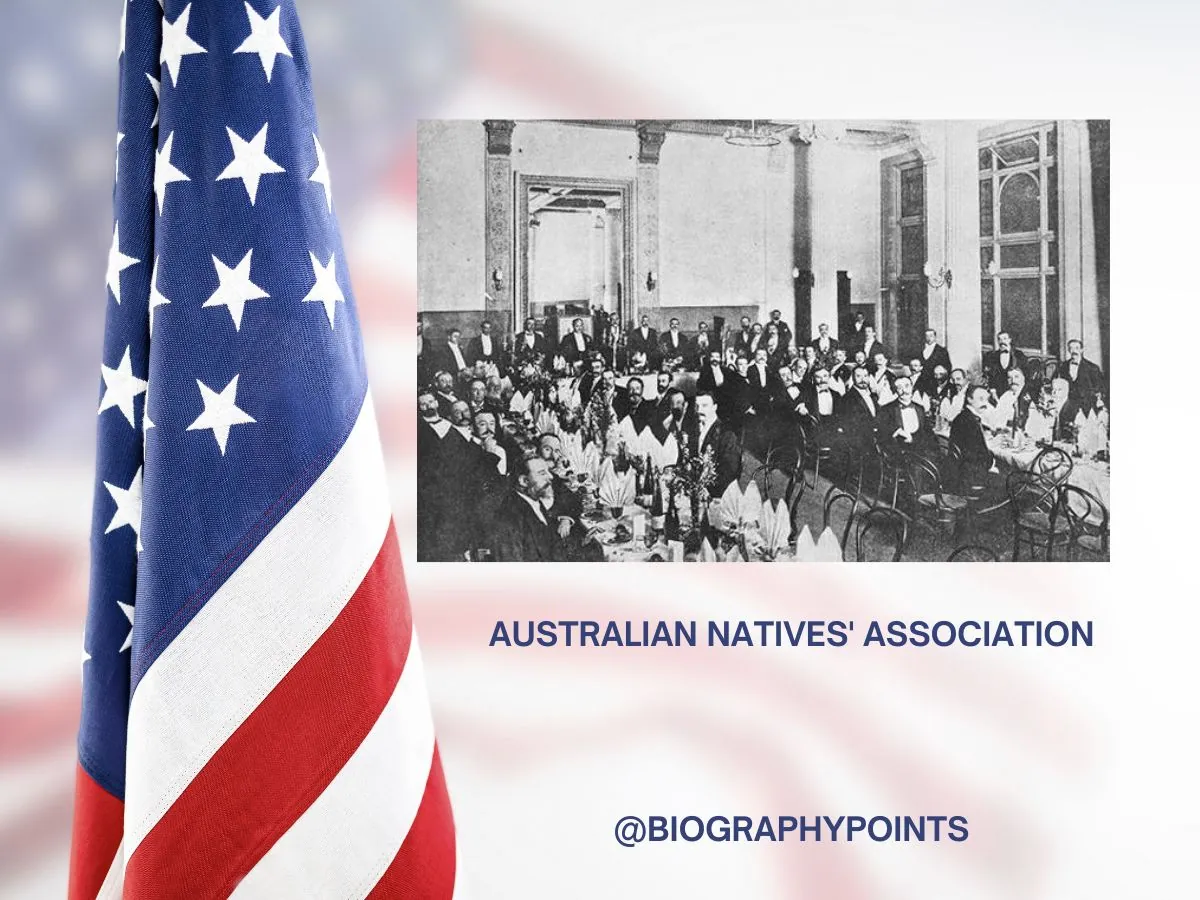
The Australian Natives’ Association (ANA) was established in Melbourne, Australia, in April 1871 as a mutual society. It was exclusively founded by and for the benefit of native-born White Australians, and its membership was strictly limited to this demographic.
The ANA’s core objectives revolved around raising funds through subscriptions and donations to provide support for its members. This support encompassed assisting sick members, covering the expenses associated with members’ funerals and those of their wives, aiding distressed widows and orphans, and managing the Society’s general affairs.
At its zenith, the organization boasted 95,000 members in 1976 and extended benefits to around 250,000 individuals, comprising both members and their families. While the ANA maintained a legal requirement of non-affiliation with any political party, it actively engaged in social initiatives. The ANA was notably supportive of the Federation of Australia, promoted sports, afforestation, social welfare, and advocated for the Federal Government’s controlled immigration policy, later recognized as the White Australia policy.
In 1990, the ANA and Manchester Unity merged to create the entity known as Australian Unity. Subsequent to the merger, the ANA Fraternal organization continued to fulfill its social and educational roles. However, the last remaining branch of the ANA ceased its operations in 2007, marking the end of an era in Western Australia.
Background
The establishment of the Australian Natives Association (ANA) was a complex and multi-stage evolution. Its origins can be traced back to several key factors, including the emergence of the six Australian colonies, the discovery of substantial gold reserves and the prosperity they brought, and the growing number of locally born citizens. These elements set the stage for the birth of the ANA.
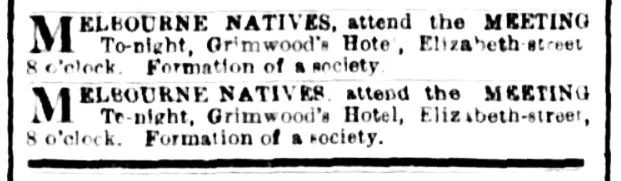
Initially, the primary aim was to create a Friendly Society that would offer support to Melbourne-born citizens in times of illness and adversity. The notion of forming such a society gained momentum among the “Melbourne Natives” who sought to safeguard and advance their interests. To bring this vision to fruition, an invitation was extended to all Melbourne Natives to attend a meeting. This pivotal gathering was scheduled for Monday evening at 8 o’clock and took place at Grimwood’s Hotel on Elizabeth Street.
The meeting marked a crucial step in the formation of the Australian Natives Association, an organization that would go on to play a significant role in promoting the welfare and interests of locally born Australians. It represented a response to the changing social landscape and the desire to provide support and protection to its members in times of need. This early initiative would eventually lead to the establishment of a prominent and influential association, contributing to the unity and progress of Australia’s native-born population.
Victorian Natives' Association
On April 24, 1871, a gathering convened, consisting of 14 individuals, with the shared intention of establishing a Friendly Society of Victorian Natives. This assembly led to the formation of a dedicated committee, and subsequent to a series of committee meetings and another public congregation, the group successfully obtained registration as a Friendly Society on May 4, 1871. It was during the meeting on June 5th that the society’s objectives were unanimously established, primarily focusing on “promoting the social and intellectual betterment of its members.”
This historic assembly marked the inception of an organization committed to the welfare and advancement of its members, fostering social bonds, and facilitating intellectual growth. The society’s core mission was to create a supportive environment where its members could prosper, both personally and intellectually, while collectively contributing to the betterment of the community. Through their dedication and commitment, these 14 individuals laid the foundation for an enduring institution that would go on to serve the interests and well-being of its members and provide a platform for social and intellectual development.
ANA Day
In the late 19th century, the Victorian association proposed the concept of an early version of what we now know as Australia Day, to be observed as a public holiday and the national day on January 26. This initiative was initially called ANA Day in Victoria. However, it took until 1935 for the other Australian states to adopt this idea and officially designate it as Australia Day.
The significance of Australia Day lies in the commemoration of the events of January 26, 1788. On this day, the first permanent white settlers, including Captain Arthur Phillip’s officials, marines, and transported convicts from England, arrived on the shores of Sydney Cove. This historic landing marked a pivotal moment in the nation’s history.
It is important to note that Australia Day does not celebrate the establishment of the Australian Commonwealth, which occurred on New Year’s Day, nor does it mark the commencement of the first Commonwealth Parliament on May 9. Instead, it is a day to honor the arrival of those early settlers who played a crucial role in shaping the nation’s future.
Australian Natives' Association 1872
In 1872, a significant decision was made to expand the membership of the organization to include men born in other Australian colonies. Concurrently, the name of the association was changed to reflect this development. This pivotal moment marked the beginning of the association’s growth and the formation of new branches, primarily in the vicinity of Melbourne.
As the organization expanded, new branches were established, initially in Melbourne and then in the goldfields towns of Ballarat and Sandhurst (now known as Bendigo) in 1874, and later in Neangor (now Eaglehawk) in 1976. It was in 1978 when the Sandhurst branch introduced a motion to allow debates or essays during meetings, following the completion of the business agenda.
The geographical center of the association’s membership shifted to the goldfields towns west of Melbourne, where membership continued to rise. This growth prompted the election of F. C. Wainwright, a member from Ballarat, as the General Secretary in 1881. With the continued expansion and development, it was decided in 1890 to relocate the administration back to Melbourne.
The ANA played a pivotal role in the movement for Australian federation during the last two decades of the 19th century. By 1900, its membership had reached 17,000, with a concentration mainly in Victoria.
One of the key functions of the ANA was to provide support for sickness, medical expenses, and funeral coverage. Membership in the ANA was initially restricted to Australian-born men, reflecting a time when Australian-born individuals of European descent, excluding Indigenous Australians, were increasingly asserting their influence, replacing the older generation born in Britain. This shift in demographics was significant, as, for the first time, native-born Australians became the majority of the population during the 1890s.
Despite its contributions, the organization faced criticism for its name, with objections raised by notable figures such as Aboriginal leader and activist William Cooper, who challenged the appropriation of the term ‘native.’
Former Chief President James Hume Cook outlined “three great principles” of the A.N.A, which included the promotion of a White Australia, support for the Made-in-Australia movement, and efforts to broaden the Commonwealth Constitution. These principles reflected the organization’s commitment to various aspects of Australian society and governance.
Chief Presidents
The policy in question has faced both criticism and praise for its impact on Australia’s financial landscape. On one hand, it has drawn criticism due to concerns of anti-competitiveness. This criticism stems from the perception that the policy shields the four major banks from potential takeover attempts by entities that would be the most probable suitors. This immunity from takeovers has raised questions about the competitiveness of the Australian financial sector and the potential implications for consumers.
However, the policy has also been acknowledged for its role in safeguarding the stability of the Australian financial system during the global financial crisis of 2007–08. By preventing hostile takeovers of major banks, it contributed to maintaining the strength and resilience of these institutions, which played a crucial role in ensuring the overall stability of the country’s financial sector.
Conversely, the major banks themselves have expressed reservations about the policy. They argue that constraining the size and growth of Australian banks can impede their ability to compete on the global stage, potentially limiting their international competitiveness.
In summary, this policy has generated mixed reactions, with concerns about anti-competitiveness countered by its role in protecting the Australian financial system during a period of global economic turmoil. The ongoing debate underscores the complex balance between safeguarding domestic financial stability and encouraging international competitiveness.
New Zealand Natives' Association
In 1880, as discussions about the potential federation of Australian colonies and New Zealand were gaining public attention, there was also consideration of establishing a New Zealand branch of the Australian Natives’ Association (ANA). The idea was met with enthusiasm, and the Victorian ANA Board of Directors explored the possibility of forming branches in Wellington, Westport, and Auckland. However, the attempt encountered significant challenges due to the differing legislation in the two colonies, rendering the legislative hurdles insurmountable.
In response to these obstacles, a distinct and separate organization, known as the New Zealand Natives Association (NZNA), was officially established on April 30, 1897. The Wellington branch of the NZNA experienced substantial growth, with its membership reaching 245 individuals within the first year. At its zenith, the Wellington branch boasted an impressive membership of 2,500 individuals.
Despite the fact that the Australian federation did not include New Zealand in 1900, the New Zealand Natives Association voted to extend membership to Australians. However, the variations in legislation and the limitations of communication technologies at the time made the idea of merging the ANA and NZNA impractical.
In 1904, the Wellington Branch faced significant challenges, leading to its disbandment in June 1905. The Victorian ANA offered its support to address the financial shortfall, ensuring that all creditors were duly compensated. Over the subsequent two decades, several attempts were made to align New Zealand branches with the ANA, but regrettably, all these efforts proved unsuccessful.
Federation
In 1885, the Australian Natives’ Association (ANA) took a resolute stance in favor of the federation of the Australian colonies. This decision was prompted by concerns over the perceived threat of foreign incursion into the Pacific region. Despite its aversion to partisan politics, the ANA found a prominent advocate for the federal movement in Alfred Deakin, a rising liberal politician and ANA member.
The ANA’s dedication to the cause of federation was evident in their membership certificate from 1891, which featured several federation-related symbols. These symbols included the Australian Flag, key words like Prosperity, Unity, Peace, and Federation, a depiction of the world with Australia as a unified entity, the idea of self-sufficiency through successful industry, and the ANA coat of arms adorned with the kangaroo and emu.
During the pivotal year of 1891, as the Victorian Parliament deliberated on the federation bill, the ANA took a proactive role in rallying support for the bill. They organized public meetings across the colony, many of which were addressed by Deakin. Even after the setback of the 1891 bill’s failure, the ANA’s commitment to the federation cause remained unwavering.
Starting in 1893, the ANA played a significant role in supporting the Federation Leagues, offering both organizational and financial backing to the campaign, particularly in Victoria. Following the resurgence of the federation movement in 1897, the ANA championed the referendums needed to approve the proposed constitution. With the achievement of federation in 1901, the ANA shifted its focus away from political activities while continuing to engage in various other initiatives. These endeavors included promoting the celebration of Australia Day, supporting afforestation, advocating for Australian-made goods, championing water conservation, facilitating meaningful citizenship ceremonies amidst post-World War II migration, and endorsing the wattle as the national floral emblem in 1912.
Female Membership
The Australian Natives’ Association (ANA) initially hesitated to admit female members, primarily due to the prevailing belief that men were predominantly the primary breadwinners. However, there were calls for the formation of a Friendly Society similar to the ANA for Australian-born females. This sentiment was voiced at the 1896 Daylesford Conference when the Clifton Hill branch presented a motion instructing the Board to explore the establishment of such a society. At the 1897 Castlemaine Conference, a comprehensive report was presented, indicating that there were 168,757 native-born women between the ages of 15 and 40, with an estimated 109,000 women eligible to join a society. Nevertheless, a motion to admit women into the ANA was defeated.
The 1899 Port Fairy Conference highlighted a significant shift as census data revealed that the number of female primary income earners had risen from 52,243 in 1871 to 114,804 in 1891. In November 1899, the Board expressed support for the creation of a Friendly Society for women. By August 1900, the Constitution and Bye-Laws for this society were approved and officially registered in September.
Subsequently, in November, the Australasian Women’s Association (AWA) was established. The ANA took responsibility for covering all the setup costs of the Association. The ANA and AWA forged a close working relationship and occasionally collaborated on publications that listed key office holders.
In the post-World War II era, changing circumstances and increased federal government involvement in providing social support began to challenge Friendly Societies, including the AWA. Starting in 1955, the ANA initiated measures to enable AWA members to transfer to the ANA, ultimately achieving this goal in 1964. Mrs. I. V. Meagher, a former AWA Chief President, broke new ground by becoming the first woman to serve as Chief President of the ANA in 1977.
White Australia policy
In conjunction with the Returned and Services League, the ANA was among the last Australian organizations to endorse the White Australia Policy. Although this policy was gradually dismantled in the decades following the Second World War and was entirely abolished by 1970, a small number of members continued to advocate for it until the 1970s.
Later years
The ANA maintained its private health fund, building society, general insurance company, and limited life insurance and fund management activities. In 1993, it merged these operations with Manchester Unity IOOF of Victoria, forming Australian Unity, the largest friendly society in Australia in terms of membership.
In 2007, the Mosman Park WA Branch of the ANA ceased its operations. The chapter’s property was sold, and the proceeds were distributed among the remaining 320 members of other groups. The ANA endures through ANA Fraternal, which is an extension of the Metropolitan Committee.
New Australian Natives' Association
The Australian Natives Association (ANA), led by Matthew Grant, asserts on its website that it is a modern-day revival of the ANA. According to its Charter of Principles, the ANA advocates for “the cultivation of an Australian sentiment based on the preservation of European-descent ethnic homogeneity; the development of a self-reliant, ethnocentric community in Australia that coexists with existing institutions; and the promotion of a patriarchal family structure in Australia.” ANA has also expressed concerns about its members feeling isolated among migrants and what it terms as rootless “globetrotters.” It claims to be guiding its community “towards a path of cultural rejuvenation.” The Global Project Against Hate and Extremism (GPAHE) has classified it as a far-right hate and extremist group with an anti-immigrant, white nationalist, and anti-woman ideology.
Australian identity
The ANA argued that an individual of “Aboriginal” heritage cannot be considered Australian because they believe “Australia” as a nation is fundamentally a creation of European origin.
According to their viewpoint, being recognized as an “Australian” is not a matter of residing within this territory; rather, it is intricately tied to the English-speaking European descent communities who settled this land, molding a distinctive cultural and ethnic identity. From their perspective, individuals of Asian, African, or Pacific Islander descent, while they may reside on this soil, can never genuinely identify as Australians. The ANA posits that our sense of identity is intrinsically linked to our historical background, culture, and ancestry.
Views on racial bigotry and Nazism
The ANA, despite its strong advocacy for the revival of the White Australia policy due to concerns about immigration’s “social impacts,” has expressed a viewpoint emphasizing the importance of treating “all individuals (even foreigners) with fundamental respect, unless they demonstrate otherwise.” The organization has made public its opposition to the “imitation” and “embrace” of foreign ideologies, including Neo-Nazism:
Those who mimic foreign symbols, doctrines, and revere foreign figures over our own esteemed history are no longer considered Nationalists. Racialists with good intentions who have moved beyond nationality and ethnicity, aligning more closely with groups like the Klu Klux Klan or Hitler’s Third Reich than with Australia, cannot be reconciled with an Australian-centric perspective. They, along with many others, are products of globalization.


