

Table of Contents
Battle of Cádiz (1587)
The fierce rivalry between England and Spain during Elizabeth I’s reign led Philip II of Spain to plan an armada invasion of England. Through spies employed by her advisor, Sir Francis Walsingham, Elizabeth discovered these plans and ordered a preemptive strike on the Spanish fleet. This daring raid, led by Francis Drake and often called the Battle of Cádiz, took place from April 29 to May 1, 1587. Drake humorously referred to it as the “singeing of the king of Spain’s beard.”
Tensions rose between Protestant England and Catholic Spain under Elizabeth I. English privateers frequently attacked Spanish ships, and England supported Dutch rebels against Spanish rule. In 1587, Elizabeth executed her Catholic cousin, Mary Queen of Scots, for treason, prompting Philip to prepare a large armada to invade England and restore Catholicism. Elizabeth tasked Francis Drake with disrupting Philip’s plans. To ensure Drake’s safe departure on April 12, Walsingham sent a misleading report to the English ambassador in Paris, who was in Spanish pay. This deception allowed Drake to set sail unimpeded. After Drake’s departure, Elizabeth sent a false counter-order to create plausible deniability in case of failure.
Drake and his fleet navigated past the defending galleys into the harbor, quickly sinking a Genoese merchant ship and attacking anchored Spanish ships. The English looted and set them on fire. Spanish defenders managed to seize one isolated English ship during their counterattacks. Despite heavy onshore guns and fireships, the English continued their assaults the next day. Unfavorable winds delayed their departure, forcing them to stay a second night before escaping. Philip II acknowledged the audacity of the raid, noting its significant impact. The destruction of thousands of barrel staves during the raid later contributed to the Spanish Armada’s failure in 1588, as they lacked sufficient barrels for food and drink storage.
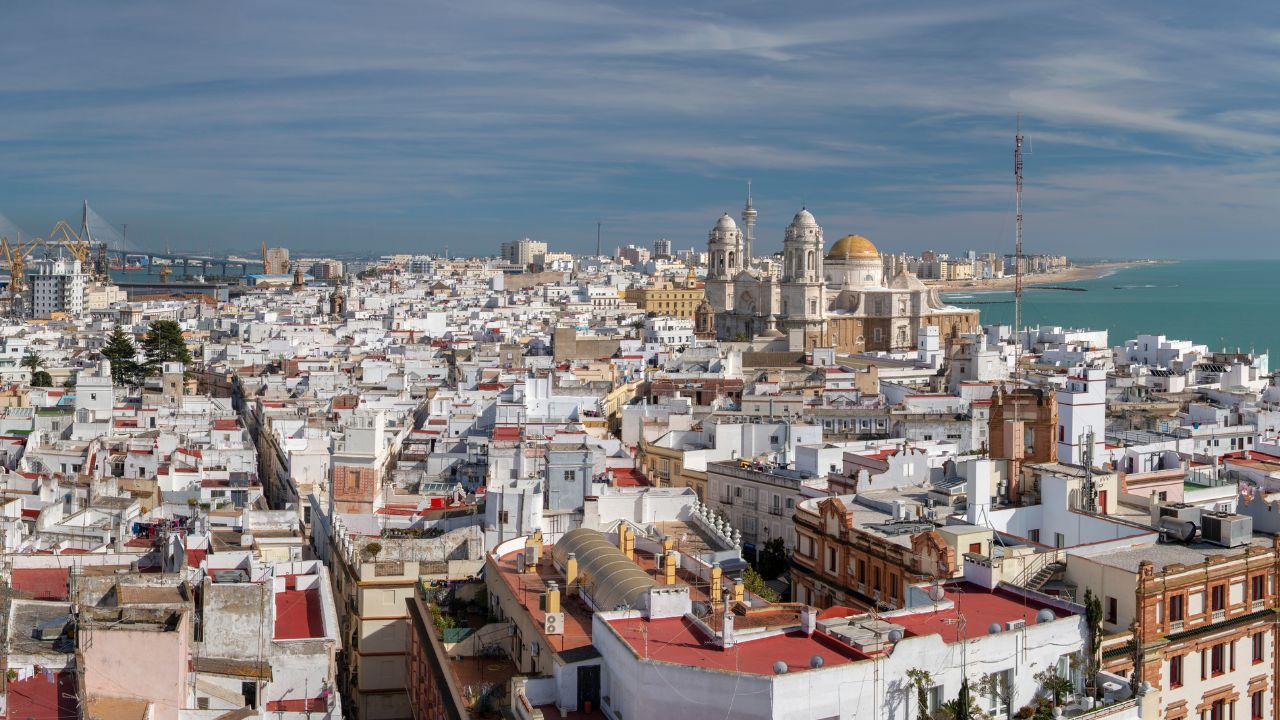
Cádiz, Spain
| Battle of Cádiz | |
| Spanish history 1587 | |
| Date | April 29, 1587 – May 1, 1587 |
| Location | Cádiz, Spain |
| Participants |
|
After the raid, Drake remained off the Spanish coast until early June, harassing Spanish shipping and capturing a carrack loaded with goods from Goa to Lisbon, earning £14,000, while Elizabeth received over £40,000. The expedition proved both financially and strategically successful.
Setting the Stage: The Context of the Battle
In the 1580s, Spain was the preeminent maritime power in Europe, with a vast empire that included territories in the Americas, Asia, and Europe. King Philip II of Spain aimed to consolidate his power and spread Catholicism, which put him at odds with Protestant England, ruled by Queen Elizabeth I. The tension between the two nations was exacerbated by England’s support of the Dutch Revolt against Spanish rule and frequent English privateering against Spanish ships.
Sir Francis Drake's Audacious Raid
In 1587, the Spanish were preparing a formidable armada to invade England and restore Catholicism. Recognizing the threat, Queen Elizabeth I commissioned Sir Francis Drake, an experienced naval commander and privateer, to preemptively strike at the Spanish fleet. Drake’s mission was to disrupt Spanish preparations and weaken their naval capabilities.
Drake set sail with a fleet of around 23 ships and approximately 3,000 men. His target was the port city of Cádiz, a vital Spanish naval base and staging area for the armada. Cádiz was not only a strategic military target but also a wealthy commercial hub, making it a prime target for Drake’s raid.
The Legacy of the Battle
The Battle of Cádiz is remembered as a key moment in the broader conflict between England and Spain. It exemplifies the strategic ingenuity and daring of Sir Francis Drake and underscores the significance of naval power in the 16th century. The raid’s impact was felt for years, influencing subsequent naval engagements and shaping the course of European history.
In conclusion, the Battle of Cádiz in 1587 stands as a testament to the volatility of the period and the intense rivalry between two of Europe’s greatest powers. It was a clash that not only altered the immediate plans of the Spanish but also set the stage for future confrontations that would ultimately redefine the balance of power in Europe.
Statistics
Forces Involved
| Side | Commander | Number of Ships | Number of Men |
| English Fleet | Sir Francis Drake | 23 | ~3,000 |
| Spanish Fleet | Marquis of Santa Cruz | ~40 | ~6,000 |
Ships and Equipment
| Type of Ship | English Fleet (Number) | Spanish Fleet (Number) |
| Galleons | 4 | 12 |
| Supply Ships | 8 | 10 |
| Merchant Ships | 11 | 18 |
| Total | 23 | 40 |
Casualties and Losses
| Category | English Fleet | Spanish Fleet |
| Ships Destroyed | 0 | 37 |
| Men Killed | ~50 | ~1,000 |
| Supplies Lost | Minimal | Significant |
Outcomes
| Aspect | English Fleet | Spanish Fleet |
| Strategic Advantage | Delayed Spanish Armada by 1 year | Significant setback in naval plans |
| Morale | Boosted English morale | Decreased Spanish prestige |
| Long-term Impact | Strengthened English naval power | Contributed to the decline of Spanish maritime dominance |


