Table of Contents
Longnose Hawkfish (Oxycirrhites typus )
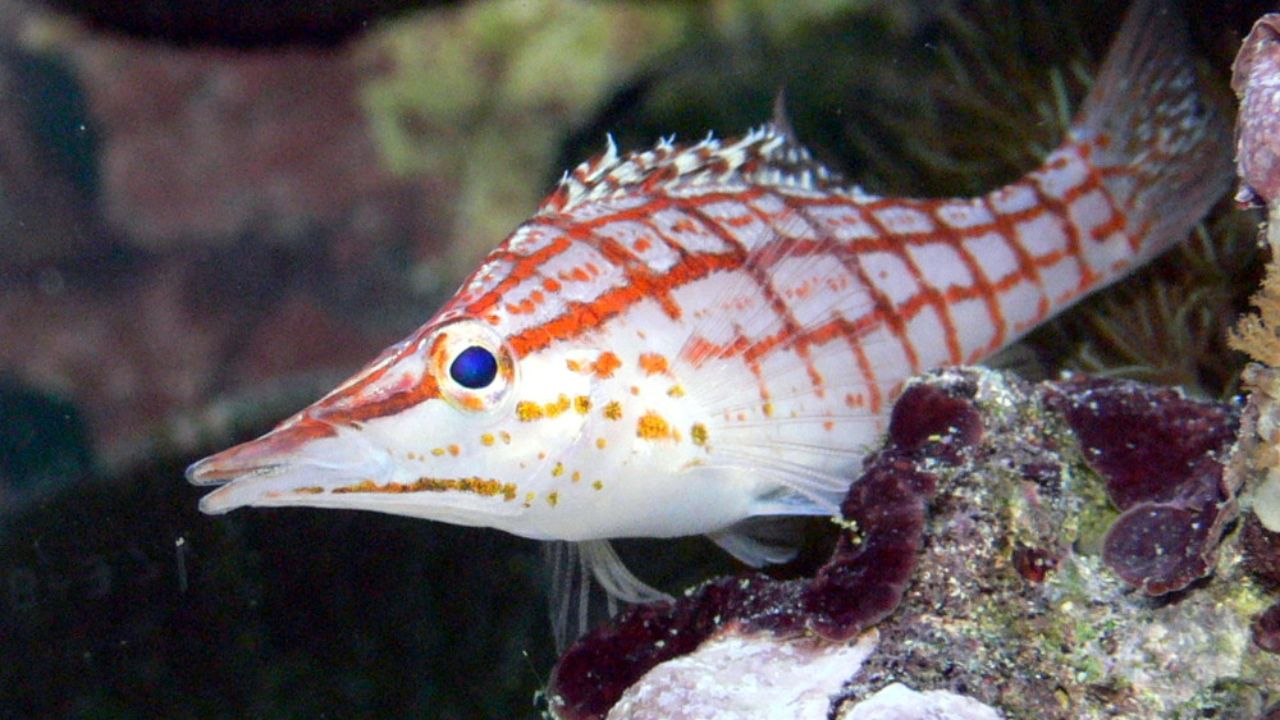
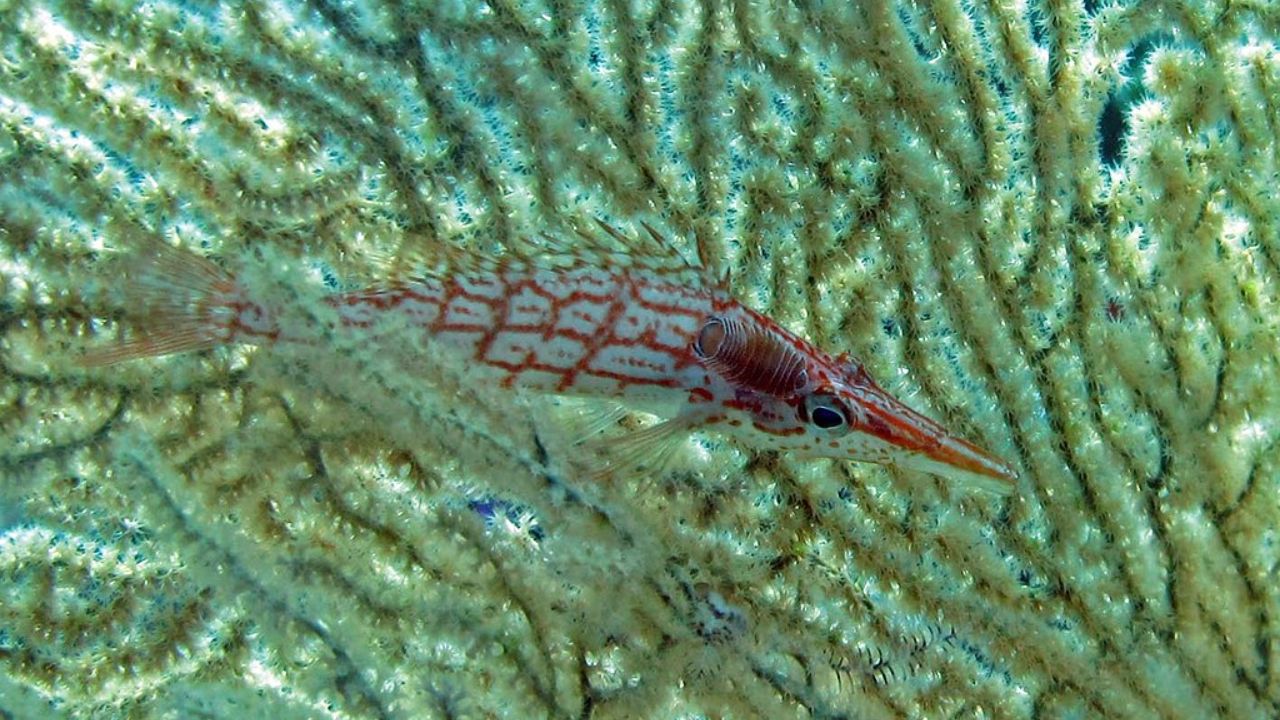
The longnose hawkfish, scientifically known as Oxycirrhites typus, represents a captivating species of marine life, classified within the hawkfish family Cirrhitidae. Inhabiting the vibrant tropical reefs of the Indian Ocean and the Pacific Ocean, this distinctive fish thrives at depths ranging from 10 to 100 meters (33 to 328 feet). It exhibits a predilection for the steep outer slopes of reefs, often cohabiting with striking gorgonians and black corals, creating a picturesque underwater tableau. With a maximum length of approximately 13 centimeters (5.1 inches), the longnose hawkfish showcases an elegant yet compact physique, making it an intriguing subject for both marine enthusiasts and researchers alike. Notably, it holds a significant presence in the aquarium trade, captivating hobbyists with its unique characteristics and behavior. Remarkably, within its taxonomic classification, the longnose hawkfish stands as the sole known representative of its genus, adding to its allure and scientific significance.
Scientific Classification
| Domain | Eukaryota |
| Kingdom | Animalia |
| Phylum | Chordata |
| Class | Actinopterygii |
| Order | Perciformes |
| Family | Cirrhitidae |
| Genus | Oxycirrhites
|
| Species | O. typus |
Biology
The longnose hawkfish, scientifically known as Oxycirrhites typus, was meticulously documented in 1857 by the esteemed Dutch ichthyologist Pieter Bleeker, with Ambon Island in Indonesia serving as its initial designated habitat. Within his taxonomic classification, Bleeker established the monotypic genus Oxycirrhites to encapsulate this distinctive species. The genus name is a fusion of “oxy,” signifying sharpness or pointedness, and “Cirrhites,” an alternative rendition of Cirrhitus, the prototypical genus within the Cirrhitidae family. Furthermore, the specific epithet “typus” highlights its status as the archetype of its genus, a testament to its taxonomic significance and distinctiveness within the realm of marine ichthyology.
Binomial name
Oxycirrhites typus Bleeker, 1857
Description
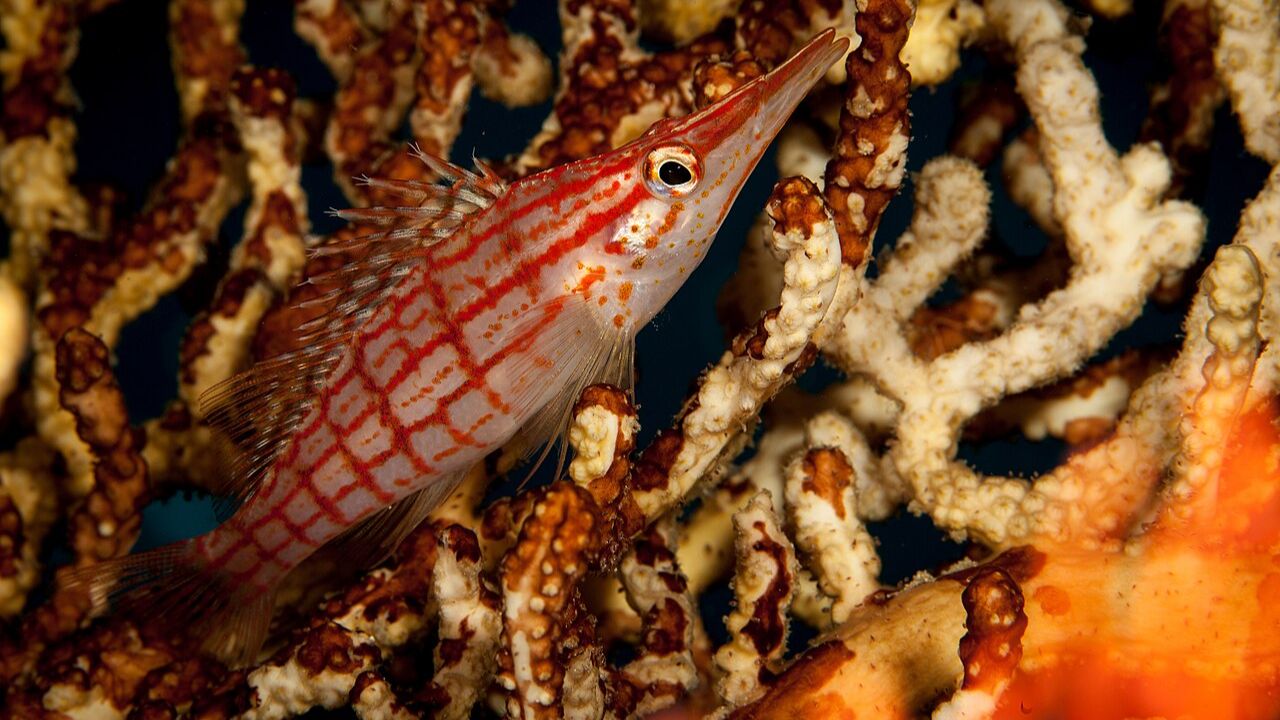
The longnose hawkfish stands out among its hawkfish counterparts primarily due to its elongated snout, a distinguishing feature where the length of the snout is roughly twice that of the head’s overall length. Notably, its jaws boast canine teeth of uniform size, slightly larger than the inner band of villiform teeth, contributing to its predatory prowess. Anatomically, its dorsal fin comprises 10 spines and 13 soft rays, while the anal fin possesses 3 spines and 7 soft rays, showcasing a balanced fin structure tailored for agile movement and precise maneuvering. Despite its modest size, reaching a maximum total length of 13 centimeters (5.1 inches), this fish exudes a remarkable presence, accentuated by tufts of cirri adorning the tip of each dorsal fin spine. Visually captivating, its body dons a whitish hue intricately patterned with a grid of vivid red horizontal and vertical lines, rendering it an enchanting sight amidst the vibrant coral reefs it inhabits.
Distributions and Biology
The longnose hawkfish boasts a vast distribution across the Indo-Pacific region, spanning from the Red Sea through the Indian Ocean, reaching as far east as the Hawaiian Islands and the Society Islands in French Polynesia. In the western Pacific, it extends north to Japan and south to Australia, where it thrives in various locations such as the Scott Reef and the Ashmore Reef in the Timor Sea. Additionally, it is also found in the eastern Pacific Ocean, from the southern tip of Baja California south to Colombia, including the Revillagigedos, Galapagos, Cocos, and Malpelo islands. Typically dwelling at depths ranging from 10 to 100 meters (33 to 328 feet), this species gravitates towards steep outer reef slopes exposed to strong currents, often seeking refuge among expansive gorgonians and black corals.
In terms of biology, the longnose hawkfish sustains itself by preying upon small benthic or planktonic crustaceans. Despite its wide-ranging habitat, it remains uncommon to rare throughout most of its distribution, showcasing a territorial nature that contributes to its elusive presence. During the breeding season, these hawkfish exhibit a fascinating reproductive behavior, forming distinct monogamous pairs as pelagic spawners, adding a layer of complexity to their ecological role within their marine habitats.
Utilisation
The longnose hawkfish holds a prominent presence within the aquarium trade, prized for its captivating appearance and fascinating behavior. Its popularity among aquarium enthusiasts stems from its striking visual features, including its elongated snout and vibrant coloration. Moreover, its relatively manageable size and adaptability to captive environments make it a desirable addition to marine aquariums worldwide. Beyond its aesthetic appeal, keeping longnose hawkfish in aquariums also provides an opportunity for enthusiasts to observe its natural behaviors up close, contributing to education and appreciation for marine life conservation. However, it’s crucial for aquarium owners to ensure responsible sourcing practices and provide appropriate care to maintain the health and well-being of these fascinating creatures in captivity.