Table of Contents
Pobiti Kamani
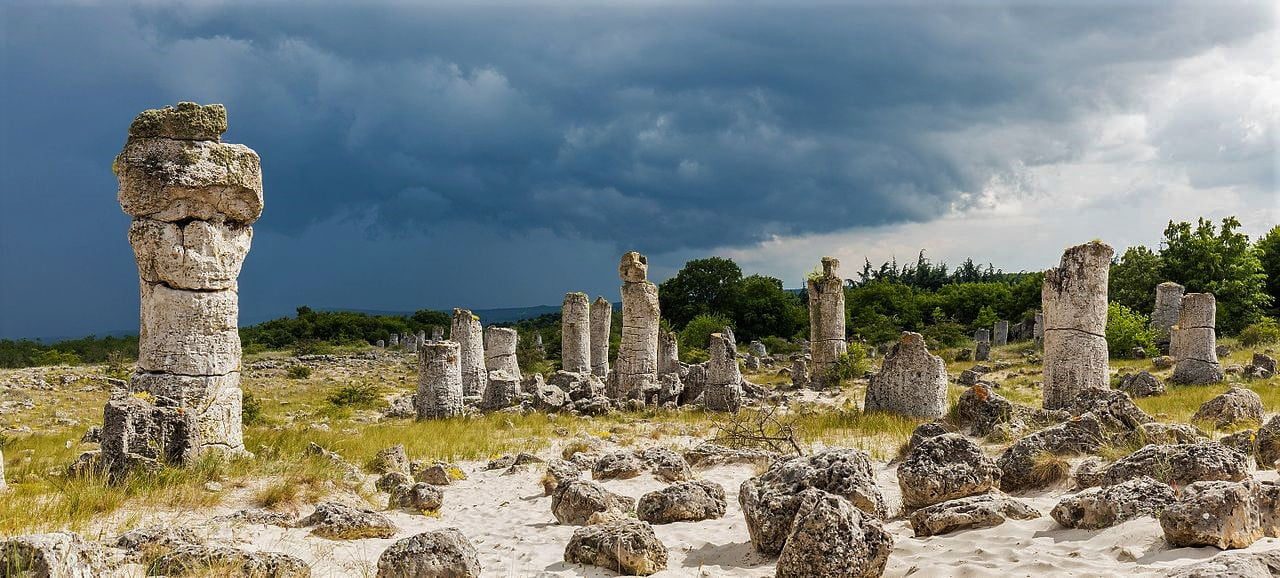
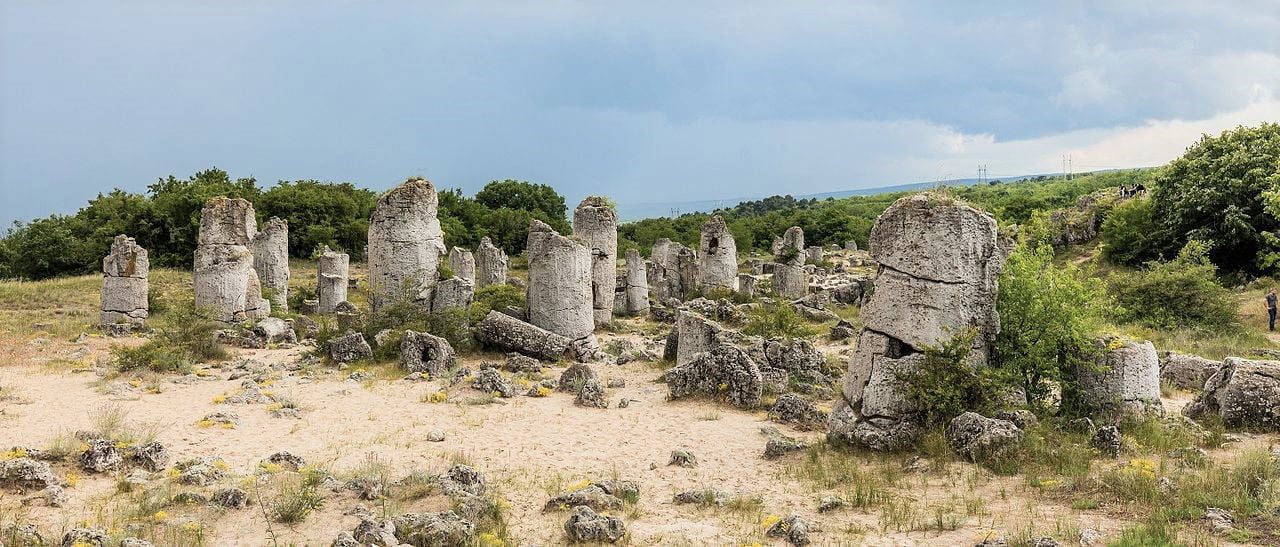
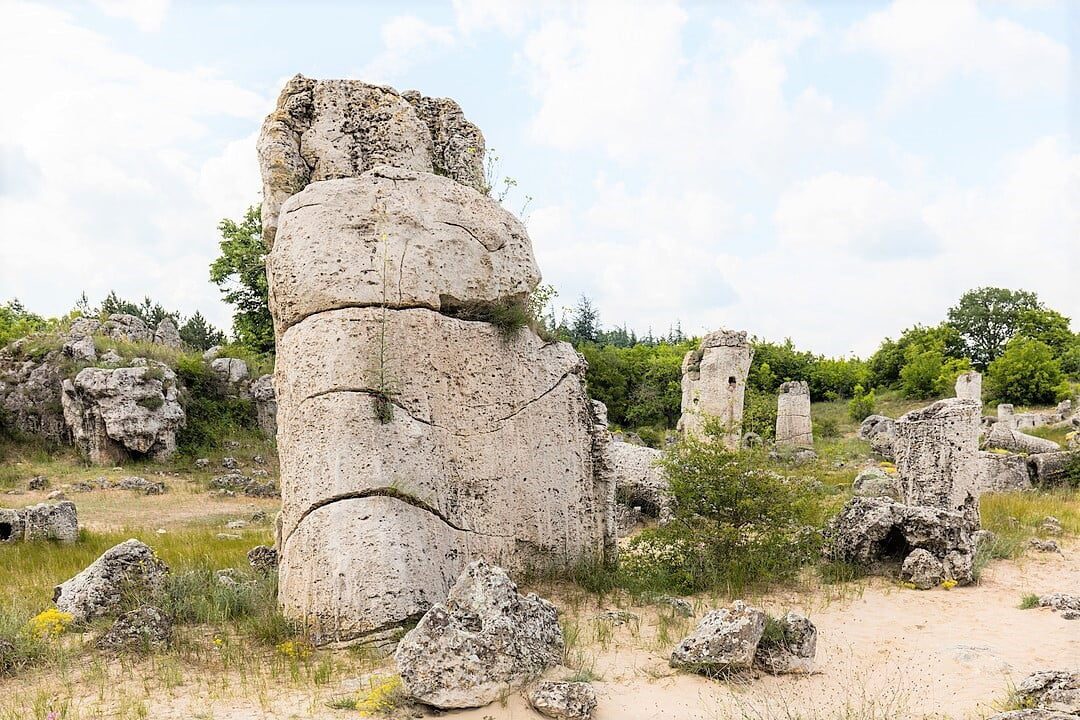
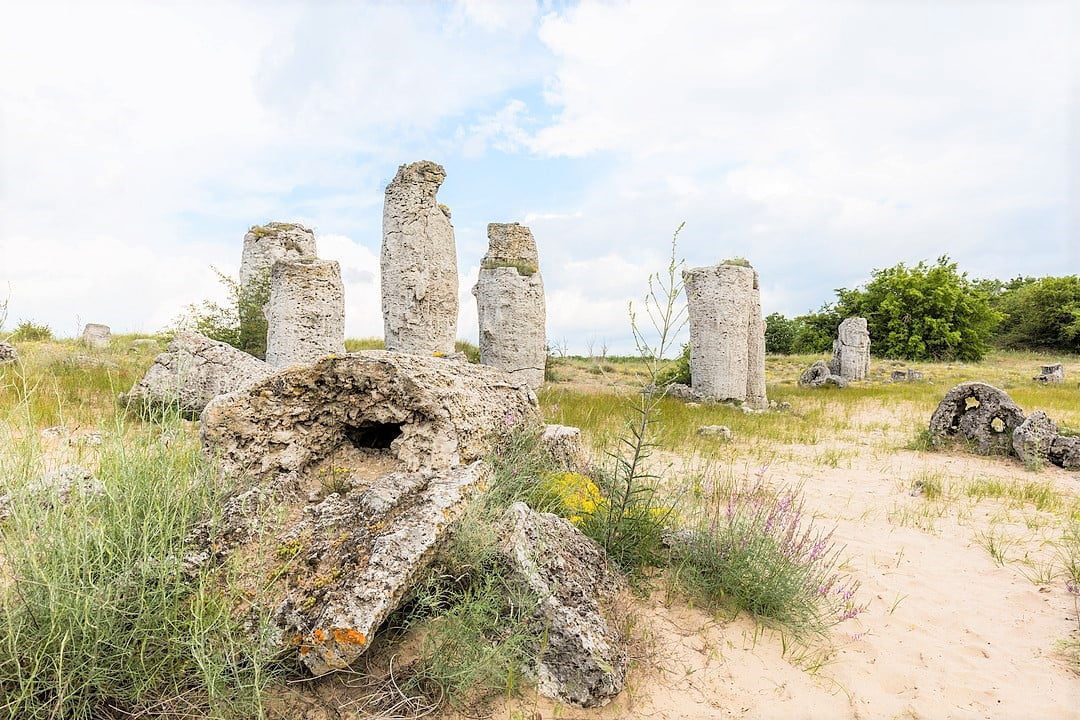
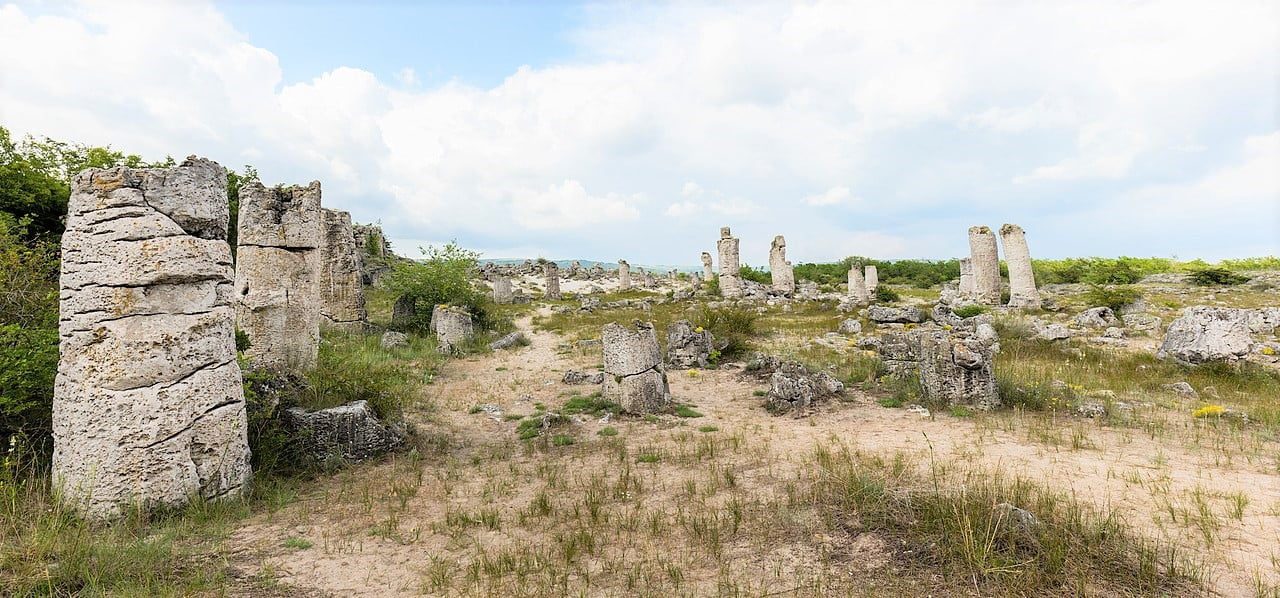
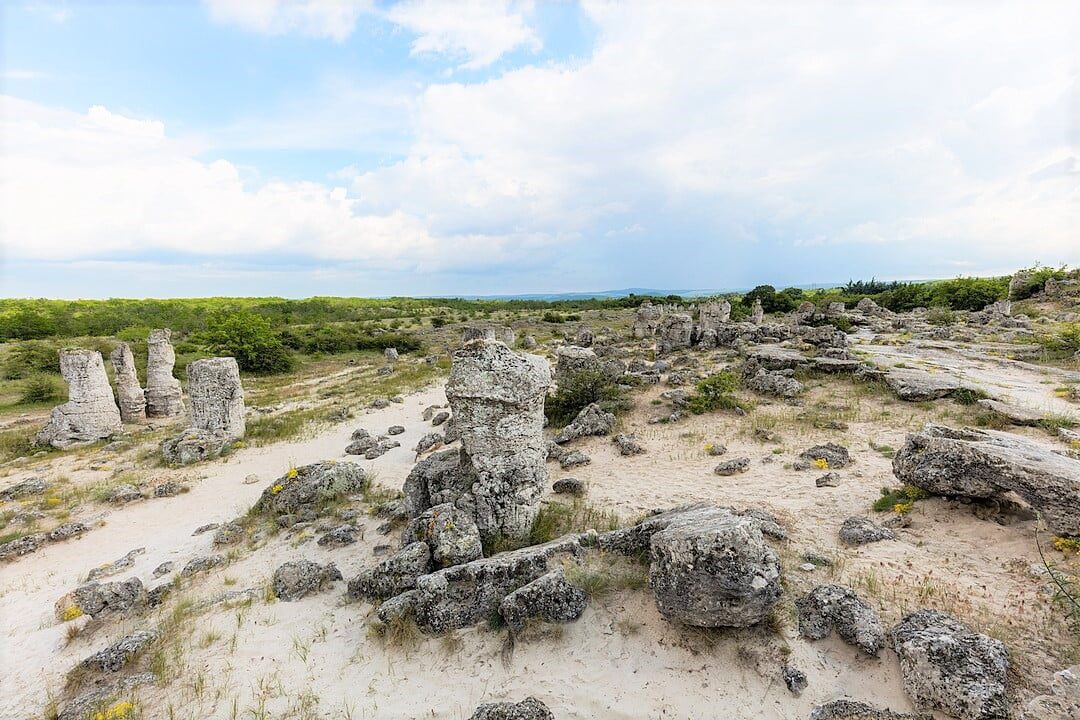
Pobiti Kamani, a mesmerizing geological wonder with the literal translation of “planted stones” in Bulgarian, stands as a testament to the remarkable forces that shape our world. Nestled on the boundary of Bulgaria’s northwestern Varna Province, this desert-like expanse of rock formations has captivated the attention of scientists and nature enthusiasts alike.
Pobiti Kamani
| Pobiti Kamani | |
| The Stone Desert | |
| Location | Varna Province, Bulgaria |
| Nearest City | Aksakovo |
| Coordinates | 43°13′35″N 27°42′24″E |
| Total Area | 13 sq km (5 sq mi) |
| Area | Protected area in Bulgaria |
A Historical Unveiling
The curtain was first lifted on these intriguing stone pillars by the perceptive eyes of Russian archaeologist and historian Victor Teplyakov in 1829. Recognizing their uniqueness and scientific value, Pobiti Kamani was officially designated as a natural landmark during the late 1930s, securing its protection for generations to come.
Theories That Ponder
As one gazes upon these peculiar formations, curiosity naturally turns to their origin. Theories abound, converging into two overarching categories: the proponents of an organic genesis and those advocating an abiotic birth. The former posits that coral activity played a pivotal role, a notion subsequently debunked by meticulous investigation. In contrast, the abiotic explanation attributes the phenomenon to intricate processes encompassing prismatic weathering, rock desertification, the emergence of sand and limestone concretions, or even the creation of bubbling reefs during the lower Eocene era.
A Glimpse into Earth's History
Delving deeper, the layers of scientific inquiry unveil a fascinating narrative. A synthesis of petrographic scrutiny, stable isotope geochemical analysis, and on-site observations points to an extraordinary revelation. These structures serve as an invaluable archive of a paleo-hydrocarbon seep system, a hidden chronicle etched in stone. Low-magnesium calcite cements, characterized by a pronounced depletion in the heavy carbon isotope 13C, act as markers of fluid pathways immortalized as columns entwined within the sands. Erosion, a patient sculptor, has laid bare these columns, sculpting a desert-like panorama that speaks of ancient dynamics.
Beyond the Stones
Pobiti Kamani sprawls across an impressive expanse spanning 8 km (5.0 mi) in length and 3 km (1.9 mi) in width, a testament to nature’s grandeur. Divided into seven distinctive groups of stone pillars, each carries its story. “Dikilitash,” the focal group, boasts a congregation of over 350 stones, a silent testament to the eons that shaped them. “Strashimirovo,” another group, stands as a striking example, with its rows of stones marked by an intriguing “bulging” at their core.
An Illusion Beyond Earth
The narrative of Pobiti Kamani extends even further, touching upon the realm of human imagination and the power of misinformation. In September 2020, the world witnessed an intriguing incident as an altered image of these stone formations, drenched in hues of red, circulated across social media platforms. False claims accompanied the image, declaring it to be an “original NASA photo of Mars.” This episode serves as a reminder of the awe-inspiring resemblance that Earth’s natural wonders can bear to distant celestial bodies.
In the heart of Bulgaria, Pobiti Kamani continues to stand, a living testament to the forces that have shaped our planet’s history. Amidst its stone pillars, science and wonder converge, offering a glimpse into the profound mysteries that lie beneath the surface.
Pobiti Kamani Gallery - FAQ
What is Pobiti Kamani?
Pobiti Kamani, also known as the Stone Forest, is a natural phenomenon in Bulgaria. It consists of large stone columns, some as tall as 6 meters, created by the forces of nature and resembling a forest made of stone.
Is there a desert in Bulgaria?
Bulgaria does not have a true desert landscape typical of what you might find in Africa or the Middle East. However, it does have semi-arid regions that might resemble desert-like conditions to some.
Where is Pobiti Kamani?
Pobiti Kamani is located in Varna Province in Bulgaria, roughly 18 kilometers west of the city of Varna.
Where is the stone desert?
The term “stone desert” can refer to various locations, but often it describes the Pobiti Kamani area in Bulgaria, known for its desert-like appearance and rocky formations.
Why is Bulgaria famous?
Bulgaria is famous for its rich history, diverse culture, beautiful landscapes ranging from mountains to beaches, and its production of rose oil, which is used extensively in perfumery.
Is Bulgaria in Asia or Europe?
Bulgaria is located in southeastern Europe. It is a part of the Balkans and borders five other countries: Romania, Serbia, Macedonia, Greece, and Turkey.
What is a desert?
A desert is a barren area of landscape where little precipitation occurs and consequently living conditions are hostile for plant and animal life.
What is a stone desert?
A stone desert, also known as a rocky desert, is a type of desert where the landscape is dominated by rock and stone formations instead of sand.
What is desert stone used for?
Desert stones are often used in landscaping and building materials due to their durability and natural beauty. They can also be found in various decorative arts and crafts.
Is Bulgaria a rich or poor country?
Bulgaria is considered a developing country with an economy that ranks lower in wealth compared to much of Europe. It faces challenges like corruption and a need for investment in public services.
What is Bulgaria rich in?
Bulgaria is rich in natural resources such as copper, gold, bauxite, coal, and timber. It also has a vibrant agricultural sector and is famous for its rose oil and wine production.
What language is spoken in Bulgaria?
The official language of Bulgaria is Bulgarian. It belongs to the South Slavic group of languages and uses the Cyrillic script.
Do I need a visa to visit Bulgaria?
Whether you need a visa to visit Bulgaria depends on your nationality. Citizens of the EU, the USA, Canada, and Australia, among others, do not usually need a visa for short visits.
Is Bulgaria a good place to live?
Bulgaria offers a relatively low cost of living, beautiful landscapes, and a moderate climate, making it a popular destination for expats. However, it also poses challenges like lower average incomes and less efficient public services compared to Western Europe.
Is Bulgaria in the euro?
As of the latest updates, Bulgaria is not in the Eurozone; the country uses its own currency, the Bulgarian Lev.
Which is the 7th largest desert in the world?
The seventh-largest desert in the world is the Gobi Desert, located in northern China and southern Mongolia.
What is the hottest desert in the world?
The hottest desert in the world is the Lut Desert in Iran, known for some of the highest recorded temperatures on the planet.
What is the largest desert in the world?
The largest desert in the world is the Antarctic Desert, covering the continent of Antarctica with its cold desert climate.
What is called a rocky desert?
A rocky desert, also known as a hamada, is a type of desert landscape characterized by large stretches of bare rock and very little sand or vegetation.
What are the 4 types of desert?
The four main types of deserts include hot and dry deserts, semi-arid deserts, coastal deserts, and cold deserts.
What are the 5 types of desert?
The five types of deserts can be classified as hot and dry, semi-arid, coastal, cold, and polar, based on their specific climatic conditions and locations.
Where is stone found in the world?
Stone can be found virtually everywhere in the world. From mountain ranges to riverbeds and vast desert landscapes, stone is one of the most common natural materials on Earth.
Is there stone in the desert?
Yes, many deserts around the world have significant amounts of stone either on the surface or forming their substructure, contributing to the desert landscape.
Where is the location of deserts in the world?
Deserts are typically located in areas where rainfall is scarce. They can be found on every continent, with major examples including the Sahara in Africa, the Gobi in Asia, and the Mojave in North America.
Does the desert have stone?
Yes, deserts often have large quantities of stone, ranging from loose gravel to massive rock formations.
How is stone formed on Earth?
Stone is formed through a variety of geological processes including volcanic activity, sedimentation, and metamorphism, which compress and solidify minerals over thousands to millions of years.
Who is the first stone in the world?
The concept of the “first stone” does not apply in geology as stones have been formed continuously throughout Earth’s history. There is no identifiable first stone.
Where is the largest stone in the world?
The largest stone monolith in the world is commonly considered to be Uluru (Ayers Rock) in central Australia, a massive sandstone formation.
Why is it called Death Valley?
Death Valley was named so by prospectors and other travelers during the California Gold Rush who crossed the valley and found it extremely harsh and challenging due to its dry, hot conditions.
What is rare in desert?
In deserts, water is the rarest and most valuable resource due to the extremely low precipitation levels typical of such regions.
What is desert rock called?
Desert rock, also known as “desert varnish,” is typically composed of very hard, weather-resistant rocks like granite or basalt. These rocks can also be coated by manganese and iron oxides, giving them a distinctive color.
Which country is full of desert?
Countries like Saudi Arabia, Namibia, and Mongolia are known for having significant desert landscapes covering large portions of their territory.
What creates a desert?
Deserts are created by a combination of low rainfall, high evaporation rates, and occasionally, the rain shadow effect caused by nearby mountain ranges.
Which is the 2nd largest desert in the world?
The second-largest desert in the world is the Arctic Desert, located in the Arctic regions surrounding the North Pole.
How deep is a desert?
Deserts can vary in depth depending on the geological features present. Sand dunes in deserts like the Sahara can be hundreds of meters deep.
Is a desert man-made?
Most deserts are natural landscapes formed by Earth’s climatic patterns. However, some desertification can be induced or exacerbated by human activities like deforestation and improper land management.
What are the 4 types of deserts?
Reiterating, the four types of deserts based on climatic conditions are hot and dry, semi-arid, coastal, and cold deserts. Each type has its unique characteristics and ecosystems.