

Table of Contents
Kara or Kada (Jewellery)
The “Kara or Kada” is more than just a piece of jewellery; it holds deep cultural and spiritual significance. Originating from the Indian subcontinent, this circular bangle is worn by people of various faiths and communities, particularly in Sikhism and Hinduism. The Kada is a symbol of eternity, unity, and strength, reflecting the rich heritage and traditions of those who wear it.
The history of the Kada dates back several centuries. It is believed to have originated in ancient India, where it was initially worn as a protective amulet by warriors. The circular shape of the Kada, with no beginning or end, symbolizes the eternal nature of God and the oneness of the universe.
In Sikhism, the Kara or Kada holds profound significance. Guru Gobind Singh, the tenth Sikh Guru, introduced the Kada as one of the five Kakars (articles of faith) that baptized Sikhs (Khalsa) must wear. The Kada is made of steel or iron, symbolizing strength and integrity. It serves as a constant reminder to the wearer of their commitment to the teachings of the Gurus and their duty to uphold righteousness.
In Hinduism, the Kara or Kada is often worn during religious ceremonies and rituals. It is believed to bring good fortune and protect the wearer from negative energies. The bangle is also associated with various deities and is considered a symbol of divine power and protection.
India
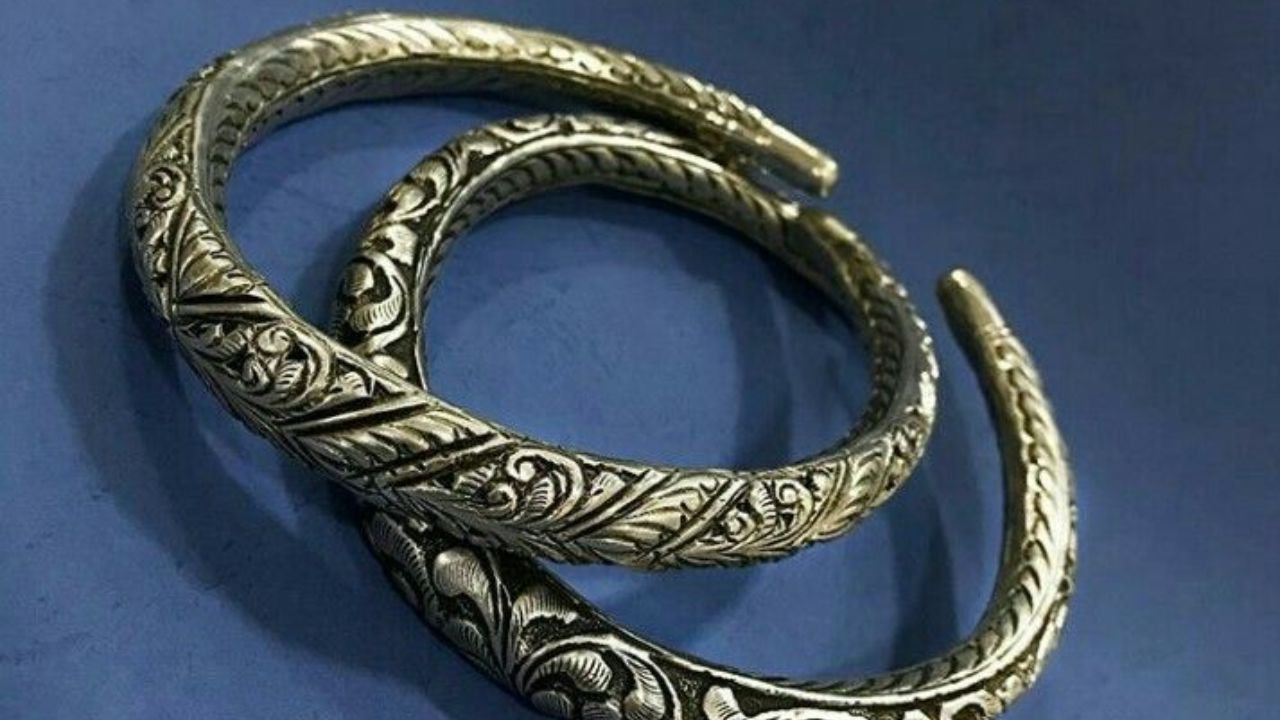
| Kara or Kada (History) | |
| 17th century | |
| jewellery | Kara or Kada |
| Origin | Ancient India |
| Historical Use | Initially worn as a protective amulet by warriors |
| Symbolism | Circular shape symbolizes eternity and unity |
| Significant Religion | Sikhism and Hinduism |
| Sikhism | Introduced by Guru Gobind Singh as one of the five Kakars (17th century) |
| Sikhism Material | Typically made of steel or iron, symbolizing strength and purity |
| Hinduism | Worn during religious ceremonies for protection and good fortune |
History
The Kada has a rich historical background, tracing its roots to ancient India. Initially, it served as a protective amulet for warriors, safeguarding them in battles and symbolizing their valor and strength. The unbroken circular design of the Kada, representing eternity and unity, reflected the infinite nature of the universe and the divine.
In Sikhism, the Kada was formalized as a religious symbol by Guru Gobind Singh, the tenth Sikh Guru, in the late 17th century. He introduced it as one of the five Kakars, essential articles of faith for baptized Sikhs. The steel or iron Kada was chosen to symbolize strength, purity, and the wearer’s commitment to righteousness and the teachings of the Sikh Gurus.
Hindu traditions also hold the Kada in high regard, often associating it with divine protection and good fortune. It is commonly worn during religious rituals and ceremonies, believed to ward off negative energies and bring prosperity. The Kada’s association with various deities further elevates its spiritual significance, making it a revered accessory in Hindu culture.
Over the centuries, the Kada has transcended its religious and cultural origins to become a symbol of heritage and identity. In modern times, it is embraced not only for its spiritual meaning but also as a fashion accessory, appreciated for its aesthetic appeal. Crafted from various materials and adorned with intricate designs, the Kada continues to be a cherished piece of jewelry, blending tradition with contemporary style.
Sikhism and the Kada
In Sikhism, the Kada holds profound significance. Guru Gobind Singh, the tenth Sikh Guru, introduced the Kada as one of the five Kakars (articles of faith) that baptized Sikhs (Khalsa) must wear. The Kada is made of steel or iron, symbolizing strength and integrity. It serves as a constant reminder to the wearer of their commitment to the teachings of the Gurus and their duty to uphold righteousness.
Hinduism and the Kada
In Hinduism, the Kada is often worn during religious ceremonies and rituals. It is believed to bring good fortune and protect the wearer from negative energies. The bangle is also associated with various deities and is considered a symbol of divine power and protection.
Cultural Significance
The Kada is not just a religious symbol; it is also a cultural artifact that represents identity and heritage. In Punjab, the Kada is an essential part of traditional attire for both men and women. It is commonly worn alongside other ornaments like the Kara and the Patiala necklace.
For Sikhs, the Kada is a daily reminder of their faith and the values of humility, honesty, and equality. It is worn on the wrist to signify the bond between the individual and the divine, serving as a constant reminder to perform good deeds and maintain moral conduct.
Modern-Day Relevance
In contemporary times, the Kada has transcended its religious and cultural origins to become a popular fashion accessory. It is now worn by people of different backgrounds around the world, appreciated for its aesthetic appeal and symbolic meaning. Jewelers craft Kadas in various materials, including gold, silver, and stainless steel, often embellishing them with intricate designs and precious stones.
The modern Kada blends tradition with style, making it a versatile piece of jewelry. Whether worn as a statement piece or a subtle accessory, the Kada continues to embody the timeless values of strength, unity, and eternal love.


