Table of Contents
SAG-AFTRA (Sag Aftra)
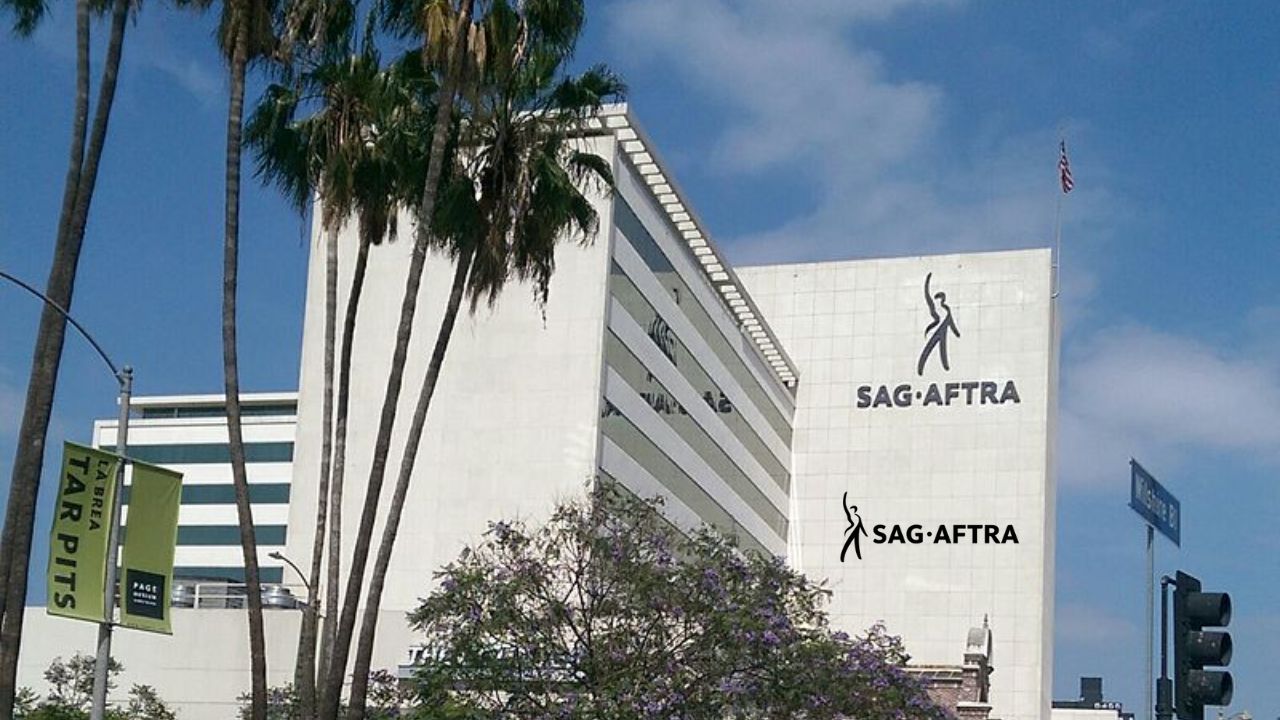
The Screen Actors Guild-American Federation of Television and Radio Artists (SAG AFTRA), pronounced /sæɡˈæftrə/ sag-AF-trə, is a labor union in the United States formed by the 2012 merger of SAG (the Screen Actors Guild) and AFTRA (the American Federation of Television and Radio Artists). It represents around 160,000 media professionals globally and is affiliated with the AFL-CIO, the largest federation of unions in the United States. Additionally, SAG AFTRA holds membership in the International Federation of Actors (FIA). The union is headquartered in Los Angeles, California, and New York City, with additional local offices across the country.
History
The organization came into being on March 30, 2012, following the consolidation of the Screen Actors Guild and the American Federation of Television and Radio Artists. According to Variety’s report in January 2013, the merger progressed relatively smoothly, marked by displays of goodwill from both sides. However, the most challenging issue that remained was the integration of the two pension funds, particularly concerning performers who had contributed to both plans but fell short of qualifying for a pension under either.
SAG AFTRA’s main offices are situated in Los Angeles, California, and New York City, with additional local branches spread across the nation.
Radio Years
Inspired by the passage of the National Labor Relations Act by Congress in 1935, radio artists in Los Angeles united to establish the Radio Actors Guild. Concurrently, Broadway actor George Heller advocated for the protection of radio artists by lobbying the Actors’ Equity Association in New York, leading to the inception of Radio Equity as a subsidiary of Actors’ Equity.
On August 16, 1937, the American Federation of Radio Artists (AFRA) was founded, supplanting Radio Equity and the Radio Actors Guild. The Associated Actors and Artistes of America (Four As) granted a charter to this new union, which boasted 400 members across two locations. Following New York and Los Angeles, Chicago, a hub for “soap opera” production, swiftly formed its own local chapter. By December 1937, AFRA’s membership exceeded 2,000 individuals.
On July 12, 1938, buoyed by the endorsement of radio luminaries such as Eddie Cantor, Edgar Bergen, Jack Benny, and Bing Crosby, AFRA members successfully negotiated the first nationwide collectively bargained agreement—with NBC and CBS—resulting in a remarkable 125% wage hike. By 1939, within a mere two years, AFRA had secured collective bargaining agreements covering 70% of live radio broadcasts.
In 1941, AFRA members negotiated the Transcription Code, which facilitated the production of programs recorded for later broadcast while incorporating cost-of-living adjustments into contracts.
SAG AFTRA

Screen Actors Guild-American Federation of Television and Radio Artists
Founded
Type
Tax ID no.
Legal status
Headquarters
Location
President
Executive Director
Subsidiaries
Staff (2018)
Volunteers (2018)
Website
March 30, 2012
Trade union
45-4931719
501(c)(5) organization
Los Angeles, California, U.S.
United States
Fran Drescher
Duncan Crabtree-Ireland
Screen Actors Guild Awards
664
1,150
Merger
- Screen Actors Guild
- American Federation of Television and Radio Artists
Members
- 116,741 (active; 2016)
- 80,440 (other; withdrawn/suspended; 2014)
Affiliations
- Associated Actors and Artistes of America
- AFL–CIO
- International Federation of Actors
- International Federation of Journalists
Television Years
On April 16, 1950, a dispute over television performers’ jurisdiction led to the formation of the Television Authority (TVA) by several unions in the entertainment industry, including Chorus Equity, the American Guild of Variety Artists, the Associated Actors and Artistes of America, the American Guild of Musical Artists, and Actors’ Equity Association. The TVA negotiated the first network television contract in December of that year. By April 23, 1951, six Los Angeles TV stations had signed contracts certifying the Television Authority as their performers’ sole union representative. In 1951, the goal set forth at the 1947 National Convention was achieved as AFRA negotiated the first Phonograph Recording Code for singers with major recording labels.
On September 17, 1952, the Television Authority and AFRA merged to form a new union: the American Federation of Television and Radio Artists (AFTRA), with George Heller as its inaugural head. SAG AFTRA boasted nearly 10,000 members at its inception. In 1954, AFTRA negotiated the AFTRA Pension and Welfare Plan (later known as the AFTRA Health and Retirement Funds), the industry’s first benefit package, which was subsequently incorporated into other agreements. By the mid-1950s, advancements in videotape technology allowed for the broadcast of pre-recorded programs, leading AFTRA members to negotiate the first-ever formula for payments for replays of performances. This paved the way for residuals and syndication throughout the television industry. In 1960, AFTRA and Screen Actors Guild (SAG) members conducted their first joint negotiations on television commercials.
In 1967, AFTRA members initiated the union’s first national strike on March 29, 1967, following breakdowns in negotiations over staff announcer contracts at owned-and-operated stations in New York, Chicago, and Los Angeles, as well as first-time contracts for “Newsmen” at networks and owned-and-operated stations. The strike involved all 18,000 members in over 100 locations across the country for 13 days until an agreement was reached on April 10, 1967, just in time to allow the live broadcast of the annual Academy Awards program from the Santa Monica Auditorium. In 1974, a challenge to AFTRA’s union shop agreements for news broadcasters by William F. Buckley failed as the US Supreme Court declined to review the case. AFTRA and SAG members jointly negotiated the contract covering primetime dramatic programming on major television networks for the first time. In 1978, AFTRA and SAG members embarked on only the second national strike in AFTRA’s history, striking advertising agencies and national advertisers over the jointly negotiated Commercials Contracts.
Screen Actors Guild Awards
The Screen Actors Guild Awards, commonly known as the SAG Awards, were established in 1995 to honor outstanding performances in both film and prime time television. Alongside the Golden Globe Awards and the Oscars, the SAG Awards have become a prominent event within the Hollywood industry. They recognize individual performances as well as the collective efforts of drama and comedy series ensembles, as well as motion picture casts.
The inaugural SAG Awards were broadcast live on February 25, 1995, from Universal Studios’ Stage 12. Subsequent ceremonies were held at various venues, including the Santa Monica Civic Auditorium and the Shrine Auditorium. In December 2017, it was announced that the awards show would have its first-ever host, actress Kristen Bell, marking a historic moment in its then twenty-four-year history.
As of 2023, “Shakespeare in Love” remains the sole film to have received nominations in all four acting categories and the ensemble award. Similarly, “Everything Everywhere All at Once” stands out as the only film to have clinched four awards, including the ensemble accolade.
The coveted statuette, nicknamed “The Actor,” depicts a nude male figure holding masks of comedy and tragedy. Crafted from solid bronze by the American Fine Arts Foundry in Burbank, California, it stands at 16 inches tall and weighs over 12 pounds.
Composition
SAG AFTRA boasts a diverse membership encompassing actors, announcers, broadcast journalists, dancers, disc jockeys, news writers, editors, program hosts, puppeteers, recording artists, singers, stunt performers, voiceover artists, and various other media professionals.
Securing membership in SAG AFTRA is often seen as a milestone for newcomers in the entertainment industry. Typically, it’s attained upon securing their inaugural position in a studio covered by a collective bargaining agreement with the union. SAG AFTRA affiliated work holds a significantly higher regard than non-union roles. Given the union’s considerable size and influence, the majority of major media companies have agreements with SAG AFTRA via the Association of Motion Picture and Television Producers. While these studios aren’t closed to non-union workers, they generally prioritize hiring union members.
The vast majority of actors and media professionals employed by medium to large American media companies are unionized. Based on SAG AFTRA’s Department of Labor records, a consistent portion—around a third—of the union’s total membership has been labeled as “withdrawn,” “suspended,” or otherwise categorized as non-“active” members since its inception. Among these, the largest subset is “honorable withdrawals,” comprising 20% of the membership or 46,934 individuals, followed by “suspended payment” members at 14% or 33,422 members. This classification system aligns with the one used by the Screen Actors Guild rather than that of SAG AFTRA.
Divisions within the Union
Within the union, there’s a notable division perceived to consist of two factions. The predominant group, known as “United for Strength,” emphasizes its commitment to generating employment opportunities for members. In contrast, the other faction, “Membership First,” has voiced disapproval of the current leadership, accusing them of hastiness and leniency in negotiations with studios.
Notable Strikes and Boycotts
Global Rule One
Global Rule One stipulates that SAG AFTRA members must only engage in work under a union contract worldwide. This rule mandates that no member should provide services or agree to do so for any employer lacking a valid and active basic minimum agreement with the union, in any jurisdiction covered by a SAG AFTRA national collective bargaining agreement. In essence, SAG AFTRA members are required to work exclusively under union contracts regardless of location. Formal “do not work” orders are issued to designate productions that have failed to comply with the necessary agreements.
2016–2017 Video Game Voice Actor Strike
Following approximately a year and a half of negotiations, SAG AFTRA initiated a strike on October 21, 2016, against eleven American video game developers and publishers, including notable names like Activision, Electronic Arts, Insomniac Games, Take 2 Interactive, and WB Games. The strike was prompted by prolonged negotiations beginning in February 2015 aimed at replacing the previous contract, the Interactive Media Agreement, which had expired in late 2014. The strike focused on four main issues:
- Ensuring transparency in contract negotiations.
- Addressing vocal stress resulting from extended recording sessions.
- Providing safety measures for stunt coordinators on performance capture sets.
- Establishing residual payments based on video game sales, a practice not common in the video game industry.
SAG AFTRA members aimed to secure fair treatment for video game actors, akin to other industries, while video game companies expressed concerns that providing residuals to actors might overshadow the contributions of programmers and artists to the games. This strike marked the first organized labor action within the video game industry and the first voice actors’ strike in 17 years, as well as the inaugural strike within the merged SAG AFTRA organization. As of April 23, 2017, it became the longest strike in SAG’s history, surpassing the 95-day 1980 Emmy Awards strike and the 2000 commercials strike. An agreement was eventually reached on September 23, 2017, bringing an end to the 340-day strike.
Clash with Bartle Bogle Hegarty
In a decisive move on September 20, 2018, SAG AFTRA initiated a strike against the multinational advertising giant Bartle Bogle Hegarty (BBH) following the company’s decision to terminate a longstanding agreement with the union. The strike garnered significant support, with thousands of SAG AFTRA members rallying on picket lines and staging strikes nationwide. Ultimately, BBH yielded to the pressure, agreeing to reinstate its contract with SAG AFTRA.
BBH’s decision to withdraw from its 1999 agreement with SAG AFTRA stemmed from contractual terms prohibiting the agency from hiring non-union actors—a move BBH argued placed them at a competitive disadvantage compared to non-signatory agencies.
SAG AFTRA’s strike tactics, which included rallies and pickets across the United States, proved highly effective. Notable actions included a gathering of 1,000 members and supporters near the union’s headquarters and a picket line at BBH’s Los Angeles headquarters, drawing an estimated 1,000 participants in a display of solidarity.
The standoff concluded on July 20, 2019, as SAG AFTRA ended its 10-month strike against BBH following the agency’s agreement to sign the union’s updated commercials contract.
Donald Trump's Membership Ban
On February 7, 2021, SAG AFTRA declared that former member Donald Trump, who had resigned from the union just three days earlier, was prohibited from seeking readmission. This decision was motivated by Trump’s perceived attacks on SAG AFTRA journalists and his support of the January 6 United States Capitol attack during his presidency.
2023 strike
In June 2023, the guild took a decisive step, voting to authorize a strike if its negotiating committee couldn’t secure a new contract with major Hollywood studios by June 30. On June 27, more than 300 actors, including luminaries like Jennifer Lawrence, Meryl Streep, Rami Malek, and Amy Schumer, signed a letter threatening to walk out. The momentum grew rapidly, with the signatories surpassing 1,000 members the following day.
The negotiations hinged on several critical issues, such as basing residuals on viewership data and establishing a consistent metric for evaluating streaming platform data. Additional concerns included curtailing the use of self-tape auditions and prohibiting the use of artificial intelligence and computer-generated voices and faces in the entertainment industry.
By July 10, 2023, SAG AFTRA had outlined potential strike rules, including restrictions on shoots, press activities, and social media promotions involving any actors or actresses under the guild’s umbrella. Meanwhile, the Alliance of Motion Picture and Television Producers (AMPTP) discussed compensation offers aimed at averting a strike. Despite offering more than \$1 billion for salary increases, pensions, and health insurance over three years, along with safeguards against AI exploitation of actors’ images, negotiations faltered.
On July 13, with no replacement agreement in sight, SAG AFTRA announced the expiration of its contract with the AMPTP. The guild’s negotiating committee unanimously voted to strike, with the National Board scheduled to finalize the decision that morning. The public announcement came at noon PST during a press conference at SAG AFTRA plaza in Los Angeles, with Fran Drescher and Duncan Crabtree-Ireland confirming the strike’s commencement on July 14.
This marked the first actors’ strike in the film and television industry since 1980 and the first simultaneous strike by both SAG AFTRA and the Writers Guild of America (WGA) since 1960. The strike endured for nearly four months, concluding on November 9, 2023. Ultimately, the proposed contract garnered 78.33% approval from voting SAG AFTRA members when balloting concluded on December 5.
Coordinating Initiatives
In February 9, 2016, NBCUniversal, the parent company of Telemundo, faced allegations from SAG-AFTRA regarding differential treatment between its English and Spanish-language talent at NBC and Telemundo. Responding to these claims, the network emphasized its commitment to ensuring competitive salaries and working conditions for Telemundo employees, aligning with industry standards based on market size and station revenues.
A few days later, on February 13, 2016, SAG-AFTRA reinforced its stance, asserting that Telemundo was treating its employees as “second-class professionals” by failing to provide basic workplace guarantees outlined in SAG-AFTRA contracts, such as fair pay, breaks, health insurance, and residuals. Telemundo’s president, Luis Silberwasser, countered, stating that SAG-AFTRA sought recognition as the employees’ bargaining agent rather than opting for a vote by employees. However, SAG-AFTRA contended that intimidation tactics within the network hindered unionization efforts, emphasizing the need for a fair process that protects workers’ rights without fear of reprisal.
In August 2016, Telemundo faced further opposition from the union when it declined to air an advertisement by SAG-AFTRA during the Premios Tu Mundo awards ceremony, highlighting disparities in wages and benefits between Telemundo employees and unionized performers at NBCUniversal. Despite being aired by other Spanish-language networks, Telemundo cited legal standards for issue-based advertisements as the reason for not broadcasting it.
SAG-AFTRA remained steadfast, criticizing Telemundo’s censorship and emphasizing the importance of transparent discussions about fair compensation.
In March 2016, the National Labor Relations Board (NLRB) conducted a secret ballot among 124 Telemundo performers, resulting in 81% of eligible voters choosing to unionize after a four-week voting period.
On July 12, 2018, SAG-AFTRA announced a tentative agreement with Telemundo Television Studios, marking the first-ever deal covering Spanish-language television performers after fifteen months of negotiations.
Key elements of the three-year agreement included contributions to the SAG-AFTRA Health Plan and Pension Plan, residuals for foreign and domestic exploitation, guaranteed minimum rates for all covered performer categories, annual increases in minimums, and enhanced working conditions and safety protections.
The agreement was renewed in 2021 with additional provisions addressing overnight rest periods, sexual harassment, audition safety, and increased contributions to health and pension plans post-contract expiration.
Environmental Advocacy in the Entertainment Industry
In May 2023, SAG-AFTRA teamed up with the Motion Picture Association of America and various entertainment industry unions to launch the Green Council Initiative. This initiative aims to champion and advance environmentally responsible practices within the entertainment sector. According to Deadline, notable founding members of this initiative include Fran Drescher, Cate Blanchett, Robert Redford, Meryl Streep, Jeff Bridges, Diane Keaton, Kevin Bacon, Kyra Sedgwick, Salma Hayek, Gloria Estefan, Peter Sarsgaard, Rosario Dawson, Billy Porter, Aida Rodriguez, Jason Momoa, Rachel Bloom, Chris Colfer, David Dastmalchian, and Ellen Crawford.
Leadership history
Between 1933 and 2012, the Screen Actors Guild (SAG) had 28 presidents, including Ralph Morgan, Robert Montgomery, and Ronald Reagan, who served non-consecutive terms. During the same period, the American Federation of Television and Radio Artists (AFTRA) had 22 presidents.
In 2012, Ken Howard, who had been SAG’s President since 2009, became the inaugural president of SAG AFTRA following the merger of SAG and AFTRA. He served alongside former AFTRA President Roberta Reardon as co-president from 2012 to 2013. After Howard’s passing in 2016, Gabrielle Carteris took over the presidency, serving until 2021.
Fran Drescher, representing the Unite for Strength faction, succeeded Carteris as President in September 2021 and was re-elected in September 2023. Duncan Crabtree-Ireland has been the National Executive Director since 2021.
Presidents of SAG
| President | Term |
|---|---|
| Ralph Morgan | 1933 |
| Eddie Cantor | 1933–1935 |
| Robert Montgomery | 1935–1938 |
| Ralph Morgan | 1938–1940 |
| Edward Arnold | 1940–1942 |
| James Cagney | 1942–1944 |
| George Murphy | 1944–1946 |
| Robert Montgomery | 1946–1947 |
| Ronald Reagan | 1947–1952 |
| Walter Pidgeon | 1952–1957 |
| Leon Ames | 1957–1958 |
| Howard Keel | 1958–1959 |
| Ronald Reagan | 1959–1960 |
| George Chandler | 1960–1963 |
| Dana Andrews | 1963–1965 |
| Charlton Heston | 1965–1971 |
| John Gavin | 1971–1973 |
| Dennis Weaver | 1973–1975 |
| Kathleen Nolan | 1975–1979 |
| William Schallert | 1979–1981 |
| Edward Asner | 1981–1985 |
| Patty Duke | 1985–1988 |
| Barry Gordon | 1988–1995 |
| Richard Masur | 1995–1999 |
| William Daniels | 1999–2001 |
| Melissa Gilbert | 2001–2005 |
| Alan Rosenberg | 2005–2009 |
| Ken Howard | 2009–2012 |
Presidents of AFTRA
| President | Term |
|---|---|
| Eddie Cantor | 1937–1940 |
| Lawrence Tibbett | 1940–1946 |
| Ken Carpenter | 1946–1948 |
| Bud Collyer | 1948–1950 |
| Knox Manning | 1950–1952 |
| Alan Bunce | 1952–1954 |
| Frank Nelson | 1954–1957 |
| Bud Collyer | 1957–1959 |
| Virginia Payne | 1959–1961 |
| Art Gilmore | 1961–1963 |
| Vicki Vola | 1963–1965 |
| Tyler McVey | 1965–1967 |
| Mel Brandt | 1967–1970 |
| Bill Baldwin | 1970–1973 |
| Ken Harvey | 1973–1976 |
| Joe Slattery | 1976–1979 |
| Bill Hillman | 1979–1984 |
| Frank Maxwell | 1984–1989 |
| Reed Farrell | 1989–1993 |
| Shelby Scott | 1993–2001 |
| John Connolly | 2001–2007 |
| Roberta Reardon | 2007–2012 |
Presidents of SAG-AFTRA
| President | Term |
|---|---|
| Ken Howard | Co-president 2012–2013<br>President 2013–2016 |
| Roberta Reardon | Co-president 2012–2013 |
| Gabrielle Carteris | 2016–2021 |
| Fran Drescher | 2021–present |
FAQ
What does SAG-AFTRA mean?
SAG-AFTRA stands for the Screen Actors Guild-American Federation of Television and Radio Artists. It is a labor union representing actors, announcers, broadcast journalists, dancers, DJs, news writers, news editors, program hosts, puppeteers, recording artists, singers, stunt performers, voiceover artists, and other media professionals. Formed in 2012 through the merger of the Screen Actors Guild (SAG) and the American Federation of Television and Radio Artists (AFTRA), SAG-AFTRA negotiates contracts and advocates for its members’ rights in the entertainment industry.
Which actors are part of SAG-AFTRA?
SAG-AFTRA’s membership includes a wide range of actors, from seasoned veterans to up-and-coming talent. Some well-known actors who are part of SAG-AFTRA include Meryl Streep, Leonardo DiCaprio, Viola Davis, Tom Hanks, Jennifer Lawrence, and Denzel Washington, among many others.
Can a non-American join SAG-AFTRA?
Yes, non-Americans can join SAG-AFTRA under certain conditions. Foreign actors who have a valid work visa or are eligible to work in the United States can apply for membership. However, they must meet specific criteria set by the union, including earning a certain amount of income from SAG-AFTRA-covered work.
Is Taylor Swift part of SAG-AFTRA?
While Taylor Swift is primarily known as a singer-songwriter, she has also ventured into acting and has appeared in various films and television shows. If she has worked on projects covered by SAG-AFTRA contracts, she may be eligible for membership. However, her membership status would need to be confirmed through official sources.
What is SAG-AFTRA pay scale?
SAG-AFTRA negotiates pay scales and minimum rates for its members based on the type of work and the budget of the production. These rates vary depending on factors such as the medium (film, television, radio, etc.), the role (principal, background, voiceover, etc.), and the duration of the work. SAG-AFTRA’s pay scale ensures that its members receive fair compensation for their talents and contributions to the entertainment industry.
Gallery
Internal Links
- Category: American
- Category: American Federations
- Category: American Academy Award
- American Federation of Television and Radio Artists
- Screen Actors Guild
- Screen Actors Guild Awards
- Screen Actors Guild Awards
- 2016–2017 video game voice actor strike